
Ra Page
Author of The New Uncanny: Tales of Unease
About the Author
Series
Works by Ra Page
Associated Works
Tagged
Common Knowledge
- Birthdate
- 1972
- Gender
- male
- Education
- Balliol College, Oxford (Physics / Philosophy)
University of Manchester (English) - Organizations
- Comma Press (Founder / Editorial Manager)
- Short biography
- Ra is the founder and Editorial Manager of Comma Press. He’s the editor of numerous anthologies, including The City Life Book of Manchester Short Stories (Penguin, 1999), co-editor of The New Uncanny (winner of the Shirley Jackson Award, 2008) and Litmus, voted one of 2011’s books of the year by The Observer. Between 2004 and 2013 he was also the coordinator of Literature Northwest, a support agency for independent publishers in the region (until it formally merged with Comma). He also coordinates Comma Film, an on-going film adaptation project which regularly commissions filmmakers and animators to adapt short literary texts (poems and short stories). He is a former journalist, having been Deputy Editor for City Life magazine, and a former Director of Manchester Poetry Festival. His critical work has been published in The Journal of the Short Story in English, and he’s been a producer, co-writer and co-director on a number of short film projects. He read Physics and Philosophy at Balliol College, Oxford and has an MA in English from the University of Manchester.
- Nationality
- UK
- Map Location
- England, UK
Members
Reviews

When I picked this book up, I thought it was a collection of essays about Stanisław Lem with a couple Lem stories thrown in. It turns out to mostly be works of fiction assembled in tribute to Lem. This genre of anthology is always a bit tricky, I think-- I remember not being a very big fan of Foundation's Friends, for example, which was written in tribute to Isaac Asimov, and the fiction in the Ursula K. Le Guin tribute 80! was its weakest part. The problem here is that Lem is in my Top show more Five science fiction authors and that the contributors here, well, aren't. So when they attempt direct pastiche of Lem, they come up short, and when they try to do something more oblique, you wonder what it has to do with Lem at all.
The book begins, however, with three stories by Lem-- for all of them, this is their first appearance in English. The best of them is definitely "The Lilo," about a man who starts to wonder if he's been placed in virtual reality without his consent or knowledge, and wants his psychiatrist to help him out of this dilemma, but the psychiatrist can't... or won't. Like a lot of Lem stories, this takes a strange premise to its logical conclusion with perfection.
The pastiche of the other authors is at its most direct with Ian Watson's "The Tale of Trurl and the Great TanGent," a tale of Trurl and Klapaucius of The Cyberiad fame. It's okay. It feels more random and arbitrary than the actual Cyberiad tales that I remember, like Watson doesn't quite grasp what makes those stories work so well. I was surprised that this was the only story to reuse Lem characters directly: there are no tales of (say) Pirx the Pilot or Ijon Tichy here, no return to (thankfully, I suppose) Solaris.
Some just seem to be about robots with little else that makes them obviously Lemmian, like Toby Litt's "The Melancholy." Annie Clarkson's "Toby" is about a man who married a robot woman contemplating adopting a robot boy: I'm not sure what it has to do with Lem, though I did find the central conceit pretty interesting. It just kind of fizzles out at the end, though, after an interesting start. "Terracotta Robot" by Adam Marek is just kind of baffling, about a guy, his son, a newly married woman, and her husband all on a sightseeing tour of an ancient robot factory. The guy keeps hitting on the newly married woman even though it's her honeymoon. It's more like a piece of literary fiction that has a robot in it for no explicable reason. Take the robot out and put it in a different book, and I probably would have liked it a lot; as it is, I was baffled.
Others, and these ones felt more Lemmian, play with concepts of reality. "The 5-Sigma Certainty" by Trevor Hoyle is about a journalist who interviews Philip K. Dick, who tells him that Lem isn't a real person but a Communist committee. (This is a thing that Dick actually believed.) The journalist decides to go to Poland to investigate for himself. I liked the story at first, but in the end, it didn't seem to have much to say; there's a punchline of sorts, but it doesn't justify the buildup. The best along these lines is "Stanlemian" by Wojciech Orliński, about people who gamble in a virtual reality simulation of pre-9/11 New York City. The title is mean to be in opposition to "phildickian": whereas phildickian describes situations where reality is difficult to determine, stanlemian is used to describe situations where the problem has been solved. The premise of the story is that everything goes when it comes to getting money out of the simulation back into the real world, and so the protagonist is a guy hired on behalf of a gambler to extract the money from the simulation without running afoul of the gambler's crooked girlfriend. Great ideas that develop some stuff Lem played with, especially in Summa Technologiae, but in directions I don't think Lem would or could have gone, which is surely what you want out of this kind of volume, but it rarely achieves.
Some of the stories ape the way Lem would play with genre: "'Every Little Helps' by Frank Cottrell Boyce, reviewed by Stanisław Lem," for example, is Boyce writing as though he's Lem reviewing a nonexistent story by Boyce. I like the idea, but the execution is not very compelling: you're basically just reading a synopsis of a story that seems somewhat interesting, but not interesting enough.
It's one of these, though, that's the best story in the whole book: "The Apocrypha of Lem by Dan Tukagawa, J. B. Krupsky, and Aaron Orvits, reviewed by Jacek Dukaj" reviews a book about the novels written by three different computer simulations of Lem. One was programmed with the conditions of Lem's life, one was programmed with Lem's DNA and brain scans, and one is but one of millions of people simulated in a construct of twentieth-century Europe as a whole. Dukaj is playful and inventive in the best Lem tradition; this is like the best parts of Imaginary Magnitude, but playing with Lem himself. For example, he points out that one might want one's Lem simulation to write more Lem books (naturally), but Lem decided he had said all he wanted to: "the more faithful their postLem was to the original, the less likely it was that he would write anything new." The different postLems end up suing each other for copyright over their works, and the review attacks the idea the biological Lem is the best instantiation of Lem, anyway: "Where does the certainty that Stanisław Lem, born 12th September 1921 and deceased 27th March 2006 in Krakow, is such an ideal model of Lemness, come from? Simply because he was reflected in a biological form and not in a digital one? But that is pure racism!" All the works of all the postLems together will give you the data you need to isolate who Lem really was, and why should it happen to be the one that was a physical human being? It's a very fun little thought experiment.
And then there are the ones that have no obvious reason to be here, like Brian Aldiss's "Less Than Kin, More Than Kind," which feels like he just sent the editors a story he hadn't been able to get published anywhere else.
The book ends with a few nonfiction pieces. The best was "Stanisław Lem - Who's He?" by Andy Sawyer. I didn't expect to like this, since I thought I knew already, but Sawyer provides a nice overview of Lem's fiction and its major themes, and I especially liked his consideration of Lem's place within the genre of science fiction itself, given Lem's disdain for the genre.
The book has its highlights, but it really does illustrate the peril of its own project: Lem is too good at what he does for most others to be able to touch him. The few good stories show it can be done, but most of what's here reveals what an immense achievement it was to write and think like Stanisław Lem. show less
The book begins, however, with three stories by Lem-- for all of them, this is their first appearance in English. The best of them is definitely "The Lilo," about a man who starts to wonder if he's been placed in virtual reality without his consent or knowledge, and wants his psychiatrist to help him out of this dilemma, but the psychiatrist can't... or won't. Like a lot of Lem stories, this takes a strange premise to its logical conclusion with perfection.
The pastiche of the other authors is at its most direct with Ian Watson's "The Tale of Trurl and the Great TanGent," a tale of Trurl and Klapaucius of The Cyberiad fame. It's okay. It feels more random and arbitrary than the actual Cyberiad tales that I remember, like Watson doesn't quite grasp what makes those stories work so well. I was surprised that this was the only story to reuse Lem characters directly: there are no tales of (say) Pirx the Pilot or Ijon Tichy here, no return to (thankfully, I suppose) Solaris.
Some just seem to be about robots with little else that makes them obviously Lemmian, like Toby Litt's "The Melancholy." Annie Clarkson's "Toby" is about a man who married a robot woman contemplating adopting a robot boy: I'm not sure what it has to do with Lem, though I did find the central conceit pretty interesting. It just kind of fizzles out at the end, though, after an interesting start. "Terracotta Robot" by Adam Marek is just kind of baffling, about a guy, his son, a newly married woman, and her husband all on a sightseeing tour of an ancient robot factory. The guy keeps hitting on the newly married woman even though it's her honeymoon. It's more like a piece of literary fiction that has a robot in it for no explicable reason. Take the robot out and put it in a different book, and I probably would have liked it a lot; as it is, I was baffled.
Others, and these ones felt more Lemmian, play with concepts of reality. "The 5-Sigma Certainty" by Trevor Hoyle is about a journalist who interviews Philip K. Dick, who tells him that Lem isn't a real person but a Communist committee. (This is a thing that Dick actually believed.) The journalist decides to go to Poland to investigate for himself. I liked the story at first, but in the end, it didn't seem to have much to say; there's a punchline of sorts, but it doesn't justify the buildup. The best along these lines is "Stanlemian" by Wojciech Orliński, about people who gamble in a virtual reality simulation of pre-9/11 New York City. The title is mean to be in opposition to "phildickian": whereas phildickian describes situations where reality is difficult to determine, stanlemian is used to describe situations where the problem has been solved. The premise of the story is that everything goes when it comes to getting money out of the simulation back into the real world, and so the protagonist is a guy hired on behalf of a gambler to extract the money from the simulation without running afoul of the gambler's crooked girlfriend. Great ideas that develop some stuff Lem played with, especially in Summa Technologiae, but in directions I don't think Lem would or could have gone, which is surely what you want out of this kind of volume, but it rarely achieves.
Some of the stories ape the way Lem would play with genre: "'Every Little Helps' by Frank Cottrell Boyce, reviewed by Stanisław Lem," for example, is Boyce writing as though he's Lem reviewing a nonexistent story by Boyce. I like the idea, but the execution is not very compelling: you're basically just reading a synopsis of a story that seems somewhat interesting, but not interesting enough.
It's one of these, though, that's the best story in the whole book: "The Apocrypha of Lem by Dan Tukagawa, J. B. Krupsky, and Aaron Orvits, reviewed by Jacek Dukaj" reviews a book about the novels written by three different computer simulations of Lem. One was programmed with the conditions of Lem's life, one was programmed with Lem's DNA and brain scans, and one is but one of millions of people simulated in a construct of twentieth-century Europe as a whole. Dukaj is playful and inventive in the best Lem tradition; this is like the best parts of Imaginary Magnitude, but playing with Lem himself. For example, he points out that one might want one's Lem simulation to write more Lem books (naturally), but Lem decided he had said all he wanted to: "the more faithful their postLem was to the original, the less likely it was that he would write anything new." The different postLems end up suing each other for copyright over their works, and the review attacks the idea the biological Lem is the best instantiation of Lem, anyway: "Where does the certainty that Stanisław Lem, born 12th September 1921 and deceased 27th March 2006 in Krakow, is such an ideal model of Lemness, come from? Simply because he was reflected in a biological form and not in a digital one? But that is pure racism!" All the works of all the postLems together will give you the data you need to isolate who Lem really was, and why should it happen to be the one that was a physical human being? It's a very fun little thought experiment.
And then there are the ones that have no obvious reason to be here, like Brian Aldiss's "Less Than Kin, More Than Kind," which feels like he just sent the editors a story he hadn't been able to get published anywhere else.
The book ends with a few nonfiction pieces. The best was "Stanisław Lem - Who's He?" by Andy Sawyer. I didn't expect to like this, since I thought I knew already, but Sawyer provides a nice overview of Lem's fiction and its major themes, and I especially liked his consideration of Lem's place within the genre of science fiction itself, given Lem's disdain for the genre.
The book has its highlights, but it really does illustrate the peril of its own project: Lem is too good at what he does for most others to be able to touch him. The few good stories show it can be done, but most of what's here reveals what an immense achievement it was to write and think like Stanisław Lem. show less
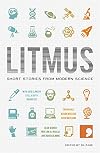
I was given this book last Christmas but didn't have space in my suitcase to bring it home, so it remained unread in my parents' spare room. Until now! The central concept is original: a series of literary fiction authors were asked to write a short story about a scientific discovery, with an actual specialist in the area writing an accompanying afterword to each. I must say, I enjoyed the implications of this structure more than the stories themselves, which were almost all forgettable. It show more seemed like the authors had to walk quite a tricky line, as they were asked for historically accurate science fiction. They dramatised the moments of discovery, in the historical mode, or extrapolated the implications of the scientific advance, in sci-fi mode. However, the preference in lit fic for making everything about romantic love was very much present. I did not really appreciate rather clumsy attempts to parallel love (especially collapsing marriages) with some form of science. 'Bride Hill', a story about realising a relative has Alzheimer's disease was quite moving, without explaining the science that effectively. The stronger stories, in my view, took the more historical approach and simply dramatised the discovery, although this still worked better in some cases than others. 'Crystal Night' did so rather well, by nearly slipping into a biographer's mode.
My favourite story was 'The Woman Who Measured the Heavens with a Span' as this introduced me a female scientist of the early 20th century whose work I hadn't heard of before, Henrietta Leavitt. As with all the other stories, however, it was vastly strengthened by the non-fiction afterword. What the book really demonstrated was the difficulty of fictionalising science in a small number of words, given the importance of a) clearly explaining the scientific discovery itself, and b) contextualising it. I found the afterwords more rewarding than the stories themselves, as those writing them were much better at both. Literary fiction rarely engages in such activities, leaving them to sci-fi. So this is an intriguing experiment in genre-hopping that I don't think entirely worked, but was worth reading anyway. show less
My favourite story was 'The Woman Who Measured the Heavens with a Span' as this introduced me a female scientist of the early 20th century whose work I hadn't heard of before, Henrietta Leavitt. As with all the other stories, however, it was vastly strengthened by the non-fiction afterword. What the book really demonstrated was the difficulty of fictionalising science in a small number of words, given the importance of a) clearly explaining the scientific discovery itself, and b) contextualising it. I found the afterwords more rewarding than the stories themselves, as those writing them were much better at both. Literary fiction rarely engages in such activities, leaving them to sci-fi. So this is an intriguing experiment in genre-hopping that I don't think entirely worked, but was worth reading anyway. show less
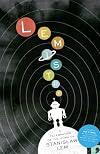
'Lemistry' is the first book that I read on my new Amazon Kindle, and I think that my choice of reading medium is in some respects appropriate. The Kindle is a futurist device in that it makes books liquid - they now take the shape and volume of their container, and therefore even the thickest volumes can slip inside one's pocket - and I like to think that the legendary Stanislaw Lem would have appreciated what ebook readers offer.
Whether Lem would have appreciated this volume of idolatry is show more another matter entirely. 'Lemistry' is a love letter to one of Poland's most famous literary exports, combining fresh translations of a few of Lem's minor short stories, literary essays, and short stories that spin off from some of Lem's own. Or, in the case of a pitiable effort by Brian Aldiss, who should have known better, simply some short stories that had not been published elsewhere.
The great problem here is the most obvious one: if Lem was so great, what chance his tribute band? None of the stories in this collection is particularly memorable, and some, such as the aforementioned Aldiss mess, are forgettable in the most active sense.
So, do I regret that my Kindle career got off to such an inauspicious start? Not at all. Despite the relatively low quality of the writing on offer here (and by that I am being harsh, most certainly, but readers of this volume will most likely have an idea of what Lem's writing was like, and will thus judge just as harshly themselves), it was fun to contemplate Lem's work, and there were pleasurable moments to savour, such as the journalist who travelled to meet Philip K. Dick and then took it upon himself to prove the existence of Lem. It's a shame there weren't more such moments, but you take what you can get these days. show less
Whether Lem would have appreciated this volume of idolatry is show more another matter entirely. 'Lemistry' is a love letter to one of Poland's most famous literary exports, combining fresh translations of a few of Lem's minor short stories, literary essays, and short stories that spin off from some of Lem's own. Or, in the case of a pitiable effort by Brian Aldiss, who should have known better, simply some short stories that had not been published elsewhere.
The great problem here is the most obvious one: if Lem was so great, what chance his tribute band? None of the stories in this collection is particularly memorable, and some, such as the aforementioned Aldiss mess, are forgettable in the most active sense.
So, do I regret that my Kindle career got off to such an inauspicious start? Not at all. Despite the relatively low quality of the writing on offer here (and by that I am being harsh, most certainly, but readers of this volume will most likely have an idea of what Lem's writing was like, and will thus judge just as harshly themselves), it was fun to contemplate Lem's work, and there were pleasurable moments to savour, such as the journalist who travelled to meet Philip K. Dick and then took it upon himself to prove the existence of Lem. It's a shame there weren't more such moments, but you take what you can get these days. show less
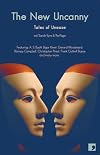
The editors of this anthology asked contemporary authors to read Freud's 1919 essay "Das Unheimliche", translated as "The Uncanny", and then to write "fresh fictional interpretations of what the uncanny might mean in the 21st century."
If interested, you can read Freud's essay here
This anthology won the Shirley Jackson Award last year. I recognized about half of the authors in this anthology and of those, I had read other work by them. These stories are not ones of overt horror stories, but show more are meant to give one some unease or "the creeps". While I certainly enjoyed some of them, others were kind of meh.
Favorites were: A. S. Byatt's "Doll's Eyes" a delightfully subtle, creepy tale about what happens when a woman gives her lover one of her precious dolls from her collection only to see it turn up on Antiques Roadshow. Jane Rogers' "Ped-o-matic" tells the story of one young mother who is leaving her infant for the first time to return to work. On a business trip to Paris she stops in the airport for a foot massage...but the machine won't let go of her feet when she needs to leave.
Etgar Keret's "Anette and I are Fucking in Hell" - which is not much more than a page long - is a creepily funny sex scene in hell. And In Christopher Priest's "The Sorting Out," a young widow and ardent bibliophile, who is in the process of ending a relationship, returns to her home to discover it has been broken into. The story is suspenseful as she must go through each of the rooms of the house oen by one, but interestingly, the only things out of place are a few books here and there --- the authors' names all begin with "D". What does it mean?
It seems to me that I responded best the stories where the creepy element is sort of a manifestation of or connected somehow to the character's internal conflicts. There were other stories that were interesting and imaginative but didn't seem to make an emotional connection. Still, this is a worthy collection to explore if one is interested in the elements of unease in fiction (fiction like other 2009 Shirley Jackson Award Winners like [Disquiet] by Julia Leigh and [The Diving Pool] by Yoko Ogawa) show less
If interested, you can read Freud's essay here
This anthology won the Shirley Jackson Award last year. I recognized about half of the authors in this anthology and of those, I had read other work by them. These stories are not ones of overt horror stories, but show more are meant to give one some unease or "the creeps". While I certainly enjoyed some of them, others were kind of meh.
Favorites were: A. S. Byatt's "Doll's Eyes" a delightfully subtle, creepy tale about what happens when a woman gives her lover one of her precious dolls from her collection only to see it turn up on Antiques Roadshow. Jane Rogers' "Ped-o-matic" tells the story of one young mother who is leaving her infant for the first time to return to work. On a business trip to Paris she stops in the airport for a foot massage...but the machine won't let go of her feet when she needs to leave.
Etgar Keret's "Anette and I are Fucking in Hell" - which is not much more than a page long - is a creepily funny sex scene in hell. And In Christopher Priest's "The Sorting Out," a young widow and ardent bibliophile, who is in the process of ending a relationship, returns to her home to discover it has been broken into. The story is suspenseful as she must go through each of the rooms of the house oen by one, but interestingly, the only things out of place are a few books here and there --- the authors' names all begin with "D". What does it mean?
It seems to me that I responded best the stories where the creepy element is sort of a manifestation of or connected somehow to the character's internal conflicts. There were other stories that were interesting and imaginative but didn't seem to make an emotional connection. Still, this is a worthy collection to explore if one is interested in the elements of unease in fiction (fiction like other 2009 Shirley Jackson Award Winners like [Disquiet] by Julia Leigh and [The Diving Pool] by Yoko Ogawa) show less
Lists
Awards

You May Also Like


Associated Authors
Statistics
- Works
- 21
- Also by
- 1
- Members
- 274
- Popularity
- #84,602
- Rating
- 3.4
- Reviews
- 8
- ISBNs
- 23