
Marshall B. Rosenberg (1934–2015)
Author of Nonviolent Communication: A Language of Life
About the Author
Image credit: Marshall B. Rosenberg
Series
Works by Marshall B. Rosenberg
Speak Peace in a World of Conflict: What You Say Next Will Change Your World (2005) 207 copies, 3 reviews
Living Nonviolent Communication: Practical Tools to Connect and Communicate Skillfully in Every Situation (2011) 164 copies, 2 reviews
The Surprising Purpose of Anger: Beyond Anger Management: Finding the Gift (Nonviolent Communication Guides) (2005) 158 copies, 2 reviews
Raising Children Compassionately: Parenting the Nonviolent Communication Way (Nonviolent Communication Guides) (2004) 157 copies, 1 review
Being Me, Loving You: A Practical Guide to Extraordinary Relationships (Nonviolent Communication Guides) (2005) 107 copies, 2 reviews
Getting Past the Pain Between Us: Healing and Reconciliation Without Compromise (Nonviolent Communication Guides) (2004) 90 copies, 2 reviews
Practical Spirituality: The Spiritual Basis of Nonviolent Communication (Nonviolent Communication Guides) (2005) 90 copies, 1 review
Life-Enriching Education: Nonviolent Communication Helps Schools Improve Performance, Reduce Conflict, and Enhance Relationships (2003) 87 copies
We Can Work It Out: Resolving Conflicts Peacefully and Powerfully (Nonviolent Communication Guides) (2004) 83 copies, 2 reviews
The Heart of Social Change: How to Make a Difference in Your World (Nonviolent Communication Guides) (2004) 63 copies
Teaching Children Compassionately: How Students and Teachers Can Succeed with Mutual Understanding (Nonviolent Communication Guides) (2004) 56 copies
Konflikte lösen durch Gewaltfreie Kommunikation: Ein Gespräch mit Gabriele Seils (2004) 52 copies, 1 review
Criar Filhos Compassivamente 8 copies
Comunicação não violenta - Nova edição: Técnicas para aprimorar relacionamentos pessoais e profissionais (Portuguese Edition) (2021) 2 copies
Educar a los niños desde el corazón: Ser padres según la Comunicación NoViolenta (Spanish Edition) 1 copy
Espiritualidade prática: reflexões sobre o fundamento espiritual da Comunicação Não Violenta (2019) 1 copy
Needs and Empathy 1 copy
Giraffe (videorecording) 1 copy
El sorprendente propósito de la rabia : Más allá de la gestión de la rabia: descubrir el regalo 1 copy
Making Life Wonderful - An Intermediate Training in Nonviolent Communication - Parts 5,6,7 & 8 1 copy
El sorprendente propósito de la rabia : más allá de la gestión de la rabia, descubrir el regalo (2017) 1 copy
Les Ressources insoupçonnées de la colère: L'approche de la Communication NonViolente® (2024) 1 copy
Communication Non-Violente et Pouvoir: Les clés d'un langage instaurant adhésion et confiance (2025) 1 copy
GROK* Games 1 copy
Associated Works
Tagged
Common Knowledge
- Canonical name
- Rosenberg, Marshall B.
- Legal name
- Rosenberg, Marshall Bertram
- Birthdate
- 1934-10-06
- Date of death
- 2015-02-07
- Gender
- male
- Education
- University of Wisconsin-Madison (PhD - Clinical Psychology)
Wayne State University
Cooley High School - Occupations
- psychologist
mediator
author - Nationality
- USA
- Birthplace
- Canton, Ohio, USA
- Places of residence
- Detroit, Michigan, USA
- Place of death
- Albuquerque, New Mexico, USA
- Associated Place (for map)
- USA
Members
Reviews
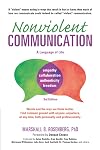
Nonviolent Communication: A Language of Life: Life-Changing Tools for Healthy Relationships (Nonviolent Communication Guides) by Marshall B. Rosenberg
Best for:
People looking for a better, more empathetic, more effective way to communicate.
In a nutshell:
Rosenberg offers guidance for ways to be more effective in communicating and finding common ground.
Worth quoting:
“Most of the time when we use [the word should] with ourselves, we resist learning, because should implies that there is no choice.”
“…emotional liberation entails more than simply asserting our own needs.”
Why I chose it:
My partner read it and wanted me to take a look a show more well.
Review:
With this book, Rosenberg provides what I find to be a helpful communications structure for more empathetic and constructive engagement. I think it is at times way too stiff, and a bit naive, but I also can see a lot of value in it.
The main component of NVC (nonviolent communication) is a four-part process of communicating:
1 - Observe (but do not judge)
2 - Associate feelings with the observation (and actual feelings, not ‘I feel that you are being a jerk’)
3 - Identify what needs we have that are associated with those feelings
4 - Request what we want from the other person.
The book spends a chapter on each of those components, then looks at how to receive that type of communication, how to communicate that way with ourselves, and also how to provide more effective affirmations. I took quite a few notes, and I can definitely see how this all could work in real life.
Rosenberg shares many sample conversations and examples of its success in seemingly fraught situations (including discussions between Israelis and Palestinians), but some of the language feels like something out of a text book, not like how people really talk. Especially his approach of asking people to repeatedly reflect back what they have heard. I know that’s an ‘active listening’ approach as well, but I could see attempts to guess at what is beneath the language getting a bit annoying.
I do have some issues with the approach. For example, the discussion around anger. He sees anger as useful, but only insofar as identifying what needs of ours are not being met. Which is fine, but he doesn’t go further into what to do if we identify the need, the need is reasonable, and the person who can meet that need refuses. Think racism, misogyny, transphobia, etc. I get that there might be a point where communication just isn’t going to meet the need, but Rosenberg doesn’t seem to acknowledge that possibility.
He also sees no value in applying moralistic judgments (which he separates from value judgments, which for him are fine), and asks us to reframe such judgments into the person not acting in harmony with our needs. Again, I kind of get it - if the goal is to get the needs met, why not try what might work - but also, I do have moralistic judgments about some folks and their actions, and I think that’s reasonable because there are some actions that society should not accept or accommodate.
And as empathy is such a big part of this, he’s essentially asking the oppressed to empathize with their oppressors to the end of getting needs met, and I’m not sure that’s reasonable to ask of oppressed people. He is clear that ‘the process is designed for those of us who would like others to change and respond, but only if they choose to do so willingly and compassionately.’ Which, for some actions, I’d argue that change needs to happen regardless of whether the actor is doing it willingly.
That’s a lot of caveats, I realize, but I do overall like this approach and am looking at incorporating it into the ways I communicate with others (including my partner).
Recommend to a Friend / Keep / Donate it / Toss it:
Keep show less
People looking for a better, more empathetic, more effective way to communicate.
In a nutshell:
Rosenberg offers guidance for ways to be more effective in communicating and finding common ground.
Worth quoting:
“Most of the time when we use [the word should] with ourselves, we resist learning, because should implies that there is no choice.”
“…emotional liberation entails more than simply asserting our own needs.”
Why I chose it:
My partner read it and wanted me to take a look a show more well.
Review:
With this book, Rosenberg provides what I find to be a helpful communications structure for more empathetic and constructive engagement. I think it is at times way too stiff, and a bit naive, but I also can see a lot of value in it.
The main component of NVC (nonviolent communication) is a four-part process of communicating:
1 - Observe (but do not judge)
2 - Associate feelings with the observation (and actual feelings, not ‘I feel that you are being a jerk’)
3 - Identify what needs we have that are associated with those feelings
4 - Request what we want from the other person.
The book spends a chapter on each of those components, then looks at how to receive that type of communication, how to communicate that way with ourselves, and also how to provide more effective affirmations. I took quite a few notes, and I can definitely see how this all could work in real life.
Rosenberg shares many sample conversations and examples of its success in seemingly fraught situations (including discussions between Israelis and Palestinians), but some of the language feels like something out of a text book, not like how people really talk. Especially his approach of asking people to repeatedly reflect back what they have heard. I know that’s an ‘active listening’ approach as well, but I could see attempts to guess at what is beneath the language getting a bit annoying.
I do have some issues with the approach. For example, the discussion around anger. He sees anger as useful, but only insofar as identifying what needs of ours are not being met. Which is fine, but he doesn’t go further into what to do if we identify the need, the need is reasonable, and the person who can meet that need refuses. Think racism, misogyny, transphobia, etc. I get that there might be a point where communication just isn’t going to meet the need, but Rosenberg doesn’t seem to acknowledge that possibility.
He also sees no value in applying moralistic judgments (which he separates from value judgments, which for him are fine), and asks us to reframe such judgments into the person not acting in harmony with our needs. Again, I kind of get it - if the goal is to get the needs met, why not try what might work - but also, I do have moralistic judgments about some folks and their actions, and I think that’s reasonable because there are some actions that society should not accept or accommodate.
And as empathy is such a big part of this, he’s essentially asking the oppressed to empathize with their oppressors to the end of getting needs met, and I’m not sure that’s reasonable to ask of oppressed people. He is clear that ‘the process is designed for those of us who would like others to change and respond, but only if they choose to do so willingly and compassionately.’ Which, for some actions, I’d argue that change needs to happen regardless of whether the actor is doing it willingly.
That’s a lot of caveats, I realize, but I do overall like this approach and am looking at incorporating it into the ways I communicate with others (including my partner).
Recommend to a Friend / Keep / Donate it / Toss it:
Keep show less

There's no "there" there.
I'm sensing that you're frustrated.
Well, yeah! I mean, Nonviolent Communication is a great title. I think about the kind of inspirational shit your neighbour has on a magnet on their fridge, that could maybe benefit from being expanded into a whole program. Like, my friend talks about trying to only say things that are "necessary, true, and kind." I have some questions about exactly what that means in practice, but it sounds great as a principle from which to pursue show more nonviolence. And, like, yesterday I casually referred to a person of my acquaintance as a Nazi, and it's maybe a little bit brutalizing to your interlocutor to do that, right? Like, reserve that term for actual members of the National Socialist party? This is where the idea of "violent communication" takes me, and I think it's worth talking about how to avoid that stuff.
So if I hear you, you feel like Dr. Rosenberg's book doesn't help you avoid that kind of thing.
Thing is, like with so many of these self-help things, he doesn't give people credit for being able to keep two ideas in their head at one time. All the world's problems are due to people not feeling like they're heard. If we hear them, there's no limit to what we can accomplish. It's like that old joke: step 1--"implement the NVC process"; step 2--?????; step 3: profit! We all know listening is important--and while of course there is no the difficulty, at least one of the major difficulties, which isn't even touched, is the difference between listening, understanding, and agreeing, which makes it all the more unfortunate and egregious that Rosenberg leans so heavily on his work with Israeli and Palestinian negotiators for examples. Haven't really fixed that problem, have you, Marshall?
So you're feeling like you don't know how to engage with the process in a useful way.
The process doesn't know how to engage with me. And if it can't handle me, I'd love to see it handle scumbag investment bankers or Tamil refugees or, fuck, Joseph Kony.
It seems like you're feeling discouraged. How about a poem?
And this is the other thing. You can't take a platitude, pop it into rhyme, and present it as poetry. I recognize that I'm the one who's risking coming across as the anger bear here, but this process just seems so dishonest. Suffering people often need to hear that someone understands how they're feeling--yes. And we're all suffering--yes. This is the truth at the core of the book. But Rosenberg seems to want us to posit a world where nobody is going to engage insincerely in a way that can't be brought down by some good ol' NVC TLC, where our only disputes come from an inability to remember our common humanity, and crucially too, where if you guess wrong about what someone is feeling--and this is a process where for it to mean anything you sometimes have to guess in detail--it doesn't stymie the process. Everyone likes to be understood, but the more you leap out into someone else's headspace, the more you run the risk of getting it wrong.
It seems like you're worried about being misunderstood when you try to use the process, and feeling like you don't know how to communicate with people in a reliable way.
Well, we all face death alone, but no, I do okay at bridging the gap--as okay as the next guy. I just think that it's an art not a science let alone a management process, and I am highly suspicious of the fact that so many of your clients are Fortune 500 companies and MBA programs and shit, and nothing I've seen convinces me that this is anything more than understanding as manipulation. Empathy emerges between two people through a sort of alchemy, and both need to be open, and defusing someone's anger by parroting them back at themselves is doing them a sort of violence, even, and you're just teaching people to fake it. You're creating Mitt Romneys.
And I dunno, I think we do a decent job at hearing each other, mostly, I just think that's not the main issue, and if you presented this as a first step to dialogue in the spirit of "nothing ever changes unless you get the shitheads on board," I might be inclined to listen, but instead you treat the story like it's done when understanding is reached, sometimes explicitly dismissing the problems that remain and stem from systematic inequalities, like the woman who still couldn't go back to school or change her life but it didn't matter because she understood better why she blamed herself. But no! We don't blame ourselves because we haven't thought it out! We blame ourselves despite knowing better, because of human maladaptive things. Quit fucking us around, Marshall Rosenberg. The only people who need to be told what's in your book would never read it.
I'm sensing that you're frustrated.
Yup. show less
I'm sensing that you're frustrated.
Well, yeah! I mean, Nonviolent Communication is a great title. I think about the kind of inspirational shit your neighbour has on a magnet on their fridge, that could maybe benefit from being expanded into a whole program. Like, my friend talks about trying to only say things that are "necessary, true, and kind." I have some questions about exactly what that means in practice, but it sounds great as a principle from which to pursue show more nonviolence. And, like, yesterday I casually referred to a person of my acquaintance as a Nazi, and it's maybe a little bit brutalizing to your interlocutor to do that, right? Like, reserve that term for actual members of the National Socialist party? This is where the idea of "violent communication" takes me, and I think it's worth talking about how to avoid that stuff.
So if I hear you, you feel like Dr. Rosenberg's book doesn't help you avoid that kind of thing.
Thing is, like with so many of these self-help things, he doesn't give people credit for being able to keep two ideas in their head at one time. All the world's problems are due to people not feeling like they're heard. If we hear them, there's no limit to what we can accomplish. It's like that old joke: step 1--"implement the NVC process"; step 2--?????; step 3: profit! We all know listening is important--and while of course there is no the difficulty, at least one of the major difficulties, which isn't even touched, is the difference between listening, understanding, and agreeing, which makes it all the more unfortunate and egregious that Rosenberg leans so heavily on his work with Israeli and Palestinian negotiators for examples. Haven't really fixed that problem, have you, Marshall?
So you're feeling like you don't know how to engage with the process in a useful way.
The process doesn't know how to engage with me. And if it can't handle me, I'd love to see it handle scumbag investment bankers or Tamil refugees or, fuck, Joseph Kony.
It seems like you're feeling discouraged. How about a poem?
And this is the other thing. You can't take a platitude, pop it into rhyme, and present it as poetry. I recognize that I'm the one who's risking coming across as the anger bear here, but this process just seems so dishonest. Suffering people often need to hear that someone understands how they're feeling--yes. And we're all suffering--yes. This is the truth at the core of the book. But Rosenberg seems to want us to posit a world where nobody is going to engage insincerely in a way that can't be brought down by some good ol' NVC TLC, where our only disputes come from an inability to remember our common humanity, and crucially too, where if you guess wrong about what someone is feeling--and this is a process where for it to mean anything you sometimes have to guess in detail--it doesn't stymie the process. Everyone likes to be understood, but the more you leap out into someone else's headspace, the more you run the risk of getting it wrong.
It seems like you're worried about being misunderstood when you try to use the process, and feeling like you don't know how to communicate with people in a reliable way.
Well, we all face death alone, but no, I do okay at bridging the gap--as okay as the next guy. I just think that it's an art not a science let alone a management process, and I am highly suspicious of the fact that so many of your clients are Fortune 500 companies and MBA programs and shit, and nothing I've seen convinces me that this is anything more than understanding as manipulation. Empathy emerges between two people through a sort of alchemy, and both need to be open, and defusing someone's anger by parroting them back at themselves is doing them a sort of violence, even, and you're just teaching people to fake it. You're creating Mitt Romneys.
And I dunno, I think we do a decent job at hearing each other, mostly, I just think that's not the main issue, and if you presented this as a first step to dialogue in the spirit of "nothing ever changes unless you get the shitheads on board," I might be inclined to listen, but instead you treat the story like it's done when understanding is reached, sometimes explicitly dismissing the problems that remain and stem from systematic inequalities, like the woman who still couldn't go back to school or change her life but it didn't matter because she understood better why she blamed herself. But no! We don't blame ourselves because we haven't thought it out! We blame ourselves despite knowing better, because of human maladaptive things. Quit fucking us around, Marshall Rosenberg. The only people who need to be told what's in your book would never read it.
I'm sensing that you're frustrated.
Yup. show less
Non-Violent Communication (NVC) is an applied spirituality, by which I mean it takes a particular philosophical point of view of what it means to be human, one usually associated with religion/spirituality and explains how to make use of it in every day life. Before NVC, a systematic such approach wasn't readily available. For example, "Love thy neighbor" seems like difficult advice to follow and "Thou shalt not kill" seems straightforward enough but is more honored in the breach.
The show more philosophy, or premise of NVC, is that people for the most part want to help each other get their needs met but have been miseducated and frustrated into thinking it's a zero sum game. As a result, the world has become a violent place in which we make enemies out of those who would more naturally be our friends. Much of this violence has been reified into our language so we can barely speak to one another without implied threats or manipulations. Marshall Rosenberg, a former psychoanalyst, unimpressed by the results he was getting in the techniques he was taught to use, replaced his practice with the training outlined in this book and now says, for example, that he can solve longstanding problems between couples in only 20 minutes once he can identify what each of their needs are.
An outline of a case from the book: A couple fighting over money begins by accusing each other (which Dr Rosenberg calls "diagnosing"). Then, when called on it, each retreats to telling each other what they need to do (Dr Rosenberg calls this "strategizing") and only finally are able to indentify their needs. He needs to feel financially secure while she needs to feel respected and treated as if she's capable of learning how to handle money responsibly. She can then empathize with his need for security and he with her need for trust and respect. With mutual empathy, they can find a solution that takes both of their needs into consideration. If the brilliance of this way of reframing a dispute isn't obvious from my summary, you should read the book and watch it play out in a variety of circumstances.
Later chapters explain using NVC to replace retributive justice with restorative justice, and with giving and receiving gratitude. In the audiobook edition, Marshall also sings us a few appropriate songs, accompanying himself on the guitar.
It requires a special brilliance to be able to take a technique so formulaic and make such sweeping changes to the world. Like Cognitive Behavioral Therapy (CBT), NVC thinks that all we need is to be retrained in a new discipline. For a (former) psychoanalyst, Marshall seems too willing to take what his clients tell him at face value. For example, I can think of many more reasons a person would have trouble expressing or receiving gratitude than the ones in his examples. And just being present and empathic is a lot more difficult than he makes it out to be. None the less I want to rate this book five stars. Marshall tells us that when he taught a class, he refused to give his students grades but I will give his book a grade anyway. show less
The show more philosophy, or premise of NVC, is that people for the most part want to help each other get their needs met but have been miseducated and frustrated into thinking it's a zero sum game. As a result, the world has become a violent place in which we make enemies out of those who would more naturally be our friends. Much of this violence has been reified into our language so we can barely speak to one another without implied threats or manipulations. Marshall Rosenberg, a former psychoanalyst, unimpressed by the results he was getting in the techniques he was taught to use, replaced his practice with the training outlined in this book and now says, for example, that he can solve longstanding problems between couples in only 20 minutes once he can identify what each of their needs are.
An outline of a case from the book: A couple fighting over money begins by accusing each other (which Dr Rosenberg calls "diagnosing"). Then, when called on it, each retreats to telling each other what they need to do (Dr Rosenberg calls this "strategizing") and only finally are able to indentify their needs. He needs to feel financially secure while she needs to feel respected and treated as if she's capable of learning how to handle money responsibly. She can then empathize with his need for security and he with her need for trust and respect. With mutual empathy, they can find a solution that takes both of their needs into consideration. If the brilliance of this way of reframing a dispute isn't obvious from my summary, you should read the book and watch it play out in a variety of circumstances.
Later chapters explain using NVC to replace retributive justice with restorative justice, and with giving and receiving gratitude. In the audiobook edition, Marshall also sings us a few appropriate songs, accompanying himself on the guitar.
It requires a special brilliance to be able to take a technique so formulaic and make such sweeping changes to the world. Like Cognitive Behavioral Therapy (CBT), NVC thinks that all we need is to be retrained in a new discipline. For a (former) psychoanalyst, Marshall seems too willing to take what his clients tell him at face value. For example, I can think of many more reasons a person would have trouble expressing or receiving gratitude than the ones in his examples. And just being present and empathic is a lot more difficult than he makes it out to be. None the less I want to rate this book five stars. Marshall tells us that when he taught a class, he refused to give his students grades but I will give his book a grade anyway. show less
You know, this is full of ideas that have already seeped into national consciousness written in a far-out peacenik style... but there really is something "there" there. It's that rule about expressing yourself using "I" phrases, not "you" phrases, extended to talking specifically about observations, feelings and needs, and extended again to listening to others in a way that lets them express themselves fully, and extended again to avoiding generic judgments even in praise. Really good stuff show more aligned with my beliefs in privileging verbs over nouns, for all it sometimes reads as hokey (or -- ahem -- when I read references to things like God or screaming "nonviolently", I felt dismissive, because I need some intellectual heft to really respect a book).
My biggest and favorite insight from this book was that many of the things we naively label "feelings" are not actually feelings. For instance, "I feel unloved," "I feel ignored," or "I feel supported" -- these are all judgments about the other person's actions (sometimes even attacks) cloaked as feelings. True feelings don't imply the other person is the cause -- they are more like "I feel depressed," "I feel lonely", or "I feel content." (I suspect that any of these could be taken as judgments too, honestly, but they are much less likely to be taken that way, because grammatically they aren't derived from objects of verbs.)
A Maya Angelou quote that's been everywhere the past few months speaks to me and this book: "I've learned that people will forget what you said, people will forget what you did, but people will never forget how you made them feel." This is a book about making people feel. Make of it what you will. show less
My biggest and favorite insight from this book was that many of the things we naively label "feelings" are not actually feelings. For instance, "I feel unloved," "I feel ignored," or "I feel supported" -- these are all judgments about the other person's actions (sometimes even attacks) cloaked as feelings. True feelings don't imply the other person is the cause -- they are more like "I feel depressed," "I feel lonely", or "I feel content." (I suspect that any of these could be taken as judgments too, honestly, but they are much less likely to be taken that way, because grammatically they aren't derived from objects of verbs.)
A Maya Angelou quote that's been everywhere the past few months speaks to me and this book: "I've learned that people will forget what you said, people will forget what you did, but people will never forget how you made them feel." This is a book about making people feel. Make of it what you will. show less
Lists
You May Also Like


Associated Authors
Statistics
- Works
- 78
- Also by
- 1
- Members
- 5,061
- Popularity
- #4,946
- Rating
- 4.1
- Reviews
- 75
- ISBNs
- 223
- Languages
- 24
- Favorited
- 4