
H. Richard Hornberger (1924–1997)
Author of MASH: A Novel About Three Army Doctors
About the Author
Image credit: Hooker at the original "Swamp" tent at the 8055th Mobile Army Surgical Hospital in South Korea during the Korean War. By Source (WP:NFCC#4), Fair use, https://en.wikipedia.org/w/index.php?curid=40455082
Works by H. Richard Hornberger
Sıhhiye Bölüğü 1 copy
Associated Works
Tagged
Common Knowledge
- Legal name
- Hornberger, Hiester Richard, Jr.
- Other names
- Hooker, Richard (pseudonym)
- Birthdate
- 1924-02-01
- Date of death
- 1997-11-04
- Gender
- male
- Education
- Bowdoin College
Cornell Medical School - Occupations
- surgeon
author - Organizations
- U.S. Army
Beta Theta Pi
U.S. Veterans Administration - Cause of death
- leukemia
- Nationality
- USA
- Birthplace
- Trenton, New Jersey, USA
- Places of residence
- Waterville, Maine, USA
Bremen, Maine, USA - Place of death
- Portland, Maine, USA
- Burial location
- Hillside Cemetery, Bremen, Maine, USA
- Associated Place (for map)
- Maine, USA
Members
Reviews
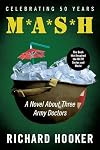
I'm all over the place with this novel.
Being a fan of the movie, and a massive fan of the series, I wanted to go back to the source material. It's an interesting ride, but like I said, I'm a bit scattered. Let me see if I can untangle this knot...
First, yes, the known and loved are there. Hawkeye, Trapper, Col. Blake, Radar, Hot lips, Burns, Mulcahey, etc. And even some of those from the movie and the first few shows. Ugly John, Spearchucker Jones (and would we EVER have a name like that on show more television again?).
But wait...Hawkeye has brothers? In jail? And he's married with kids? Mulcahey is as warped as the rest of them? Trapper is the smarter and better of the surgeons than Hawkeye? Radar isn't so childlike and innocent?
And who the hell is this Duke guy that plays such a big role? And some of the other players? Okay, fair enough, this isn't the movie, this isn't the book. Let's enjoy the new friends.
And I did. I honestly did. I had a few laugh out loud moments throughout the book.
But something weird was going on in my head. It was in a constant struggle to reconcile the Alan Alda Hawkeye to the book Hawkeye, along with all the other characters. Likely a side effect of having seen the entire series at least three times, and the movie twice. So, through no fault of the novel, it was a bit of a schizophrenic experience.
Second, this isn't a novel. It's not a non-fiction account. Call it faction. Call it whatever the hell you want, but it's essentially a collection of anecdotes-as-chapters that all have the same recurring characters. Had Hooker been a better writer, some of the character introductions would have worked much better had he taken a few moments to just bring them in a chapter or two earlier so that, when they're needed, they're already known personalities.
So, the stories were fun, and often quite funny. The characters were...well, who they were. Blame the scriptwriters for changing them. The writing was, at best, workmanlike.
And still, I'm very glad I've read it. But god no, I will not read the other MASH Goes To... books. Hell no. show less
Being a fan of the movie, and a massive fan of the series, I wanted to go back to the source material. It's an interesting ride, but like I said, I'm a bit scattered. Let me see if I can untangle this knot...
First, yes, the known and loved are there. Hawkeye, Trapper, Col. Blake, Radar, Hot lips, Burns, Mulcahey, etc. And even some of those from the movie and the first few shows. Ugly John, Spearchucker Jones (and would we EVER have a name like that on show more television again?).
But wait...Hawkeye has brothers? In jail? And he's married with kids? Mulcahey is as warped as the rest of them? Trapper is the smarter and better of the surgeons than Hawkeye? Radar isn't so childlike and innocent?
And who the hell is this Duke guy that plays such a big role? And some of the other players? Okay, fair enough, this isn't the movie, this isn't the book. Let's enjoy the new friends.
And I did. I honestly did. I had a few laugh out loud moments throughout the book.
But something weird was going on in my head. It was in a constant struggle to reconcile the Alan Alda Hawkeye to the book Hawkeye, along with all the other characters. Likely a side effect of having seen the entire series at least three times, and the movie twice. So, through no fault of the novel, it was a bit of a schizophrenic experience.
Second, this isn't a novel. It's not a non-fiction account. Call it faction. Call it whatever the hell you want, but it's essentially a collection of anecdotes-as-chapters that all have the same recurring characters. Had Hooker been a better writer, some of the character introductions would have worked much better had he taken a few moments to just bring them in a chapter or two earlier so that, when they're needed, they're already known personalities.
So, the stories were fun, and often quite funny. The characters were...well, who they were. Blame the scriptwriters for changing them. The writing was, at best, workmanlike.
And still, I'm very glad I've read it. But god no, I will not read the other MASH Goes To... books. Hell no. show less
I wish I’d had the chance to watch more of M*A*S*H, as I love its sense of humour. The film was hilarious and so is this book. I’m taking off one star because quite a few jokes are at women’s expense, also the descriptions of American football are incomprehensible if you’re British and hate sport. Nonetheless, it repeatedly made me laugh on the train and the cast of oddball characters are magnificent. Hooker has such a talent for dialogue and for dipping slightly into pathos before show more veering back to surreal absurdity. That seems a very effective way of depicting war’s impact just off the front lines. A good example:
After all the hijinks and banter, I found the ending unexpectedly moving. The lesson here (and from several TV shows I could name) is that I’m willing to let a certain amount of misogyny slide if the whole thing is really funny. Especially if the context is a war. I wonder if there's a legal means of streaming M*A*S*H the series. show less
”What are you doing here, gentlemen?” he asked.
“Buildin’ us a mermaid trap,” Duke informed him. “Y’all want to help?”
The Colonel was trying to blend into the environment. “I see,” he said. “Where do you expect to catch mermaids?”
“The river’s alive with them,” answered Trapper.
“I see,” said the Colonel again. “Assuming that you are able to catch one of these creatures, what do you propose to do with it?”
Hawkeye gave the Colonel a look of impatience and scorn. “We’re gonna screw the ass off her,” he stated.
The Colonel was trying desperately to hang in there. “Do you have reason to believe that mermaids may be effectively utilised for that purpose?”
“Oh, Finest Kind,” Hawkeye assured him.
“Numero Uno,” said Trapper John.
“Yeah,” said the Duke.
Colonel DeLong departed to his tent to think. Colonel Blake, before departing for Tokyo, had deliberately and perhaps maliciously not briefed him on the Swampmen.
After all the hijinks and banter, I found the ending unexpectedly moving. The lesson here (and from several TV shows I could name) is that I’m willing to let a certain amount of misogyny slide if the whole thing is really funny. Especially if the context is a war. I wonder if there's a legal means of streaming M*A*S*H the series. show less

I listened to this novel that started MASH. It was a fun listen, and I mostly pictured the TV cast as I listened. There are differences between the novel and TV series. For example, "Hot Lips" was interested in a doctor but his name wasn't Frank Burns, although they seemed to have similar personalities. Klinger was not in it. Radar's role was minor. There was another doctor--Duke from Georgia--in the Swamp with Hawkeye and Trapper. It was hard to picture Father Mulcahey as "Diego Red" since show more the actor didn't have the red hair the book star had, but of course, when they called him Father Mulcahey, I had no troubles! It was fun. It reminded me while MASH is one of the greatest, if not the greatest, TV shows of all time. show less
This was a nostalgic gem of a read for me.
Originally published in 1968, Richard Hooker's (a pseudonym) debut novel is a semi-autobiographical account of one aspect of the Korean War. It introduces us to the "Swamp" -- a tent inhabited by 3 (and then 4) surgeons assigned to the 4077th Mobile Army Surgical Hospital. Hawkeye Pierce, John McIntyre (Trapper), and Duke Forrest deal with the horrors of war through dry martinis, golf, and elaborate (junior high type) pranks aimed at incompetent show more superiors.
Fans of the television series will enjoy reading this source material as a fond trip down memory lane. It's genuinely funny in some parts that made me laugh out loud, and captures a definite type of wit that helped make the show so popular.
One thing you'll notice is the writing quality. Given that Hooker was a surgeon and not a novelist, the prose often seemed clunky and not well put together. The characters meander from one antic to another and there is no real emotion or much more aside from describing the crazy, often immature, shenanigans that I found hard to believe would truly be tolerated in any sort of military installation even in those times. Despite this, however, I really enjoyed the book for the nostalgic escape and it was a fun, quick read that reminded me of times in my life long ago when this movie and TV series made such an impact on my future.
I was able to listen to the newly released audio book provided by the publisher while also following along in the e-book. The narrator, Scott Brick, is one of my favorites. He does an excellent job of voicing all the characters, giving them unique accents, and definitely captures the dry and irreverent tone which works well with the text. One thing that struck hard was that there are many politically correct edits and specific word changes from the rough, unfiltered language typical of military life at that time. These changes were mostly done to eliminate racial and ethnic slurs, remove the descriptions that were offensive to women, and altered some stereotypical portrayals of certain characters. The production was well done and enhanced my enjoyment of the book. show less
Originally published in 1968, Richard Hooker's (a pseudonym) debut novel is a semi-autobiographical account of one aspect of the Korean War. It introduces us to the "Swamp" -- a tent inhabited by 3 (and then 4) surgeons assigned to the 4077th Mobile Army Surgical Hospital. Hawkeye Pierce, John McIntyre (Trapper), and Duke Forrest deal with the horrors of war through dry martinis, golf, and elaborate (junior high type) pranks aimed at incompetent show more superiors.
Fans of the television series will enjoy reading this source material as a fond trip down memory lane. It's genuinely funny in some parts that made me laugh out loud, and captures a definite type of wit that helped make the show so popular.
One thing you'll notice is the writing quality. Given that Hooker was a surgeon and not a novelist, the prose often seemed clunky and not well put together. The characters meander from one antic to another and there is no real emotion or much more aside from describing the crazy, often immature, shenanigans that I found hard to believe would truly be tolerated in any sort of military installation even in those times. Despite this, however, I really enjoyed the book for the nostalgic escape and it was a fun, quick read that reminded me of times in my life long ago when this movie and TV series made such an impact on my future.
I was able to listen to the newly released audio book provided by the publisher while also following along in the e-book. The narrator, Scott Brick, is one of my favorites. He does an excellent job of voicing all the characters, giving them unique accents, and definitely captures the dry and irreverent tone which works well with the text. One thing that struck hard was that there are many politically correct edits and specific word changes from the rough, unfiltered language typical of military life at that time. These changes were mostly done to eliminate racial and ethnic slurs, remove the descriptions that were offensive to women, and altered some stereotypical portrayals of certain characters. The production was well done and enhanced my enjoyment of the book. show less
Lists
Awards

You May Also Like


Associated Authors
Statistics
- Works
- 17
- Also by
- 1
- Members
- 3,220
- Popularity
- #7,950
- Rating
- 3.6
- Reviews
- 65
- ISBNs
- 106
- Languages
- 7