
Bruce Handy
Author of Wild Things: The Joy of Reading Children's Literature as an Adult
About the Author
Bruce Handy is a writer and editor at Esquire and a contributor to vanity Fair. His articles, essays, reviews, and humor pieces have also appeared in The New York Times, The New Yorker, Spy, Time, Rolling Stone, and elsewhere. He lives in Manhattan.
Image credit: photo by Denise Bosco
Works by Bruce Handy
Associated Works
Tagged
Common Knowledge
- Gender
- male
- Education
- Stanford University (BA, English Language and Literature)
- Occupations
- journalist
- Organizations
- Vanity Fair
The New Yorker
Esquire
Time - Birthplace
- California, USA
- Places of residence
- Manhattan, New York, New York, USA
- Associated Place (for map)
- USA
Members
Reviews
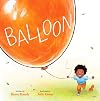
Featuring just a single word throughout, Handy’s latest picture book centers on a small boy with big feelings about his new balloon.
A Black adult and a toddler—presumably parent and son—are strolling through an unmistakable Central Park; he’s delighted by the orange balloon (“Balloon!”) that he’s just gotten from a park vendor. During an altercation with a pigeon, the boy involuntarily lets go of the balloon’s string and watches his treasured memento float away show more (“Balloon…”). As he and his parent continue their walk, the boy keeps mistakenly spotting his beloved possession (“Balloon?”): in an assembled crowd (the orange object is really a musician’s beanie), peeking out from behind some park denizens’ blanket (it’s actually an orange Frisbee), and so on. The last time the boy thinks he spies his balloon, it turns out to be the curved back of an orange kitten at a pet-adoption event. He accepts the kitty as a salve for his balloon-pining heart—his persistence has paid off!—but his loyalty compels him to honor his lost keepsake: “Balloon. That’s your name,” he tells the cat. Handy has nimbly blended a sweet story tailor-made for the tenderhearted with a Where’s Waldo?–esque activity suited to more fidgety types. Working with digitally tweaked pen and ink in blooming springtime colors, Kwon inserts the book’s visual game into invitingly bustling scenes that give the big city the feel of a communal gathering.
Handy’s few words speak volumes. (author’s note) (Picture book. 3-5)
-Kirkus Review show less
A Black adult and a toddler—presumably parent and son—are strolling through an unmistakable Central Park; he’s delighted by the orange balloon (“Balloon!”) that he’s just gotten from a park vendor. During an altercation with a pigeon, the boy involuntarily lets go of the balloon’s string and watches his treasured memento float away show more (“Balloon…”). As he and his parent continue their walk, the boy keeps mistakenly spotting his beloved possession (“Balloon?”): in an assembled crowd (the orange object is really a musician’s beanie), peeking out from behind some park denizens’ blanket (it’s actually an orange Frisbee), and so on. The last time the boy thinks he spies his balloon, it turns out to be the curved back of an orange kitten at a pet-adoption event. He accepts the kitty as a salve for his balloon-pining heart—his persistence has paid off!—but his loyalty compels him to honor his lost keepsake: “Balloon. That’s your name,” he tells the cat. Handy has nimbly blended a sweet story tailor-made for the tenderhearted with a Where’s Waldo?–esque activity suited to more fidgety types. Working with digitally tweaked pen and ink in blooming springtime colors, Kwon inserts the book’s visual game into invitingly bustling scenes that give the big city the feel of a communal gathering.
Handy’s few words speak volumes. (author’s note) (Picture book. 3-5)
-Kirkus Review show less
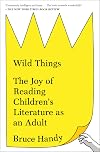
This was the perfect book for me at exactly the right time, and I loved every page. Bruce Handy is a writer who has contributed to such publications as Vanity Fair, Time, The New York Times Magazine, The New York Times Book Review, The New Yorker, and others. This is an exploration of books he read and loved as a child, books he revisited when reading aloud to his children, and the experience of reading children's books in general. He covers the moralizing primers of previous centuries, the show more Dick and Jane books, fairy tales, fantasy, animal fiction, coming of age fiction, and explores the books, artwork, and lives of various authors such as Dr. Seuss, Margaret Wise Brown, Maurice Sendak, Beverly Cleary, C.S. Lewis, Laura Ingalls Wilder, Louisa May Alcott, Beatrix Potter, and more. The book is laugh-out-loud funny, frequently introspective, and acutely aware of its 21st century lens. Like Mr. Handy, I have cringed when I revisit old favorites that don't age well, and have been overjoyed when revisiting those timeless classics still as beloved to me in my 40s as when I was 8. And there are no joys quite like sharing those beloved stories with my own girls.
This is not an exhaustive thesis; the chapters should be read as essays rather than works of academia or journalism. Handy never hesitates to share his opinions and reactions, with which readers may agree or passionately disagree. It is liberally (and at times hilariously) footnoted. It almost exclusively focuses on literature from the mid to late 20th century as he traces the rise of the children's literature publishing industry (and if you love children's literature, then you know that the 21st century is something of a golden age for children's and YA literature). As with any book, the age of the intended reader matters, and I found myself appreciatively chuckling when he asserts that he doesn't love something but then again, he's not four. But the books that stand up to countless daily rereadings across the decades are rightfully lauded, and I love those as passionately as I ever did. His adult readings of classics he missed as a child are a mixed bag: he devoured the [Little House] series and regretted the reluctance by boys to read "girl" books, but had to skim [Little Women] and set aside [Anne of Green Gables] altogether. But those books were never written for the 50-something male, and I think there is something to certain books needing to be read at certain times of life. But when they are, and then are still as wonderful to an adult of any age, then they are something magical and joyful indeed.
Highly recommended, especially if you still love children's literature.
And that cover... is it brilliant in its simplicity and its instant evocation of an absolute classic, or just awful? I can't decide. show less
This is not an exhaustive thesis; the chapters should be read as essays rather than works of academia or journalism. Handy never hesitates to share his opinions and reactions, with which readers may agree or passionately disagree. It is liberally (and at times hilariously) footnoted. It almost exclusively focuses on literature from the mid to late 20th century as he traces the rise of the children's literature publishing industry (and if you love children's literature, then you know that the 21st century is something of a golden age for children's and YA literature). As with any book, the age of the intended reader matters, and I found myself appreciatively chuckling when he asserts that he doesn't love something but then again, he's not four. But the books that stand up to countless daily rereadings across the decades are rightfully lauded, and I love those as passionately as I ever did. His adult readings of classics he missed as a child are a mixed bag: he devoured the [Little House] series and regretted the reluctance by boys to read "girl" books, but had to skim [Little Women] and set aside [Anne of Green Gables] altogether. But those books were never written for the 50-something male, and I think there is something to certain books needing to be read at certain times of life. But when they are, and then are still as wonderful to an adult of any age, then they are something magical and joyful indeed.
Highly recommended, especially if you still love children's literature.
And that cover... is it brilliant in its simplicity and its instant evocation of an absolute classic, or just awful? I can't decide. show less
Just finished this in audio book form (a read I've been wanting to tend to for a while).
This book's author takes time to digest rather dismantle, understand alongside critique the work of the greatest children's writer's of the 20th century. The slogan with this book is about "reading children's literature as an adult". The funny thing about this statement is that at one period of my life I actually hated it with a passion. In my entirety of my teenage years, my exposure to children's media show more through my own upbringing, as well as being the oldest of 6 children, always kept the idea of imagination, fun, whimsy, absurdity, and general childlikeness very relevant and very present to me, in the best ways. It was a personal way for me to retain security in my identity as an alienated, creative, positive, moral kid.
I saw this title in a bookstore one day, and the Sendakian iconography of the cover obviously grappled me, a fan. But as I read through, the intellectualism that I sniffed in and throughout the book really, really strongly deterred me. The idea of reviewing such precious content as children's books through the lens of a cynical adult really disgusted me; 1) because of the aforementioned reasons, and 2) because I feared that if I read it, I would lose the ability to look at the books in the same way I did as a kid -- years of my life that are incredibly pure and precious to me, still. Hence, shelved this read became.
These days approaching my mid-20s, I understand the ways in which I invalidated certain bases of knowledge that I was too ignorant and disinterested to delve into -- to find the one's own curiousity in the ditch of anti-intellectualism is kind of surprisiing. There are only additives to be gained from learning more about the world around me (it's a cycle that's repeated in my life time and time again).
Sure I'm a little more cynical, self-depricating, and understanding of how the world doesn't care about me, but that's no justification to match the nihilism. I'm very appreciative and fascinated to learn about how all of these authors -- Suess, Sendak, White, --- all wrote those stories, not because they wanted to appeal to kids wants, but because they looked and found things in their adulthood that they felt deeply and needed to express in the unique medium of the illustrated storybook. This adds another layer of gratitidue in my enjoyment of these books, both in memory sitting with my Nonna, Mom, and Dad reading, and also now as a youg adulty myself. Things are darker and sadder since those days of little me in childhood, but that's how it goes I'm finding. There is peace to be made with the darkness of this world so that you can thoroughly enjoy and understand facets of life and yourself itself.
P.S. There book functions as a great delve into the stories, lives, and values of about 10+ writers, and, as such, should be treated as a very heartful adn detailed invitation to further explore the lives of these great authors. More later! show less
This book's author takes time to digest rather dismantle, understand alongside critique the work of the greatest children's writer's of the 20th century. The slogan with this book is about "reading children's literature as an adult". The funny thing about this statement is that at one period of my life I actually hated it with a passion. In my entirety of my teenage years, my exposure to children's media show more through my own upbringing, as well as being the oldest of 6 children, always kept the idea of imagination, fun, whimsy, absurdity, and general childlikeness very relevant and very present to me, in the best ways. It was a personal way for me to retain security in my identity as an alienated, creative, positive, moral kid.
I saw this title in a bookstore one day, and the Sendakian iconography of the cover obviously grappled me, a fan. But as I read through, the intellectualism that I sniffed in and throughout the book really, really strongly deterred me. The idea of reviewing such precious content as children's books through the lens of a cynical adult really disgusted me; 1) because of the aforementioned reasons, and 2) because I feared that if I read it, I would lose the ability to look at the books in the same way I did as a kid -- years of my life that are incredibly pure and precious to me, still. Hence, shelved this read became.
These days approaching my mid-20s, I understand the ways in which I invalidated certain bases of knowledge that I was too ignorant and disinterested to delve into -- to find the one's own curiousity in the ditch of anti-intellectualism is kind of surprisiing. There are only additives to be gained from learning more about the world around me (it's a cycle that's repeated in my life time and time again).
Sure I'm a little more cynical, self-depricating, and understanding of how the world doesn't care about me, but that's no justification to match the nihilism. I'm very appreciative and fascinated to learn about how all of these authors -- Suess, Sendak, White, --- all wrote those stories, not because they wanted to appeal to kids wants, but because they looked and found things in their adulthood that they felt deeply and needed to express in the unique medium of the illustrated storybook. This adds another layer of gratitidue in my enjoyment of these books, both in memory sitting with my Nonna, Mom, and Dad reading, and also now as a youg adulty myself. Things are darker and sadder since those days of little me in childhood, but that's how it goes I'm finding. There is peace to be made with the darkness of this world so that you can thoroughly enjoy and understand facets of life and yourself itself.
P.S. There book functions as a great delve into the stories, lives, and values of about 10+ writers, and, as such, should be treated as a very heartful adn detailed invitation to further explore the lives of these great authors. More later! show less
A little bit history of (selected) children's lit and a little bit explication of its subtitle, Wild Things was entertaining and pleasing. I'm not sure it would convince anyone who *didn't* want to read children's lit as an adult to do so, but I'm also not sure it was trying to. (This feels like the kind of book that is preaching to the choir and knows it and doesn't mind and the choir doesn't mind either.) And I think that's part of what made it good--it wasn't trying to make an argument, show more really, but rather was just setting down, nice and neat, what's cool and worthwhile (in other words, why we like it) about a certain kind of reading. And it's inspired me to try to revisit some Dr. Seuss and the Ramona Quimby books. Recommended, especially to readers who like books about books. show less
Lists
Awards


You May Also Like


Associated Authors
Statistics
- Works
- 7
- Also by
- 1
- Members
- 498
- Popularity
- #49,659
- Rating
- 4.0
- Reviews
- 29
- ISBNs
- 20
- Languages
- 1
