
Shira Tarrant
Author of Men and Feminism
About the Author
Shira Tarrant is Professor of Women's, Gender and Sexuality Studies at California State University, Long Beach.
Image credit: Shira Tarrant (credit: Carlos Batts)
Works by Shira Tarrant
Tagged
Common Knowledge
- Birthdate
- 1963
- Gender
- female
- Education
- University of California, Los Angeles (PhD)
- Relationships
- Pateman, Carole (doctoral advisor)
- Nationality
- USA
- Places of residence
- Cleveland, Ohio, USA
Southern California, USA - Associated Place (for map)
- USA
Members
Reviews
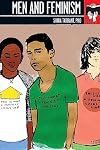
First off, when you see the cover of the book you'll notice that this book is part of the Seal Press Studies series. But DO NOT FREAK OUT! While this book can easily be in a Gender & Women's Studies course syllabus, I also believe this is an excellent book for anyone to pick up in order to know more about how men have fit into the feminist movement.
What's that? You don't think that men have been a part of the feminist movement? Oh how mistaken you are! But it's not your fault that you show more believe that, first of all, our history classes don't teach women's history and when we take it upon ourselves we do focus on the accomplishments of kick ass women like Elizabeth Cady Stanton and Dolores Huerta. In fact men have been supportive of the movement all along, not as many as we would want, but that's where Tarrant really gets into the question of men & feminism.
Tarrant goes thru the history of the (mostly American) women's movement and reveals the men behind the amazing women, but also reveals some of their contradictions including how their public voice did not match their private lives or how men used motherhood as a way to push for women's rights.
But I felt that the gem of this book was how Tarrant wrestled with trans and gay issues within the context of feminism and masculinity. She showed us how the fear of being labeled a sissy keeps even the most feminist of men silent thus complacent in continuing our sexist and homophobic society. She walks us thru how ignoring or being ignorant of trans-issues keeps us focused on the false binary of boy-girl, masculine-feminine and thus keeping all of us in gendered boxes. As close friends know, I believe my feminism can connect almost any issue and Tarrant does a brilliant job at showing us how we must pay attention to the plight of boys and men under patriarchy in order to bring out a more just world. I wish I had had this book a few years ago when I was trying to create a men's issues committee for a feminist org I use to work with. I was shot down loudly and quickly.
Tarrant also has a great chapter on male privilege. It's an easy read in terms of vocabulary, althou it might be hard for anyone to totally grasp. Essentially Tarrant says "Great, you're a great guy. You might love a feminist woman, never hit her and even support her work. But unless you are taking progressive steps to call out others on their sexism there's still work to be done." It's not finger-pointing or male-bashing at all. Rather it's a straight forward call to action for all the "I'm not a feminist but..." men in our lives who really need to walk all that talk.
This would be an excellent present for a feminist dad/husband in training. It's 150 pages of the feminist manliness. If you're a nrrd like me, it's great summer reading too. show less
What's that? You don't think that men have been a part of the feminist movement? Oh how mistaken you are! But it's not your fault that you show more believe that, first of all, our history classes don't teach women's history and when we take it upon ourselves we do focus on the accomplishments of kick ass women like Elizabeth Cady Stanton and Dolores Huerta. In fact men have been supportive of the movement all along, not as many as we would want, but that's where Tarrant really gets into the question of men & feminism.
Tarrant goes thru the history of the (mostly American) women's movement and reveals the men behind the amazing women, but also reveals some of their contradictions including how their public voice did not match their private lives or how men used motherhood as a way to push for women's rights.
But I felt that the gem of this book was how Tarrant wrestled with trans and gay issues within the context of feminism and masculinity. She showed us how the fear of being labeled a sissy keeps even the most feminist of men silent thus complacent in continuing our sexist and homophobic society. She walks us thru how ignoring or being ignorant of trans-issues keeps us focused on the false binary of boy-girl, masculine-feminine and thus keeping all of us in gendered boxes. As close friends know, I believe my feminism can connect almost any issue and Tarrant does a brilliant job at showing us how we must pay attention to the plight of boys and men under patriarchy in order to bring out a more just world. I wish I had had this book a few years ago when I was trying to create a men's issues committee for a feminist org I use to work with. I was shot down loudly and quickly.
Tarrant also has a great chapter on male privilege. It's an easy read in terms of vocabulary, althou it might be hard for anyone to totally grasp. Essentially Tarrant says "Great, you're a great guy. You might love a feminist woman, never hit her and even support her work. But unless you are taking progressive steps to call out others on their sexism there's still work to be done." It's not finger-pointing or male-bashing at all. Rather it's a straight forward call to action for all the "I'm not a feminist but..." men in our lives who really need to walk all that talk.
This would be an excellent present for a feminist dad/husband in training. It's 150 pages of the feminist manliness. If you're a nrrd like me, it's great summer reading too. show less
This is a great collection of feminist men writing on gender equality. These essays were meant to be personal and anecdotal, certainly not scholarly.
There is a wide range of topics covered, and there are essays in particular that really stand out. My favorite essay was early in the collection, written by the man who created the film BEYOND BEATS AND RHYMES. It was a fantastic essay about him filming and doing research about people of color and how as a whole women are treated. His essay was show more about what he observed at the BET Spring Break and what the implications of what he observed.
I LOVED this book, but it's too bad that getting one's hands on a copy is not an easy task. show less
There is a wide range of topics covered, and there are essays in particular that really stand out. My favorite essay was early in the collection, written by the man who created the film BEYOND BEATS AND RHYMES. It was a fantastic essay about him filming and doing research about people of color and how as a whole women are treated. His essay was show more about what he observed at the BET Spring Break and what the implications of what he observed.
I LOVED this book, but it's too bad that getting one's hands on a copy is not an easy task. show less

Even though my inclination is to give this book 3 stars, I think it's good for what it is and deserves 4. The book is very dry, and is written in the language of very academic feminism, so I found it hard to follow at times, and boring at other times. Also, the author tends to repeat herself.
This book was refuting the argument that no gains were made in feminism in the time period after WWII and before the second wave. The author covers five women who wrote about women's issues during this show more era (Komarovsky, de Beauvoir, Mead, Klein and Herschberger) and who were arguably ahead of their time, as most of them were (and still are) largely unknown, although their ideas were used very generously and were built off of for a lot of second wave feminism philosophy.
I found the most interesting thought of the book to be that post WWII, Europe (the author focuses only on England and France) was in such a state of disarray after the war that most of the focus of government was on creating a welfare-state to help its citizens recuperate. However, in the US, there was such an economic boom, that the government was mostly focused on upholding and preserving this new found economic success and it's new role as a global power. This was carried out socially through tactics such as Red-Baiting, and led to a practice of total conformance and an inflation of "traditional family values" (i.e. submission of women into raising children and keeping house).
Also the author makes a great point at the end of the book that by looking at feminism's progress in waves, and ignoring what comes in between, we do feminism a great disservice by not taking into consideration the great thinkers that have existed, and many feminists are left reinventing the wheel when the next wave arrives. show less
This book was refuting the argument that no gains were made in feminism in the time period after WWII and before the second wave. The author covers five women who wrote about women's issues during this show more era (Komarovsky, de Beauvoir, Mead, Klein and Herschberger) and who were arguably ahead of their time, as most of them were (and still are) largely unknown, although their ideas were used very generously and were built off of for a lot of second wave feminism philosophy.
I found the most interesting thought of the book to be that post WWII, Europe (the author focuses only on England and France) was in such a state of disarray after the war that most of the focus of government was on creating a welfare-state to help its citizens recuperate. However, in the US, there was such an economic boom, that the government was mostly focused on upholding and preserving this new found economic success and it's new role as a global power. This was carried out socially through tactics such as Red-Baiting, and led to a practice of total conformance and an inflation of "traditional family values" (i.e. submission of women into raising children and keeping house).
Also the author makes a great point at the end of the book that by looking at feminism's progress in waves, and ignoring what comes in between, we do feminism a great disservice by not taking into consideration the great thinkers that have existed, and many feminists are left reinventing the wheel when the next wave arrives. show less
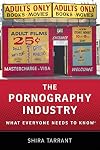
The focus on this seems to be more on the film industry, though it does present a good overview of the issues of debate and areas of interest. Tarrant has obviously read the material, and she notes ares where the data doesn't provide a clear case either way. She also uses more than one research study, including those outside of the US. At times, I found the format a little off - for instance shouldn't all the issues surrounding Deep Throat be brought up when it is first mentioned - but it is show more a very good book. show less
Lists
Taylor & Francis (2)
Seal Press (1)
You May Also Like


Statistics
- Works
- 6
- Members
- 267
- Popularity
- #86,453
- Rating
- 3.9
- Reviews
- 8
- ISBNs
- 25