
Mark Pendergrast
Author of Uncommon Grounds: The History of Coffee and How It Transformed Our World
About the Author
Mark Pendergrast is an independent scholar who brews a fantastic cup of coffee. He is the author of many books, including For God, Country, and Coca-Cola. He lives in Vermont.
Works by Mark Pendergrast
Uncommon Grounds: The History of Coffee and How It Transformed Our World (1999) 966 copies, 10 reviews
For God, Country, and Coca-Cola: The Definitive History of the Great American Soft Drink and the Company That Makes It (1993) 392 copies, 2 reviews
Inside the Outbreaks: The Elite Medical Detectives of the Epidemic Intelligence Service (2010) 142 copies, 2 reviews
Beyond Fair Trade: How One Small Coffee Company Helped Transform a Hillside Village in Thailand (2015) 11 copies
For God, Country, And Coca-Cola [and] Mafia Dynasty — Author — 1 copy
Associated Works
Tagged
Common Knowledge
- Canonical name
- Pendergrast, Mark
- Birthdate
- 1948
- Gender
- male
- Education
- Harvard University (BA|1969)
Simmons College (MLS|1975) - Occupations
- writer
librarian
teacher - Organizations
- Authors Guild
National Association of Science Writers - Nationality
- USA
- Birthplace
- Atlanta, Georgia, USA
- Places of residence
- Atlanta, Georgia, USA
Essex Junction, Vermont, USA
Colchester, Vermont, USA - Associated Place (for map)
- Vermont, USA
Members
Reviews
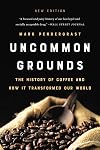
I bought this book sometime in 2013 and have read it in fits and starts since then, but only in earnest since last year. Thus is the fate of books in my Kindle app, sometimes. But it is to the book's credit that I bought it for a specific reason--some context on the Coffee Cantata by J.S. Bach for a documentary project I was involved in--but I wound up reading the entire book because it was so exhaustive and fascinating. Indeed, from the Ottoman Empire to Starbucks, Pendergrast traces the show more commodification and history of the beverage itself, the drinkers, the farmers, the roasters, the purveyors, and some folks in between. If you need a fairly deep dive into the intimate relationship between coffee and world politics, this is a good one.
From myths of goatherds, to 18th-c feminist fights for coffee via Abigail Adams, onward to the U.S.'s dangerous dancing with Brazil, as well as domestic coffee wars, there are few stones left unturned here. At times the information felt a bit overwhelming, with some zooming in on economic minutiae that some readers might appreciate, but might disrupt the energy of the narrative for others. It is the kind of book, however, that makes you glad you learned more than you had set out to, and while it lays bare a lot of the unsavory practices and issues surrounding coffee, Prendergrast ultimately reminds us that it is part of a "matrix" and says:
"Compared with many other products developed countries demand in cheap quantity, however, coffee is relatively benign. Laboring on banana, sugar, or cotton plantations or sweating in gold and diamond mines and oil refineries is far worse." (374)
Whether that dose of relativism brings one solace or not is an individual experience, but regardless, Uncommon Grounds is an informative and multifaceted report that may make you take that morning cup of joe a bit less for granted. show less
From myths of goatherds, to 18th-c feminist fights for coffee via Abigail Adams, onward to the U.S.'s dangerous dancing with Brazil, as well as domestic coffee wars, there are few stones left unturned here. At times the information felt a bit overwhelming, with some zooming in on economic minutiae that some readers might appreciate, but might disrupt the energy of the narrative for others. It is the kind of book, however, that makes you glad you learned more than you had set out to, and while it lays bare a lot of the unsavory practices and issues surrounding coffee, Prendergrast ultimately reminds us that it is part of a "matrix" and says:
"Compared with many other products developed countries demand in cheap quantity, however, coffee is relatively benign. Laboring on banana, sugar, or cotton plantations or sweating in gold and diamond mines and oil refineries is far worse." (374)
Whether that dose of relativism brings one solace or not is an individual experience, but regardless, Uncommon Grounds is an informative and multifaceted report that may make you take that morning cup of joe a bit less for granted. show less
Inside the Outbreaks: The Elite Medical Detectives of the Epidemic Intelligence Service by Mark Pendergrast

This 'history' of the Epidemic Intelligence Service is mostly a series of profiles of particular epidemiological investigations performed by various members of the EIS, and of vaccination/prevention outreach initiatives they have been involved in. That episodic nature makes it a good book to drop into at random, but it also avoids the overarching narrative fallacy that sometimes affects such histories. The author clearly reveres the work that the EIS and its workers have done, so there's a show more bit of hagiography here. On the other hand, some failed investigations are also reported, and the issue of vaccine-derived polio cases from the Oral Polio Vaccine-- and the communication around them-- is discussed frankly. The reader gets a general sense of how these investigations work and what case-control studies do, as well as a general sense of how outbreaks of disease are studied. Overall, an interesting, enjoyable and educational book for those interested in public health.
Reading it in 2021, I feel a certain visceral discomfort thinking about what the post-2016 years and especially the Covid-19 pandemic may have wrought in the EIS and the CDC in general, but that's a story to be told later, I believe. show less
Reading it in 2021, I feel a certain visceral discomfort thinking about what the post-2016 years and especially the Covid-19 pandemic may have wrought in the EIS and the CDC in general, but that's a story to be told later, I believe. show less
For God, Country and Coca-Cola: The Definitive History of the Great American Soft Drink and the Company That Makes It by Mark Pendergrast
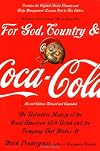
In the late nineteenth century, cocaine was considered a wonder
drug. Heralded by medical journals, pharmacists, Freud and even several Popes - Pope Leo III was a regular imbiber of Vin Mariani, a wine created in 1863 that contained 2.16 grains of cocaine, in the recommended dose of six glasses per day. No doubt he felt very holy indeed, and his long life and "all-radiant" eyes were probably less due to his piety than his daily dose of this "healthful" and "life-sustaining" drug that had been show more so valued by the Incas.
Dr. John Pemberton, an Atlanta druggist and doctor - he held two degrees and had created a master reference work containing over 12,000 tests - was anxious to create a drink that would be healthful and profitable. He was not immune to the vast literature hailing cocaine as a wonder drug. "The use of the coca plant not only preserves the health of all who use it, but prolongs life to a very great old age and enables the coca eaters to perform prodigies of mental and physical labor," he wrote in 1885. It was a time when patent medicines and elixirs were all the rage. Soda fountains would often offer as many as 300 different combinations of drinks. Advertisers tried to influence consumers to purchase one in favor of others, and huge signs were erected along railroads and roads to get the traveler's attention. It was not unusual for a patent medicine "advertiser of the era to clear-cut an entire mountainside to that he could erect a mammoth sign for Helmholdt's Buchu." A contemporary traveler described, "enormous signs are erected in the fields, not a rock is left without disfigurement, and gigantic words glare at as great a distance as the eye is able to read them."
Pemberton's first product was French Wine Coca. It was loaded with cocaine, an extract of the kola nut (very high in caffeine) and damiana, the leaf of a plant with supposed aphrodisiacal powers. The concoction was advertised as a cure for virtually everything from nerve trouble and dyspepsia to impotence and morphine addiction.
Opiate addiction was a huge problem after the Civil War. Known as the "Army Disease" because so many veterans were addicted. Pemberton himself was an addict trying to break the habit. He was convinced that cocaine was the best treatment for morphine addiction.
In the meantime, by 1886, temperance was becoming a movement in the Atlanta area, so Pemberton began experimenting with a new beverage that excluded the wine. By adding citric acid, he eliminated some of the sugary sweet taste and eliminated the damiana but kept the coca and kola, hence the alliterative choice that his colleague Robinson came up with: Coca-Cola. They advertised it both for its medicinal benefits and as a new soda fountain drink. One ad read, "The new and popular soda fountain drink containing the properties of the wonderful coca plant and the famous cola nut." As it gained in popularity, the business convolutions kept pace, with Pemberton selling his rights to the business several times over. It was soon a mess.
Asa Candler finally wound up with ownership of the trademark. He remained committed to quality and insisted that his distributors (a rather unique arrangement for the time) not tinker with the syrup recipe, although some of them did, one adding saccharine in an attempt to preserve the drink -- it was also an ironic attempt to make the drink as sweet as possible. Candler never thought bottling the drink would amount to much, so he virtually gave away the bottling rights, a prognosticatory failure that was to cost the company millions in later years to purchase them back. He and Frank Robinson (the real marketing genius, who invented the script logo for the drink) soon were collecting huge amounts of money as Coke took off.
By 1900, Coca-Cola had become so popular it became a target for those who were terribly afraid someone might be out there enjoying themselves, i.e., the self-righteous, and soon pulpits all over attacked the nefarious qualities of the drink that was addicting children, of all people. It had also become a popular drink among the black population, and soon the KKK was suggesting that the black population was drinking Coca-Cola, becoming "drug fiends" and roaming the countryside in search of white women to ravish. Some white farm owners had indeed paid their sharecroppers, mostly black, with cocaine, since it was cheaper than alcohol, and cocaine addiction had become a serious problem. Ironically, Candler had already removed the minute traces of cocaine that had been in the formula. (The purity of the formula was somewhat of a joke, as several of the bottlers had added saccharin to make it sweeter, but also as a preservative.) The company by 1902 was promoting Coca-Cola as a healthful drink and the official Coke line is that the drink never contained cocaine, a typical PR prevarication, and not a particularly astute one since earlier company brochures had bragged about the healthful benefits of cocaine. In any case, the do-gooders, who wanted Coke declared an adulterated product because it contained caffeine managed to enlist the mighty forces of the FDA. Many expensive years later the suit finally died although Coke did reduce the amount of caffeine in the formula. They spent massive amounts of money on advertising, plastering the Coke logos on the sides of barns and giving out millions of items with the Coke logo. It was widely successful and soon Coke was the most popular drink around.
Pendergrast's section on the infamous New Coke marketing disaster - or was it really an enormous accidental success - is fascinating. The outrage was enormous, but the publicity that resulted showed tremendous loyalty to a drink. Odd hype occurred almost everywhere. A study at Harvard Medical School compared the douche properties of the old Coke to those of the new, and found that the old Coke killed five times as many sperm as the new Coke. That's weird. The company completely failed to recognize that Coca-Cola had become an American institution, an icon. "They talk as if Coca-Cola had just killed God," moaned one executive. Coca-Cola had come to symbolize America; it was "associated with almost every aspect of their lives - first dates, moments of victory and defeat, joyous group celebrations, pensive solitude." show less
drug. Heralded by medical journals, pharmacists, Freud and even several Popes - Pope Leo III was a regular imbiber of Vin Mariani, a wine created in 1863 that contained 2.16 grains of cocaine, in the recommended dose of six glasses per day. No doubt he felt very holy indeed, and his long life and "all-radiant" eyes were probably less due to his piety than his daily dose of this "healthful" and "life-sustaining" drug that had been show more so valued by the Incas.
Dr. John Pemberton, an Atlanta druggist and doctor - he held two degrees and had created a master reference work containing over 12,000 tests - was anxious to create a drink that would be healthful and profitable. He was not immune to the vast literature hailing cocaine as a wonder drug. "The use of the coca plant not only preserves the health of all who use it, but prolongs life to a very great old age and enables the coca eaters to perform prodigies of mental and physical labor," he wrote in 1885. It was a time when patent medicines and elixirs were all the rage. Soda fountains would often offer as many as 300 different combinations of drinks. Advertisers tried to influence consumers to purchase one in favor of others, and huge signs were erected along railroads and roads to get the traveler's attention. It was not unusual for a patent medicine "advertiser of the era to clear-cut an entire mountainside to that he could erect a mammoth sign for Helmholdt's Buchu." A contemporary traveler described, "enormous signs are erected in the fields, not a rock is left without disfigurement, and gigantic words glare at as great a distance as the eye is able to read them."
Pemberton's first product was French Wine Coca. It was loaded with cocaine, an extract of the kola nut (very high in caffeine) and damiana, the leaf of a plant with supposed aphrodisiacal powers. The concoction was advertised as a cure for virtually everything from nerve trouble and dyspepsia to impotence and morphine addiction.
Opiate addiction was a huge problem after the Civil War. Known as the "Army Disease" because so many veterans were addicted. Pemberton himself was an addict trying to break the habit. He was convinced that cocaine was the best treatment for morphine addiction.
In the meantime, by 1886, temperance was becoming a movement in the Atlanta area, so Pemberton began experimenting with a new beverage that excluded the wine. By adding citric acid, he eliminated some of the sugary sweet taste and eliminated the damiana but kept the coca and kola, hence the alliterative choice that his colleague Robinson came up with: Coca-Cola. They advertised it both for its medicinal benefits and as a new soda fountain drink. One ad read, "The new and popular soda fountain drink containing the properties of the wonderful coca plant and the famous cola nut." As it gained in popularity, the business convolutions kept pace, with Pemberton selling his rights to the business several times over. It was soon a mess.
Asa Candler finally wound up with ownership of the trademark. He remained committed to quality and insisted that his distributors (a rather unique arrangement for the time) not tinker with the syrup recipe, although some of them did, one adding saccharine in an attempt to preserve the drink -- it was also an ironic attempt to make the drink as sweet as possible. Candler never thought bottling the drink would amount to much, so he virtually gave away the bottling rights, a prognosticatory failure that was to cost the company millions in later years to purchase them back. He and Frank Robinson (the real marketing genius, who invented the script logo for the drink) soon were collecting huge amounts of money as Coke took off.
By 1900, Coca-Cola had become so popular it became a target for those who were terribly afraid someone might be out there enjoying themselves, i.e., the self-righteous, and soon pulpits all over attacked the nefarious qualities of the drink that was addicting children, of all people. It had also become a popular drink among the black population, and soon the KKK was suggesting that the black population was drinking Coca-Cola, becoming "drug fiends" and roaming the countryside in search of white women to ravish. Some white farm owners had indeed paid their sharecroppers, mostly black, with cocaine, since it was cheaper than alcohol, and cocaine addiction had become a serious problem. Ironically, Candler had already removed the minute traces of cocaine that had been in the formula. (The purity of the formula was somewhat of a joke, as several of the bottlers had added saccharin to make it sweeter, but also as a preservative.) The company by 1902 was promoting Coca-Cola as a healthful drink and the official Coke line is that the drink never contained cocaine, a typical PR prevarication, and not a particularly astute one since earlier company brochures had bragged about the healthful benefits of cocaine. In any case, the do-gooders, who wanted Coke declared an adulterated product because it contained caffeine managed to enlist the mighty forces of the FDA. Many expensive years later the suit finally died although Coke did reduce the amount of caffeine in the formula. They spent massive amounts of money on advertising, plastering the Coke logos on the sides of barns and giving out millions of items with the Coke logo. It was widely successful and soon Coke was the most popular drink around.
Pendergrast's section on the infamous New Coke marketing disaster - or was it really an enormous accidental success - is fascinating. The outrage was enormous, but the publicity that resulted showed tremendous loyalty to a drink. Odd hype occurred almost everywhere. A study at Harvard Medical School compared the douche properties of the old Coke to those of the new, and found that the old Coke killed five times as many sperm as the new Coke. That's weird. The company completely failed to recognize that Coca-Cola had become an American institution, an icon. "They talk as if Coca-Cola had just killed God," moaned one executive. Coca-Cola had come to symbolize America; it was "associated with almost every aspect of their lives - first dates, moments of victory and defeat, joyous group celebrations, pensive solitude." show less

Uncommon Grounds is exactly what I was looking for. I had finished a similar commodity book (Salt: A World History by Mark Kurlansky) and was blown away. I was hoping for the same experience and am happy to say that I found something similar. The author goes into quite a lot of detail about the origin, trade, branding and questionable medicinal qualities of coffee in a relatively entertaining fashion. It gets a little bogged down at times but overall, Pendergrast succinctly digests coffee's show more history in a way that is not, for the most part, overwhelmingly dragged down by minutia.
It's not an amazing book, but for coffee drinkers who are curious about the history and trade of coffee, it is most certainly enlightening. I would have preferred the final chapter to have been the first chapter, and to have more said on the science behind the substances in coffee, but otherwise, it's a good read. A example of the author's start-to-finish style of writing might help to entice possible readers:
"At the Smithsonian conference, I heard a grower ask, “We are shocked and confused that specialty roasters sell our coffee for $8 or $10, when we only receive a little over a dollar a pound. How is that just?” While their U.S. colleagues made sympathetic noises, no one really answered the question.
Later, a specialty coffee professional gave me an answer. Let us say he pays $2 a pound for Colombian Supremo green beans (and remember that this price can fluctuate). Add 11 cents for freight-in, storage, and handling, 46 cents for the 18 percent weight loss during roasting, 19 cents a pound for roasting, 35 cents to hand-pack in five-pound valve bags for wholesale shipments, and 40 cents for shipping costs. That totals $3.51. Add $2.05 to cover overhead for the roaster/distributor (everything from mortgages and machinery loans to sales commissions, repairs, and rubbish removal) and profit, and it costs $5.56 to deliver roasted coffee to a specialty retailer. Depending on the retailer’s size, rent, and other overhead costs, he or she must then charge between $9.50 and $11.50 a pound to make a reasonable profit.
If the roasted beans go to a coffeehouse outlet, the proprietor converts the $5.56 per pound beans into a twelve-ounce regular coffee at $1.75 or cappuccino or latte for $2.50 or more. If the proprietor gets twenty-four servings to the pound, that translates to a whopping $70 a pound for regular filter coffee, and $82.50 a pound for thirty-three lattes, minus the cost of the milk, stirrer, sweetener, and stale discarded coffee. On the other hand, coffeehouse owners have to pay astronomical rents, shell out $18,000 for a top-of-the line espresso machine, and allow customers to linger for long, philosophical conversations or solitary reading over their single cup of coffee." show less
It's not an amazing book, but for coffee drinkers who are curious about the history and trade of coffee, it is most certainly enlightening. I would have preferred the final chapter to have been the first chapter, and to have more said on the science behind the substances in coffee, but otherwise, it's a good read. A example of the author's start-to-finish style of writing might help to entice possible readers:
"At the Smithsonian conference, I heard a grower ask, “We are shocked and confused that specialty roasters sell our coffee for $8 or $10, when we only receive a little over a dollar a pound. How is that just?” While their U.S. colleagues made sympathetic noises, no one really answered the question.
Later, a specialty coffee professional gave me an answer. Let us say he pays $2 a pound for Colombian Supremo green beans (and remember that this price can fluctuate). Add 11 cents for freight-in, storage, and handling, 46 cents for the 18 percent weight loss during roasting, 19 cents a pound for roasting, 35 cents to hand-pack in five-pound valve bags for wholesale shipments, and 40 cents for shipping costs. That totals $3.51. Add $2.05 to cover overhead for the roaster/distributor (everything from mortgages and machinery loans to sales commissions, repairs, and rubbish removal) and profit, and it costs $5.56 to deliver roasted coffee to a specialty retailer. Depending on the retailer’s size, rent, and other overhead costs, he or she must then charge between $9.50 and $11.50 a pound to make a reasonable profit.
If the roasted beans go to a coffeehouse outlet, the proprietor converts the $5.56 per pound beans into a twelve-ounce regular coffee at $1.75 or cappuccino or latte for $2.50 or more. If the proprietor gets twenty-four servings to the pound, that translates to a whopping $70 a pound for regular filter coffee, and $82.50 a pound for thirty-three lattes, minus the cost of the milk, stirrer, sweetener, and stale discarded coffee. On the other hand, coffeehouse owners have to pay astronomical rents, shell out $18,000 for a top-of-the line espresso machine, and allow customers to linger for long, philosophical conversations or solitary reading over their single cup of coffee." show less
Lists
You May Also Like


Associated Authors
Statistics
- Works
- 15
- Also by
- 2
- Members
- 1,789
- Popularity
- #14,390
- Rating
- 3.7
- Reviews
- 16
- ISBNs
- 62
- Languages
- 4