
Jeffrey Pfeffer
Author of Power: Why Some People Have It and Others Don't
About the Author
Works by Jeffrey Pfeffer
Hard Facts, Dangerous Half-Truths And Total Nonsense: Profiting From Evidence-Based Management (2006) 332 copies, 4 reviews
Dying for a Paycheck: How Modern Management Harms Employee Health and Company Performance―and What We Can Do About It (2018) 99 copies, 1 review
7 Rules of Power: Surprising--but True--Advice on How to Get Things Done and Advance Your Career (2019) 80 copies
The External Control of Organizations: A Resource Dependence Perspective (Stanford Business Classics) (1978) 44 copies
Tagged
Common Knowledge
Members
Reviews
Hard Facts, Dangerous Half-Truths And Total Nonsense: Profiting From Evidence-Based Management by Jeffrey Pfeffer
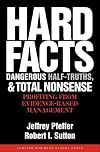
This excellent book lays out why and how companies fail to drive their business based on evidence, and instead "miracle cure" advice and personal reactions - largely to the detriment of everyone involved. The book quickly lays out why you should take an evidence-based approach and some guidelines on how. The meat of the book comes in chapters on various half-truths that are dangerous in terms of managing people and organizations:
- Is work fundamentally different from the rest of life and show more should it be
- Do the best organizations have the best people
- Do financial incentives drive company performance
- Is strategy destiny?
- Is it change or die
- Are great leaders in control of their companies (and should the be)?
They wrap up with a call for evidence-based management. The book is well-written, funny in many places and slightly depressing (if you don't see yourself or your company in any of the "how not to" stories I will be astonished) but very worthwhile. Some of my favorite quotes include:
"If doctor's practiced medicine the way many companies practice management, there would be far more sick and dead patients, and many more doctor's would be in jail"
"If you think you have a new idea, you are wrong. Someone problably already had it. This idea isn't original either; I stole it from someone else
Sutton's Law"
"Treat your business as an unfinished prototype"
"No brag, just facts"
In particular they recommend making sure you have identifed cause and effect when considering past successes, taking account of changing circumstances and establishing why something was effective before adopting it. They emphasize the importance of attacking assumptions and establishing which are pre-conditions for success. The book lays out plenty of evidence on the importance of narrow testing of new ideas before rolling them out, especially in ways analogous to the double-blind study used in medicine. They discuss the importance not of individual leaders being great but of them building a structure within which people can be successful (think Toyota) and they conclude by reminding us that wisdom is knowing what you know and what you don't know while still acting on the best available data and being willing to change as new data becomes available.
I would also recommend three other books I have reviewed recently:
Competing on Analytics: The New Science of Winning
Tom Davenport's book shows one aspect of evidence-based management - driving company behavior with analytics - and uses some of the same examples (Harrah's, for one)
Making Robust Decisions: Decision Management For Technical, Business, & Service Teams
David Ullman's book is a great discussion of decision-making in the face of uncertainty, a key skill in evidence-based management
The Halo Effect: ... and the Eight Other Business Delusions That Deceive Managers
Phil Rosenzweig's book disses many of the same business trend half-truths with even more wit than this one. If you are cynical about fix-everything-with-technique-X books, and you probably should be, this is a great book
Lastly if you are more technically minded and enjoy this book, you might enjoy the one I have just finished:Smart Enough Systems: How to Deliver Competitive Advantage by Automating Hidden Decisions show less
- Is work fundamentally different from the rest of life and show more should it be
- Do the best organizations have the best people
- Do financial incentives drive company performance
- Is strategy destiny?
- Is it change or die
- Are great leaders in control of their companies (and should the be)?
They wrap up with a call for evidence-based management. The book is well-written, funny in many places and slightly depressing (if you don't see yourself or your company in any of the "how not to" stories I will be astonished) but very worthwhile. Some of my favorite quotes include:
"If doctor's practiced medicine the way many companies practice management, there would be far more sick and dead patients, and many more doctor's would be in jail"
"If you think you have a new idea, you are wrong. Someone problably already had it. This idea isn't original either; I stole it from someone else
Sutton's Law"
"Treat your business as an unfinished prototype"
"No brag, just facts"
In particular they recommend making sure you have identifed cause and effect when considering past successes, taking account of changing circumstances and establishing why something was effective before adopting it. They emphasize the importance of attacking assumptions and establishing which are pre-conditions for success. The book lays out plenty of evidence on the importance of narrow testing of new ideas before rolling them out, especially in ways analogous to the double-blind study used in medicine. They discuss the importance not of individual leaders being great but of them building a structure within which people can be successful (think Toyota) and they conclude by reminding us that wisdom is knowing what you know and what you don't know while still acting on the best available data and being willing to change as new data becomes available.
I would also recommend three other books I have reviewed recently:
Competing on Analytics: The New Science of Winning
Tom Davenport's book shows one aspect of evidence-based management - driving company behavior with analytics - and uses some of the same examples (Harrah's, for one)
Making Robust Decisions: Decision Management For Technical, Business, & Service Teams
David Ullman's book is a great discussion of decision-making in the face of uncertainty, a key skill in evidence-based management
The Halo Effect: ... and the Eight Other Business Delusions That Deceive Managers
Phil Rosenzweig's book disses many of the same business trend half-truths with even more wit than this one. If you are cynical about fix-everything-with-technique-X books, and you probably should be, this is a great book
Lastly if you are more technically minded and enjoy this book, you might enjoy the one I have just finished:Smart Enough Systems: How to Deliver Competitive Advantage by Automating Hidden Decisions show less
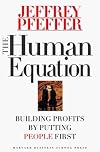
Pfeffer does a really nice job laying out the evidence for building people first organizational cultures and reaping the benefits. The evidence is clear that if organizational leaders adopt seven related practices vis-a-vis their employees, they will see better financial performance. Yet for many reasons that Pfeffer elaborates, leaders and organizations don't, and sometimes even do the opposite. Be different. Transform your workplace.
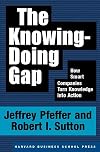
This is quite interesting as a review of the fact that so little knowledge becomes action in organisations but I felt that like most business books, the actual practical down to earth advice is very little. How do you actually do this stuff? It's also ironic that many of the companies mentioned in this as good at knowledge to action are now being investigated for fraud etc!
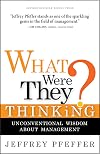
This collection of distinct lessons was a very readable format on a long car trip with kids. I've always enjoyed organizational behavior topics and Pfeffer's background at Stanford gives him a rich set of examples to leverage. He organizes the lessons into three categories: failure to consider unintended consequences, reliance on naive theories of behavior, and ignorance of obvious answers. The range of points doesn't combine into a unified framework, but it's not intended to do so. These show more are the pitfalls to avoid, and that approach lets Pfeffer come up with more thought-provoking examples, such as Why spy on your employees? and In Praise of Organized Labor. The final chapter is about stopping corporate misdeeds. With no conclusion following that, the book seems to end abruptly. show less
Awards

You May Also Like


Associated Authors
Statistics
- Works
- 21
- Members
- 1,922
- Popularity
- #13,397
- Rating
- 3.9
- Reviews
- 21
- ISBNs
- 83
- Languages
- 8
- Favorited
- 1