
Leora Tanenbaum
Author of Slut!: Growing Up Female with a Bad Reputation
About the Author
Leora Tanenbaum writes and lectures about the lives of girls and women. She is the author of four books, including Slut! Growing Up Female with a Bad Reputation, and is a blogger for The Huffington Post. She has been a guest on Oprah, The Today Show, and National Public Radio. She lives in New York show more City. show less
Works by Leora Tanenbaum
Catfight: Rivalries Among Women--from Diets to Dating, from the Boardroom to the Delivery Room (2002) 107 copies, 1 review
Reflections on Jerusalem : City of David in classical texts (1995) — some editions; Author — 20 copies
Tagged
Common Knowledge
- Other names
- TANENBAUM, Leora
- Birthdate
- 1969
- Gender
- female
- Nationality
- USA
- Places of residence
- New York, New York, USA
- Associated Place (for map)
- New York, USA
Members
Reviews
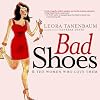
If women's magazines were written like Bad Shoes & the Women Who Love Them I would actually read women's magazines. Tanenbaum's text is an interesting hybrid--part popular history of high heels and part miniature coffee table book. She discusses why purchasing and wearing a pair of high heels is as much about purchasing and wearing a fantasy as it is a physical object, why it is that heels confer not only blisters, bunions, hammertoes and worse deformities, but femininity as well. She show more consults with orthopaedic surgeons who caution against wearing heels and orthopaedic surgeons who perform and market surgeries to mold the human foot into the impossible dimensions demanded by heels. She traces the development of high heels throughout the centuries, and gives pointers on how to prevent them from causing permanent physical damage to the wearer.
Tanenbaum's style is clear, light, and hiply executed--Bad Shoes reads much more like a series of well-written magazine articles than a single, cohesive volume, but don't let that scare you off. There's a lot of solid content in this little book, for all that it looks like a novelty read. Better yet, Tanenbaum is far from idealistic or didactic: wear high heels if they make you happy, she says. Just do it having informed yourself of the risks and take steps to avoid permanently injuring yourself. And of course, one can hardly write a book on modern fashion's footwear dictates for women and the injuries they entail without giving a the pre-modern Chinese practice of footbinding a mention; luckily, Tanenbaum's take on this difficult subject is both refreshingly original and extremely well argued.
Indeed, the topic of high heels is so surprisingly fascinating and Tanenbaum such a good author that I wish she'd written a more thorough (even scholarly) book on this subject. Even women who adamantly refuse to leave the house without at least a "sensible" two-inch pump to round out their outfit will find much to consider in Bad Shoes. show less
Tanenbaum's style is clear, light, and hiply executed--Bad Shoes reads much more like a series of well-written magazine articles than a single, cohesive volume, but don't let that scare you off. There's a lot of solid content in this little book, for all that it looks like a novelty read. Better yet, Tanenbaum is far from idealistic or didactic: wear high heels if they make you happy, she says. Just do it having informed yourself of the risks and take steps to avoid permanently injuring yourself. And of course, one can hardly write a book on modern fashion's footwear dictates for women and the injuries they entail without giving a the pre-modern Chinese practice of footbinding a mention; luckily, Tanenbaum's take on this difficult subject is both refreshingly original and extremely well argued.
Indeed, the topic of high heels is so surprisingly fascinating and Tanenbaum such a good author that I wish she'd written a more thorough (even scholarly) book on this subject. Even women who adamantly refuse to leave the house without at least a "sensible" two-inch pump to round out their outfit will find much to consider in Bad Shoes. show less
 This review was written for LibraryThing Early Reviewers.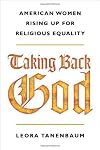
Wow! An excellent overview of (American) religious feminism. I particularly appreciated that it did not focus on one religious tradition, that it was written by someone who loves her religious tradition and intends to stay within it, and that, at the end, it is at once practical and optimistic.
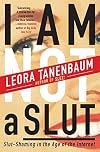
I Am Not a Slut: Slut-Shaming in the Age of the Internet by Leora Tanenbaum is a highly recommended examination of the meaning of "slut" for young women today.
Young women today face a contradictory landscape. While they can be encourage to explore their sexuality they can also be humiliated and disgraced based on the same actions or no actions at all but simply at the discretion of others. Currently the word “slut” has a dual meaning and can either be used as a positive, creating a sense show more of esprit de corps between friends or it is a negative, harmful label that can cause pain well into adulthood. Tanenbaum explores the meaning of "slut" in adolescent and college-age women and why the usage of the word is increasing.
Tanenbaum's book includes interviews with many young women. Their stories and experiences are the examples used to document her points. She also examines and distinguishes between the negative acts of slut-bashing and slut-shaming. Slut-bashing is verbal harassment where "a girl is intentionally targeted because she does not adhere to feminine norms. Slut-shaming, on the other hand, is a casual and often indirect form of judgment." Adding to this already volatile mix is the wide variety of social media outlets that can be used to harass and bully, often anonymously.
Women face the ongoing problem that "female body parts are regarded as offensive, female sexual activity is mocked as a competitive sport for guys or preyed upon as an opportunity for coercion, and even young girls are reduced to sexual playthings." It's easy to understand why young women might internalize their own objectification. Tanenbaum makes an argument that, "'Slut' is best regarded as a toxic four-letter word that should be quarantined if not buried." She makes it clear that "we can sharpen awareness that 'slut' is a violent label; when females are called sluts, sexual assault and self-assault all too often lurk nearby. But first there is an important distinction to make here: it’s not female sexuality that is dangerous, but the sexual double standard." I think most women have seen many examples over their lifetime where men have become accustomed to treating women as sexual objects and worthless “sluts.”
This is an empowering examination of what the problem is behind the increased use of the word "slut" and how we can address the societal issues while helping and encouraging young women today. Clearly, anyone who currently has any contact with teenage or college-age women knows that the all-too-common use of the word "slut" needs to be addressed and some encouragement to reassess the use of the word would be beneficial. Since these young women use social media constantly Tanenbaum points out that it could be used as a tool for positive change in contrast to the negative we so often hear about.
Tanenbaum does an excellent job explaining the problem with many examples, and offers some suggested solutions. The book includes in the appendices Do's and Don'ts for Parents of Teenagers and College-Age Children; The Slut-Shaming Self Defense Toolkit; and a list of Resources
Table of Contents:
Introduction
What’s the Same, What’s Different
Are You a “Good Slut” or a “Bad Slut”?
Slut--Bashing: Face--to--Face and in Cyberspace
Reciprocal Slut--Shaming: Sexual Identity in an Online World
“Good Slut” Containment Strategies
“Bad Slut” Coping Mechanisms
The Rape of a “Slut” Is Rape
Can “Slut” Be Reclaimed?
Creative Solutions to Eliminate “Slut”
Appendix A: Do's and Don'ts for Parents of Teenagers and College-Age Children
Appendix B: The Slut-Shaming Self Defense Toolkit
Appendix C: Resources
Acknowledgments, notes
Disclosure: My Kindle edition was courtesy of HarperCollins for review purposes. show less
Young women today face a contradictory landscape. While they can be encourage to explore their sexuality they can also be humiliated and disgraced based on the same actions or no actions at all but simply at the discretion of others. Currently the word “slut” has a dual meaning and can either be used as a positive, creating a sense show more of esprit de corps between friends or it is a negative, harmful label that can cause pain well into adulthood. Tanenbaum explores the meaning of "slut" in adolescent and college-age women and why the usage of the word is increasing.
Tanenbaum's book includes interviews with many young women. Their stories and experiences are the examples used to document her points. She also examines and distinguishes between the negative acts of slut-bashing and slut-shaming. Slut-bashing is verbal harassment where "a girl is intentionally targeted because she does not adhere to feminine norms. Slut-shaming, on the other hand, is a casual and often indirect form of judgment." Adding to this already volatile mix is the wide variety of social media outlets that can be used to harass and bully, often anonymously.
Women face the ongoing problem that "female body parts are regarded as offensive, female sexual activity is mocked as a competitive sport for guys or preyed upon as an opportunity for coercion, and even young girls are reduced to sexual playthings." It's easy to understand why young women might internalize their own objectification. Tanenbaum makes an argument that, "'Slut' is best regarded as a toxic four-letter word that should be quarantined if not buried." She makes it clear that "we can sharpen awareness that 'slut' is a violent label; when females are called sluts, sexual assault and self-assault all too often lurk nearby. But first there is an important distinction to make here: it’s not female sexuality that is dangerous, but the sexual double standard." I think most women have seen many examples over their lifetime where men have become accustomed to treating women as sexual objects and worthless “sluts.”
This is an empowering examination of what the problem is behind the increased use of the word "slut" and how we can address the societal issues while helping and encouraging young women today. Clearly, anyone who currently has any contact with teenage or college-age women knows that the all-too-common use of the word "slut" needs to be addressed and some encouragement to reassess the use of the word would be beneficial. Since these young women use social media constantly Tanenbaum points out that it could be used as a tool for positive change in contrast to the negative we so often hear about.
Tanenbaum does an excellent job explaining the problem with many examples, and offers some suggested solutions. The book includes in the appendices Do's and Don'ts for Parents of Teenagers and College-Age Children; The Slut-Shaming Self Defense Toolkit; and a list of Resources
Table of Contents:
Introduction
What’s the Same, What’s Different
Are You a “Good Slut” or a “Bad Slut”?
Slut--Bashing: Face--to--Face and in Cyberspace
Reciprocal Slut--Shaming: Sexual Identity in an Online World
“Good Slut” Containment Strategies
“Bad Slut” Coping Mechanisms
The Rape of a “Slut” Is Rape
Can “Slut” Be Reclaimed?
Creative Solutions to Eliminate “Slut”
Appendix A: Do's and Don'ts for Parents of Teenagers and College-Age Children
Appendix B: The Slut-Shaming Self Defense Toolkit
Appendix C: Resources
Acknowledgments, notes
Disclosure: My Kindle edition was courtesy of HarperCollins for review purposes. show less
I really enjoyed this book. Although I am not one of the women who wears high heels all the time, the book helped me to understand why I sometimes feel guilty that I don't wear high heels all of the time. The book was not only about the shoes that women wear, it was about the historical events that lead to the reasons that women choose to wear the shoes that do such damage to their feet. I will pass this book on to my sister, who wears high heels on a daily basis, in the hopes that it can show more help her to overcome the shoe addiction and perhaps even save her feet. show less
This review was written for LibraryThing Early Reviewers.Lists
Awards

You May Also Like


Associated Authors
Statistics
- Works
- 8
- Members
- 771
- Popularity
- #33,005
- Rating
- 3.6
- Reviews
- 23
- ISBNs
- 18
- Languages
- 1
- Favorited
- 1
