
Edward Lucas
Author of The New Cold War: Putin's Russia and the Threat to the West
About the Author
Edward Lucas has covered Eastern Europe for The Economist for over twenty years. He witnessed the end of the Cold War, the parting of the Iron Curtain, and, as Moscow bureau chief, covered Boris Yeltsin's demise and Vladimir Putin's rise to power. He lives in London, England.
Works by Edward Lucas
The Snowden Operation: Inside the West's Greatest Intelligence Disaster (Kindle Singles) (2014) 15 copies, 1 review
The Snowden Operation 1 copy
Tagged
Common Knowledge
- Birthdate
- 1962-05-03
- Gender
- male
- Education
- London School of Economics (economics)
Jagiellonian University (Polish ∙ did not graduate) - Occupations
- journalist
magazine editor
Senior Editor
Non-resident Senior Fellow - Organizations
- The Economist
BBC
The Independent
Daily Mail
The Baltic Independent (co-founder)
Standpoint magazine (show all 7)
Center for European Policy Analysis - Relationships
- Lucas, J. R. (#1) (father)
Odone, Christina (2nd wife) - Nationality
- UK
- Birthplace
- Wiltshire, England, UK
- Places of residence
- London, England, United Kingdom
Moscow, Russia
Berlin, Germany
Vienna, Austria
Lithuania
Czech Republic
Members
Reviews
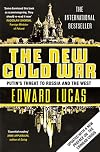
I read the second revision of this book which was published in 2014, the first edition was published in 2008. The book details how Russian president Vladimir Putin came to power and how he used this power to increase his control over the all aspects of Russian life between 1999 and 2008. Lucas warned in his first edition how he could see Putin's push for more power going and how, if the rest of the world, specifically the EU didn't stand up to him he would only become more of a menace. As it show more turns out, most of the predictions were accurate and second edition expands on what Putin's next steps will be. The book is pretty easy to read and although I largely agree with the author's position I do worry that some of the steps he advocates seriously risk armed conflict between NATO and Russia, something I'm sure no one wants. show less
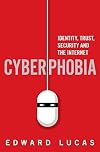
Light on details. A little passe. Got me thinking about about the strategic logic of cyber ware though. Well written.
Overall I agree with Mr. Lucas, though I am sure that he - as I - could name many wonderful Russian individuals. As a system, however, I think he is probably quite accurate. I lived in Russia for several years. I agree that it is "xenophobic yet obsessed with the West." I was once on a bus in Moscow during a traffic jam, due to an accident. The babuski on board immediately blamed it on the 'chornies' - dark skinned people. I once was walking down a street when I heard a strange clinking show more noise. It was a group of about 200-300 skinheads adorned in chains. I know there are skinheads elsewhere in the world but I have never seen so many skinheads randomly walking down a street as if they own the place.
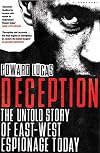
My main beef with this book is that it should have ended at 192 pages. The author sets the stage well, historically, for the discovery and capture of the illegals. Thereafter, the author reverts into a historical treatise on all things Baltic spies. It was basically a completely different book. In fact, Deception should have been developed into 3 books: The first comprising up to and including 192. The second should be the additional historical information and facts about spies in the past as related to the Baltics and the East/West conflict (which he introduces after page 192). The third should be all about the Estonian master spy Mr, Simm (working for the Russians). It just doesn't make sense to force a separate storyline and information into the book after the climax (which was only about half way through). show less
My main beef with this book is that it should have ended at 192 pages. The author sets the stage well, historically, for the discovery and capture of the illegals. Thereafter, the author reverts into a historical treatise on all things Baltic spies. It was basically a completely different book. In fact, Deception should have been developed into 3 books: The first comprising up to and including 192. The second should be the additional historical information and facts about spies in the past as related to the Baltics and the East/West conflict (which he introduces after page 192). The third should be all about the Estonian master spy Mr, Simm (working for the Russians). It just doesn't make sense to force a separate storyline and information into the book after the climax (which was only about half way through). show less
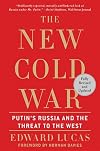
If you want a very detailed account of what has been happening economically and politically in Russia since Putin came to power (and Lucas sees Putin as still in control, though he is no longer president), then this book should work for you.
Among the areas Lucas covers:
1. the decline in freedom since Yeltsin - which apparently the people in Russia are willing to put up with because there is also less chaos and more economic security
2. although he does not think that Russia will try to show more regain the whole of its lost empire, or that it is militarily a threat to the west, he talks about bullying tactics against some of the smaller nations, particularly those like Estonia and Georgia, who seem to be moving in the direction of democracy (Estonia more firmly than Georgia).
3. Increased oil wealth, and control of a lot of oil resources has given Russia a lot of leverage.
For me the book became tedious very quickly, because, as I said, it is mostly a listing of all the numerous ways that Russia is acting like a thug of a country. He doesn't really get into why he thinks Russia has gone in that direction, other than a desire for stability. And he doesn't say anything about any counter trends. I don't know what biases, if any, he brings to the analysis. His very brief discussion at the end about how the west ought to react seemed reasonable enough. He doesn't advocate shutting off western contact or investment, since isolation can lead to paranoid behavior and corruption. However, he points to behavior like cutting off oil supplies to the Ukraine, and suggests that if Russia is to be part of the European economic community it should have to play by the rules of that community, and not have companies that are supposedly private, but then operate as a branch of the government and not deliver on it's contracts.
As I read more and more I kept thinking, "you have to be the change you want in the world." This was particularly true when reading a section about how Russia uses the excuse that it has only done things that the west has also done. Lucas argues that though the west does these things, there are also protests that are allowed to occur, and he talks about the guilt in German over the holocaust, while, according to him, there is little guilt over the things that were done in the Soviet Union to ethnic minorities, political dissidents, etc. That feels very lame to me, knowing that, guilt or not, the U.S. has been very involved with interference with the political structures of other countries for a very long time.
His point is well made, that Russian school children are being taught to regret the breakup of the Soviet Union, rather than about what can be improved now. I don't know if there is truly a hardening in Russia towards totalitarianism or whether it was simply naive to expect instant democracy and western style freedom in a country that went from the czar to a repressive communist regime. This book didn't give me any more basis to decide that than I had before I read it. show less
Among the areas Lucas covers:
1. the decline in freedom since Yeltsin - which apparently the people in Russia are willing to put up with because there is also less chaos and more economic security
2. although he does not think that Russia will try to show more regain the whole of its lost empire, or that it is militarily a threat to the west, he talks about bullying tactics against some of the smaller nations, particularly those like Estonia and Georgia, who seem to be moving in the direction of democracy (Estonia more firmly than Georgia).
3. Increased oil wealth, and control of a lot of oil resources has given Russia a lot of leverage.
For me the book became tedious very quickly, because, as I said, it is mostly a listing of all the numerous ways that Russia is acting like a thug of a country. He doesn't really get into why he thinks Russia has gone in that direction, other than a desire for stability. And he doesn't say anything about any counter trends. I don't know what biases, if any, he brings to the analysis. His very brief discussion at the end about how the west ought to react seemed reasonable enough. He doesn't advocate shutting off western contact or investment, since isolation can lead to paranoid behavior and corruption. However, he points to behavior like cutting off oil supplies to the Ukraine, and suggests that if Russia is to be part of the European economic community it should have to play by the rules of that community, and not have companies that are supposedly private, but then operate as a branch of the government and not deliver on it's contracts.
As I read more and more I kept thinking, "you have to be the change you want in the world." This was particularly true when reading a section about how Russia uses the excuse that it has only done things that the west has also done. Lucas argues that though the west does these things, there are also protests that are allowed to occur, and he talks about the guilt in German over the holocaust, while, according to him, there is little guilt over the things that were done in the Soviet Union to ethnic minorities, political dissidents, etc. That feels very lame to me, knowing that, guilt or not, the U.S. has been very involved with interference with the political structures of other countries for a very long time.
His point is well made, that Russian school children are being taught to regret the breakup of the Soviet Union, rather than about what can be improved now. I don't know if there is truly a hardening in Russia towards totalitarianism or whether it was simply naive to expect instant democracy and western style freedom in a country that went from the czar to a repressive communist regime. This book didn't give me any more basis to decide that than I had before I read it. show less
Lists
Awards

You May Also Like


Statistics
- Works
- 13
- Members
- 416
- Popularity
- #58,579
- Rating
- 3.6
- Reviews
- 11
- ISBNs
- 37
- Languages
- 7