
Robert Martin Adams (1915–1996)
Author of The Norton Anthology of English Literature, 4th Edition, Volume 2
About the Author
Works by Robert Martin Adams
The Norton Anthology of English Literature, 4th Edition, Volume 2 (1979) — Editor — 271 copies, 1 review
Candide [Norton Critical Edition, 1st ed.] (1966) — Editor; Editor; Contributor; Translator — 213 copies, 3 reviews
Ben Jonson's Plays and Masques [Norton Critical Edition, 1st ed.] (1979) — Editor; Contributor — 76 copies
Associated Works
Paradise Lost [Norton Critical Edition] (1667) — Contributor, some editions — 2,437 copies, 14 reviews
Studies in Bibliography (Vol. 17) — Contributor — 2 copies
Tagged
Common Knowledge
- Birthdate
- 1915
- Date of death
- 1996
- Gender
- male
- Education
- Columbia University (BA, MA, PhD)
- Occupations
- editor
professor - Organizations
- Hudson Review
University of California, Los Angeles
Cornell University
Rutgers University
University of Wisconsin
Columbia University - Short biography
- Founding editor of the Norton Anthology of English Literature. "He taught at the University of Wisconsin, Rutgers, Cornell and U.C.L.A. His scholarly interested ranged from Milton to Joyce, and his translations of many classic works of French literature continue to be read to this day." [Source: NYRB]
- Nationality
- USA
- Birthplace
- New York, New York, USA
- Place of death
- Santa Fe, New Mexico, USA
- Associated Place (for map)
- USA
Members
Reviews

An interesting evaluation of the societal structures which led to the collapse of five of the Western world's most powerful cultures - eastern and western Rome, 18th century France, pre-Communist Russia, and the British empire.
He stumbles, badly, however, when venturing to apply the lessons learned from these prior world powers to the early 1980s United States. He's dismissive of alternative energy sources, weirdly obsessed with the Mafia, condemns, ever so mildly, the "alternative show more lifestyle" of homosexuality, and seems to think the death penalty is needed merely for its vengefulness. It's difficult to see how these examples even apply to the lessons learned from the previous 121 pages of analysis.
Read the introduction and first three chapters, skip the moralizing of the final chapter - it caused me to dock this book by a star and a half. show less
He stumbles, badly, however, when venturing to apply the lessons learned from these prior world powers to the early 1980s United States. He's dismissive of alternative energy sources, weirdly obsessed with the Mafia, condemns, ever so mildly, the "alternative show more lifestyle" of homosexuality, and seems to think the death penalty is needed merely for its vengefulness. It's difficult to see how these examples even apply to the lessons learned from the previous 121 pages of analysis.
Read the introduction and first three chapters, skip the moralizing of the final chapter - it caused me to dock this book by a star and a half. show less
A succinct read about the principal cases of fallen empires: Roman (eastern and western), Russian, French, and English and the relevance to our own great America. His historical analysis covers the Persian's literal ethnocentricity (nations are greater according to their proximity), the challenges that faced the expanded Roman empire (early days were legions fighting for their own soil but later mercenaries, less united and fighting for loot), and the effect of rapid technology growth show more raising the cost of defense for large powers like England. He provides solid context, dipping into the subleties to show that decadence is more than orgiastic pomp. Decadence could almost be described as becoming disunited, lazy, and collapsing from the weight. Historically, revolt occured when the tax base became too concentrated at the bottom. In all cases, there was also such a propagation of the upper class that eventually it became top-heavy. Nations appear also to suffer from the shirtsleeves-to-shirtsleeves phenomena.
The last part of his book addresses the U.S. in a very balanced way. We have resource issues but are still quite wealthy. Crime is higher and litigation rampant (P157: "A law is a law when there is a chance of a penalty.") P179, the welfare, tax, and other systems undermine hope but taxes are not yet concentrated at the bottom. Education and culture are light relative to other advanced nations. show less
The last part of his book addresses the U.S. in a very balanced way. We have resource issues but are still quite wealthy. Crime is higher and litigation rampant (P157: "A law is a law when there is a chance of a penalty.") P179, the welfare, tax, and other systems undermine hope but taxes are not yet concentrated at the bottom. Education and culture are light relative to other advanced nations. show less

Absolutely hilarious! And although old, the satire could apply to modern times as it could to his. I very rarely reread anything, but this one has received my attention numerous times. I even bought another copy when mine was loaned out. If I weren't afraid that people would cry out at the "spoiler"--it's not really a book of mystery--I'd post the last two paragraphs, which are the most satisfying end to a book I've ever encountered. :)
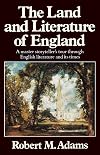
Given the amount of time covered and the amount of material I thought it a great read. As a reader most of the history was familiar and the same with the literature, but there was also stuff I didnt know and authors I havent read, some that I never heard of, a introduction to the deep world of English culture. The author also makes good use of humour to keep the reader smirking at what can be a dry topic.
Lists
Best Satire (1)
You May Also Like


Associated Authors
Statistics
- Works
- 21
- Also by
- 8
- Members
- 1,082
- Popularity
- #23,754
- Rating
- 3.8
- Reviews
- 7
- ISBNs
- 27