

Ernst Jünger (1895–1998)
Author of Storm of Steel
About the Author
Image credit: Ernst Jünger, circa 1920, photographer unknown. historymatters.sites.sheffield.ac.uk / Wikimedia Commons
Series
Works by Ernst Jünger
Sobre El Dolor Seguido De La Movilizacion Total Y Fuego Y Movimiento (Spanish Edition) (2003) 16 copies
De arbeider heerschappij en gestalte, gevolgd door Minima en maxima : aantekeningen bij De arbeider (1981) 12 copies
Radiaciones Ic / Ernst Jünger 5 copies
Viaggi in Sicilia 3 copies
Interwar Articles 3 copies
Sprache und Körperbau 2 copies
Jahre der Okkupation. 2 copies
Schriften : Eine Auswahl 2 copies
Glasbin 2 copies
Maxima-Minima 1 copy
Deutschland, Glückwunsch! Am 29. März wird Ernst Jünger hundert Jahre alt. Sieben Gründe für seinen krisenfesten Ruhm (Die Zeit, 24. März 1995) — Contributor — 1 copy
Antaios ; Bd. 6. 1965, No 5/6. März Ernst Jünger zum 70. Geburtstag : 29. März 1965 (1965) — Editor — 1 copy
Ernst August Freiherr von Mandelsloh, 1886-1962 : ein vergessener österr. Maler : mit Illustrationen zum Werk Ernst Jüngers — Letter writer and inspriation for paintings — 1 copy
ユンガー政治評論選 1 copy
Strahlungen. 1 copy
Sämtliche Werke, 18 Bde. u. 4 Supplement-Bde., Bd.20: Strahlungen V (Erste Abteilung - Tagebücher VII) (2000) 1 copy
Sämtliche Werke, 18 Bde. u. 4 Supplement-Bde., Bd.21: Strahlungen VI (Erste Abteilung - Tagebücher VIII) (2001) 1 copy
Καταιγίδα από ατσάλι 1 copy
Ein Jahrhundertleben 1 copy
Παιχνίδια της Αφρικής 1 copy
Zeitungsartikel-Konglomerat 1 copy
Ad hoc 1 copy
Dalmatinski boravak 1 copy
Sämtliche Werke, 18 Bde. u. 4 Supplement-Bde., Bd.2: Strahlungen I (Erste Abteilung - Tagebücher II) (1998) 1 copy
Ernst Jünger / Rudolf Schlichter - Briefwechsel 1935-1955 — Author — 1 copy
Alfred Kubin : Vingt dessins 1 copy
Το πέρασμα στο δάσος 1 copy
Gärten und Straßen, 1 copy
The Tree 1 copy
Sobre as falésias de mármore 1 copy
Sämtliche Werke Bd. 1: In Stahlgewittern - Das Wäldchen 125 - Feuer und Blut - Kriegsausbruch 1914 1 copy
Sämtliche Werke, 18 Bde. u. 4 Supplement-Bde., Bd.22: Späte Arbeiten. Verstreutes. Aus dem Nachlaß 1 copy
ドイツ保守革命 I 無法者たち/内的体験としての戦闘 1 copy
Associated Works
Philosophy and Technology: Readings in the Philosophical Problems of Technology (1972) — Contributor, some editions — 38 copies
The Details of Time: Conversations With Ernst Junger (Eridanos Library (New York, N.Y.)) (1986) 34 copies
The intellectual tradition of modern Germany : A collection of writings from the eighteenth to the twentieth century (1973) — Contributor — 3 copies
The intellectual tradition of modern Germany : A collection of writings from the eighteenth to the twentieth century : Volume 2 : History and Society (1973) — Contributor — 3 copies
Alfred Kubin: Weltgeflecht : ein Kubin-Kompendium : Schriften u. Bilder zu Leben u. Werk (German Edition) (1978) — Contributor — 2 copies
Lebensgut — Ein deutsches Lesebuch für Mädchen — 5. Teil (9. Schuljahr) — Contributor — 1 copy
Tagged
Common Knowledge
- Canonical name
- Jünger, Ernst
- Legal name
- Jünger, Ernst
- Birthdate
- 1895-03-29
- Date of death
- 1998-02-17
- Gender
- male
- Occupations
- novelist
essayist
entomologist - Organizations
- French Foreign Legion (1913)
Imperial German Army, Füsilier-Regiment „General-Feldmarschall Prinz Albrecht von Preußen“ (Hannoversches) Nr. 73 (WWI)
Infanterieregiment 16 (Weimar Republic)
German Army (WWII) - Awards and honors
- Iron Cross (1914) II. and I. Class (1916)
Prussian House Order of Hohenzollern Knight's Cross with Swords (1917)
Wound Badge (1918) in Gold (1918)
Pour le Mérite ( military class) (1918)
Clasp to the Iron Cross Second Class (1939)
Literature Prize of the city of Bremen ( for Am Saracen ); Culture Prize of the city of Goslar (1956) (show all 26)
Grand Merit Cross (1959)
Honorary Citizen of the Municipality Wilflingen ; honorary gift of the Cultural Committee of the Federation of German Industry (1960)
Honorary Citizen of Rehburg ; Immermann Prize of the city of Düsseldorf (1965)
Freiherr vom Stein Gold Medal of the Alfred Toepfer Foundation (1970)
Literature Prize of the Academy Amriswil ( Organizer: Dino Larese; Laudations: Alfred Andersch, François Bondy, Friedrich Georg Jünger) (1973)
Schiller Memorial Prize of Baden-Württemberg (1974)
Aigle d'Or the city of Nice, Great Federal Cross of Merit with Star (1977)
Médaille de la Paix (Peace Medal) of the city of Verdun (1979)
Medal of Merit of the State of Baden -Württemberg (1980)
Prix Europa Littérature the Fondation Internationale pour le Rayonnement des Arts et des Lettres ; Prix Mondial Cino the Fondation Simone et del Duca (Paris ), Gold Medal of the Humboldt Society (1981)
Goethe Prize of Frankfurt (1982)
Honorary Citizen of the city of Montpellier ; Premio Circeo the Associazione Italo – Germanica Amicizia ( Association of Italian – German friendship) (1983)
Grand Merit Cross with Star and Sash (1985)
Bavarian Maximilian Order for Science and Art (1986)
Premio di Tevere (awarded by Francesco Cossiga in Rome) (1987)
honorary doctorate from the University of the Basque Country in Bilbao (1989)
Upper Swabian Art Prize (1990)
Grand Prize of the Jury of the Venice Biennale (1993)
Robert Schuman Prize (Alfred Toepfer Foundation) (1993)
honorary doctorate from the Faculty of Arts of the Complutense University of Madrid (1995) - Relationships
- Jünger, Friedrich Georg (brother)
Jeinsen, Gretha von (wife)
Lohrer, Liselotte (wife) - Nationality
- Germany
- Birthplace
- Heidelberg, Germany
- Places of residence
- Heidelberg, Germany
Hanover, Germany
Schwarzenberg in the Erzgebirge, Saxony, Germany
Rehburg, Lower Saxony, Germany
Berlin, Germany
Wilflingen, Germany (show all 7)
Ravensburg - Place of death
- Wilflingen, Germany
- Burial location
- Wilflingen Cemetery, Langenenslingen, Baden-Württemberg, Germany
- Map Location
- Germany
Members
Discussions
Ernst Jünger in The Chapel of the Abyss (September 2023)
Reviews
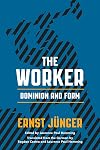
Written at the fall of Weimar, Junger had an idea of what was to come.
He also knew there was no going back, diagnosing like Barzun in From Dawn to Decadence that the old ways died in the trenches.
'Between the body at the very instant of death and the corpse in the next, there is not the slightest relationship.'
'There are two breeds of men, one of which we recognize as ready to bargain at any price, the other as ready to fight at any cost.'
'Yet it is irrefutable that a locomotive can pull a show more company of soldiers instead of a dining car, and an engine can move a tank instead of a luxury vehicle - and the advance in traffic brings together more rapidly not only the good Europeans, but also the wicked ones. Likewise, the artificial synthesis of nitrogen compounds can be put to work both in agricultural technology and explosives. All those things can be ignored only as long as one does not come in contact with them.'
'So it has become possible for wars to be waged nowadays without anyone noticing, because the stronger side prefers to describe them as something like peaceful penetration, or police action against bands of robbers - wars that exist in reality, but not in theory.'
(Regarding zones of annihilation in the last war, like natural disasters) 'It is a romantic notion that their unleashing, their use in battle for life and death, can be prevented by social contracts. The assumption behind this notion is that man is good - however, man is not good, but rather good and evil at the same time. Any reckoning that can stand the test of reality must take into account that there is nothing of which man is not capable.'
The claims of the necessary usurpation of the bourgeois by the worker 'Typus', of total mobilization didn't last the Nazi/Soviet era, nor could he have predicted the rise of the consumer after they fell.
Regardless, Junger informs us that there is no going back from our present moment, and that nature and humans abhor a vacuum - so many want to be told what to do. show less
He also knew there was no going back, diagnosing like Barzun in From Dawn to Decadence that the old ways died in the trenches.
'Between the body at the very instant of death and the corpse in the next, there is not the slightest relationship.'
'There are two breeds of men, one of which we recognize as ready to bargain at any price, the other as ready to fight at any cost.'
'Yet it is irrefutable that a locomotive can pull a show more company of soldiers instead of a dining car, and an engine can move a tank instead of a luxury vehicle - and the advance in traffic brings together more rapidly not only the good Europeans, but also the wicked ones. Likewise, the artificial synthesis of nitrogen compounds can be put to work both in agricultural technology and explosives. All those things can be ignored only as long as one does not come in contact with them.'
'So it has become possible for wars to be waged nowadays without anyone noticing, because the stronger side prefers to describe them as something like peaceful penetration, or police action against bands of robbers - wars that exist in reality, but not in theory.'
(Regarding zones of annihilation in the last war, like natural disasters) 'It is a romantic notion that their unleashing, their use in battle for life and death, can be prevented by social contracts. The assumption behind this notion is that man is good - however, man is not good, but rather good and evil at the same time. Any reckoning that can stand the test of reality must take into account that there is nothing of which man is not capable.'
The claims of the necessary usurpation of the bourgeois by the worker 'Typus', of total mobilization didn't last the Nazi/Soviet era, nor could he have predicted the rise of the consumer after they fell.
Regardless, Junger informs us that there is no going back from our present moment, and that nature and humans abhor a vacuum - so many want to be told what to do. show less

Eszméletlen szórással csillagozták ezt a könyvet itt a molyon, nyilván nem véletlenül: bár Jünger műve magára húzza az értelmezés vágyát, de egyáltalán nem könnyíti meg azt. Adott két ex-katona, akik ezen a képzeletbeli tájon és behatárolhatatlan időben leginkább botanikai értelemben vett élvezkedést folytatnak, ám a barbárság özöne harmonikus világuk elpusztítására tör. Első ránézésre ez egy allegória az Aranykor elvesztéséről (másodikra show more is), és a megjelenés dátuma (1939) is szinte rákényszerít az olvasóra egy bizonyos magyarázatrendszert – az egyik népszerű feloldása a szövegnek, hogy a műben szereplő gonosz főerdész alatt Göringet kell érteni. Ugyanakkor ez talán nem annyira egyértelmű. A barbárság alatt ugyanis nem pusztán a náci totalizmust érthetjük, hanem akár a bolsevizmust is – ilyen értelemben pedig A márványszirteken talán nem is a szélsőjobboldal kritikája, hanem épp ellenkezőleg. Részben ezt támaszthatja alá, hogy a „csőcselék” áradatával szemben Jünger végső soron az esztéták szűk, elitista kasztját állítja szembe – azokat, akik még értik, vagy érteni akarják a Természet nyelvét. Úgyhogy biztosak csak abban lehetünk, hogy Jünger valamiféle technológiai barbarizmust támad – de hogy melyiket, az nem világos. Tételezzük fel jóindulatúan, hogy mind a kettőt. Az sem könnyíti dolgunkat, hogy az író szándékosan keveri a valós és fiktív történelmi személyeket, helyeket és nációkat, mindennek a tetejébe pedig tartózkodik attól, hogy megnyugtató, de legalábbis világosan értelmezhető végkifejletbe vezesse szereplőit – ha csak nem tekintjük azt válasznak a regény problematikájára, hogy ha eljön a világvége, akkor lépjünk le, és keressünk máshol növényeket. Szóval lehet, akkor teszünk magunkkal a legjobbat, ha egyáltalán nem akarjuk megfejteni ezt a könyvet. Pusztán csak élvezzük a kiválóan felépített szöveget, amiben az expresszionista lendület és valamiféle nyugodt visszafogottság váltogatja egymást – ez utóbbi érzésem szerint kifejezetten távol-keleti hangulatot visz a szövegbe. Mert lehet élvezni. show less
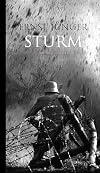
A forgotten antecedent to Storm of Steel, this serialized novella deals with Jünger's stand-in Sturm, mostly hunkered down in a bunker on the trench line, keeping company with his squad and engaging in some story-within-the-story storytelling, both of prior adventures and a fictionalized bit of prose from another soldier's POV. There's a lot of "slice of life" in the trenches, little portraits of characters and events that give some real verisimilitude, noting how they would hammer in show more fixtures in the wall above a fire to be able to cook or boil water. One soldier taking the time after being shelled to swig the last drops of his flask, because "it'd be a shame to waste it". And of course the looming shadow of instant brutal death, even in the recounting of earlier stratagems like synchronizing a gas attack in a mining tunnel with an above ground bombardment.
As with its bigger brother (Storm of Steel) there's not much sentimentality and maudlin reflection of the "war is hell" variety, the atrocities are very matter of fact, and while there's plenty of meaningless deaths, we mostly see a stoic soldier's soldier response to these threats. Nor is there a lot of reflecting on the cheap tricks used to get the better of The Other, or the man in the other trench being just another poor sap fighting a war for his betters (all of which ring more true for something like All Quiet on the Western Front). Instead the break from the war comes mostly in the form of desires and dreams, for the future, from times on leave, seeking women, pursuing art. There's very much a life beyond the trench that waits for them, no mindless grunts here. show less
As with its bigger brother (Storm of Steel) there's not much sentimentality and maudlin reflection of the "war is hell" variety, the atrocities are very matter of fact, and while there's plenty of meaningless deaths, we mostly see a stoic soldier's soldier response to these threats. Nor is there a lot of reflecting on the cheap tricks used to get the better of The Other, or the man in the other trench being just another poor sap fighting a war for his betters (all of which ring more true for something like All Quiet on the Western Front). Instead the break from the war comes mostly in the form of desires and dreams, for the future, from times on leave, seeking women, pursuing art. There's very much a life beyond the trench that waits for them, no mindless grunts here. show less

A dystopian novel about the advent of micro-sized robots by an Italian inventor who must keep his unruly staff placated and happy if he is to continue to be a Steve Jobs-like commercial success. The prose is lean, uncluttered. Very short sentences. Captain Richard is looking for work and finds it--somehow--at the very high-tech factory of the robot manufacturer, Zapparoni. This man, an entrepreneur, has revolutionized modern life with his robots. Nothing is done as it once was for his robots show more have permeated virtually every aspect of life and business. The narrator is a former cavalry man still stung by the loss of his profession in World War I. He was appalled by how the cavalry was rendered obsolete by the invention of tanks, machine guns and long range artillery, and by the disruption in the ranks caused by this change in military technology. More generally he is not sure how it is possible for him to be a man in this radically changed world. Many around him find their purpose in fascism, but Captain Richard rejects that ideologically riven path. It would be possible, if he were a vindictive man, for him to see in Zapparoni all that has gone wrong with contemporary society, and to envision Zapparoni's destruction as the necessary corrective. There are a number of pages when the reader thinks that this is the expectation about to be fulfilled. But Jünger shakes off this predictable ending for something superficially reassuring for its conformity to the new standards, but ultimately more startling because of it. show less
Lists
Awards


You May Also Like


Associated Authors
Statistics
- Works
- 227
- Also by
- 11
- Members
- 7,312
- Popularity
- #3,342
- Rating
- 3.9
- Reviews
- 148
- ISBNs
- 681
- Languages
- 23
- Favorited
- 43


