
Samuel Shem
Author of The House of God
About the Author
Works by Samuel Shem
House of God 1 copy
Tagged
Common Knowledge
- Legal name
- Bergman, Stephen Joseph
- Birthdate
- 1944
- Gender
- male
- Education
- Harvard University (MD)
University of Oxford (Balliol College) - Occupations
- psychiatrist
novelist
playwright
essayist
activist - Awards and honors
- Rhodes Scholar
- Nationality
- USA
- Places of residence
- Boston, Massachusetts, USA
- Associated Place (for map)
- Massachusetts, USA
Members
Reviews
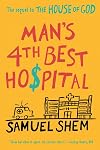
Shem’s darkly comic sequel to The House of God starts out at rock-bottom (literally!) and segues into flashback, reuniting most of the characters from his first novel. Unfortunately, that flashback format means that several major events have been revealed up front – a technique that tends to vitiate their emotional impact for the reader.
The backbone of the novel has the House of God crew reuniting to do battle against the corporate forces sweeping through modern medicine, emphasizing show more profit over all else and creating “doctor as adversary [whose] ‘work’ was the computer.” There’s a kind of ‘Catch-22’ flavor here as narrator Roy Basch, the Fat Man, the Irish cops Gilheeny and Quick (possibly the most interesting and certainly the most enjoyable characters in the book), and assorted other subversive teammates do battle against the hated computerized records system, bean-counters who want them to monetize medicine, and an egomaniacal surgeon who’s out to defeat Death, no matter how many test subjects he has to kill to do it.
Along the way, Shem takes healthy swipes at the general screen culture that has overtaken virtually all modern life. In his words, the iPhone (iPad, iMac, etc.) becomes the “I”-phone. What seems at first to just be a snarky swipe, or perhaps a mere authorial affectation becomes a way to make a deeper point about the shift away from community in our personal and professional lives. He also has his narrator (who, in this universe, “wrote” The House of God) ‘fess up to having edited reality in a few of the cases he cited in his book, explaining that at first he felt guilty about it, but ultimately decided that, since it was his universe, he could “edit” reality for a more satisfying outcome.
Which brings us to the pie-in-the-sky conclusion of the characters’ rage-against-the-machine odyssey. In Shem’s “edited” reality, common sense, dedication, and teamwork do bring about the fall of Big Med, Big Pharma, and Big Insurance, and everybody (well, almost everybody) gets to live happily ever after.
As poet e.e. cummings told us, “…there's a hell of a good universe next door; let's go”. Shem has definitely gone there, and this sudden about-face from blackest of black humor to unicorns and rainbows is a jarring resolution that not all readers will find satisfying. show less
The backbone of the novel has the House of God crew reuniting to do battle against the corporate forces sweeping through modern medicine, emphasizing show more profit over all else and creating “doctor as adversary [whose] ‘work’ was the computer.” There’s a kind of ‘Catch-22’ flavor here as narrator Roy Basch, the Fat Man, the Irish cops Gilheeny and Quick (possibly the most interesting and certainly the most enjoyable characters in the book), and assorted other subversive teammates do battle against the hated computerized records system, bean-counters who want them to monetize medicine, and an egomaniacal surgeon who’s out to defeat Death, no matter how many test subjects he has to kill to do it.
Along the way, Shem takes healthy swipes at the general screen culture that has overtaken virtually all modern life. In his words, the iPhone (iPad, iMac, etc.) becomes the “I”-phone. What seems at first to just be a snarky swipe, or perhaps a mere authorial affectation becomes a way to make a deeper point about the shift away from community in our personal and professional lives. He also has his narrator (who, in this universe, “wrote” The House of God) ‘fess up to having edited reality in a few of the cases he cited in his book, explaining that at first he felt guilty about it, but ultimately decided that, since it was his universe, he could “edit” reality for a more satisfying outcome.
Which brings us to the pie-in-the-sky conclusion of the characters’ rage-against-the-machine odyssey. In Shem’s “edited” reality, common sense, dedication, and teamwork do bring about the fall of Big Med, Big Pharma, and Big Insurance, and everybody (well, almost everybody) gets to live happily ever after.
As poet e.e. cummings told us, “…there's a hell of a good universe next door; let's go”. Shem has definitely gone there, and this sudden about-face from blackest of black humor to unicorns and rainbows is a jarring resolution that not all readers will find satisfying. show less
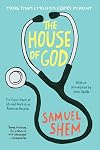
Shem's fictionalized memoir, recounting his year as an intern in a major Boston hospital, is by turns dark and depressing and cynical and ribald and wildly funny. Set against the final days of Richard Nixon's presidency, the disintegration of a formerly powerful man is reflected in the increasingly fractured and disintegrating medical intern training system of the day.
Urged to "do everything possible for every patient, every time", Shem's Roy Basch and his fellow internal medicine interns show more are faced with aging patients whose lives can be extended, but not improved, by the medical procedures the system (and their superiors) insist they perform. And while the elderly and often demented patients are not permitted the final rest they seek (to the extent that they are capable of seeking anything), Basch's younger patients have a horrifying tendency to expire, either from the underlying conditions that brought them to the hospital or from botched treatments that harmed instead of helped. Battling an increasingly heavy burden of despair, Basch tries everything from long-distance running to wild bouts of casual sex to utter withdrawal from emotional involvement, with varying levels of success.
He's not alone on his journey, as the novel is also filled with sharp and involving characters, including two of the most unlikely cops ever to appear on the printed page.
How he survives the year and begins the healing that will ultimately save him, makes an often fascinating, often troublesome, always compelling read. show less
Urged to "do everything possible for every patient, every time", Shem's Roy Basch and his fellow internal medicine interns show more are faced with aging patients whose lives can be extended, but not improved, by the medical procedures the system (and their superiors) insist they perform. And while the elderly and often demented patients are not permitted the final rest they seek (to the extent that they are capable of seeking anything), Basch's younger patients have a horrifying tendency to expire, either from the underlying conditions that brought them to the hospital or from botched treatments that harmed instead of helped. Battling an increasingly heavy burden of despair, Basch tries everything from long-distance running to wild bouts of casual sex to utter withdrawal from emotional involvement, with varying levels of success.
He's not alone on his journey, as the novel is also filled with sharp and involving characters, including two of the most unlikely cops ever to appear on the printed page.
How he survives the year and begins the healing that will ultimately save him, makes an often fascinating, often troublesome, always compelling read. show less

This is an example of the benefits of stepping out of one's comfort zone. If one of my coworkers (who was a nurse in the 70s) had not lent me this book, I never ever would have picked it up. It is exactly as it proclaims to be on the cover - the "Catch 22" of medicine. It is a hilarious satire of life in a modern hospital, where the extremely elderly can be artificially kept alive forever, but athletic 30-year-old fathers still die of heart attacks. As you can imagine, it is very dark. The show more characters are phenomenal (if a little dated), from the genius black sidekick and the horny nurse to the policemen who speak like Harvard professors and the bitter workaholic female resident.
It wasn't perfect, but I enjoyed it and it's helped me understand my coworkers a little better. Highly recommended, at least if you don't usually read this sort of thing. show less
It wasn't perfect, but I enjoyed it and it's helped me understand my coworkers a little better. Highly recommended, at least if you don't usually read this sort of thing. show less
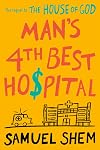
If you have never read The House of God, funniest book ever penned by a doctor for a general audience, please do so before picking up this 42-years-later-sequel. Boston readers will immediately recognize Mass General and Brigham and Women's (the former Partners consortium, unsuccessful and now abandoned) as the fictional BUDDIES, a messy medical morass of profit-driven excess. The hero attending physician of the prior book's setting (Boston's Beth Israel Hospital, now also part of a pustular show more profit pile including Lahey Clinic), Fats, has made a fortune in biotech curing dementia and is bringing back his old team to make doctoring fun and humane again. Dr. Roy Basch, the fictitious doc using Samuel Shem as a non de plume, who is really a doctor and really Stephen Joseph Bergman - stay with me - begins to have hope again for his profession when the electronic records system's billing component OUTGOING is disabled and the medical staff gets to spend their time learning from patients instead of hiding behind screens. This is a complex novel that scurries off in multiple directions simultaneously, the most surprising being recognition of the harm of gender imbalance and the value of working cooperatively. A worthy sequel to a true classic.
Quotes: "The new model was health care only for the healthy, the Fewer-Better-Patient Model." show less
Quotes: "The new model was health care only for the healthy, the Fewer-Better-Patient Model." show less
Lists
Awards

You May Also Like


Associated Authors
Statistics
- Works
- 15
- Members
- 2,246
- Popularity
- #11,416
- Rating
- 3.8
- Reviews
- 69
- ISBNs
- 94
- Languages
- 11
- Favorited
- 5
