
William O. Douglas (1898–1980)
Author of Exploring the Himalaya
About the Author
Image credit: Supreme Court Historical Society
Series
Works by William O. Douglas
The Douglas letters: Selections from the private papers of Justice William O. Douglas (1987) 25 copies
We the judges; studies in American and Indian constitutional law from Marshall to Mukherjea (1956) 9 copies
Democracy and finance; the addresses and public statements of William O. Douglas as member and chairman of the Securitie (1940) 2 copies
The rule of law in world affairs 2 copies
Best-in-Books: Summer of Pride / Angel of Death / Infernal World of Branwell Brontë / Out of the Air (1961) 2 copies
MANIFIESTO DE LA DEMOCRACIA 1 copy
Associated Works
This I Believe: The Personal Philosophies of Remarkable Men and Women (2006) — Contributor — 1,153 copies, 36 reviews
The Supreme Court and the Constitution: Readings in American Constitutional History (1969) — Contributor, some editions — 68 copies
The World of Law, Volumes I-II: The Law in Literature, The Law as Literature (1960) — Contributor — 54 copies
Democracy in Print: The best of the Progressive Magazine, 1909-2009 (2009) — Contributor — 15 copies
As Maine Goes: Photographs by John McKee (Bowdoin College Museum of Art) (1966) — Introduction — 3 copies
Tagged
Common Knowledge
- Canonical name
- Douglas, William O.
- Legal name
- Douglas, William Orville
- Birthdate
- 1898-10-16
- Date of death
- 1980-01-19
- Gender
- male
- Education
- Whitman College (B.A. | English and Economics | 1920)
Columbia Law School (LL.B|1925) - Occupations
- lawyer
professor (law)
Associate Justice of the Supreme Court of the United States (1939-1975)
teacher
Chairman of the United States Securities and Exchange Commission (1937-1939) - Organizations
- Yale University
United States Securities and Exchange Commission
Supreme Court of the United States (Associate Justice ∙ 1939-1975)
Beta Theta Pi
Cravath, DeGersdorff, Swaine & Wood
Franklin D. Roosevelt administration (1937-1939) - Awards and honors
- Phi Beta Kappa
- Nationality
- USA
- Birthplace
- Maine Township, Otter Tail County, Minnesota, USA
- Places of residence
- Portland, Oregon, USA
Yakima, Washington, USA
Walla Walla, Washington, USA
Washington, D.C., USA - Place of death
- Bethesda, Maryland, USA
- Burial location
- Arlington National Cemetery, Arlington, Virginia, USA
- Associated Place (for map)
- USA
Members
Reviews

I just finished reading The Court Years, 1939-1975: The Autobiography of William O. Douglas by William O. Douglas. As a lawyer and avid reader, I found large parts of the book fascinating. Among the little-known stories I learned,in the section about racial segregation, I learned about a county that seceded from Confederate Alabama, a "secession within a secession", see Civil War Within Civil War - Secession From Seceders.
This book must have been given to me as a law-school graduation gift show more in 1982, and I finally got around to reading it. This Autobiography had certain aspects of a tell-all. Some of those tidbits included the sexual and marital peccadilloes of Dwight D. Eisenhower. Other scintillating tidbits included vignettes of his relationships and transactions with the U.S. presidents under which he served. His obvious hero was FDR. I assume this was written before the seamier underside of his life and administration became generally known. He gives hints of believing that LBJ was involved in JFK's assassination.
The Autobiography has a fascinating viewpoint on much of the legal struggles of the era, from a rather liberal perspective. His liberalism was of an old-fashioned, common-sense variety which would be unrecognizable in modern times. Overall, the book is a good read. Other enjoyable books of his have been My Wilderness: The Pacific West and by My Wilderness: East to Katahdin, both by William O. Douglas. show less
This book must have been given to me as a law-school graduation gift show more in 1982, and I finally got around to reading it. This Autobiography had certain aspects of a tell-all. Some of those tidbits included the sexual and marital peccadilloes of Dwight D. Eisenhower. Other scintillating tidbits included vignettes of his relationships and transactions with the U.S. presidents under which he served. His obvious hero was FDR. I assume this was written before the seamier underside of his life and administration became generally known. He gives hints of believing that LBJ was involved in JFK's assassination.
The Autobiography has a fascinating viewpoint on much of the legal struggles of the era, from a rather liberal perspective. His liberalism was of an old-fashioned, common-sense variety which would be unrecognizable in modern times. Overall, the book is a good read. Other enjoyable books of his have been My Wilderness: The Pacific West and by My Wilderness: East to Katahdin, both by William O. Douglas. show less
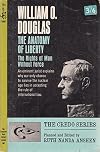
During a visit to the Yakima Valley Museum in Yakima, Washington, last summer, I unexpectedly encountered a superb exhibit on William O. Douglas (1898-1980), a former Supreme Court Justice. I was surprised to find such a comprehensive display in a small, hometown museum. Not even two weeks later, fate intervened again when I stumbled upon a copy of Douglas's The Anatomy of Liberty in a thrift store in Osoyoos, British Columbia. With the book now in my hands, I knew I had to read it.
It was show more dense. It took the rest of my summer vacation to work through it. After many fitful starts and stops, I finally finished what is probably the most reasoned case for individual rights and liberties that I’ve encountered outside of Ayn Rand. His arguments for objectivism, though perhaps less well-known, are equally compelling. (It was no surprise to [discover that this work was part of Rand's library](https://www.librarything.com/profile/AynRandLibrary).)
(Skip to the end for a brief introduction to The Credo Series.)
My Credo: The Foundation
Douglas opens the book with a three-page introduction titled "My Credo," which serves as a manifesto of his philosophical beliefs. Here, he lays the groundwork for his subsequent arguments, emphasizing the primacy of individual liberty as the cornerstone of a just society. Douglas's approach to objectivism is pragmatic, rooted in legal principles, and informed by his experiences on the Supreme Court. His commitment to personal freedom aligns closely with Rand's objectivism, though Douglas infuses his arguments with a focus on the legal mechanisms that protect these freedoms.
I could write pages illustrating Douglas's key points using his well-reasoned examples; however, to keep this summary brief, I've encapsulated his intent in short, broad bullets. I hope that someday I can explain what I believe with such brevity and passion! (If you want more detail, read the book!)
The Individual and the State
In the first chapter, "The Individual and the State," Douglas examines into the tension between personal liberty and governmental authority. He argues that the state must exist to serve the individual, not the other way around. His analysis is meticulous, examining how legal frameworks should be structured to prevent the erosion of individual rights by the state.
Key Takeaways:
Executive vs. Legislative vs. Judicial
In "Executive vs. Legislative vs. Judicial," Douglas explores the separation of powers. As a Supreme Court Justice, Douglas brings a unique perspective to this topic, emphasizing the importance of maintaining clear boundaries between these branches of government to prevent the concentration of power.
Key Takeaways:
The United Nations and a Rule of Law
Douglas shifts his focus to international governance in "The United Nations and a Rule of Law." He argues that the rule of law must extend beyond national borders to ensure global peace and justice. His perspective on the United Nations reflects his belief in the necessity of a legal framework that transcends individual nations, promoting cooperation and preventing conflict.
Key Takeaways:
Federalism and a Rule of Law
In the final chapter, "Federalism and a Rule of Law," Douglas examines the concept of federalism and its role in upholding the rule of law. He discusses the importance of balancing power between national and state governments, ensuring that federalism serves as a mechanism for protecting individual rights rather than diluting them.
Key Takeaways:
Applicability for Today: Trump 2024
Douglas’s exploration of liberty and the rule of law is strikingly relevant in the context of the upcoming 2024 election, particularly with the potential re-election of Donald Trump. As we face the prospect of a leader who has previously challenged the norms of executive power, Douglas’s warnings about the concentration of authority and the erosion of checks and balances are more pertinent than ever. His defense of the separation of powers serves as a critical reminder of the dangers posed when one branch of government seeks to dominate the others, undermining the very foundation of democracy.
Conclusion
The Anatomy of Liberty is a dense (but rewarding) exploration of the legal and philosophical foundations of liberty. Douglas provides a comprehensive and reasoned defense of individual rights, drawing on his vast legal experience to make a compelling case for objectivism within the framework of American governance. Reading this book deepened my understanding of the intricate balance between liberty and law, reinforcing the importance of a legal system that rigorously protects individual freedoms.
---------------------------------
Introduction to The Credo Series
"The Credo Series," conceived and edited by Ruth Nanda Anshen, explores man's deepest philosophical questions. It offers a collection of intellectual works that address the very essence of human existence. This series, encompassing themes such as humanism, the search for meaning, and the intrinsic rights of man, resonates deeply with those who, like myself, are drawn to the philosophical underpinnings of life and the pursuit of truth.
Each title within the collection examines a critical idea about the human experience (adventure?), from the continuity of living to the balance between rights and force. The topics in the series align closely with my own journey and beliefs, particularly the tenets of objectivism and rational self-interest. The works within this series, though written more than fifty years ago, reveal the fundamental questions that shape our lives and guide our decisions. They are just as relevant today as they were when published.
Key Points About "The Credo Series:"
As I read through the 16 works in this series, I will explore how these ideas have influenced my understanding of the world. Through these reviews, I hope to connect the insights of these great thinkers with my own experiences, offering a reflection not only on the ideas presented but also on their enduring relevance today. show less
It was show more dense. It took the rest of my summer vacation to work through it. After many fitful starts and stops, I finally finished what is probably the most reasoned case for individual rights and liberties that I’ve encountered outside of Ayn Rand. His arguments for objectivism, though perhaps less well-known, are equally compelling. (It was no surprise to [discover that this work was part of Rand's library](https://www.librarything.com/profile/AynRandLibrary).)
(Skip to the end for a brief introduction to The Credo Series.)
My Credo: The Foundation
Douglas opens the book with a three-page introduction titled "My Credo," which serves as a manifesto of his philosophical beliefs. Here, he lays the groundwork for his subsequent arguments, emphasizing the primacy of individual liberty as the cornerstone of a just society. Douglas's approach to objectivism is pragmatic, rooted in legal principles, and informed by his experiences on the Supreme Court. His commitment to personal freedom aligns closely with Rand's objectivism, though Douglas infuses his arguments with a focus on the legal mechanisms that protect these freedoms.
I could write pages illustrating Douglas's key points using his well-reasoned examples; however, to keep this summary brief, I've encapsulated his intent in short, broad bullets. I hope that someday I can explain what I believe with such brevity and passion! (If you want more detail, read the book!)
The Individual and the State
In the first chapter, "The Individual and the State," Douglas examines into the tension between personal liberty and governmental authority. He argues that the state must exist to serve the individual, not the other way around. His analysis is meticulous, examining how legal frameworks should be structured to prevent the erosion of individual rights by the state.
Key Takeaways:
- The state should be a servant of the people, with its power strictly limited to prevent encroachment on individual liberties.
- Legal protections must be robust to safeguard personal freedoms against the overreach of governmental authority.
- When not consciously maintained, balance between state power and individual rights tips dangerously towards authoritarianism.
Executive vs. Legislative vs. Judicial
In "Executive vs. Legislative vs. Judicial," Douglas explores the separation of powers. As a Supreme Court Justice, Douglas brings a unique perspective to this topic, emphasizing the importance of maintaining clear boundaries between these branches of government to prevent the concentration of power.
Key Takeaways:
- The separation of powers is essential to preserving democracy and preventing tyranny.
- Each branch of government must remain vigilant in checking the others, ensuring that no single entity becomes too powerful.
- Douglas discusses the historical evolution of these powers and the ongoing challenges in maintaining their balance.
The United Nations and a Rule of Law
Douglas shifts his focus to international governance in "The United Nations and a Rule of Law." He argues that the rule of law must extend beyond national borders to ensure global peace and justice. His perspective on the United Nations reflects his belief in the necessity of a legal framework that transcends individual nations, promoting cooperation and preventing conflict.
Key Takeaways:
- The rule of law is as vital on an international scale as it is within nations, fostering peace and cooperation.
- Douglas sees the United Nations as a crucial institution for maintaining global order, though he acknowledges its limitations.
- He advocates for stronger legal mechanisms within the UN to enforce international law effectively.
Federalism and a Rule of Law
In the final chapter, "Federalism and a Rule of Law," Douglas examines the concept of federalism and its role in upholding the rule of law. He discusses the importance of balancing power between national and state governments, ensuring that federalism serves as a mechanism for protecting individual rights rather than diluting them.
Key Takeaways:
- Federalism must strike a balance between empowering states and maintaining national cohesion under the rule of law.
- Douglas warns against the dangers of both excessive centralization and extreme decentralization, advocating for a balanced approach.
- He emphasizes the role of federalism in preserving liberty by preventing the concentration of power at any single level of government.
Applicability for Today: Trump 2024
Douglas’s exploration of liberty and the rule of law is strikingly relevant in the context of the upcoming 2024 election, particularly with the potential re-election of Donald Trump. As we face the prospect of a leader who has previously challenged the norms of executive power, Douglas’s warnings about the concentration of authority and the erosion of checks and balances are more pertinent than ever. His defense of the separation of powers serves as a critical reminder of the dangers posed when one branch of government seeks to dominate the others, undermining the very foundation of democracy.
Conclusion
The Anatomy of Liberty is a dense (but rewarding) exploration of the legal and philosophical foundations of liberty. Douglas provides a comprehensive and reasoned defense of individual rights, drawing on his vast legal experience to make a compelling case for objectivism within the framework of American governance. Reading this book deepened my understanding of the intricate balance between liberty and law, reinforcing the importance of a legal system that rigorously protects individual freedoms.
---------------------------------
Introduction to The Credo Series
"The Credo Series," conceived and edited by Ruth Nanda Anshen, explores man's deepest philosophical questions. It offers a collection of intellectual works that address the very essence of human existence. This series, encompassing themes such as humanism, the search for meaning, and the intrinsic rights of man, resonates deeply with those who, like myself, are drawn to the philosophical underpinnings of life and the pursuit of truth.
Each title within the collection examines a critical idea about the human experience (adventure?), from the continuity of living to the balance between rights and force. The topics in the series align closely with my own journey and beliefs, particularly the tenets of objectivism and rational self-interest. The works within this series, though written more than fifty years ago, reveal the fundamental questions that shape our lives and guide our decisions. They are just as relevant today as they were when published.
Key Points About "The Credo Series:"
End of an Epoch: The series suggests that an era defined by relative truths and existential crises has ended, urging a return to foundational principles that guide human existence.
Reconciliation of Dichotomies: It emphasizes the need to reconcile various dualities—action and contemplation, practice and principle, thought and feeling—to restore a unified understanding of life.
The Inner Eye: Anshen introduces the concept of the "Inner Eye," a metaphor for spiritual and intellectual insight that transcends mere empirical observation, allowing deeper understanding of reality.
Personal Relevance of Ideas: The series aims to demonstrate how philosophical ideas have practical relevance in everyday life, highlighting the interconnectedness of man and his vocation.
Evolution of Consciousness: Anshen speaks to the evolutionary progress of human consciousness, which she argues must now integrate knowing and being to avoid self-destruction.
Unity of Being and Doing: The series underscores the importance of aligning one's actions with one's deeper self, suggesting that true fulfillment comes from this unity.
Moral and Spiritual Aspiration: The series advocates for a morality rooted in spiritual experience and aspiration rather than mere constraint or prohibition.
As I read through the 16 works in this series, I will explore how these ideas have influenced my understanding of the world. Through these reviews, I hope to connect the insights of these great thinkers with my own experiences, offering a reflection not only on the ideas presented but also on their enduring relevance today. show less

I read My Wilderness: East to Katahdin and My Wilderness: The Pacific West, both by William O. Douglas in the spring of 1969. I was looking forward to going to summer camp in New Hampshire, and hiking the White Mountains.
These books started my real love of hiking and wilderness. These books transported me to remote places I can never likely get to such as the Brooks Range of Alaska.The book triggered an avid interest in nature and wilderness. While my views have matured, I still have those show more books on my shelf and remember them fondly. show less
These books started my real love of hiking and wilderness. These books transported me to remote places I can never likely get to such as the Brooks Range of Alaska.The book triggered an avid interest in nature and wilderness. While my views have matured, I still have those show more books on my shelf and remember them fondly. show less
William Douglas loved the outdoors. There is no mistaking that. He also had an enthusiasm for sharing that love with others. From a young age Douglas found a friendship with the mountains outside his home in Washington state. The mountains of Adams and Rainier became his getaway retreats. As he states in his forward (p x) to Of Men and Mountains, "I learned early that the richness of life is found in adventure." Amen to that. His book combines the history of the mountains with Douglas's show more lifelong enthusiasm, making it an infectious read. He covers the mountain adventures of his entire life, from boyhood to adulthood and I wanted to get out and hike immediately after hearing them. show less
Lists
Awards


You May Also Like


Associated Authors
Statistics
- Works
- 50
- Also by
- 20
- Members
- 1,897
- Popularity
- #13,570
- Rating
- 3.8
- Reviews
- 22
- ISBNs
- 56
- Languages
- 2
- Favorited
- 2