
Ram Charan
Author of Execution: The Discipline of Getting Things Done
About the Author
Ram Charan has been an advisor to CEOs & senior executives of many Fortune 500 companies including General Electric, DuPont, Citigroup, Ford & Allied Signal. Earlier in his career he was on the faculty at Harvard Business School & Northwestern University. (Bowker Author Biography)
Image credit: Courtesy of Allen and Unwin
Works by Ram Charan
Know-How: The 8 Skills That Separate People Who Perform from Those Who Don't (2007) 326 copies, 4 reviews
Profitable Growth Is Everyone's Business: 10 Tools You Can Use Monday Morning (2004) 152 copies, 1 review
The Game-Changer: How You Can Drive Revenue and Profit Growth with Innovation (2008) 147 copies, 3 reviews
What the Customer Wants You to Know: How Everybody Needs to Think Differently About Sales (2007) 96 copies, 1 review
Boards That Deliver: Advancing Corporate Governance From Compliance to Competitive Advantage (2005) 65 copies, 2 reviews
Boards That Lead: When to Take Charge, When to Partner, and When to Stay Out of the Way (2013) 61 copies, 1 review
The Amazon Management System: The Ultimate Digital Business Engine That Creates Extraordinary Value for Both Customers and Shareholders (2019) 36 copies
Boards At Work: How Corporate Boards Create Competitive Advantage (J-B US non-Franchise Leadership) (1998) 34 copies
The High-Potential Leader: How to Grow Fast, Take on New Responsibilities, and Make an Impact (2017) 30 copies
Governança Corporativa que Produz Resultados Como integrar conselhos de administração e diretorias para gerar vantagem (2005) 2 copies
Assumindo o Controlo As 14 questões que todos os membros do conselho de administração tem de colocar 2 copies
Associated Works
Papaji Amazing Grace: Interviews With Seekers Of Enlightenment...And How They Found It (2007) — Contributor, some editions — 5 copies
The 180-Degree Turnaround — Contributor — 2 copies
Tagged
Common Knowledge
- Birthdate
- 1939
- Gender
- male
- Education
- Banaras Hindu University
Harvard University - Occupations
- consultant
- Nationality
- India
- Associated Place (for map)
- India
Members
Reviews
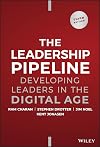
Developing a leadership strategy is tough for any organization. Leaders have to function at various levels and lead in different ways, depending on the task at hand. Many leaders become stuck by doing their previous job instead of embracing the new charter of their new responsibilities. Leaders must simultaneously be kept happy doing their present work while being ready to accept different responsibilities when needed. Leadership must no longer be viewed as an ascent but rather as a skill to show more be used to achieve results.
My biggest takeaway is that at every level, the biggest trap is that leaders resist growing into their new roles. Instead, they do not let go of prior responsibilities by handing them off to others. At every stage, this book talked about leaders doing their old jobs instead of their new ones too much. As I embrace a new role at work, this book has reinforced that I need to view that tendency as a temptation, not a virtue.
This book's subtitle talks about developing leaders in the digital age. I'm not sure there's a whole lot in this book specific to the "digital age," but it does borrow logic from IT organizations, where leaders can ascend or descend freely and where young twenty-somethings can sometime serve as CEOs. Maybe I'm just used to that organizational prism since I work in IT, but their point is well-taken that almost every company needs to be adept in such practices these days.
This book reinforces how to organize a company's leadership so that senior leaders don't focus too much on details and productivity and shift their focus to competitive strategy. Although I found it helpful as someone well below C-suite responsibilities, this book's intended audience lays in more senior leaders who can adjust their company's leadership strategy. It's for leaders who are interested in developing people rather than merely counting dollars. It's for leaders who don't mind handing off and letting go of previous successful roles to embrace tomorrow's challenges. show less
My biggest takeaway is that at every level, the biggest trap is that leaders resist growing into their new roles. Instead, they do not let go of prior responsibilities by handing them off to others. At every stage, this book talked about leaders doing their old jobs instead of their new ones too much. As I embrace a new role at work, this book has reinforced that I need to view that tendency as a temptation, not a virtue.
This book's subtitle talks about developing leaders in the digital age. I'm not sure there's a whole lot in this book specific to the "digital age," but it does borrow logic from IT organizations, where leaders can ascend or descend freely and where young twenty-somethings can sometime serve as CEOs. Maybe I'm just used to that organizational prism since I work in IT, but their point is well-taken that almost every company needs to be adept in such practices these days.
This book reinforces how to organize a company's leadership so that senior leaders don't focus too much on details and productivity and shift their focus to competitive strategy. Although I found it helpful as someone well below C-suite responsibilities, this book's intended audience lays in more senior leaders who can adjust their company's leadership strategy. It's for leaders who are interested in developing people rather than merely counting dollars. It's for leaders who don't mind handing off and letting go of previous successful roles to embrace tomorrow's challenges. show less

This book was written about the former CEO of EDS, Dick Brown as a vanity piece. The company bought truckloads and distributed them to the long-suffering employees.
Most frequently used as a doorstop, the book is a horn-tooting ego trip for the chairman, who soon ran the company into the ground.
His most memorable quote was "I have a very expensive wife" by way of excusing his golden parachute exit package.
Buy it if you have a wayward door.
Most frequently used as a doorstop, the book is a horn-tooting ego trip for the chairman, who soon ran the company into the ground.
His most memorable quote was "I have a very expensive wife" by way of excusing his golden parachute exit package.
Buy it if you have a wayward door.
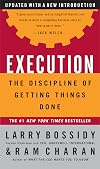
Larry Bossidy and Ram Charan have written a fine management book with “Execution” and I can't see why other reviewers find it lacking in usefulness. It's true that their systems require a good deal of uncomfortable frank talk between managers but the whole thing is really concerned with getting outside the comfort zone.
Strategy focuses firmly on the company's environment and competitor actions with the core being very open (non-political) decision making with clearly defined actions and show more a timetable with specific personal responsibilities.
I'm not a great fan of management books in general but I can recommend this one and it has similarities to one of my longtime favourites, Sam Walton's “Made in America” (bad title) and like him, they emphasise the personal touch and a high level of personal involvement.
A downside is the strange neo-liberal economic environment that these systems are designed to exploit (not really their fault they are an important part of it).
For example the idea that outsourcing may damage US industry/ skills and employment is completely absent as is concern with the influence of special interest (of which they are certainly one). Line workers also don't get a single mention.
Try the following quotes from the book:
P196 “Do we have people who know how to source? Do we have people who can run a supply chain that extends worldwide?”
P197 “The short and medium term milestones were to develop programs to move to low-cost manufacturing locations .”
P247 “We also had a program to promote sales of high tech globally, using China as a low cost supply base.”
P223 “You must continue to involve our lobbyist group to show congressional leaders the advantages of the product and dispel some of the current misconceptions.”
P250 “Or maybe you wanted to shut down a plant this year and transfer production to a lower cost country.”
Etc. etc. It's all in line with Jack Welch's 70/70/70 rule (70% of research and development should be outsourced, 70% of that should be outsourced offshore, 70% should be outsourced overseas and sent to India) = A tragedy of the commons, where the Commons is the non-shareholder/non-top executive part of the U.S.A. show less
Strategy focuses firmly on the company's environment and competitor actions with the core being very open (non-political) decision making with clearly defined actions and show more a timetable with specific personal responsibilities.
I'm not a great fan of management books in general but I can recommend this one and it has similarities to one of my longtime favourites, Sam Walton's “Made in America” (bad title) and like him, they emphasise the personal touch and a high level of personal involvement.
A downside is the strange neo-liberal economic environment that these systems are designed to exploit (not really their fault they are an important part of it).
For example the idea that outsourcing may damage US industry/ skills and employment is completely absent as is concern with the influence of special interest (of which they are certainly one). Line workers also don't get a single mention.
Try the following quotes from the book:
P196 “Do we have people who know how to source? Do we have people who can run a supply chain that extends worldwide?”
P197 “The short and medium term milestones were to develop programs to move to low-cost manufacturing locations .”
P247 “We also had a program to promote sales of high tech globally, using China as a low cost supply base.”
P223 “You must continue to involve our lobbyist group to show congressional leaders the advantages of the product and dispel some of the current misconceptions.”
P250 “Or maybe you wanted to shut down a plant this year and transfer production to a lower cost country.”
Etc. etc. It's all in line with Jack Welch's 70/70/70 rule (70% of research and development should be outsourced, 70% of that should be outsourced offshore, 70% should be outsourced overseas and sent to India) = A tragedy of the commons, where the Commons is the non-shareholder/non-top executive part of the U.S.A. show less
What a completely over-rated book. I suspect this made the top 20 best-ever booklist that led me to it on the basis that the title sounds good, like something a knowledgeable business person should advocate. Bossidy has earned the right to write on this topic, but the story lacks any sense of instructive meat. It's really more suited to a motivational speech or a Tom Peters interview. Reading 250+ pages was painful. Some business books are thoughtful; others make me really dislike business show more culture in general. This was exemplary of the latter. Bossidy and Charan's pompous tone was omnipresent, but the pinnacle came with Bossidy's way of explaining that every employee assessment should include something developmental, since even "The Good Lord had some development needs." I was slightly amused at their summary of the typical strategy review (a boring 4-hour sleeper that ends up decorating a credenza), but then sobered by the discussion about the engagement and discussion that should happen. Their 3 fundamental tasks where the leader must see execution: picking leaders, setting strategic direction, and running operations. They also made uncomfortable points about "emotional fortitude." show less
Lists
Awards


You May Also Like


Associated Authors
Statistics
- Works
- 49
- Also by
- 2
- Members
- 4,864
- Popularity
- #5,165
- Rating
- 3.5
- Reviews
- 45
- ISBNs
- 229
- Languages
- 14
- Favorited
- 2