
Stuart Hampshire (1914–2004)
Author of The Age of Reason: 17th Century Philosophers
About the Author
Stuart Hampshire was most recently Professor of Philosophy at Stanford University.
Works by Stuart Hampshire
Associated Works
Tagged
Common Knowledge
- Canonical name
- Hampshire, Stuart
- Legal name
- Hampshire, Stuart Newton
- Birthdate
- 1914-10-01
- Date of death
- 2004-06-13
- Gender
- male
- Education
- Repton School, Derbyshire, England, UK
University of Oxford (Balliol College) - Occupations
- university professor
philosopher
literary critic - Organizations
- Oxford University (Wadham College)
Princeton University - Awards and honors
- President, American Philosophical Association Eastern Division (1969-70)
President, American Philosophical Association Pacific Division (1990-1991)
Fellow, British Academy (1960) - Relationships
- Cartwright, Nancy (wife)
- Nationality
- UK
- Associated Place (for map)
- UK
Members
Reviews

This book is an accessible and comprehensive introduction to the philosophy of Spinoza. Spinoza aimed to create a complete system of philosophy, including his own metaphysics, ethics, theory of knowledge, politics, science, religion et cetera. All this he aimed to create via deductive argument based on strict logic, so there is something reminiscent of him in Wittgenstein, though Spinoza is more philosophically and scientifically optimistic. The general feeling of it is a mixture of Stoic show more and Epicurean/Lucretian philosophy, with none of the major metaphysical beliefs overtly in common with either Platonic or Aristotlean thought.
The main ideas that seemed to be important were: (1), that the universe consists of matter and mind (or extension and thought), which are equivalent with one another (contra Descartes), (2) that God and Nature are in some sense equivalent, (3), but that God is eternal, and contains as part of himself the material universe (which is finite in space/time), which is a self-created part of himself, and in which he is immanent, (the universe is a subset of God) (4), that the universe is deterministic, and that causality can be explained via logic, (5) that this is the only possible universe (6) and therefore the universe in theory can be entirely rationally understood, (7) that there are no good and bad because our actions can be explained and are necessary and predetermined by God/Nature, (8), Complete well-being can be attained by improving our understanding of the universe, and knowledge is necessary for salvation.
Spinoza is, like Descartes and the other rationalists, very much a product of the Newtonian wold-view. While Scientific optimism is to be commended for at least practical reasons, current scientific belief very much disagrees with the determinism that Spinoza believed in, as quantum events are not predictable beyond saying that a particle will do this or that with a certain probability (and this does not appear to be due to technical inadequacy of measuring, but an in-built property of reality). Despite this being in disagreement though, he conceived of the universe as a closed system as we currently do, neither gaining or losing anything, and his thought/extension is very similar to our current scientific conception of energy.
What Spinoza does share with Plato, is that he believes the life of the philosopher to be highest possible. However Spinoza has nothing mystical at all in his writings; many of his statements appear mystical out of context, but he gives words strict definitions and everything follows from his logical arguments.
Spinoza's politics are quite modern, as he believes that the state should exist to provide man with intellectual freedom and physical safety, and deny him as few of his liberties as is possible while protecting those of others and avoiding war. He doesn't support a particular structure of state, as many other political theorists have, as he believes that whatever state fulfills his criteria is okay, but that in practice some form of democracy is likely to work as well as any. As for religion, he thinks that it is more often than not false, and cannot be upheld by reason, but is useful in revealing moral guidelines and maintaining peace among those without the capability of being philosophers. This is similar to how Plato thought of religion and myths, as being of practical value for social good among the non-academic masses.
What this book doesn't include is the full deductive arguments that are present in Spinoza's books, which would be of interest to those wanting to examine how he came to the conclusions that he did. show less
The main ideas that seemed to be important were: (1), that the universe consists of matter and mind (or extension and thought), which are equivalent with one another (contra Descartes), (2) that God and Nature are in some sense equivalent, (3), but that God is eternal, and contains as part of himself the material universe (which is finite in space/time), which is a self-created part of himself, and in which he is immanent, (the universe is a subset of God) (4), that the universe is deterministic, and that causality can be explained via logic, (5) that this is the only possible universe (6) and therefore the universe in theory can be entirely rationally understood, (7) that there are no good and bad because our actions can be explained and are necessary and predetermined by God/Nature, (8), Complete well-being can be attained by improving our understanding of the universe, and knowledge is necessary for salvation.
Spinoza is, like Descartes and the other rationalists, very much a product of the Newtonian wold-view. While Scientific optimism is to be commended for at least practical reasons, current scientific belief very much disagrees with the determinism that Spinoza believed in, as quantum events are not predictable beyond saying that a particle will do this or that with a certain probability (and this does not appear to be due to technical inadequacy of measuring, but an in-built property of reality). Despite this being in disagreement though, he conceived of the universe as a closed system as we currently do, neither gaining or losing anything, and his thought/extension is very similar to our current scientific conception of energy.
What Spinoza does share with Plato, is that he believes the life of the philosopher to be highest possible. However Spinoza has nothing mystical at all in his writings; many of his statements appear mystical out of context, but he gives words strict definitions and everything follows from his logical arguments.
Spinoza's politics are quite modern, as he believes that the state should exist to provide man with intellectual freedom and physical safety, and deny him as few of his liberties as is possible while protecting those of others and avoiding war. He doesn't support a particular structure of state, as many other political theorists have, as he believes that whatever state fulfills his criteria is okay, but that in practice some form of democracy is likely to work as well as any. As for religion, he thinks that it is more often than not false, and cannot be upheld by reason, but is useful in revealing moral guidelines and maintaining peace among those without the capability of being philosophers. This is similar to how Plato thought of religion and myths, as being of practical value for social good among the non-academic masses.
What this book doesn't include is the full deductive arguments that are present in Spinoza's books, which would be of interest to those wanting to examine how he came to the conclusions that he did. show less

Says that rudimentary ethical theories systematically ignore core conflicts that ethics is supposed to both address and resolve. Then he continues to distinguish how public morality and private morality address these pervasive conflicts.
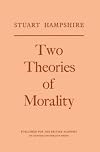
Compares Aristotle and Spinoza (1977) in a public lecture, and reprinted in 1978 in Morality and Conflict

Among other things, compares outlooks of Aristotle and Spinoza
You May Also Like


Associated Authors
Statistics
- Works
- 27
- Also by
- 3
- Members
- 1,238
- Popularity
- #20,730
- Rating
- 4.1
- Reviews
- 7
- ISBNs
- 65
- Languages
- 4
- Favorited
- 1