
Yan Ge
Author of Strange Beasts of China
About the Author
Works by Yan Ge
That We May Live: Speculative Chinese Fiction (Calico, 1) (2020) — Contributor — 31 copies, 2 reviews
Tagged
Common Knowledge
- Legal name
- Dai, Yuexing
- Birthdate
- 1984
- Gender
- female
- Nationality
- China
- Places of residence
- Dublin, Ireland
- Map Location
- China
Members
Reviews
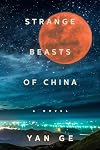
What at first seems a weird and fantastic compendium of various beasts from the fictional city of Yang’an, China quickly morphs into a tale that asks of its readers one of literature’s favorite queries, “What defines humanity?” Echoes abound from Shelley’s Frankenstein to Ishiguro’s Never Let Me Go as the characters edge along the cosmic loneliness of merely existing, but Yan Ge crafts a wholly original novel that is self-aware without being gimmicky, and touching without being show more precious about it.
It will appeal to those looking for a wild ride into the strange, anyone interested in an off-kilter mystery, as well as those who like a multilayered story to contemplate long after reading. show less
It will appeal to those looking for a wild ride into the strange, anyone interested in an off-kilter mystery, as well as those who like a multilayered story to contemplate long after reading. show less
In one Chinese city, a young woman who is an amateur cryptozoologist, is asked by a former professor if she would document and uncover the stories of the cities famed 'beasts" who have lived among humans. The beasts are very human-like (although they have green skin); female beasts can breed with human males, but male beasts cannot breed with any but their own kind. Our documenter, who describes each kind of beast in detail, begins with the "Sorrowful" beasts. Others are "Joyous". show more "Sacrificial", "Impasse" and "Thousand League" and so on.
[Strange Beasts of China] is a wonderful, intriguing and clever combination of fantasy and mystery. Like our intrepid amateur, we the readers are drawn deeper into the story and the mystery of these beasts. Are they some vestige from a human past? A mutation? Are we really one kind? There is something being suggested here and it made the story irresistible.
I thought the story muddied a bit near the end but it doesn’t take much away from the enjoyment of this fresh imaginative novel. show less
[Strange Beasts of China] is a wonderful, intriguing and clever combination of fantasy and mystery. Like our intrepid amateur, we the readers are drawn deeper into the story and the mystery of these beasts. Are they some vestige from a human past? A mutation? Are we really one kind? There is something being suggested here and it made the story irresistible.
I thought the story muddied a bit near the end but it doesn’t take much away from the enjoyment of this fresh imaginative novel. show less

Such an odd collection of related stories: each chapter a tale told by a newspaper columnist about one sort of unusual quasi-human beast found in the industrial Chinese city of Yong’an. The beasts have evocative names like “heartsick beasts” and “returning beasts.” I suppose that, strictly speaking, this is fantasy, but I can’t help but feel that it’s more allegory than fantasy. No doubt due to my ignorance of Chinese culture, I found it fairly opaque in places, and I also show more found the first-person narrator’s sudden shifts in emotion and attitude rather alien and abrupt, which kept me from fully engaging with this intriguing book. I suspect it would improve with a second reading. show less

A brief young adult novella, translated from the Chinese, Yan Ge's White Horse chronicles a few years in the life of Yun Yun, a young girl whose family life begins to deteriorate, as she and her cousin Zhang Qing grow older. Episodic in nature, the narrative here skips from scene to scene, depicting key moments of change, from the ways in which Zhang Qing begins to draw away from Yun Yun, and to rebel, as she reaches adolescence, to the slowly building revelation that Yun Yun's widowed show more father and Zhang Qing's married mother have a more complicated relationship than either girl realized. It is at these key moments that Yun Yun sees a mysterious white horse, whose function - a harbinger of those changes? a talisman protecting Yun Yun against the worst harm those changes can bring? - is not always clear. The story ends as Yun Yun graduates from primary school at the top of her class, her family life terribly compromised...
At a brief eighty-four pages, White Horse is a quick read, and I finished it the other day during the course of a single train commute home. Mulling it over ever since, I've come to the conclusion that I don't entirely understand it, although I did find it engrossing and at times quite poignant. I'm not sure that I grasped the significance of the white horse in the story, although I learn toward the interpretation that it offered both warning and protection, as Yun Yun did seem to retain quite a bit of her innocence (or perhaps just distance?), despite the sordid events occurring around her. Of course, I also wondered whether the horse was related to her father, since one of his chess moves, at the beginning of the story, involved "white horse bright hooves." I found some of the revelations toward the close of the book somewhat confusing as well. Apparently Yun Yun's father and Zhang Qing's mother had been pretendingto be siblings, for the benefit of Zhang Qing's father, even though the whole town knew otherwise, and had previously had a romantic relationship . I wasn't sure if the implication of this was that Zhang Qing was Yun Yun's sister, or what to make of the identity of Yun Yun's mother. Her statement to her classmate, at the close of the book, that she was the child of a white horse, just added more confusion.
This was definitely worth reading, if for nothing else than the Chinese take on the classic theme of growing up, but I think it is also worth reading for the storytelling, despite the confusion I felt. Some of the scenes - especially the ones in which Auntie is being abusive to Zhang Qing - are very well done, and really made me cringe in sympathy. Recommended to anyone looking for coming of age stories, or for young adult novels set in China. show less
At a brief eighty-four pages, White Horse is a quick read, and I finished it the other day during the course of a single train commute home. Mulling it over ever since, I've come to the conclusion that I don't entirely understand it, although I did find it engrossing and at times quite poignant. I'm not sure that I grasped the significance of the white horse in the story, although I learn toward the interpretation that it offered both warning and protection, as Yun Yun did seem to retain quite a bit of her innocence (or perhaps just distance?), despite the sordid events occurring around her. Of course, I also wondered whether the horse was related to her father, since one of his chess moves, at the beginning of the story, involved "white horse bright hooves." I found some of the revelations toward the close of the book somewhat confusing as well. Apparently Yun Yun's father and Zhang Qing's mother had been pretending
This was definitely worth reading, if for nothing else than the Chinese take on the classic theme of growing up, but I think it is also worth reading for the storytelling, despite the confusion I felt. Some of the scenes - especially the ones in which Auntie is being abusive to Zhang Qing - are very well done, and really made me cringe in sympathy. Recommended to anyone looking for coming of age stories, or for young adult novels set in China. show less
Lists
Awards


You May Also Like


Associated Authors
Statistics
- Works
- 8
- Members
- 524
- Popularity
- #47,449
- Rating
- 3.7
- Reviews
- 15
- ISBNs
- 34
- Languages
- 5