
Rebecca Caudill (1899–1985)
Author of Tree of Freedom
About the Author
Series
Works by Rebecca Caudill
The High Cost of Writing 3 copies
From Hardshell Baptist to Quaker 2 copies
Far-off Land. Drawings, The 1 copy
Associated Works
Tagged
Common Knowledge
- Birthdate
- 1899-02-02
- Date of death
- 1985
- Gender
- female
- Education
- Wesleyan College in Georgia
Vandebilt University - Occupations
- writer
teacher - Relationships
- Ayars, James Sterling (spouse)
- Nationality
- USA
- Associated Place (for map)
- USA
Members
Reviews

When Betsy is invited to a special party at which prizes will be given to the owners of the best-dressed, the oldest and the most talented dolls, the young girl debates which one of her collection she should take. Finally, rejecting the prize-winners, she choose Jennifer, a rather bedraggled doll whose dress is tattered and who has no special attributes. None, that is, save for being a well-loved companion to her little girl...
I adored The Best-Loved Doll as a little girl, and read my show more childhood copy to tatters! There is a melancholy quality to the story, that seems quite common in stories of dolls and toys that are either abandoned, or in danger of being abandoned. What makes Caudill's narrative so satisfying, for the child reader, is that this abandonment is firmly rejected, not just by Betsy, who chooses to take Jennifer to the party, but by the adult authority figure (and elegant grown-up lady!) Mrs. Anderson, who creates a special prize just for this unusual doll. I liked the implicit message here about following your heart, rather than trying to impress others, and choosing to emphasize internal worth and emotional value (even in dolls!) rather than appearance or prestige. This one is a classic, and I'm so glad to see that it remains in print, so today's children can enjoy it as much as I did! show less
I adored The Best-Loved Doll as a little girl, and read my show more childhood copy to tatters! There is a melancholy quality to the story, that seems quite common in stories of dolls and toys that are either abandoned, or in danger of being abandoned. What makes Caudill's narrative so satisfying, for the child reader, is that this abandonment is firmly rejected, not just by Betsy, who chooses to take Jennifer to the party, but by the adult authority figure (and elegant grown-up lady!) Mrs. Anderson, who creates a special prize just for this unusual doll. I liked the implicit message here about following your heart, rather than trying to impress others, and choosing to emphasize internal worth and emotional value (even in dolls!) rather than appearance or prestige. This one is a classic, and I'm so glad to see that it remains in print, so today's children can enjoy it as much as I did! show less
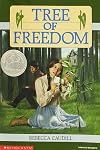
This, set in 1780, is interesting. Apparently all the dialect, customs, and cultural references are accurate, because Caudill herself grew up in that culture. Lots and lots of non-standard spellings, vocabulary, etc. Hit for it, ballet for song, I'm guessing via ballad, the idea that book-larnin' ruints a boy, stuff like that.
There's a good bit about how wrong slavery is. And the women are strong, brave, and intelligent.
Otoh, there's nothing redeeming about how the "red men" are portrayed. show more At first we're led to think they're just vicious, and then it's revealed that the British are bribing them to raid the new white settlements, as another strategy to wear down the colonists besides the battles up North.
Neither Washington nor the activists in Philadelphia are revered, or even universally respected. Most ordinary people just want to be left alone to live their own lives, and so a major theme of the book is that it's not possible to do so. To simplify, Caudill claims that either a citizen does his civic duty, and makes some sacrifices, or he gets trampled by a tyrant.
Of course these brave pioneers work hard etc., and do get their happy ending. Some threads are left unanswered, but nothing major. And the cover is silly. Steffy is most always barefoot, and in a simple dress rather than a skirt and blouse. The only teen boy sulking around is her brother, who is fair (or at least tanned not much more than she is).
And I'm not so sure about the title tree, either. I'm pretty sure one seed is not going to grow enough in one summer to be strong enough for a winter (though maybe Kentucky is warm enough), and I'm even more sure that, without a scion, there's going to be fruit. Even Eric Sloane mentions grafts in his writings about the earliest years of the colonies. show less
There's a good bit about how wrong slavery is. And the women are strong, brave, and intelligent.
Otoh, there's nothing redeeming about how the "red men" are portrayed. show more At first we're led to think they're just vicious, and then it's revealed that the British are bribing them to raid the new white settlements, as another strategy to wear down the colonists besides the battles up North.
Neither Washington nor the activists in Philadelphia are revered, or even universally respected. Most ordinary people just want to be left alone to live their own lives, and so a major theme of the book is that it's not possible to do so. To simplify, Caudill claims that either a citizen does his civic duty, and makes some sacrifices, or he gets trampled by a tyrant.
Of course these brave pioneers work hard etc., and do get their happy ending. Some threads are left unanswered, but nothing major. And the cover is silly. Steffy is most always barefoot, and in a simple dress rather than a skirt and blouse. The only teen boy sulking around is her brother, who is fair (or at least tanned not much more than she is).
And I'm not so sure about the title tree, either. I'm pretty sure one seed is not going to grow enough in one summer to be strong enough for a winter (though maybe Kentucky is warm enough), and I'm even more sure that, without a scion, there's going to be fruit. Even Eric Sloane mentions grafts in his writings about the earliest years of the colonies. show less

When I picked this up I was excited to see some of Evaline Ness' earlier illustrations - before her Caldecott winning "Sam, Bangs and Moonshine" (this one got a Caldecott honor). The illustrations are printed with a similar method of overlapping and semi transparent layers, but they don't have the depth and subtlety of "Sam Bangs." They are made with less texture and more hard edged lines. The beautifully loose, blotchy and bold pen lines and washes are not there - just a few subtle hard pen show more lines. That said, they are great little designs, placed in interesting ways within the pages and many of them floating on a text heavy page. And this book is text heavy (it was written in 1964) but it is really wonderful text. It is a first day of school story, but you wouldn't know it for the first third of the book. We have plenty of time to get to know the main character, Jay, and the details of his slow paced life on the farm. In the waning days of August he takes in and befriends a cricket, who he just can't leave behind when he gets on the bus for his first day of school. The cricket sets him apart from the other children and causes him problems in class.
Despite the lengthy text my three year old son wanted it read to him three times in a row. This is because the reader gets a real intimate look into Jay's world and his emotions. His joy and his sadness are really tangible in both the text and the illustrations.
It is a good story of feeling different, but finding a way to fit in while celebrating what makes you unique. It also is wonderful in its depiction of the teacher - who comes across first as a strict and mean, but listens to and understands Jay, shaping the learning around the students as well as the students around the learning. show less
Despite the lengthy text my three year old son wanted it read to him three times in a row. This is because the reader gets a real intimate look into Jay's world and his emotions. His joy and his sadness are really tangible in both the text and the illustrations.
It is a good story of feeling different, but finding a way to fit in while celebrating what makes you unique. It also is wonderful in its depiction of the teacher - who comes across first as a strict and mean, but listens to and understands Jay, shaping the learning around the students as well as the students around the learning. show less
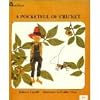
A story about a little farm boy who takes great notice of all the wonderful beautiful things around him, including a cricket. He then gets a chance to share these things with the students at his new school. A quiet, contemplative book about taking joy in the simple things.
Lists
Awards


You May Also Like


Associated Authors
Statistics
- Works
- 28
- Also by
- 1
- Members
- 4,733
- Popularity
- #5,317
- Rating
- 4.1
- Reviews
- 33
- ISBNs
- 82
- Languages
- 1