
Lionel Davidson (1922–2009)
Author of Kolymsky Heights
About the Author
Lionel Davidson was born in Hull, Yorkshire on March 31, 1922. He left school early and worked as office boy at the Spectator magazine, which published his first short story when he was 15. At 17, he was writing syndicated features for the Morley Adams Group. During World War II, he served as a show more telegraphist with the Royal Navy's submarine service in the Pacific. After the war, he joined the Keystone Press Agency as a freelance reporter. His first novel, The Night of Wenceslas, was published in 1960 and won the Crime Writers' Association's Gold Dagger Award and the Author's Club First Novel Award. It was adapted into a film entitled Hot Enough for June starring Dirk Bogarde in 1964. His other works include The Rose of Tibet and Kolymsky Heights. He also won the CWA's Gold Dagger Award for A Long Way to Shiloh in 1966 and The Chelsea Murders in 1978. In 2001, he was awarded the CWA's Cartier Diamond Dagger lifetime achievement award. He also wrote children's books under the pen name David Line. He died on October 21, 2009 at the age of 87. (Bowker Author Biography) show less
Disambiguation Notice:
Lionel Davidson also published children's novels under the pseudonym David Line.
Works by Lionel Davidson
Associated Works
Tagged
Common Knowledge
- Other names
- Line, David (pseudonym)
- Birthdate
- 1922-03-31
- Date of death
- 2009-10-21
- Gender
- male
- Occupations
- reporter
submariner(WW2)
novelist
spy novelist
short story writer
screenwriter - Organizations
- Royal Navy (WWII)
- Awards and honors
- Cartier Diamond Dagger(2001)
Gold Dagger Award(1960 ∙ 1966 ∙ 1978) - Short biography
- Lionel Davidson was born in Yorkshire, one of nine children of an immigrant Jewish tailor. The family moved to Streatham in south London when he was a small child. He left school at age 14 and worked for The Spectator magazine as an office boy. He managed to get one of his first stories published in the magazine under a pseudonym. Later he became a reporter for the Keystone Press Agency. During World War II, he served in the Far East with the Submarine Service of the Royal Navy. At the end of the war, he returned to the Keystone Agency and became fiction editor of John Bull magazine in 1955 before traveling around Europe as a freelance reporter. It was during one of these trips that he got the idea for his first thriller, The Night of Wenceslas, published in 1960. The novel was an instant bestseller and immediately pushed Davidson into the front ranks of the thriller genre. The book won the Crime Writers' Association's Gold Dagger Award (the top prize for crime and spy fiction in Britain) as well as the Authors' Club First Novel Award. It was adapted as a film in 1964 called Hot Enough for June. Davidson's second novel, The Rose of Tibet (1962) was equally well received. A Long Way to Shiloh (1966) won Davidson his second Gold Dagger, and he achieved an unprecedented third with The Chelsea Murders (1978). The Chelsea Murders was also adapted for television as part of Thames TV's Armchair Thriller series in 1981. Davidson moved with his family to Israel in 1968. Three of his novels are set in that country. He also wrote film scripts, short stories, and children's fiction such as Under Plum Lake (1980), as well as several others written under the pen name David Line. He did not produce another thriller until Kolymsky Heights (1994), which won international acclaim and introduced its author to a new generation of readers. In 2001, he received the CWA's Cartier Diamond Dagger award for lifetime achievement and "a significant contribution to crime fiction published in the English language."
- Nationality
- UK
- Birthplace
- Hull, Yorkshire, England, UK
- Places of residence
- London, England, UK
- Place of death
- London, England, UK
- Disambiguation notice
- Lionel Davidson also published children's novels under the pseudonym David Line.
- Associated Place (for map)
- England, UK
Members
Reviews
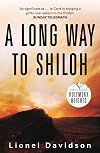
Part of the fun of mystery novels is trying to work out puzzles, and I quite enjoyed chewing over a puzzle presented by this one: why do I dislike this so much?
There was an obvious answer: the protagonist and his portrayal. Our narrator, Casper Laing, is a loathsome sex pest, an irresponsible drunk, and a heedless narcissist. Now, you can’t write a character quite so flawed without noticing that you’re doing so, but Davidson apparently thinks that his creation is, overall, a good egg. At show more the crucial moments, Laing dashingly displays all the heroic virtues, and earns absolution for all his vices, none of which turn out to be too consequential anyway. The object of his affections (most often referred to as “the girl”) turns out to consider relentless badgering the very best of foreplay; his drinking results in nothing much more than chucklesome antics; and the headlong charges after his own interests deliver outrageous success more often than not. There is much to dislike here, but after some thought I concluded that this was a red herring. Too obvious. The answer had to be deeper.
Was it, perhaps, the plot? The plot is unarguably preposterous, a caper across the plains and deserts of Israel in search of McGuffins. Laing is a brilliant young professor of archaeology, or philology, or some such thing involving very old Middle Eastern languages (don’t worry, though—we’re assured early on that he’s the sexy “intuitive” kind of brainy, not the frumpy thinking-hard-about-stuff kind). He’s hired by people vaguely connected with the Israeli establishment, at first to find and interpret an ancient scroll, and subsequently to find and recover the treasure whose location the scroll reveals, all before the Bad Guys get there first. Escapades and shenanigans ensue: scrapes, escapes, fights, heights, chases, even a courtroom scene. It’s all deeply, deeply silly, a succession of set pieces tenuously connected. But dislikeable? Surely not. Who doesn’t like a silly pseudo-archaeological adventure, done well? (it’s easy to believe that George Lucas absorbed quite a lot from this book that later shaped Indiana Jones)
But wait: that’s it. Done well! Or, in this case, not. Here’s the thing: to successfully pull off this kind of caper, you need to dissuade the audience from thinking too closely about what’s going on. The writing needs to be fluent, pacey, and smooth: it needs to speed the reader along, not trip them up. And for far too much of this book, the reader is stumbling around. Furthermore, this is due to clearly deliberate style choices. It’s as if Davidson has taken far too much heed of two bits of common writing advice. First: “show, don’t tell”. Yes, fine, avoid clunky exposition, but not at the cost of leaving your descriptions so vague and oblique that the reader frequently has to pause to work out what the hell is actually being described. Second: “avoid cliché like the plague”. Again, fine, but if the alternative is convoluted syntax, dangling pronouns, pile-ups of adverbs and modifiers, and the occasional gobstopping thesaurus word (“inpissated”, anyone?) . . . well, you might be better off just laying out some boilerplate now and again. The whole thing reminded me somewhat obscurely of Beckett, and that would be a compliment if the work were one where a tricksy style ought to be to the focus, but in this case it’s definitely not a compliment.
I’ve analysed all this as if the problem is that Davidson is trying to be A Writer, rather than just writing. The other slightly worrying possibility is that he thinks he has faithfully recreated how brainy people actually speak and think. Whatever the cause, it’s all a bit of a shame, because when he forgets being A Writer and just writes, he can put a tense, gripping scene on the page, and he can manage evocative description of locale. I can see why a lot of people like this. But I didn’t much. show less
There was an obvious answer: the protagonist and his portrayal. Our narrator, Casper Laing, is a loathsome sex pest, an irresponsible drunk, and a heedless narcissist. Now, you can’t write a character quite so flawed without noticing that you’re doing so, but Davidson apparently thinks that his creation is, overall, a good egg. At show more the crucial moments, Laing dashingly displays all the heroic virtues, and earns absolution for all his vices, none of which turn out to be too consequential anyway. The object of his affections (most often referred to as “the girl”) turns out to consider relentless badgering the very best of foreplay; his drinking results in nothing much more than chucklesome antics; and the headlong charges after his own interests deliver outrageous success more often than not. There is much to dislike here, but after some thought I concluded that this was a red herring. Too obvious. The answer had to be deeper.
Was it, perhaps, the plot? The plot is unarguably preposterous, a caper across the plains and deserts of Israel in search of McGuffins. Laing is a brilliant young professor of archaeology, or philology, or some such thing involving very old Middle Eastern languages (don’t worry, though—we’re assured early on that he’s the sexy “intuitive” kind of brainy, not the frumpy thinking-hard-about-stuff kind). He’s hired by people vaguely connected with the Israeli establishment, at first to find and interpret an ancient scroll, and subsequently to find and recover the treasure whose location the scroll reveals, all before the Bad Guys get there first. Escapades and shenanigans ensue: scrapes, escapes, fights, heights, chases, even a courtroom scene. It’s all deeply, deeply silly, a succession of set pieces tenuously connected. But dislikeable? Surely not. Who doesn’t like a silly pseudo-archaeological adventure, done well? (it’s easy to believe that George Lucas absorbed quite a lot from this book that later shaped Indiana Jones)
But wait: that’s it. Done well! Or, in this case, not. Here’s the thing: to successfully pull off this kind of caper, you need to dissuade the audience from thinking too closely about what’s going on. The writing needs to be fluent, pacey, and smooth: it needs to speed the reader along, not trip them up. And for far too much of this book, the reader is stumbling around. Furthermore, this is due to clearly deliberate style choices. It’s as if Davidson has taken far too much heed of two bits of common writing advice. First: “show, don’t tell”. Yes, fine, avoid clunky exposition, but not at the cost of leaving your descriptions so vague and oblique that the reader frequently has to pause to work out what the hell is actually being described. Second: “avoid cliché like the plague”. Again, fine, but if the alternative is convoluted syntax, dangling pronouns, pile-ups of adverbs and modifiers, and the occasional gobstopping thesaurus word (“inpissated”, anyone?) . . . well, you might be better off just laying out some boilerplate now and again. The whole thing reminded me somewhat obscurely of Beckett, and that would be a compliment if the work were one where a tricksy style ought to be to the focus, but in this case it’s definitely not a compliment.
I’ve analysed all this as if the problem is that Davidson is trying to be A Writer, rather than just writing. The other slightly worrying possibility is that he thinks he has faithfully recreated how brainy people actually speak and think. Whatever the cause, it’s all a bit of a shame, because when he forgets being A Writer and just writes, he can put a tense, gripping scene on the page, and he can manage evocative description of locale. I can see why a lot of people like this. But I didn’t much. show less
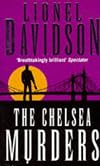
This is my third time reading The Chelsea Murders, and this time I actually remembered which of them was the killer about halfway through. I don't think there's a murder mystery out there that I've ever enjoyed quite as much, certainly not of the classic English variety which this both is and sends up.
We are, as it were, led by the nose through a series of murders terrorising London's bohemian Chelsea area. The killer, who enjoys sending cryptic literary notes to warn of his coming exploits, show more is one of three students making a film. The police are all over them and the press are sniffing round like bloodhounds and everyone's trying to work it out, but the killer always seems one step ahead.
By all accounts this is packed to the rafters with London arty/publishing/whatever in-jokes of which I can fairly confidently say I got bugger all. That doesn't matter. It's clever, sharp, witty, full of characters that are mostly unlikeable but who are all doing interesting things and the whodunnit aspect is utterly, deliciously maddening in a way that most whodunnits just aren't.
Davidson didn't write another one like this. Like DCS Warton he'd had enough of the murder game, which was almost a pity. Luckily he wrote some other great stuff instead, and we can always go to Chelsea. show less
We are, as it were, led by the nose through a series of murders terrorising London's bohemian Chelsea area. The killer, who enjoys sending cryptic literary notes to warn of his coming exploits, show more is one of three students making a film. The police are all over them and the press are sniffing round like bloodhounds and everyone's trying to work it out, but the killer always seems one step ahead.
By all accounts this is packed to the rafters with London arty/publishing/whatever in-jokes of which I can fairly confidently say I got bugger all. That doesn't matter. It's clever, sharp, witty, full of characters that are mostly unlikeable but who are all doing interesting things and the whodunnit aspect is utterly, deliciously maddening in a way that most whodunnits just aren't.
Davidson didn't write another one like this. Like DCS Warton he'd had enough of the murder game, which was almost a pity. Luckily he wrote some other great stuff instead, and we can always go to Chelsea. show less
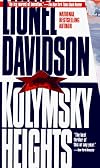
Lionel Davidson's pulpy spy novel combines a punchy, Le-carre style realism with camp, Clive Cussler-esque flourishes to produce an enjoyable - if somewhat guilty - read with a dynamite ending.
Dr Johnny Porter, biologist, linguist, Canadian Inuit is recruited - or rather, requested - to work for the CIA when a scientist from a top-secret Russian lab sends a cryptic note promising fabulous intel that only Johnny can access.
Will little ado, our mustachioed renaissance man sets off for show more deepest Siberia, leaving a a trail of identities and broken hearts behind him. Once there, he'll find sexy Russians, scientists playing god with genetic hybrids, breath-taking cold and suspicious commies everywhere.
I grant, this summary sounds more Cussler than Le Carre, but don't be fooled: Besides a few quirky mass-market bits thrown into the narrative, Kolymsky Heights is more like a procedural than an action movie. The bulk of the book concerns Porter's careful planning and execution of his mission, leading to an absolutely nail-biting finish at the end.
Most of the book seems well-researched and very carefully plotted, with even pacing and no nonsense prose. Despite Porter's larger-than-life rap sheet sheet, his presence in the novel is generally quite believable. This all makes the more hyperbolic segments of the novel stand out; and I can't deny they make the book somewhat weaker in my opinion. But it's by no means a death blow, especially when you get to the exciting finish, executed with great flair and sense of pace.
Kolymsky Heights is not the best spy novel I've read, with its kooky add-ons and silly Macguffin - and yet I suspect fans of Tom Clancy and co will be bored by its phlegmatic protagonist and his steady work towards a goal. Consider this a fun companion piece to Martin Cruz Smith's superior novel, Polar Star, set in a similar locale. It's a fun ride that doesn't charge too much, and I enjoyed it. show less
Dr Johnny Porter, biologist, linguist, Canadian Inuit is recruited - or rather, requested - to work for the CIA when a scientist from a top-secret Russian lab sends a cryptic note promising fabulous intel that only Johnny can access.
Will little ado, our mustachioed renaissance man sets off for show more deepest Siberia, leaving a a trail of identities and broken hearts behind him. Once there, he'll find sexy Russians, scientists playing god with genetic hybrids, breath-taking cold and suspicious commies everywhere.
I grant, this summary sounds more Cussler than Le Carre, but don't be fooled: Besides a few quirky mass-market bits thrown into the narrative, Kolymsky Heights is more like a procedural than an action movie. The bulk of the book concerns Porter's careful planning and execution of his mission, leading to an absolutely nail-biting finish at the end.
Most of the book seems well-researched and very carefully plotted, with even pacing and no nonsense prose. Despite Porter's larger-than-life rap sheet sheet, his presence in the novel is generally quite believable. This all makes the more hyperbolic segments of the novel stand out; and I can't deny they make the book somewhat weaker in my opinion. But it's by no means a death blow, especially when you get to the exciting finish, executed with great flair and sense of pace.
Kolymsky Heights is not the best spy novel I've read, with its kooky add-ons and silly Macguffin - and yet I suspect fans of Tom Clancy and co will be bored by its phlegmatic protagonist and his steady work towards a goal. Consider this a fun companion piece to Martin Cruz Smith's superior novel, Polar Star, set in a similar locale. It's a fun ride that doesn't charge too much, and I enjoyed it. show less
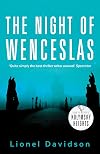
The basic plot of this novel involves a fairly stupid young man who ends up shuttling back and forth between the UK and Prague, engaged in what he's been told is mild industrial espionage, but turns out to be rather more serious spy business. There's the same shift from light comedy to peril that we saw last time with Ambler, though this time more abrupt; there's again the shadow of Greene ("The Third Man" gets an oblique nod).
Now, It must be quite hard to write sympathetic stupid show more characters. Easy enough to write total chuckleheads, I suppose, characters to laugh at; hard to write someone who's daft enough to make the wheels of the plot turn, but appealing enough for the reader to hope the wheels turn in their favour. The trouble here is that the protagonist is not sympathetically stupid. He is really, really dumb, and not from some sort of lack of schooling or deficiency, just from blithe carelessness, selfishness, failure to spot the very very obvious. He keeps doing very clearly stupid things. This is a problem because, as one stupid move follows another, as his stupidity gets him into scrapes and out of them again and into them again, the reader loses their senses of verisimilitude (surely nobody could be this dumb?) and involvement (if someone is really this dumb, I don't think I care what happens to them).
I should, perhaps, note that the name of this stupid protagonist is Nicolas Whistler, which is uncomfortably close to my own name, which might be why I take so much exception to his rank idiocy. But anyway, even if you can overlook that, there's also some big gaping holes in the plot. Nobody likes pedantic exposition, and nitpicking complaints about tiny gaps in the machinery are tedious, but here there really is a sort of authorial shrug at a couple of pretty crucial moments.
Furthermore, once you're sufficiently irritated by the stupid protagonist and the vacant plot, there's plenty else here you can get irritated at. For example, this is a book in which no bosom goes unnoticed or undescribed---a litany of descriptions irritating in their frequency, their obtrusiveness, and their vague insufficiency (what exactly is a "bomb-like" breast? Are we talking a sort of classical spherical thing with a long fuse, or one of those sleek pointy ones with fins, or perhaps something more like a grenade? The niche campaign group Perverts for Precision demands answers).
All in all, I was not impressed by this one. I'm not sure how much you should trust my judgement—plenty of other people seem to really like it—but I note with mild dismay that I have two more Davidson books to look forward to in this series. show less
Now, It must be quite hard to write sympathetic stupid show more characters. Easy enough to write total chuckleheads, I suppose, characters to laugh at; hard to write someone who's daft enough to make the wheels of the plot turn, but appealing enough for the reader to hope the wheels turn in their favour. The trouble here is that the protagonist is not sympathetically stupid. He is really, really dumb, and not from some sort of lack of schooling or deficiency, just from blithe carelessness, selfishness, failure to spot the very very obvious. He keeps doing very clearly stupid things. This is a problem because, as one stupid move follows another, as his stupidity gets him into scrapes and out of them again and into them again, the reader loses their senses of verisimilitude (surely nobody could be this dumb?) and involvement (if someone is really this dumb, I don't think I care what happens to them).
I should, perhaps, note that the name of this stupid protagonist is Nicolas Whistler, which is uncomfortably close to my own name, which might be why I take so much exception to his rank idiocy. But anyway, even if you can overlook that, there's also some big gaping holes in the plot. Nobody likes pedantic exposition, and nitpicking complaints about tiny gaps in the machinery are tedious, but here there really is a sort of authorial shrug at a couple of pretty crucial moments.
Furthermore, once you're sufficiently irritated by the stupid protagonist and the vacant plot, there's plenty else here you can get irritated at. For example, this is a book in which no bosom goes unnoticed or undescribed---a litany of descriptions irritating in their frequency, their obtrusiveness, and their vague insufficiency (what exactly is a "bomb-like" breast? Are we talking a sort of classical spherical thing with a long fuse, or one of those sleek pointy ones with fins, or perhaps something more like a grenade? The niche campaign group Perverts for Precision demands answers).
All in all, I was not impressed by this one. I'm not sure how much you should trust my judgement—plenty of other people seem to really like it—but I note with mild dismay that I have two more Davidson books to look forward to in this series. show less
Lists
Global Mysteries (1)
Awards


You May Also Like


Associated Authors
Statistics
- Works
- 20
- Also by
- 6
- Members
- 2,075
- Popularity
- #12,385
- Rating
- 3.6
- Reviews
- 60
- ISBNs
- 175
- Languages
- 9
- Favorited
- 5
