
John Sayles
Author of A Moment in the Sun
About the Author
John Thomas Sayles is a novelist, screenwriter, director, and actor. He was born in Schenectady, New York, on September 28, 1950. He earned a B.S. in psychology from Williams College in 1972. After graduating, Sayles earned a living as an orderly, a laborer, and a meat packer. Two novels and a show more collection of short stories were published in the 1970s. Sayles also wrote screenplays for B-movie king Roger Corman, contributing to such films as Piranha and Battle Beyond the Stars. In 1980 he wrote, directed, and acted in the film Return of the Secaucus Seven, which won the Best Screenplay award from the Los Angeles Film Critics and was nominated for an Academy Award. In 1983, Sayles received a MacArthur Foundation "genius grant," which provided him with $30,000 per year for five years. His work during this period included the films Baby it's You, Brother From Another Planet, and Matewan. Sayles also directed the Bruce Springsteen music videos, "Born in the U.S.A.," "I'm on Fire," and "Glory Days." He also created a television series in 1989 called Shannon's Deal. Sayles has received an O. Henry Award, a best director award from the Seattle Film Festival, a Taskforce Award, and Academy Award nominations for the screenplays for Passion Fish and Lone Star. He also wrote the screenplay for, directed, and performed in the critically acclaimed film, Eight Men Out. (Bowker Author Biography) show less
Image credit: Festival Internacional de Cine en Guadalajara
Works by John Sayles
The Secret of Roan Inish : Original Motion Picture Soundtrack — Director — 9 copies
Race to Freedom: The Underground Railroad / Honeydripper / Stigma / Go Tell It on the Mountain (Video) (2016) — Director — 7 copies
Lianna 5 copies
Honeydripper / Race to Freedom: The Underground Railroad / Nightjohn / Sophie & the Moonhanger / A Gathering of Old Men / Resting Place (2014) — Director; Director — 4 copies
6-Film Collection Movies of Excellence V.3 (Honeydripper / Nightjohn / Sophie and the Moon Hanger / Endgame / Execution of Raymond Graham / Race to Freedom: The Underground… (2015) — Director — 1 copy, 1 review
New Hope for the Dead 1 copy
The Anarchists Convention 1 copy
4 Movie Collection (Honeydripper / Go Tell It on the Mountain / Sophie and the Moon Hanger / Race to Freedom: The Underground Railroad) (2015) — Director — 1 copy
Jamie Bacgilivray 1 copy
Piranha — Author — 1 copy
Santitos 1 copy
Associated Works
Selected Shorts: American Classics (Selected Shorts: A Celebration of the Short Story) (2010) — Contributor — 28 copies, 6 reviews
Casa De Los Babys — Contributor — 3 copies
TriQuarterly 48: Western Stories — Contributor — 2 copies
Men With Guns (Hombres Armados): Original Soundtrack — Contributor — 2 copies
Lady In Red / Crazy Mama (Roger Corman's Cult Classics) — Writer — 2 copies
Tagged
Common Knowledge
- Canonical name
- Sayles, John
- Legal name
- Sayles, John Thomas
- Birthdate
- 1950-09-28
- Gender
- male
- Education
- Williams College
- Occupations
- film director
screenwriter
actor
author - Nationality
- USA
- Birthplace
- Schenectady, New York, USA
- Map Location
- USA
Members
Reviews

Los Gusanos (which literally means 'the worms' but is also used in Cuban Spanish to refer to Cuban-Americans) is ostensibly the story of Marta, a young woman of convictions which are almost religiously intense, and her desire to avenge her brother Ambrosino who died during the Bay of Pigs invasion.
In fact, it's the story of a whole community, Cuban and non-: the staff and inmates at the old people's home where Marta works, the ones who returned alive from the Bay of Pigs, the ones who show more continue to control the community. We get to see each one well enough to understand what's going on inside their heads - the book is told in the third person throughout, but it changes style when it follows different individuals, from Luz (Marta's best friend) going out on the town, dancing and drinking and gradually getting a little sloppy, to the military-enthusiast teenager that Marta ropes into her plan, seeing his routine job as if it's military drill.
It may seem that this is detracting from the overall story - and indeed, the character of Marta is one of the weakest points of the book, seen largely through religious/saintly metaphors and the sense of future doom which her name hints at (Marta=martyr?). But it fits perfectly with the overall message of the book, which is that no human being should be seen as a means to an end. History tells us that there are the powerful - "In Santiago they were the ones who controlled the jobs, the ones who winked and pinched your cheek and collected their dues, who grinned and said such is life, who paid for the funerals of men they had broken, who left big tips but were rarely charged for a meal" - and there are their victims. Which group is powerful and which is a victim may change, particularly in the context of a revolution (the book shows clearly the complex ups and downs of the revolution and Cuban-exile politics, but also suggests that some of the nastiest oppressors may always find a way to come out on top): but the moral imperative is to help the victims and oppose oppression.
A further note on the title, worms feature several more times: Los Gusanos is also the name of a poem which Ambrosio writes during his military training, which starts "The worms find no food in our hope", an old man complains that his insides are being eaten by the worms of his life, worms turn up in the prison food on the Isla De Las Pinas eaten by those imprisoned as counter-revolutionaries.
Sample: In the kitchen there are two men, a woman and a boy. The kitchen smells like coffee, though only the ex-priest is drinking any, his cup balanced behind him on the edge of the sink. The overhead light bounces hard on the balding spot on his forehead. His hands lie together in his lap, fingertips touching as if in prayer. He can't quite believe he's really here, doing this thing, saying these words. He watches the face of the man who sits against the wall in the shadow of the refrigerator. show less
In fact, it's the story of a whole community, Cuban and non-: the staff and inmates at the old people's home where Marta works, the ones who returned alive from the Bay of Pigs, the ones who show more continue to control the community. We get to see each one well enough to understand what's going on inside their heads - the book is told in the third person throughout, but it changes style when it follows different individuals, from Luz (Marta's best friend) going out on the town, dancing and drinking and gradually getting a little sloppy, to the military-enthusiast teenager that Marta ropes into her plan, seeing his routine job as if it's military drill.
It may seem that this is detracting from the overall story - and indeed, the character of Marta is one of the weakest points of the book, seen largely through religious/saintly metaphors and the sense of future doom which her name hints at (Marta=martyr?). But it fits perfectly with the overall message of the book, which is that no human being should be seen as a means to an end. History tells us that there are the powerful - "In Santiago they were the ones who controlled the jobs, the ones who winked and pinched your cheek and collected their dues, who grinned and said such is life, who paid for the funerals of men they had broken, who left big tips but were rarely charged for a meal" - and there are their victims. Which group is powerful and which is a victim may change, particularly in the context of a revolution (the book shows clearly the complex ups and downs of the revolution and Cuban-exile politics, but also suggests that some of the nastiest oppressors may always find a way to come out on top): but the moral imperative is to help the victims and oppose oppression.
A further note on the title, worms feature several more times: Los Gusanos is also the name of a poem which Ambrosio writes during his military training, which starts "The worms find no food in our hope", an old man complains that his insides are being eaten by the worms of his life, worms turn up in the prison food on the Isla De Las Pinas eaten by those imprisoned as counter-revolutionaries.
Sample: In the kitchen there are two men, a woman and a boy. The kitchen smells like coffee, though only the ex-priest is drinking any, his cup balanced behind him on the edge of the sink. The overhead light bounces hard on the balding spot on his forehead. His hands lie together in his lap, fingertips touching as if in prayer. He can't quite believe he's really here, doing this thing, saying these words. He watches the face of the man who sits against the wall in the shadow of the refrigerator. show less
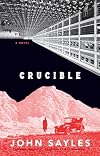
This sprawling novel embraces fifteen pivotal years of Detroit history, with numerous historical and fictional characters from every part of society, located in Detroit, Dearborn, and Brazil.
It jumps from storyline to storyline, almost overwhelming as you try to keep track of all that is happening.
Detroiters will glory in recognizing locations and familiar history: the rise of the unions, Walter Reuther, the River Rouge plant (which I recalled from class trips), Blackbottom, Belle Isle with show more its now restored aquarium, Willow Run and Rosie the Riveter, the Tigers and Hank Greenberg.
And at the center, Henry Ford, anti-semite and genius, innovator and heavy handed dictator, the man who offered thousands of African Americans and immigrants and Southerners a better life while putting money above workers, his goons patrolling their personal lives. Ford’s drive for independence, to provide his own raw materials, led to his Fordlandia in the Amazon forest. It was ill thought out, with no research, led by unqualified men.
It is an exciting story, a human story, an essential story. Workers demanding safety and fair pay for back breaking, unhealthy jobs. African Americans and Jews shunted into ghettos, watching their backs. Prohibition and gangsters. Diego Rivera painting the mural on the walls of the Detroit Institute of Art that so outraged people it was nearly whitewashed over, his wife and greater artist Frida Kahlo dismissed in the newspaper as “also a painter”.
…he was one of the richest men in America and accustomed to getting his way… from Crucible by John Sayles
Reading Crucible you realize there is nothing new under the sun. The problems of a hundred years ago are still with us. Some of the gains made then we have lost, are losing.
“As the novel displays, enormous social and economic forces rushed together in that city,” Sayle writers, “making it more a high-pressure crucible than a genteel American melting-pot.”
Thanks to the publisher for a free book through NetGalley. show less
It jumps from storyline to storyline, almost overwhelming as you try to keep track of all that is happening.
Detroiters will glory in recognizing locations and familiar history: the rise of the unions, Walter Reuther, the River Rouge plant (which I recalled from class trips), Blackbottom, Belle Isle with show more its now restored aquarium, Willow Run and Rosie the Riveter, the Tigers and Hank Greenberg.
And at the center, Henry Ford, anti-semite and genius, innovator and heavy handed dictator, the man who offered thousands of African Americans and immigrants and Southerners a better life while putting money above workers, his goons patrolling their personal lives. Ford’s drive for independence, to provide his own raw materials, led to his Fordlandia in the Amazon forest. It was ill thought out, with no research, led by unqualified men.
It is an exciting story, a human story, an essential story. Workers demanding safety and fair pay for back breaking, unhealthy jobs. African Americans and Jews shunted into ghettos, watching their backs. Prohibition and gangsters. Diego Rivera painting the mural on the walls of the Detroit Institute of Art that so outraged people it was nearly whitewashed over, his wife and greater artist Frida Kahlo dismissed in the newspaper as “also a painter”.
…he was one of the richest men in America and accustomed to getting his way… from Crucible by John Sayles
Reading Crucible you realize there is nothing new under the sun. The problems of a hundred years ago are still with us. Some of the gains made then we have lost, are losing.
“As the novel displays, enormous social and economic forces rushed together in that city,” Sayle writers, “making it more a high-pressure crucible than a genteel American melting-pot.”
Thanks to the publisher for a free book through NetGalley. show less
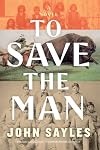
The title of this book comes from a speech made by Brigadier-General Richard Henry Pratt, delivered in 1892, in which he used the now well-known phrase to describe his philosophy of assimilation: "Kill the Indian in him, and save the man." The ideas expressed in Pratt's speech are central to the development of the Carlisle Indian School, which is the subject of this book. Pratt founded the Carlisle Indian Industrial School in Pennsylvania in 1879 and served as its longtime superintendent. show more While “killing the Indian” is to be taken metaphorically, the killing off of cultural ties and the requirement to speak only English at the school effectively killed the man, and perhaps the Indian too.
Sayles has a sure touch, never letting “issues” dominate over plot and character, and yet he deftly explores the issues of the time so easily through casual references and through memories or backstories. Such an example occurs on p. 53, where a character “knew some of the men President Lincoln chose to hang,” a casual yet devastating reminiscence which refers to the Minnesota hangings of 1862. Likewise Sayles pours out what seems like effortless decades of research and years of writing in incorporating other issues in this novel, such as issues of language (including sign language), cleanliness, orderliness, references to Wokova and spirit dances, the effects of the Pendleton Act (and the spoils system leading to bad hires as Indian Agents), and the pain felt in the loss of a mother’s touch.
There are no dastardly villains here, but plenty of presumption and arrogance on the parts of those running the school. There is not one main narrator in this book. One of the characters is an Indian woman/girl who has become an instructor at the school, so is compromised in many ways. “She has heard the Captain’s manifestos, and he never seems to say that Indian Culture is wrong or even inferior - only that it is ~over ~, of no practical use in what the world has come to be.” This kind of philosophy justifies a self-satisfied approach of talking right over the heads of the students, in the belief that they will be bathed in “truth”, even those who do not understand any English.
As stated above, there is not one main character, but several perspectives. I think there is, ultimately, a lack of depth to most of the characters, with the possible exception of Asa, who delivers a beautiful interior monologue and understands no English (p.66). The narrative skims and floats, moving from place to place with cinematic ease, delivered in short, unrelated sections. It would make a great movie. But due to the lack of depth (lack of interiority of characters) we see them all from outside, mostly. It would make a great movie, but it’s not a great book. One of my true tests of a great read is whether it sticks with you. This one evaporated from my thoughts pretty fast. show less
Sayles has a sure touch, never letting “issues” dominate over plot and character, and yet he deftly explores the issues of the time so easily through casual references and through memories or backstories. Such an example occurs on p. 53, where a character “knew some of the men President Lincoln chose to hang,” a casual yet devastating reminiscence which refers to the Minnesota hangings of 1862. Likewise Sayles pours out what seems like effortless decades of research and years of writing in incorporating other issues in this novel, such as issues of language (including sign language), cleanliness, orderliness, references to Wokova and spirit dances, the effects of the Pendleton Act (and the spoils system leading to bad hires as Indian Agents), and the pain felt in the loss of a mother’s touch.
There are no dastardly villains here, but plenty of presumption and arrogance on the parts of those running the school. There is not one main narrator in this book. One of the characters is an Indian woman/girl who has become an instructor at the school, so is compromised in many ways. “She has heard the Captain’s manifestos, and he never seems to say that Indian Culture is wrong or even inferior - only that it is ~over ~, of no practical use in what the world has come to be.” This kind of philosophy justifies a self-satisfied approach of talking right over the heads of the students, in the belief that they will be bathed in “truth”, even those who do not understand any English.
As stated above, there is not one main character, but several perspectives. I think there is, ultimately, a lack of depth to most of the characters, with the possible exception of Asa, who delivers a beautiful interior monologue and understands no English (p.66). The narrative skims and floats, moving from place to place with cinematic ease, delivered in short, unrelated sections. It would make a great movie. But due to the lack of depth (lack of interiority of characters) we see them all from outside, mostly. It would make a great movie, but it’s not a great book. One of my true tests of a great read is whether it sticks with you. This one evaporated from my thoughts pretty fast. show less
It's the late 1800's, and new students/recruits/inmates/victims are arriving at the Carlisle Indian Industrial School, where the founder, Captain Richard Pratt, runs things on a military model. The children are met by students who have been at the school for as much as 5 years, and are given an orientation of sorts, including new names, haircuts, "american" clothing, and a set of rules many of them are unable to understand, because their native language, including signing, is forbidden here. show more The basics of this history are not new to most of us, but the presentation here is full of detail that may have escaped our attention. The daily lives of the students, their classes and training, sound remarkably like any other boarding school situation in history and literature, with less physical abuse and more compassionate teacher-student interaction than one might expect. That is not to say we're meant to approve of the circumstances. This was not a "reform" school in the sense of being a place designed for punishment, but the purpose was purely, and not at all surreptitiously, to save the man by killing the Indian. Ironically, the diversity of the student body is one of the most striking things about this story. Many tribes are represented; many of the students did know some English upon arrival; some were already well on the way to assimilation, having come from families who had adopted Christianity and sent their children previously to mission schools. Some of the older students took to the system very well. Ah, but those who did not...escaping was not difficult, but almost always ended in apprehension and return to the school. News from home reservations managed to be disseminated, and more than one student made repeated attempts to get back to where they felt they were belonged. This story culminates at the battle of Wounded Knee on the Pine Ridge reservation, where history and Sayles tell us that a long-term student, a "Carlisle Indian", played a pivotal role. Not an easy read, either for its subject matter or its style (which I cannot begin to describe, other than to say I found it deliberately "choppy" at times). I hesitate to recommend it wholeheartedly unless you already have a pretty good basic knowledge of the massacre and what led up to it , or are at least willing to delve into that history. I found the fictional version compelling, but not completely coherent without the background. show less
Lists
Awards


You May Also Like


Associated Authors
Statistics
- Works
- 59
- Also by
- 15
- Members
- 2,538
- Popularity
- #10,117
- Rating
- 3.7
- Reviews
- 41
- ISBNs
- 131
- Languages
- 4
