
Daniel Easterman (1949–2022)
Author of Naomi's Room
About the Author
Image credit: Daniel Easterman, pseudonyme de Denis MacEoin, en France le 13 février 1998
Works by Daniel Easterman
Associated Works
The New Penguin Handbook of Living Religions: Second Edition (Penguin Reference Books) (1997) — Contributor, some editions — 121 copies
Tagged
Common Knowledge
- Legal name
- MacEoin, Denis Martin
- Other names
- Aycliffe, Jonathan (pseudonym)
Easterman, Daniel (pseudonym)
McKeown, Denis Martin (birth) - Birthdate
- 1949-01-26
- Date of death
- 2022-06-06
- Gender
- male
- Education
- King's college, Cambridge (Ph. D., Etudes persanes et islamiques, 1979)
Université d'Édimbourg (Maîtrise, Etudes persanes, arabes et islamiques, 1975)
Trinity College (Licence, Maîtrise, Langue et littérature anglaises,1967-1971) - Occupations
- professor
editor - Awards and honors
- Centre for Islamic and Middle East Studies at Durham University (Honorary Fellow)
- Relationships
- MacEoin, Beth (wife)
- Cause of death
- Covid-19
- Nationality
- UK
- Birthplace
- Belfast, Northern Ireland, UK
- Places of residence
- Newcastle upon Tyne, England, UK
Belfast, Northern Ireland
Fez, Morocco - Associated Place (for map)
- UK
Members
Discussions
Has anyone read Naomi's Room? in Thing(amabrarian)s That Go Bump in the Night (May 2010)
Reviews
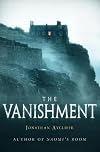
I have read one of Jonathan Aycliffe's excellent ghost stories in the run up to Christmas for a number of years, and I thought this was one of the best. Author Peter Clare and his wife Sarah come to stay in a remote house in Cornwall to get away from the stresses in their lives. But the house harbours a guilty and horrifying secret dating back to the late 19th century when a lady who is now a vengeful ghost committed a horrific crime against her family. Sarah disappears and Peter must face show more the loss of others close to him as he tries to exorcise the ghost. There are twists until right near the end and this was a brilliant atmospheric read. show less
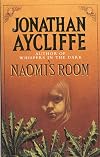
Stay out of Naomi's room, better yet stay out of the whole house. Pretty good ghost-haunted house creeper that will keep you entertained to the very end. You're not going to find Casper here because those beyond the pall have their own fun and games for us that are left behind. As in all good ghost stories the revenants are bad news. This is no rattle the silverware and move the furniture around type of haunting, these are ghosties that can reach out and grab you and cut your arm off.
Our show more poor narrator doesn't have a chance and the whimperings about exorcisms go by the wayside as the body count gets out of hand and everyone forgets about that particular palliative. It wouldn't have worked anyway because things on the other side are not as easily dealt with as you may think. Leave it to say that the existence of an afterlife here is not a comforting thought. Better off dead. show less
Our show more poor narrator doesn't have a chance and the whimperings about exorcisms go by the wayside as the body count gets out of hand and everyone forgets about that particular palliative. It wouldn't have worked anyway because things on the other side are not as easily dealt with as you may think. Leave it to say that the existence of an afterlife here is not a comforting thought. Better off dead. show less
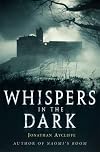
This was the second excellent and horrifically tense novel I have read by this author. Like the first one (The Silence of Ghosts), this was told through a framework narrative, in which a man in the present day (early 1990s when this was written) looks through the papers of his recently deceased doctor father, and finds an account written by one of his elderly patients, Charlotte Metcalfe, twenty years before, detailing what happened to her as a young girl at the turn of the century. Those show more chilling events, involving a dark secret in her family, largely centre on a remote country house, Barrass Hall in Northumberland, where she lived for a time with some of her relatives. The author is very good at slowly building up an atmosphere of creeping horror and the final ending of Charlotte's narrative and the exposure of the devilish family secret is truly horrifying. This is gothic horror writing at its very best, relying on atmosphere and suggestion, not blood and gore. At a different level of horror, Charlotte's bleak experiences in the workhouse in her childhood are also very sobering. A real corker of a novel. show less
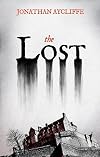
During nearly every run up to Christmas over the last five or six years I have read one of the creepy modern Gothic horror novels by this author. In this one, it is early 1990s Britain, where Michael Feraru is the son and grandson of aristocratic Romanian emigres who fled that country after the Communist takeover in the late 1940s. Michael returns to his ancestral home with the aim of setting up an orphanage to cater to some of the poor Romanian children in the existing orphanages, whose show more plight was well publicised in the west after the collapse of Ceausescu's regime 30 years ago this month (I recall the haunting images of filthy and ragged children confined permanently to metal cots). When Michael gets to Romania and tries to find out more about his family history, he realises it centres on his ancestral home Castel Vlaicu, set deep in the Carpathian mountains. After some unsettling occurrences in Bucharest, he finally makes his way to the family pile, cut off from communication with his mother and girlfriend back in Britain, who continue to write to him in increasing desperation at his non-communication and the developing tragedies in his local community (this is an epistolary novel). He soon discovers dark and sinister secrets in the castle surrounding his ancestors and their influence over the local peasantry over several centuries. The ending is particularly shocking as the family secret takes over Michael's life and transforms him into a true son of his aristocratic Vlahuta ancestors. Great stuff, after a fairly slow build up, as is characteristic of this author. show less
Lists
Awards

You May Also Like


Associated Authors
Statistics
- Works
- 38
- Also by
- 3
- Members
- 2,573
- Popularity
- #9,984
- Rating
- 3.6
- Reviews
- 81
- ISBNs
- 269
- Languages
- 9
- Favorited
- 6
