

Claribel Alegría (1924–2018)
Author of Luisa in Realityland
About the Author
Clara Isabel Alegría Vides was born in Esteli, Nicaragua on May 12, 1924. Her family moved to El Salvador when she was a baby. She received a bachelor's degree in philosophy and letters at George Washington University in 1948. That was also the year her first book of poetry, Anillo de Silencio show more (Ring of Silence), was published. In 1947, she married American journalist and diplomat Darwin J. Flakoll. Alegría's collections of poetry included Flowers from the Volcano and Saudade/Sorrow. She also wrote children's books. She and Flakoll wrote several books together including Tunnel to Canto Grande and Death of Somoza. She died on January 25, 2018 at the age of 93. (Bowker Author Biography) show less
Disambiguation Notice:
"No me agarran viva: La mujer salvadorena en lucha" (1983) and "They won't take me alive: Salvadorean women in struggle for national liberation" (1987 English trans) are the same work.
Image credit: Photo by Jorge Mejía peralta / Flickr via Wikimedia Commons.
Works by Claribel Alegría
And We Sold the Rain: Contemporary Fiction from Central America (1988) — Contributor — 47 copies, 2 reviews
Tunnel to Canto Grande: The Story of the Most Daring Prison Escape in Latin American History (1996) 7 copies, 1 review
Sobrevivo 5 copies
Nicaragua, la revolución sandinista: Una crónica política, 1855-1979 (Serie popular Era) (Spanish Edition) (1982) 4 copies
New Voices of Hispanic America: An Anthology — Editor — 2 copies
Despierta mi bien despierta 2 copies
Pagaré a cobrar y otros poemas 2 copies
Ina Vida en Poemas 1 copy
EN CLAVE DE MI 1 copy
Semillero (inédito) 1 copy
Y este poemario 1 copy
Somoza: expediente cerrado 1 copy
Homenaje a El Salvador 1 copy
Associated Works
Against Forgetting: Twentieth-Century Poetry of Witness (1993) — Contributor — 377 copies, 2 reviews
These Are Not Sweet Girls: Poetry by Latin American Women (2000) — Contributor — 45 copies, 1 review
Daughters of Latin America: An International Anthology of Writing by Latine Women (2023) — Contributor — 40 copies, 1 review
Tagged
Common Knowledge
- Canonical name
- Alegría, Claribel
- Legal name
- Alegría, Claribel Joy
- Birthdate
- 1924-05-12
- Date of death
- 2018-01-24
- Gender
- female
- Education
- George Washington University (BA)
- Occupations
- poet
novelist
essayist
journalist - Awards and honors
- Neustadt International Prize for Literature (2006)
Cenizas de Izalco was a finalist in the Seix Barral competition, Barcelona, Spain, 1964
honorary doctorate from Eastern Connecticut State University - Short biography
- Claribel Alegría was the pen name of Clara Isabel Alegría Vides, born to Nicaraguan-Salvadoran parents in Estelí, Nicaragua. After her father was sent into exile for protesting human rights abuses, she was raised in her mother's hometown of Santa Ana, El Salvador. She began writing as a child and she published her first poems at age 17 in Repertorio Americano, a Central American cultural supplement. In 1943, she moved to the USA for her education. She received a B.A. in Philosophy and Letters from George Washington University in 1948. In 1985, she returned to Nicaragua to aid in the country's reconstruction. She has published numerous collections of poetry, including Casting Off (2003); Sorrow (1999); Umbrales (1996); and La Mujer del Rio/Woman of the River, bilingual, 1989). She also wrote novels and children's books. In 2006, she won the Neustadt International Prize for Literature.
- Nationality
- Nicaragua
- Birthplace
- Esteli, Nicaragua
- Places of residence
- El Salvador
USA
Managua, Nicaragua - Disambiguation notice
- "No me agarran viva: La mujer salvadorena en lucha" (1983) and "They won't take me alive: Salvadorean women in struggle for national liberation" (1987 English trans) are the same work.
- Associated Place (for map)
- Nicaragua
Members
Reviews

This is a collection of three novellas first published in Spanish between 1977 and 1985. The 1990 Women's Press edition has an absolutely fabulous cover image by Susan Alcantarilla!
1. The first novella, The Talisman, is mostly set in a Los Angeles convent school, with memories of childhood in Key West. It's told via the experiences, memories, and imaginings, of a girl, through the framing device of encounters with the nun who is her spiritual advisor. The style is elliptical, and readers who show more dislike having multiple characters introduced by name and then alluded to repeatedly before their identities become clear will hate this, lol. I thought it worked well, and I wouldn't have known it was a translation (props to translator Amanda Hopkinson and the commissioning editor at The Women's Press). Warnings for child sex abuse, domestic abuse, and animal abuse (yes, the dog dies), although more of this is implied than graphic depictions.
There's a clever magical realist scene change from the girl protagonist at boarding school to herself as an older woman:
"Next day she said she was feeling ill and didn't go down to the dining room at breakfast time. She began furiously brushing her hair in front of the mirror above the washbasin. Then she took a comb, made a centre parting and pulled locks of hair down over her eyes.
Great, she said to herself, now I need to paint two rings around my eyes and add some crows' feet. She took a piece of charcoal and began drawing. Brilliant, now I only need the glasses and books to complete the image.
She helped herself to Susan's glasses, put three books under each arm and regarded herself triumphantly in the mirror."
2. The second novella, Family Album, is mostly set in Nicaragua and France, and is told through the memories of the daughter of a large extended wealthy Central American family. It uses family anecdotes, through both current experience and memories, to show Nicaraguan society divided into "market forces" driven "Conquistador" type people who take advantage of even their closest family members, and exploited "Indian" type people who care more about families and communities and society, in more conventional terms those who "take" and those who "give". The author also employs a traditional magical realist trope to make "the disappeared" literally disappear within the story. The present day here is 1978, although it was published with hindsight in 1982, i.e. after the tyrannicide of Somoza but before the USA-backed Contra terrorists were fully active and assassinating members of the legitimate FSLN government (also mild historicalbefore Eden Pastora changed sides and was bombed by either the CIA or an FSLN faction depending on who you choose to believe ).
Warnings for description of the torture of political prisoners (although the description is mild compared to reality).
A girl sneaks into her grandmother's bedroom:
"She knelt breathlessly at her bedside, and, taking the old lady's withered and yellow hand in her own, whispered, 'Mamita Rosa, you're a saint, and now you're about to die I want you to ask the Virgin to grant me three wishes.'
'What are they?'
'That I get away from here, that I love my husband very much, and that I become a writer.'
'I'll ask for the first two, but not for the last. I don't like the way poets live.' "
3. The third novella, Village of God and the Devil, is set on the Spanish island of Mallorca, and features a wide cast of locals and especially incomers as characters, including "Robert" implied to be author Robert Graves. There's an early reference to The White Goddess embedded in this series of vignettes about the lives of ex-pats, in which increasingly extreme supernatural explanations are appended to ordinary events. Each tale, and especially the build-up of tales, ought to be disturbing but because they're presented as an anthropological study of ex-pats they seem prosaic. Perhaps the contrast between Robert's poetic responses and the protagonist Marcia's prosaic responses is deliberate as Alegria was an accomplished poet who also wrote fiction and journalism. From the anecdotes one might get the impression that ex-pats are a bunch of drug-addled weirdos. Ahem. And then there's a plot twist or two, bringing whole new layers of weirdness, which at this point seems normal for this milieu. I understand this story as an examination, with anthropology used as a semi-satirical medium, of the reactions of a specific class of privileged people to the threat of an extinction event caused by humans, in this case an analogy of nuclear war (although a search and replace for climate change would also fit), but the magical realist ending didn't work for me, which is, of course, a subjective perspective.
Not necessarily the compliment one wants from a corpse dresser at a wake:
" 'Since I turned twenty I've been dressing the dead and now I'm over seventy. You can figure it out for yourself.'
'Would you like cup of coffee?'
'I wouldn't mind.'
Marcia got up to pour her one, then the two of them went to sit down in a corner of the dining room.
'Do you know something?' the dresser looked at Marcia with tenderness. 'Up until now I've only dressed Majorcans, but I've taken a liking to you, and I'm going to dress you too.' " show less
1. The first novella, The Talisman, is mostly set in a Los Angeles convent school, with memories of childhood in Key West. It's told via the experiences, memories, and imaginings, of a girl, through the framing device of encounters with the nun who is her spiritual advisor. The style is elliptical, and readers who show more dislike having multiple characters introduced by name and then alluded to repeatedly before their identities become clear will hate this, lol. I thought it worked well, and I wouldn't have known it was a translation (props to translator Amanda Hopkinson and the commissioning editor at The Women's Press). Warnings for child sex abuse, domestic abuse, and animal abuse (yes, the dog dies), although more of this is implied than graphic depictions.
There's a clever magical realist scene change from the girl protagonist at boarding school to herself as an older woman:
"Next day she said she was feeling ill and didn't go down to the dining room at breakfast time. She began furiously brushing her hair in front of the mirror above the washbasin. Then she took a comb, made a centre parting and pulled locks of hair down over her eyes.
Great, she said to herself, now I need to paint two rings around my eyes and add some crows' feet. She took a piece of charcoal and began drawing. Brilliant, now I only need the glasses and books to complete the image.
She helped herself to Susan's glasses, put three books under each arm and regarded herself triumphantly in the mirror."
2. The second novella, Family Album, is mostly set in Nicaragua and France, and is told through the memories of the daughter of a large extended wealthy Central American family. It uses family anecdotes, through both current experience and memories, to show Nicaraguan society divided into "market forces" driven "Conquistador" type people who take advantage of even their closest family members, and exploited "Indian" type people who care more about families and communities and society, in more conventional terms those who "take" and those who "give". The author also employs a traditional magical realist trope to make "the disappeared" literally disappear within the story. The present day here is 1978, although it was published with hindsight in 1982, i.e. after the tyrannicide of Somoza but before the USA-backed Contra terrorists were fully active and assassinating members of the legitimate FSLN government (also mild historical
Warnings for description of the torture of political prisoners (although the description is mild compared to reality).
A girl sneaks into her grandmother's bedroom:
"She knelt breathlessly at her bedside, and, taking the old lady's withered and yellow hand in her own, whispered, 'Mamita Rosa, you're a saint, and now you're about to die I want you to ask the Virgin to grant me three wishes.'
'What are they?'
'That I get away from here, that I love my husband very much, and that I become a writer.'
'I'll ask for the first two, but not for the last. I don't like the way poets live.' "
3. The third novella, Village of God and the Devil, is set on the Spanish island of Mallorca, and features a wide cast of locals and especially incomers as characters, including "Robert" implied to be author Robert Graves. There's an early reference to The White Goddess embedded in this series of vignettes about the lives of ex-pats, in which increasingly extreme supernatural explanations are appended to ordinary events. Each tale, and especially the build-up of tales, ought to be disturbing but because they're presented as an anthropological study of ex-pats they seem prosaic. Perhaps the contrast between Robert's poetic responses and the protagonist Marcia's prosaic responses is deliberate as Alegria was an accomplished poet who also wrote fiction and journalism. From the anecdotes one might get the impression that ex-pats are a bunch of drug-addled weirdos. Ahem. And then there's a plot twist or two, bringing whole new layers of weirdness, which at this point seems normal for this milieu. I understand this story as an examination, with anthropology used as a semi-satirical medium, of the reactions of a specific class of privileged people to the threat of an extinction event caused by humans, in this case an analogy of nuclear war (although a search and replace for climate change would also fit), but the magical realist ending didn't work for me, which is, of course, a subjective perspective.
Not necessarily the compliment one wants from a corpse dresser at a wake:
" 'Since I turned twenty I've been dressing the dead and now I'm over seventy. You can figure it out for yourself.'
'Would you like cup of coffee?'
'I wouldn't mind.'
Marcia got up to pour her one, then the two of them went to sit down in a corner of the dining room.
'Do you know something?' the dresser looked at Marcia with tenderness. 'Up until now I've only dressed Majorcans, but I've taken a liking to you, and I'm going to dress you too.' " show less

Twenty-four Central America short stories collected here by editor Rasario Santos, each story more marvelous than the next. From the introduction: "In Central America the story is performing its primordial function of mediating history, interpreting a brutal and brutalizing reality, and keeping hope and dignity alive as it has for centuries on this frail bridge between worlds." Here are my brief comments on six unforgettable tales:
AND WE SOLD THE RAIN by Carmen Naranjo (1928-2012, Costa show more Rica)
Carmen Naranjo’s story takes the form of a black humor bug so black, so caustic, the bug chews its way through the entire guava fruit and comes out the other side as a ball of laugh-out-loud hilarity. What a story! Set in a Central American country so poor it doesn’t even have a name. But, for certain, this unnamed country has debt, a ton of debt, the president and all government officials are up to their soaking wet eyeballs in debt. Make no mistake, not only higher-ups sopping wet but the country’s entire population of poor people are waterlogged, drooping wet sombreros, fungus-filled toes, an entire country of people so wringing wet they are now the green people, living their shiny wet green lives in a country where it rains day and night, nonstop, seven days a week.
Just how poor are these poor people? They live on radish tops, bananas and garbage; the Public Welfare Agency rations rice and beans as if medicine; they dodge bullets from drug lords who operate uncontrolled. Meanwhile, the president asks, ““Doesn’t anyone in this whole goddamned country have an idea that could get us out of this?” The poor citizens tell him that he and his cabinet should prey to the virgin. In desperation they try, but the virgin has gone deaf and ignores their pleas for help despite the fact the whole government cabinet implores her at the top of their lungs.
One brilliant ideas came from someone in the government: levy a tax on air – ten colones per breath. Another suggestion: a contest “Miss Underdevelopment” to be chosen from the multitudes of skinny, dusky, round-shouldered, short-legged, half-bald girls with cavity-pocked smiles and suffering from parasites. “If we could only export the rain,” bemoaned one minister. A great aha moment! An aqueduct is built by French technicians, those guardians of European meritocracy, running to an oil-rich Middle Eastern nation. Sounds like the perfect solution but does anything ever really go right for such a poor country?
THE PROOF by Rodrigo Rey Rosa (Born 1958, Guatemala)
One night, all alone in his house, young teenager Miguel opens the birdcage and grabs the canary in his fist, staring at the little bird with his eager eyes as if seeking an omen. Feeling the canary’s small body and feather in the clutch of his fingers, he decides to go down to the cellar. We read: “He crouched in a corner under the high vaulted ceiling, as Indians and savages do, face down, his arms wrapped around his legs, and with the canary in his fist between his knees. Raising his eyes into the darkness, which at that moment looked red, he said in a low voice: “If you exist, God, bring this bird back to life.” As he spoke, he tightened his fist little by little, until his fingers felt the snapping of the fragile bones and an unaccustomed stillness in the little body.”
What happens after his parents return home and after Miguel experiences a night of insomnia that’s a kind of nightmare? What happens when the maid who cares for the canary arrives the next morning and then secretly decides to buy a new canary? And lastly, what happens after that, when his father finds feathers in the cellar? Sentence by sentence, Rodrigo Rey Rosa’s very short story builds in drama, layer by layer, image by image, and takes on qualities of myth, legend, fable and allegory. As you read this tale you will feel a tangible, urgent tug to enter ever more deeply into the spirit of Central American storytelling.
CONFINEMENT by Horacio Castellanos Moya (Born 1957, El Salvador)
Horacio Castellanos Moya is the author of over a dozen novels and short stories, one novel about a sex-obsessed boozehound writer employed by the Catholic Church he despises to clean up the written testimonies of survivors from the massacre and torture of thousands of indigenous villagers a decade earlier; another novel written as a furious one paragraph rant on the injustices committed against the people of El Salvador, a novel that earned the author death threats. In this short story Horacio Castellanos Moya lets us listen in on what goes through the mind of an El Salvador guerrilla in hiding, confined to a room in a home of a family sympathetic to his cause:
After three days, he feels a tightness in his chest as if facing the same four walls is a bad omen. He wishes he had a good book, knows he’s been on too many marches, wonders what his fellow guerrilla girlfriend is doing right now since his heart is all desire, like a mound of earth full of unsprouted seeds. Sure he writes poetry but tears up what he’s written. He really needs to find some peace and calm, frustrated that now when he has all the time in the world to examine his memories and emotions in depth, everything seems tedious.
He feels trapped in this hot room; he’d like to have a drink. If he could live his life over again, he’d live exactly as his instincts dictate; after all, he joined the revolution out of instinct, like a tiger sniffing out its prey. He thinks of the practice of confining a guerrilla is like the days Jonah spent in the belly of a whale. And when he gets out? He’d be happy, ready to dive back into the city, a good thing, like being born again.
THE PERFECT GAME by Sergio Ramírez (Born 1942, Nicaragua)
We sit in the stands with a father who has arrived at the stadium late (damn car broke down) to watch his eighteen-old-son’s professional baseball team, San Fernanco. Would the team use his son as a relief pitcher for the first time, ever? The father takes his seat high up in the cheep seats as he usually does, right behind home plate. He first looks up at the scoreboard – it’s the top of the 5th inning and both teams have failed not only score a run but both teams have failed to get a hit. He then looks over at the bullpen to catch a glimpse of his son. He doesn’t see him. What has happened? He looks down at the field and sees exactly what happened – his son is taking the mound. This is the very first time his son is pitching on the professional level. And he is the starting pitcher! Of all nights to have a breakdown on the highway! And not only is his son pitching but, glory of glories, so far he is pitching a perfect game!
So begins this heartwarming story of a father’s love for his baseball playing teenage son. And Sergio Ramírez has us right there in the stands living through each pitch as his son moves closer to pitching a perfect game and making history for himself, his team, his home town and for Nicaragua. Anybody who follows major league baseball knows how many baseball players are from Central America and perhaps is aware of the struggles these players endured beginning as kids out on a dirt lot next to a shanty town. And, of course, baseball in Sergio’s tale can be taken as a metaphor for life.
STORY OF THE MAESTRO WHO SPENT HIS WHOLE LIFE COMPOSING A PIECE FOR THE MARIMBA by Mario Payeras (1940-1995, Guatemala)
Half fable, half magic, this tale of how Patrocinio Raxtun went into the jungle and dedicated his entire life to building and playing the instrument he loved with all the rhythms and marimba energy he could feel in the animals and plants, earth and sky, days and nights along with his bones and his blood. When he finally began to play “what he attempted to capture had to do with the wild tails of spinning kites that trace the Great Bear in the immense night sky of the altiplano, with the sadness of the iron cocks on rusting weather vanes, with the invisible pathways of the birds.”
A MARCH GUAYACAN by Bertalicia Peralta (Born 1940, Panamá)
Hot steamy passion, anyone? One quote will say it all: “Calmly she went into the kitchen. She picked up a knife and gripped it firmly by the handle. She thrust it into the heart of the man more than once. The blood ran in torrents, first steaming, then more slowly until it stopped. A lot of blood. It smelled. She made sure he was dead. She thrust the knife three more times into the body.” show less
Twenty-four Central America short stories collected here by editor Rasario Santos, each story more marvelous than the next. From the introduction: "In Central America the story is performing its primordial function of mediating history, interpreting a brutal and brutalizing reality, and keeping hope and dignity alive as it has for centuries on this frail bridge between worlds." Here are my brief comments on six unforgettable tales:
AND WE SOLD THE RAIN by Carmen Naranjo (1928-2012, Costa show more Rica)
Carmen Naranjo’s story takes the form of a black humor bug so black, so caustic, the bug chews its way through the entire guava fruit and comes out the other side as a ball of laugh-out-loud hilarity. What a story! Set in a Central American country so poor it doesn’t even have a name. But, for certain, this unnamed country has debt, a ton of debt, the president and all government officials are up to their soaking wet eyeballs in debt. Make no mistake, not only higher-ups sopping wet but the country’s entire population of poor people are waterlogged, drooping wet sombreros, fungus-filled toes, an entire country of people so wringing wet they are now the green people, living their shiny wet green lives in a country where it rains day and night, nonstop, seven days a week.
Just how poor are these poor people? They live on radish tops, bananas and garbage; the Public Welfare Agency rations rice and beans as if medicine; they dodge bullets from drug lords who operate uncontrolled. Meanwhile, the president asks, ““Doesn’t anyone in this whole goddamned country have an idea that could get us out of this?” The poor citizens tell him that he and his cabinet should prey to the virgin. In desperation they try, but the virgin has gone deaf and ignores their pleas for help despite the fact the whole government cabinet implores her at the top of their lungs.
One brilliant ideas came from someone in the government: levy a tax on air – ten colones per breath. Another suggestion: a contest “Miss Underdevelopment” to be chosen from the multitudes of skinny, dusky, round-shouldered, short-legged, half-bald girls with cavity-pocked smiles and suffering from parasites. “If we could only export the rain,” bemoaned one minister. A great aha moment! An aqueduct is built by French technicians, those guardians of European meritocracy, running to an oil-rich Middle Eastern nation. Sounds like the perfect solution but does anything ever really go right for such a poor country?
THE PROOF by Rodrigo Rey Rosa (Born 1958, Guatemala)
One night, all alone in his house, young teenager Miguel opens the birdcage and grabs the canary in his fist, staring at the little bird with his eager eyes as if seeking an omen. Feeling the canary’s small body and feather in the clutch of his fingers, he decides to go down to the cellar. We read: “He crouched in a corner under the high vaulted ceiling, as Indians and savages do, face down, his arms wrapped around his legs, and with the canary in his fist between his knees. Raising his eyes into the darkness, which at that moment looked red, he said in a low voice: “If you exist, God, bring this bird back to life.” As he spoke, he tightened his fist little by little, until his fingers felt the snapping of the fragile bones and an unaccustomed stillness in the little body.”
What happens after his parents return home and after Miguel experiences a night of insomnia that’s a kind of nightmare? What happens when the maid who cares for the canary arrives the next morning and then secretly decides to buy a new canary? And lastly, what happens after that, when his father finds feathers in the cellar? Sentence by sentence, Rodrigo Rey Rosa’s very short story builds in drama, layer by layer, image by image, and takes on qualities of myth, legend, fable and allegory. As you read this tale you will feel a tangible, urgent tug to enter ever more deeply into the spirit of Central American storytelling.
CONFINEMENT by Horacio Castellanos Moya (Born 1957, El Salvador)
Horacio Castellanos Moya is the author of over a dozen novels and short stories, one novel about a sex-obsessed boozehound writer employed by the Catholic Church he despises to clean up the written testimonies of survivors from the massacre and torture of thousands of indigenous villagers a decade earlier; another novel written as a furious one paragraph rant on the injustices committed against the people of El Salvador, a novel that earned the author death threats. In this short story Horacio Castellanos Moya lets us listen in on what goes through the mind of an El Salvador guerrilla in hiding, confined to a room in a home of a family sympathetic to his cause:
After three days, he feels a tightness in his chest as if facing the same four walls is a bad omen. He wishes he had a good book, knows he’s been on too many marches, wonders what his fellow guerrilla girlfriend is doing right now since his heart is all desire, like a mound of earth full of unsprouted seeds. Sure he writes poetry but tears up what he’s written. He really needs to find some peace and calm, frustrated that now when he has all the time in the world to examine his memories and emotions in depth, everything seems tedious.
He feels trapped in this hot room; he’d like to have a drink. If he could live his life over again, he’d live exactly as his instincts dictate; after all, he joined the revolution out of instinct, like a tiger sniffing out its prey. He thinks of the practice of confining a guerrilla is like the days Jonah spent in the belly of a whale. And when he gets out? He’d be happy, ready to dive back into the city, a good thing, like being born again.
THE PERFECT GAME by Sergio Ramírez (Born 1942, Nicaragua)
We sit in the stands with a father who has arrived at the stadium late (damn car broke down) to watch his eighteen-old-son’s professional baseball team, San Fernanco. Would the team use his son as a relief pitcher for the first time, ever? The father takes his seat high up in the cheep seats as he usually does, right behind home plate. He first looks up at the scoreboard – it’s the top of the 5th inning and both teams have failed not only score a run but both teams have failed to get a hit. He then looks over at the bullpen to catch a glimpse of his son. He doesn’t see him. What has happened? He looks down at the field and sees exactly what happened – his son is taking the mound. This is the very first time his son is pitching on the professional level. And he is the starting pitcher! Of all nights to have a breakdown on the highway! And not only is his son pitching but, glory of glories, so far he is pitching a perfect game!
So begins this heartwarming story of a father’s love for his baseball playing teenage son. And Sergio Ramírez has us right there in the stands living through each pitch as his son moves closer to pitching a perfect game and making history for himself, his team, his home town and for Nicaragua. Anybody who follows major league baseball knows how many baseball players are from Central America and perhaps is aware of the struggles these players endured beginning as kids out on a dirt lot next to a shanty town. And, of course, baseball in Sergio’s tale can be taken as a metaphor for life.
STORY OF THE MAESTRO WHO SPENT HIS WHOLE LIFE COMPOSING A PIECE FOR THE MARIMBA by Mario Payeras (1940-1995, Guatemala)
Half fable, half magic, this tale of how Patrocinio Raxtun went into the jungle and dedicated his entire life to building and playing the instrument he loved with all the rhythms and marimba energy he could feel in the animals and plants, earth and sky, days and nights along with his bones and his blood. When he finally began to play “what he attempted to capture had to do with the wild tails of spinning kites that trace the Great Bear in the immense night sky of the altiplano, with the sadness of the iron cocks on rusting weather vanes, with the invisible pathways of the birds.”
A MARCH GUAYACAN by Bertalicia Peralta (Born 1940, Panamá)
Hot steamy passion, anyone? One quote will say it all: “Calmly she went into the kitchen. She picked up a knife and gripped it firmly by the handle. She thrust it into the heart of the man more than once. The blood ran in torrents, first steaming, then more slowly until it stopped. A lot of blood. It smelled. She made sure he was dead. She thrust the knife three more times into the body.” show less
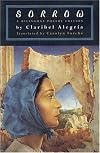
The poems in this short collection were written after the death of Alegría's husband. Many of the poems are quite short, but they focus on grief, loneliness, loss, life alone as an older woman who knows she will join her husband relatively soon.
This is a bilingual edition, and it was fascinating to compare the Spanish and English versions. I do not know enough Spanish to read the Spanish edition, but I do know enough to see the changes in word order and obviously the splitting/joining of show more lines. This is what fascinates me about translated poetry--how much does the form matter? The cadence and syllables? These poems are, I think, all about the meaning and not the form/cadence. show less
This is a bilingual edition, and it was fascinating to compare the Spanish and English versions. I do not know enough Spanish to read the Spanish edition, but I do know enough to see the changes in word order and obviously the splitting/joining of show more lines. This is what fascinates me about translated poetry--how much does the form matter? The cadence and syllables? These poems are, I think, all about the meaning and not the form/cadence. show less
Lists
Awards


You May Also Like


Associated Authors
Statistics
- Works
- 45
- Also by
- 10
- Members
- 501
- Popularity
- #49,398
- Rating
- 4.1
- Reviews
- 8
- ISBNs
- 94
- Languages
- 2