
Sholom Aleichem (1859–1916)
Author of Tevye the Dairyman / The Railroad Stories
About the Author
Sholom Aleichem (Hebrew greeting meaning "Peace be unto you!") was born near Pereyaslav, Ukraine, and settled in the United States two years before his death. The most popular and beloved of all Yiddish writers, he wrote with humor and tenderness about the Yiddish-speaking Jews of Eastern Europe show more and won the title "the Jewish Mark Twain". One of his creations, Tevye the Dairyman, has become world famous, thanks to the highly successful Broadway musical Fiddler on the Roof, which is based on Sholom Aleichem's Tevye stories. Although he also wrote plays and novels, it is for his short stories and his humorous monologues that Sholom Aleichem is best remembered. (Bowker Author Biography) show less
Image credit: Image from In Ameriḳa Moṭl Peysi dem ḥazn's un andere mayśes̀ (1918) by Sholem Aleichem
Series
Works by Sholom Aleichem
Selected Works of Sholem-Aleykhem (The Three Great Classic Writers of Modern Yiddish Literature, Vol 2) (1994) 19 copies
A childhood of honey and tears: Delightful stories to warm the heart (Hallmark editions) (1975) 14 copies
Nineteen To the Dozen: Monologues and Bits and Bobs of Other Things (Judaic Traditions in Literature, Music, and Art) (1998) 10 copies
Motl Peyse dem Khazns: Abridged and Adapted for Students with Exercises and Glossary (Yiddish Edition) (2017) 9 copies
'Iram shel ha-anashim ha-ketanim : sipurim meha-me'ah ha-'eśrim עירם של האנשים הקטנים (2005) 6 copies
Piimamees Tevje : [romaan] 5 copies
Kasrilevke. Ciudad grande 5 copies
כתבי שלום עליכם 5 copies
Kuuskümmend kuus : [novellid] 3 copies
Cuentos de niños 3 copies
Dos antisemitas y otras narraciones / Sholom Aleichem ; [traducción del inglés por José-Luis Sobrón] 3 copies
Smolař Menachem Mendl 3 copies
Al ĉiuj egale: mia utopio 3 copies
אויסגעוויילטע ווערק 3 copies
אלע ווערק 3 copies
Apysakos 3 copies
Estampas del ghetto 2 copies
Monólogos 2 copies
Yiddishe Ramanen 2 copies
Ülemlaul : [jutustus] 2 copies
גענדז 2 copies
Moshkele il ladro 2 copies
Тевье-молочник. Повести и рассказы 2 copies
Ĉe doktoro: monologo 2 copies
Lekavod Yom Tov (?? Holiday) 2 copies
יום-טוב שהופרה שמחתו 2 copies
ילקוט שלום עליכם 2 copies
Modern Children 2 copies
Jewish short stories [a co-production of the National Yiddish Book Center and KCRW, Santa Monica] 2 copies
Sender Blanc 1 copy
Stempeniu 1 copy
T. XIII Alt Naj Kasrilewkie 1 copy
כתבים: מפסח עד פסח 1 copy
מע טאר ניט זיין [קיין] גוטער 1 copy
חרוסת אויף פסח 1 copy
שראגע לכבוד פורים 1 copy
קוואס 1 copy
זעליג מעכאניק 1 copy
כתבים עבריים 1 copy
בערדיטשעװער טראַמװײ 1 copy
Realidad y fantasía 1 copy
טוביה החלבן ובנותיו 1 copy
Der Sohn des Kantors Roman 1 copy
Motel 1 copy
En la Tormenta 1 copy
Sobranie socinenij : v sesti tomach. T. 6, Pesy ; Zametki o literature ; Vospominanija ; Pisma (1990) 1 copy
מאטעל דעם חזנ'ס 1 copy
Тев'є-молочар 1 copy
ילקוט שלום עליכם 1 copy
שלום עליכם לבני הנעורים 1 copy
דער פארכישופטער שניידער 1 copy
פעליעטאנען 1 copy
אויסגעווילטע ווערק 1 copy
פונעם יאריד 1 copy
אלע ווערק פון שלום עליכם 1 copy
אויסגעוויילטע שריפטן 1 copy
Der behexte Schneider 1 copy
El Banderín 1 copy
אויסגעוויילטע ווערר 1 copy
בריװ פֿון שלום עליכם 1 copy
שלום עליכם'ס ווערק 1 copy
СТЕМПЕНЮ. ТЕВЬЕ-МОЛОЧНИК 1 copy
סיפורי הרכבת 1 copy
Ketavim 1 copy
Der leydiḳgeyer 1 copy
The best of Sholom Aleichem 1 copy
Tewje, maitomies 1 copy
Мальчик Мотл [Повесть] 1 copy
Humoresken 1 copy
Den lille verden 1 copy
Aus dem nahen Osten 1 copy
A Paz seja Convosco 1 copy
Anatewka - Eine Hochzeit ohne Musikanten: Die Geschichte von Tewje, dem Milchmann (TREDITION CLASSICS) (2012) 1 copy
ל"ג בעומר 1 copy
On Account Of A Hat 1 copy
A Passover Expropriation 1 copy
If I Were Rothschild 1 copy
The Bubble Bursts 1 copy
Chava 1 copy
Get Thee Out 1 copy
From Mottel The Cantor's Son 1 copy
Bandits 1 copy
The Guest 1 copy
The Krushniker Delegation 1 copy
One In A Million 1 copy
Once There Were Four 1 copy
Favorite Yiddish Stories 1 copy
Elijah the Prophet 1 copy
Stories of Sholom Aleichem 1 copy
Povestiri Tragicomice 1 copy
Storielle ebraiche vol.1 1 copy
Storielle ebraiche vol.2 1 copy
Home For Passover 1 copy
The Pot 1 copy
Fon Pesach biz Pesach 1 copy
Yiddish Masterpieces 1 copy
Af Vos Badarfn Yidn A Land 1 copy
Oysgeṿeylṭe ṿerḳ 1 copy
כתבי שלום-עליכם : ימים טובים 1 copy
Sedam kćeri bez miraza 1 copy
Station Baranovich 1 copy
Eternal Life 1 copy
A Yom Kippur Scandal 1 copy
Ponem Yarid (?) 1 copy
Dos Meserl 1 copy
Histoires de Chaos 1 copy
מפסח עד פסח 1 copy
הונדערט איינס 1 copy
בערדיטשעווער טעאטער 1 copy
שלום עליכם - מבחר יצירות 1 copy
אדם ובהמה ח-ט-י 1 copy
חיי אדם א-ב 1 copy
מדברים בעדם ו-ז 1 copy
מנחם מנדל ג-ד-ה 1 copy
סטמפניו יג-יד-טו 1 copy
קומדיות יא-יב 1 copy
אגענטען : א שפאס אין 1 אקט 1 copy
א דאקטאר : א שפאס אין 1 אקט 1 copy
א פסח אין דארף 1 copy
אלמנה נומר [!] צוויי 1 copy
ראבטשיק : א יודישער הונד 1 copy
שלום-עליכם אין בילד — Associated Name — 1 copy
צוויי שלח-מנות' 1 copy
אסתר : צו דער סעודה 1 copy
ניטא קיין מזל 1 copy
די סוכה 1 copy
נס פון הושענא רבה 1 copy
סמבטיען : צוויי אנטיסעמיטען 1 copy
די ערשטע יודישע רעפובליק 1 copy
א פערשטערטער פסח 1 copy
די יורשים 1 copy
דער דייטש 1 copy
דרייצעהן פעראייניגטע שטאאטען 1 copy
קאסרילעווקע מאנאלאגן 1 copy
ימים טובים : ספורים 1 copy
כתבי שלום-עליכם א-ו 1 copy
דריי אלמאנעס 1 copy
א בוידעמ 1 copy
דער געט 1 copy
האדל 1 copy
היינטיקע קינדער 1 copy
יויסעפ 1 copy
אגענטע 1 copy
לאנדאנ ; פאפירלעב 1 copy
פונעמ פריזיוו 1 copy
די גאלדשפינערס 1 copy
פידלער אויפן דאך ; די מגילה 1 copy
דריטע קלאס 1 copy
א זעקס אונזעכציג 1 copy
די קליינע מענטשעלאך 1 copy
דערציילונגען און מאנאלאגען 1 copy
מעשיות און מאנאלאגן 1 copy
עולם הבא 1 copy
דאס מעסערל 1 copy
דרייצעהן געפאנגענע 1 copy
מיט'ן עטאפ 1 copy
שמואליק 1 copy
א וויגרישנע בילעט 1 copy
דער יונגסטער פון די מלכים 1 copy
Associated Works
A Treasury of Yiddish Stories: Revised and Updated Edition (1958) — Contributor — 387 copies, 1 review
Choice Cuts: A Savory Selection of Food Writing from Around the World and Throughout History (2002) — Contributor — 367 copies, 2 reviews
75 Short Masterpieces: Stories from the World's Literature (1961) — Contributor — 316 copies, 2 reviews
The Jewish caravan : great stories of twenty-five centuries (1965) — Contributor, some editions — 139 copies
Radiant Days, Haunted Nights: Great Tales from the Treasury of Yiddish Literature (2005) — Contributor — 71 copies, 1 review
Fiddler on the Roof: Original 1964 Broadway Cast Recording (2009) — Original story — 68 copies, 2 reviews
No Star Too Beautiful: An Anthology of Yiddish Stories 1382 to the Present (2002) — Contributor — 65 copies
Beautiful as the Moon, Radiant as the Stars: Jewish Women in Yiddish Stories - An Anthology (2003) — Contributor — 59 copies, 1 review
The World of Law, Volumes I-II: The Law in Literature, The Law as Literature (1960) — Contributor — 54 copies
Never-Ending Tales: Stories from the Golden Age of Jewish Literature (2025) — Contributor — 7 copies
Antaeus No. 34, Summer 1979 — Contributor — 1 copy
A Caravan of Music Stories by the World's Great Authors — Contributor — 1 copy
Tagged
Common Knowledge
- Legal name
- Rabinovitsh, Sholem Yakov (Rabinowitz)
Rabinovich, Solomon Naumovich - Other names
- Sholem Aleychem
שלום־עליכם
Sholem Aleykhem - Birthdate
- 1859-03-02
- Date of death
- 1916-05-13
- Gender
- male
- Occupations
- novelist
short story writer
playwright
humorist - Relationships
- Kaufman, Bel (granddaughter)
Kaufman, Lyala (daughter)
Waife-Goldberg, Marie (daughter)
Beylin, Asher (secretary) - Short biography
- Sholem Aleichem's pseudonym, meaning "peace be with you," is a common greeting in Yiddish and Hebrew. He's often referred to as the "Jewish Mark Twain" because of the two authors' similar writing styles (and their use of pen names). When Mark Twain heard of this, he reportedly said, "Please tell him that I am the American Sholem Aleichem." Sholem Aleichem and his wife had six children; the American writer Bel Kaufman is their granddaughter.
- Cause of death
- tuberculosis
diabetes - Nationality
- Russian Empire
USA - Birthplace
- Voronko, Kiev Governorate, Russia
- Places of residence
- Odessa, Ukraine
Kiev, Ukraine
Geneva, Switzerland
New York, New York, USA - Place of death
- New York, New York, USA
- Burial location
- Mount Carmel Cemetery, Queens, New York, New York, USA
- Map Location
- Ukraine
Members
Discussions
Group tags in YIVO Encyclopedia (March 2012)
collaborative work on Sholem Aleichem in Collaborative work (October 2009)
Reviews

Two of the best-known Yiddish stories by the “Jewish Mark Twain”. Sholem Rabinovitch was an ambitious young man, brought up in a mixture of traditional Jewish and liberal Russian cultures in late-19th-century Ukraine. After failing as a businessman and as a writer in Russian or Hebrew, he stumbled upon a profitable market for folksy comic tales in Yiddish, which he published under the pen-name Sholem Aleichem (the ubiquitous Hebrew and Arabic greeting “peace be with you”). Although show more written mostly to entertain nostalgic first-generation emigrants to the US, these stories still have a lot of interest for modern readers because of the way that the comedy is overlaid on realistic descriptions of the life of Jews in the fast-changing conditions of Russia and America around 1900-1914.
Teyve the dairyman is an episodic narrative, published over the space of a couple of decades, of the life of a tradesman in a small Russian town. Teyve frequently reflects on his good fortune in not being born a woman, but has nonetheless been blessed with seven daughters (and a wife!), all of whom bring him misery in one way or another, mostly as a result of his own stubbornness or lack of perception, aided by the more predictable disasters of the outside world: wars, revolutions and pogroms. A lot of the comedy comes from Teyve’s extensive knowledge of — and total failure to understand — the Hebrew Scriptures. The musical Fiddler on the roof was very loosely based on these stories, but there’s no actual fiddling in the text.
Motl the Cantor’s son is a little different in tone from having been conceived from the start as a single novel, although it ends in mid-chapter after about 200 pages: Sholem Aleichem carried on writing until the last day of his life. It’s narrated by a nine-year-old boy who describes the family’s attempts to earn a living after the death of his father, first in Russia, then on the long trek west to join an emigrant ship, and finally in New York City. If the author had lived a little longer, it might have turned into the Jewish David Copperfield. There’s both comedy and pathos in Motl’s detached observation of the repeated disasters that happen to family and friends and the way he is able to take pleasure in small positive outcomes in the midst of it all. He’s always a small boy first and foremost, and only in second place a representative of his culture. This seems to work quite well, only occasionally turning slightly patronising and hardly ever veering into sentiment. It is still quite possible to laugh at Motl’s view of the world. show less
Teyve the dairyman is an episodic narrative, published over the space of a couple of decades, of the life of a tradesman in a small Russian town. Teyve frequently reflects on his good fortune in not being born a woman, but has nonetheless been blessed with seven daughters (and a wife!), all of whom bring him misery in one way or another, mostly as a result of his own stubbornness or lack of perception, aided by the more predictable disasters of the outside world: wars, revolutions and pogroms. A lot of the comedy comes from Teyve’s extensive knowledge of — and total failure to understand — the Hebrew Scriptures. The musical Fiddler on the roof was very loosely based on these stories, but there’s no actual fiddling in the text.
Motl the Cantor’s son is a little different in tone from having been conceived from the start as a single novel, although it ends in mid-chapter after about 200 pages: Sholem Aleichem carried on writing until the last day of his life. It’s narrated by a nine-year-old boy who describes the family’s attempts to earn a living after the death of his father, first in Russia, then on the long trek west to join an emigrant ship, and finally in New York City. If the author had lived a little longer, it might have turned into the Jewish David Copperfield. There’s both comedy and pathos in Motl’s detached observation of the repeated disasters that happen to family and friends and the way he is able to take pleasure in small positive outcomes in the midst of it all. He’s always a small boy first and foremost, and only in second place a representative of his culture. This seems to work quite well, only occasionally turning slightly patronising and hardly ever veering into sentiment. It is still quite possible to laugh at Motl’s view of the world. show less
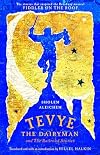
This collection of short stories is really two separate collections put together: the Tevye the Dairyman Stories, and the Railroad Stories. The first set comprises the short stories that were the inspiration for the Broadway musical Fiddler on the Roof. Written over a span of twenty years, these stories offer fragments of Tevye's life as he comes to terms with the changing times and the growth of his daughters. The Railroad Stories do not feature Tevye, and are instead a disjointed show more collection of narratives it seems Sholem Aleichem has collected on his many travels by railroad throughout Europe. There's no overwhelming theme to these collected stories, except perhaps koyl yisro'el khaveyrim ("all Jews are brethren") -- wherever you go, a Jew is a Jew.
I was surprised to find that Tevye's world in these stories is so different from what is portrayed in Fiddler on the Roof (the play and the movie). For one thing, society is much more varied, and there are Jews on all levels and in all sorts of roles, not only in the shtetl living as peasants. Secularization plays a much more significant role in these stories than the play/movie would suggest, and Tevye finds himself straddling the gap between the religious and secular world even more precariously. Speaking of precarious, though, there's a noticeable lack of any fiddling; the image of the rooftop fiddler, Halkin's introduction explains, actually comes from a Marc Chagall painting.
Perhaps the most colorful element of this collection is the language used. I really have to commend Halkin's translation -- it does a marvelous job of capturing the "feel" of Yiddish as I remember my grandparents speaking it. Halkin also does a great job of navigating the blended Yiddish, Russian, Polish, and Hebrew to craft a translation that keeps the essence not only of the meaning, but of Sholem Aleichem's famous wordplay and colorful turns of phrase. I don't read nearly enough Yiddish to be able to read the original and offer a line-by-line comparison to endorse the translation more fully, but this translation certainly had the right "feel," and evokes images of the world that so many immigrant Jews left behind to move to America (and elsewhere) at the turn of the last century. No wonder Sholem Aleichem received such a warm reception here when he emigrated! show less
I was surprised to find that Tevye's world in these stories is so different from what is portrayed in Fiddler on the Roof (the play and the movie). For one thing, society is much more varied, and there are Jews on all levels and in all sorts of roles, not only in the shtetl living as peasants. Secularization plays a much more significant role in these stories than the play/movie would suggest, and Tevye finds himself straddling the gap between the religious and secular world even more precariously. Speaking of precarious, though, there's a noticeable lack of any fiddling; the image of the rooftop fiddler, Halkin's introduction explains, actually comes from a Marc Chagall painting.
Perhaps the most colorful element of this collection is the language used. I really have to commend Halkin's translation -- it does a marvelous job of capturing the "feel" of Yiddish as I remember my grandparents speaking it. Halkin also does a great job of navigating the blended Yiddish, Russian, Polish, and Hebrew to craft a translation that keeps the essence not only of the meaning, but of Sholem Aleichem's famous wordplay and colorful turns of phrase. I don't read nearly enough Yiddish to be able to read the original and offer a line-by-line comparison to endorse the translation more fully, but this translation certainly had the right "feel," and evokes images of the world that so many immigrant Jews left behind to move to America (and elsewhere) at the turn of the last century. No wonder Sholem Aleichem received such a warm reception here when he emigrated! show less
re-read
I've read this collection of stories as a young adult back in Soviet Union and only re-reading it today I understand how I did not understood it at all.
Back in the day I've missed all the links to the Jewish culture, all the references to Torah, but also all the historical references to Pale of Settlements, the limitations on Jews getting education, owning land or being a professional.
These stories of Tevye, a poor and hardworking Jew, a father of six daughters, whom he hopes to show more marry well full of both humor and sadness, they're both hopeless and full of hope. And now I understand that this is how my great grandparents lived. show less
I've read this collection of stories as a young adult back in Soviet Union and only re-reading it today I understand how I did not understood it at all.
Back in the day I've missed all the links to the Jewish culture, all the references to Torah, but also all the historical references to Pale of Settlements, the limitations on Jews getting education, owning land or being a professional.
These stories of Tevye, a poor and hardworking Jew, a father of six daughters, whom he hopes to show more marry well full of both humor and sadness, they're both hopeless and full of hope. And now I understand that this is how my great grandparents lived. show less
SYNC: Neville Jason’s performance makes Tevye’s Yiddish wit, wisdom, and melancholy utterly believable. Tevye, whom listeners will know from the popular musical Fiddler on the Roof, recounts the tales of his family’s daily life under the iron fist of the Russian tsar. Jason makes Tevye more than a milkman, but rather a philosopher of commonsense with a keen eye for irony. With subtlety and nuance, Jason masters Tevye’s self-deprecating humor. As all the misery and wretchedness of the show more world pour down on his head, Jason’s Tevye seems to shrug his shoulders and move on. show less
Lists
Awards


You May Also Like


Associated Authors
Statistics
- Works
- 360
- Also by
- 32
- Members
- 4,902
- Popularity
- #5,125
- Rating
- 3.9
- Reviews
- 62
- ISBNs
- 286
- Languages
- 17
- Favorited
- 16
