
Claudia Piñeiro
Author of Elena Knows
About the Author
Image credit: Claudia Piñeiro
Works by Claudia Piñeiro
Pineiro Claudia 1 copy
A Little Luck 1 copy
Associated Works
Tagged
Common Knowledge
- Canonical name
- Piñeiro, Claudia
- Birthdate
- 1960
- Gender
- female
- Education
- University of Buenos Aires
- Occupations
- accountant
novelist
screenwriter - Nationality
- Argentina
- Birthplace
- Buenos Aires, Argentina
- Map Location
- Argentina
Members
Reviews
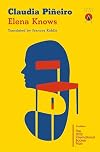
Elena knows that she has Parkinson's disease, and that her daughter is dead, and that her daughter's death wasn't suicide. Fuelled by this conviction, hampered by her illness, she battles her way across Buenos Aires to find someone that she believes can help her to prove that her daughter was murdered.
This is a claustrophobic novel, tightly focused on a main character whose circumstances provoke empathy even as she herself is a rather unpleasant person to spend time with. I wasn't entirely show more convinced by the ending—it both convincingly reframes earlier parts of the book and teeters on the edge of camp. show less
This is a claustrophobic novel, tightly focused on a main character whose circumstances provoke empathy even as she herself is a rather unpleasant person to spend time with. I wasn't entirely show more convinced by the ending—it both convincingly reframes earlier parts of the book and teeters on the edge of camp. show less

Elena is dying by inches. Her world is shrinking as Parkinson's makes walking, lifting her arms, raising her head, and every ignoble daily process nearly impossible. Her daughter had been her primary caretaker, but she died recently, and Elena is determined to find her killer. The book opens with Elena's second dose of levodopa in the morning as she prepares to reach the one person she thinks can help her solve the mystery of her daughter's death. Once the medication takes hold, Elena is show more able to shuffle along, but only as long as the dose lasts. The book ends that afternoon, after her fourth pill.
Although much of the plot centers around Elena's illness and the death of her daughter, the themes are much broader. To what extent do women have control over their own bodies? How do societal mores, religious beliefs, politics, and illness transgress on that control? What does it mean to be a mother, and what does it mean when a woman doesn't want to be a mother? Are you still a mother after your child dies? Can you give birth and not be a mother? Do mothers by definition know their children best?
Despite the premise, and the author's previous works, this is not a crime novel, but the story of mothers and daughters, illness, and the fallibility of the very things we think we know best. I found it engaging, thought-provoking, and surprising. Recommended. show less
Although much of the plot centers around Elena's illness and the death of her daughter, the themes are much broader. To what extent do women have control over their own bodies? How do societal mores, religious beliefs, politics, and illness transgress on that control? What does it mean to be a mother, and what does it mean when a woman doesn't want to be a mother? Are you still a mother after your child dies? Can you give birth and not be a mother? Do mothers by definition know their children best?
Despite the premise, and the author's previous works, this is not a crime novel, but the story of mothers and daughters, illness, and the fallibility of the very things we think we know best. I found it engaging, thought-provoking, and surprising. Recommended. show less
Trapped in a Body
One would not normally find this book to be one that broke an “unable to concentrate” phase, but I was engrossed in Elena Knows from its very beginning.
Elena Knows. Knows what? At first I thought the title was a weird translation from Argentinian Spanish, but no, it’s spot on. Elena sabe.
Elena is severely physically disabled from Parkinson’s disease. She can barely walk and her whole body is disfigured. The most disabled for normal everyday functioning is the painful show more walking, difficulty in eating, the constant unattractive drooling, and the inability to raise her head which is forever tilted down. She can’t see faces, and people turn away from hers.
Elena needs 24 hour care. She can manage tasks like shopping but it’s a huge effort. She’s aware like all of us, of how people see her. She’s looked after by her daughter Rita who has assisted her in daily living. Rita is cold and we feel she’s doing the care from duty rather than love.
When the book starts we realize that Rita has died. She was the found hanging from a rope in the local church’s belfry and the police, her priest, and every one in her suburb of Buenos Aires assume suicide. But Elena knows otherwise.
Elena believes that Rita was murdered. There had been a thunderstorm that day and Rita had been suspicious of storms and would never go to church in the middle of one. Elenor begins to investigate the true cause of Rita’s death. Elena knows.
Throughout the book there are flashbacks to life before Rita’s death. We learn of an act of well-intended kindness to a young woman and of a fraught vacation of Elena and Rita, both years before Elena’s Parkinson’s had developed. We learn details of the two women’s domestic life coping with the debilitating effects of the disease.
Elena’s investigation is relentless. Despite her disabilities Elena is determined to find the real cause of her daughter’s death. It involves a grueling trip across the capital all alone, to a house she knows only by a single sighting decades ago. As Elena cannot see straight ahead or move with ease, we feel her pain as she struggles to use trains and taxis.
To go further into the plot would spoil the book for first-time readers. This is not a simple story of one woman’s struggle with Parkinson’s. Written before abortion was legalized in Argentina in 2020 , the issue of women’s bodies and their ownership, hover in the background as sub-text.
Claudia Piñeiro is known in Argentina as the Queen of Crime writers, but Elena Knows is not your typical crime novel. It’s confronting, disturbing and sheds light on western society’s treatment of the aged and disabled. We have to read to the very end to find the crime, or if there was one. Eleano knows. Or does she?
Highly recommended with 4.5 stars. show less
One would not normally find this book to be one that broke an “unable to concentrate” phase, but I was engrossed in Elena Knows from its very beginning.
Elena Knows. Knows what? At first I thought the title was a weird translation from Argentinian Spanish, but no, it’s spot on. Elena sabe.
Elena is severely physically disabled from Parkinson’s disease. She can barely walk and her whole body is disfigured. The most disabled for normal everyday functioning is the painful show more walking, difficulty in eating, the constant unattractive drooling, and the inability to raise her head which is forever tilted down. She can’t see faces, and people turn away from hers.
Elena needs 24 hour care. She can manage tasks like shopping but it’s a huge effort. She’s aware like all of us, of how people see her. She’s looked after by her daughter Rita who has assisted her in daily living. Rita is cold and we feel she’s doing the care from duty rather than love.
When the book starts we realize that Rita has died. She was the found hanging from a rope in the local church’s belfry and the police, her priest, and every one in her suburb of Buenos Aires assume suicide. But Elena knows otherwise.
Elena believes that Rita was murdered. There had been a thunderstorm that day and Rita had been suspicious of storms and would never go to church in the middle of one. Elenor begins to investigate the true cause of Rita’s death. Elena knows.
Throughout the book there are flashbacks to life before Rita’s death. We learn of an act of well-intended kindness to a young woman and of a fraught vacation of Elena and Rita, both years before Elena’s Parkinson’s had developed. We learn details of the two women’s domestic life coping with the debilitating effects of the disease.
Elena’s investigation is relentless. Despite her disabilities Elena is determined to find the real cause of her daughter’s death. It involves a grueling trip across the capital all alone, to a house she knows only by a single sighting decades ago. As Elena cannot see straight ahead or move with ease, we feel her pain as she struggles to use trains and taxis.
To go further into the plot would spoil the book for first-time readers. This is not a simple story of one woman’s struggle with Parkinson’s. Written before abortion was legalized in Argentina in 2020 , the issue of women’s bodies and their ownership, hover in the background as sub-text.
Claudia Piñeiro is known in Argentina as the Queen of Crime writers, but Elena Knows is not your typical crime novel. It’s confronting, disturbing and sheds light on western society’s treatment of the aged and disabled. We have to read to the very end to find the crime, or if there was one. Eleano knows. Or does she?
Highly recommended with 4.5 stars. show less
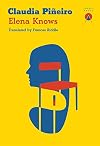
And, if you're reading this, pardon my language. Because holy fuck. This book kicked me in the chest. Hard.
It takes place over just one day when Elena, a 65-year-old suffering from debilitating Parkinson's, is working to further the investigation into who killed her daughter (who was found hanging in the church belfry). Officially, the ruling is suicide, but "Elena knows" that wouldn't be the case. She is determined to push the police to investigate further.
This story
But, really, the crime is not the point of the story. It's a frame for investigating so many fucking hard things. Fucking hard things that women especially face in this man's world we live in: women's fight to control their own bodies, the horrors of enduring a progressive, disabling disease (or being the caretaker & watching it all happen in excruciating slo-mo), investigating the roles of being a woman &/or a mother (what do those even mean?), rape, the way society brushes aside the elderly & disabled, & so many more big things.
This is a slim book that packs an extremely powerful punch. Worthwhile but you will be bruised. Just... fuck.
Lists
Awards


You May Also Like


Associated Authors
Statistics
- Works
- 20
- Also by
- 1
- Members
- 1,839
- Popularity
- #13,998
- Rating
- 3.8
- Reviews
- 87
- ISBNs
- 194
- Languages
- 13