

Peter Andreas
Author of Smuggler Nation: How Illicit Trade Made America
About the Author
Peter Andreas is a professor in the Department of Political Science and the Watson Institute for International Studies at Brown University.
Works by Peter Andreas
Sex, Drugs, and Body Counts: The Politics of Numbers in Global Crime and Conflict (2010) 29 copies, 1 review
Blue Helmets and Black Markets: The Business of Survival in the Siege of Sarajevo (2008) 20 copies, 1 review
The wall around the West : state borders and immigration controls in North America and Europe (2000) 4 copies
The Rebordering of North America: Integration and Exclusion in a New Security Context (2003) 3 copies
Associated Works
Den lidt mindre store danske pomphoplædi (1995) — Author, some editions; Author, some editions — 4 copies, 1 review
MHQ: The Quarterly Journal of Military History — Spring 2020 (2020) — Author "Behind the Lines: Quench Warfare" — 1 copy
Tagged
Common Knowledge
- Gender
- male
- Education
- Swarthmore College (B.A.|Political Science)
Cornell University (Ph.D.|Government) - Nationality
- USA
- Associated Place (for map)
- USA
Members
Reviews
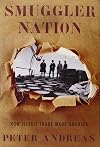
Smuggler Nation is a very readable addendum to conventional American history books. If you know American history, you’re already familiar with many of the important impacts of illicit trade on that history: the Revolution, slave trade, Confederate blockade runners, rum runners, etc. Some of the lesser known aspects (to me, at least) were fascinating. For example, the young United States was a haven for what we would call “intellectual piracy” today, and of American farmers supplied show more much of the food needed by British forces in Canada during the War of 1812.
The author makes an excellent case for his belief that control of smuggling has been the major driving force for an expansion of Federal law enforcement throughout American history. The last chapters deal with controversial contemporary political issues (drugs, guns, immigration) and the author’s bias is clear. This doesn’t detract from the readability and usefulness of the book. This a well-written book that is fun to read, but it is also well-footnoted for scholarly purposes. show less
The author makes an excellent case for his belief that control of smuggling has been the major driving force for an expansion of Federal law enforcement throughout American history. The last chapters deal with controversial contemporary political issues (drugs, guns, immigration) and the author’s bias is clear. This doesn’t detract from the readability and usefulness of the book. This a well-written book that is fun to read, but it is also well-footnoted for scholarly purposes. show less
Smuggler Nation rocks. It tells the unvarnished story behind the official and the legendary. It answers age-old questions about motives and assumptions. It speaks truth to power. And the truth is ugly.
The United States was born a smuggling nation. John Hancock, whose florid signature sits top and center on the Declaration of Independence, was one of the biggest smugglers of his era. His concern was not taxation without representation; he was was fed up with British attempts to crack down on show more smuggling. As were many, many others. The Stamp Act wasn't the last straw; writs of assistance permitting Customs inspections was the last straw.
All through the Revolutionary War, the Civil War and the War of 1812, Americans traded freely with both sides. They fed the British army in Canada in 1812 and armed the South in the Civil War. It was all just business as usual in a country renown for its piracy and theft. The US government encouraged theft and smuggling of machinery, which enabled New England to build a
worldbeating cloth manufacturing industry, all without paying licensing, royalties or even import fees. British workers were smuggled out of the country to man it all - tens of thousands of them. Foreigners were not allowed to own patents, thus permitting Americans to use the law to ensure lawbreaking.
Andreas traces an entire smuggling circuit from the Caribbean, where Americans picked up molasses to smuggle to their rum refineries, smuggling the rum into Europe, then down to Africa to pick up more slaves for the cane plantations in the Caribbean.
This was the mainstay of the US economy until the revolution. The US did not become the biggest slave importer for itself until after it was outlawed in the early 1800s. If it could be smuggled, it became attractive.
The US was known as the foremost haven for international copyright piracy in the world throughout the 19th century. Why smuggle in a container of books, when you could bring one home and reprint it yourself? Even Dickens complained about the theft, and it wasn't until an American, Mark Twain, protested, that the US became a born-again copyright evangelist. And of course it has since swung to other extreme, extending copyright (The Mickey Mouse Act) for 93 years and policing the planet in search of infringers.
The USA looked very much like what it charges China with today, and this hypocrisy is typical of the cycle at all levels. The grand "old money" of the US - of the Hancocks and the Astors and the like - came from smuggling. They traded with the enemy and they smuggled alcohol to the Indians, and no law was too serious to even give them pause. They had the support of presidents and cabinet secretaries who participated themselves and encouraged it. The sainted Daniel Webster said in their defense: "It is not the practice of nations to undertake to prohibit their own subjects from trafficking in articles contraband of war." Go for it!
Even Lincoln handed out permits to trade cotton with the South, keeping the war going longer. General William Butler somehow increased his net worth from $150,000 to $3 million during the Civil War, as "merchants" gathered round him wherever he went. Franklin Roosevelt's family fortune came from selling opium to the Chinese. Shipbuilders on Long Island built for both the coast guard and rum runners during Prohibition.
I think my favorite story is of the legendary Alamo hero, Jim Bowie. While famous for the Bowie Knife, he made his living smuggling, and he had a great scam. He bought slaves in Spanish-controlled Galveston, then surrendered them to the US Customs authorities. This got them into the USA cleanly, and he could buy them back from the government as simple seized contraband. He even got 50% off from the government. ($1 a pound in Galveston, 50 cents a pound in the USA) No muss, very little fuss. And because of honor among thieves, no one bid against you when you went to recover your cargo - or your ship itself.
So when you look at Somalia and its piracy, when you look at China and its copying, know there is excellent precedent in the country that spends billions every year to stamp it out. There is no wrath like the wrath of the reformed. and the USA spends fabulous amounts of taxpayer dollars to stamp out what its founders fought to preserve.
Smuggler Nation is an blockbuster of the first rank. It is breezily written, well referenced and terrifically organized. Most highly recommended. show less
The United States was born a smuggling nation. John Hancock, whose florid signature sits top and center on the Declaration of Independence, was one of the biggest smugglers of his era. His concern was not taxation without representation; he was was fed up with British attempts to crack down on show more smuggling. As were many, many others. The Stamp Act wasn't the last straw; writs of assistance permitting Customs inspections was the last straw.
All through the Revolutionary War, the Civil War and the War of 1812, Americans traded freely with both sides. They fed the British army in Canada in 1812 and armed the South in the Civil War. It was all just business as usual in a country renown for its piracy and theft. The US government encouraged theft and smuggling of machinery, which enabled New England to build a
worldbeating cloth manufacturing industry, all without paying licensing, royalties or even import fees. British workers were smuggled out of the country to man it all - tens of thousands of them. Foreigners were not allowed to own patents, thus permitting Americans to use the law to ensure lawbreaking.
Andreas traces an entire smuggling circuit from the Caribbean, where Americans picked up molasses to smuggle to their rum refineries, smuggling the rum into Europe, then down to Africa to pick up more slaves for the cane plantations in the Caribbean.
This was the mainstay of the US economy until the revolution. The US did not become the biggest slave importer for itself until after it was outlawed in the early 1800s. If it could be smuggled, it became attractive.
The US was known as the foremost haven for international copyright piracy in the world throughout the 19th century. Why smuggle in a container of books, when you could bring one home and reprint it yourself? Even Dickens complained about the theft, and it wasn't until an American, Mark Twain, protested, that the US became a born-again copyright evangelist. And of course it has since swung to other extreme, extending copyright (The Mickey Mouse Act) for 93 years and policing the planet in search of infringers.
The USA looked very much like what it charges China with today, and this hypocrisy is typical of the cycle at all levels. The grand "old money" of the US - of the Hancocks and the Astors and the like - came from smuggling. They traded with the enemy and they smuggled alcohol to the Indians, and no law was too serious to even give them pause. They had the support of presidents and cabinet secretaries who participated themselves and encouraged it. The sainted Daniel Webster said in their defense: "It is not the practice of nations to undertake to prohibit their own subjects from trafficking in articles contraband of war." Go for it!
Even Lincoln handed out permits to trade cotton with the South, keeping the war going longer. General William Butler somehow increased his net worth from $150,000 to $3 million during the Civil War, as "merchants" gathered round him wherever he went. Franklin Roosevelt's family fortune came from selling opium to the Chinese. Shipbuilders on Long Island built for both the coast guard and rum runners during Prohibition.
I think my favorite story is of the legendary Alamo hero, Jim Bowie. While famous for the Bowie Knife, he made his living smuggling, and he had a great scam. He bought slaves in Spanish-controlled Galveston, then surrendered them to the US Customs authorities. This got them into the USA cleanly, and he could buy them back from the government as simple seized contraband. He even got 50% off from the government. ($1 a pound in Galveston, 50 cents a pound in the USA) No muss, very little fuss. And because of honor among thieves, no one bid against you when you went to recover your cargo - or your ship itself.
So when you look at Somalia and its piracy, when you look at China and its copying, know there is excellent precedent in the country that spends billions every year to stamp it out. There is no wrath like the wrath of the reformed. and the USA spends fabulous amounts of taxpayer dollars to stamp out what its founders fought to preserve.
Smuggler Nation is an blockbuster of the first rank. It is breezily written, well referenced and terrifically organized. Most highly recommended. show less

Condoms and cotton, salt and slaves, blueprints and booze, molasses and marijuana, Americans and their colonial predecessors have smuggled them all.
What exactly do we mean by smuggling? Simply, it’s illegally avoiding taxes, regulations, or outright prohibitions when moving goods and people across a political border. And Andreas writes a clear, entertaining, jargon-free history making his case that smuggling did, indeed, make America from its beginnings in a tax revolt, its acquisitions of show more land, and its development into something like a surveillance state.
Andreas’ chronological history begins with molasses and how New England rum distilleries obviously used way more molasses than they were legally importing from other British colonies. But molasses wasn’t the only good smuggled into the colonies. There were brandies from France and clothing, gunpowder, coffee, and chocolate from Holland, a torrent of illegal goods that, incidentally, generated enough income from illegal trade for colonists to buy legal British manufactured goods. As he does throughout the book, Andreas doesn’t just throw out stats but also quotes contemporary sources about all this smuggling or, as one New Englander put it, “this Trade So very pernicious to the British Nation”. That became a literally treasonous trade during the French and the Indian War when American smugglers selling to France prolonged combat in the North American sector of the war. (It was not the last time Americans would, in the middle of a war, sell to their enemies exhibiting, depending on your predisposition, risky pragmatism or a tendency to put selfish economic gain over national interest.) Attempts to recoup its war expenses from its American colonists – and reform customs enforcement – precipitated a civil war in the British Empire – the American Revolution.
Andreas views the American Revolution from the interesting parallax of a war against smuggling. British tea undercut tea supplied by local smugglers so the reaction was the Boston Tea Party. John Hancock, a wealthy smuggler unsuccessfully prosecuted, was the first to sign the Declaration of Independence. Clandestine trading kept the Revolutionary Army supplied – but plenty of colonists traded with the enemy regardless of their stated political positions, a pernicious trade noted by George Washington.
“Taxation without Representation” was the battle cry of the Revolution but many of the smugglers, including John Brown – one of the founders of Brown University -- an archetypal figure for Andreas, didn’t much like taxation with representation either. The tariffs so many evaded were basically the sole support for the young nation. British military operations in the War of 1812 were aided greatly by American smugglers. And America’s greatest (if irrelevant) victory in the war, the Battle of New Orleans, prominently featured smuggler Jean Laffite (after his smuggling base had been destroyed by the American military and he refused overtures from the British).
Andreas has something of a general insouciant, a “seen it all before”, people-want-what- they-want tone throughout the book. Part of that may be just an academic necessity to dispassionately look at government policy and the responses to it. I don’t really think he morally equates the slave smuggling that took place after the constitutional ban went into effect in 1808 (actually there were numerous restrictions placed on the American slave trade before that) with the smuggling of condoms to evade general tariffs. But I took away different lessons than perhaps Andreas, who seems rather libertarian in his notions of not restricting the movement of goods and people across borders, intended.
The American effort, semi-official in that it was encouraged, if not directly funded by various Presidential administration, to steal British patents, skilled workers (from 1749 to 1824 various laws existed restricting the emigration of skilled labor from Britain), and actual technology was successful in developing American industrially. It was part of a plan by Alexander Hamilton, who favored tariffs, of building a strong economy and supplanting the British. And it worked eventually. One could perhaps consider that when looking at Chinese-American trade today.
In a chapter on the benefits (at least for whites) of smuggling liquor to Indians, Andreas talks about how some Indian leaders, certainly recognizing their race’s peculiar susceptibility to alcohol’s downsides, asked that liquor not be sold to Indians. The idea that members of a race might ask to, in effect, be protected from themselves would seem peculiar to us today with ideas of non-discrimination and a disdain for “paternalism”. Yet, I would add that this conflict was played out as recently as two weeks ago on the Pine Ridge Indian Reservation in South Dakota.
In regards to the tariffs that financed America through most of the 19th Century, Andreas talks about the many attempts at evasion at all social levels and the corruption of the revenue service. However, does our Internal (as opposed to taxes paid at a point of entry into the country) Revenue Service and the mass of laws it is expected to enforce really seem a great substitute for tariffs despite their administrative problems?
Human trafficking is a big part of this book whether its slaves or British mechanics or “white slaves” or illegal immigrants. In a chapter on illegal Chinese immigration, we are told of the horrors of exploitation and discrimination faced by them in America. Yet, like illegal immigrants today, they often paid large amounts of money to be sent to a land that treated them badly. It all seems very irrational and stupid – unless, of course, you consider the self-smuggling immigrant has made the calculation it was worth it. Andreas does a nice job of documenting how illegal entry methods and points varied for Chinese immigrants through the years. But it’s also fairly clear, if not explicit, that Andreas really sees nothing wrong with unrestricted immigration though he also notes America has never had a completely open door to immigration.
There are, of course, many chapters on the war on drugs which has been going on for a century in America. In typical modern moral logic, we are automatically invited to see the various efforts in this war with suspicion because they started out with the contention that certain minorities exhibited bad behavior because of a certain drug. We’re not really given any evidence one way or another about the actual truth of these charges, but in an age which places anti-discrimination before anything else, we are simply to regard anything smacking of “profiling” as illegitimate, illogical, and immoral. To be fair, Andreas does note that Prohibition did seem to curb actual alcohol contention.
One of the important contributions Andreas makes is showing how anti-smuggling efforts created greater centralization of Federal authority. It started with the increase in revenue cutters to enforce Thomas Jefferson’s total embargo of American commerce with other countries in 1807-1809 and really accelerated with the war on drugs. Those efforts created greater use of the military, increased surveillance, and new laws to monitor the movements of Americans’ money.
But you don’t have to agree with Andreas’ contention that laws attempting to control the movement of drugs and people causes “enormous collateral damage” (personally, I’m fairly sympathetic to the former claim but not the latter) to appreciate this book. You just have to want a well-written, unusual viewpoint for American history.
Oh, you will want to read the introduction which covers Andreas’ adventure in toilet paper smuggling. show less
What exactly do we mean by smuggling? Simply, it’s illegally avoiding taxes, regulations, or outright prohibitions when moving goods and people across a political border. And Andreas writes a clear, entertaining, jargon-free history making his case that smuggling did, indeed, make America from its beginnings in a tax revolt, its acquisitions of show more land, and its development into something like a surveillance state.
Andreas’ chronological history begins with molasses and how New England rum distilleries obviously used way more molasses than they were legally importing from other British colonies. But molasses wasn’t the only good smuggled into the colonies. There were brandies from France and clothing, gunpowder, coffee, and chocolate from Holland, a torrent of illegal goods that, incidentally, generated enough income from illegal trade for colonists to buy legal British manufactured goods. As he does throughout the book, Andreas doesn’t just throw out stats but also quotes contemporary sources about all this smuggling or, as one New Englander put it, “this Trade So very pernicious to the British Nation”. That became a literally treasonous trade during the French and the Indian War when American smugglers selling to France prolonged combat in the North American sector of the war. (It was not the last time Americans would, in the middle of a war, sell to their enemies exhibiting, depending on your predisposition, risky pragmatism or a tendency to put selfish economic gain over national interest.) Attempts to recoup its war expenses from its American colonists – and reform customs enforcement – precipitated a civil war in the British Empire – the American Revolution.
Andreas views the American Revolution from the interesting parallax of a war against smuggling. British tea undercut tea supplied by local smugglers so the reaction was the Boston Tea Party. John Hancock, a wealthy smuggler unsuccessfully prosecuted, was the first to sign the Declaration of Independence. Clandestine trading kept the Revolutionary Army supplied – but plenty of colonists traded with the enemy regardless of their stated political positions, a pernicious trade noted by George Washington.
“Taxation without Representation” was the battle cry of the Revolution but many of the smugglers, including John Brown – one of the founders of Brown University -- an archetypal figure for Andreas, didn’t much like taxation with representation either. The tariffs so many evaded were basically the sole support for the young nation. British military operations in the War of 1812 were aided greatly by American smugglers. And America’s greatest (if irrelevant) victory in the war, the Battle of New Orleans, prominently featured smuggler Jean Laffite (after his smuggling base had been destroyed by the American military and he refused overtures from the British).
Andreas has something of a general insouciant, a “seen it all before”, people-want-what- they-want tone throughout the book. Part of that may be just an academic necessity to dispassionately look at government policy and the responses to it. I don’t really think he morally equates the slave smuggling that took place after the constitutional ban went into effect in 1808 (actually there were numerous restrictions placed on the American slave trade before that) with the smuggling of condoms to evade general tariffs. But I took away different lessons than perhaps Andreas, who seems rather libertarian in his notions of not restricting the movement of goods and people across borders, intended.
The American effort, semi-official in that it was encouraged, if not directly funded by various Presidential administration, to steal British patents, skilled workers (from 1749 to 1824 various laws existed restricting the emigration of skilled labor from Britain), and actual technology was successful in developing American industrially. It was part of a plan by Alexander Hamilton, who favored tariffs, of building a strong economy and supplanting the British. And it worked eventually. One could perhaps consider that when looking at Chinese-American trade today.
In a chapter on the benefits (at least for whites) of smuggling liquor to Indians, Andreas talks about how some Indian leaders, certainly recognizing their race’s peculiar susceptibility to alcohol’s downsides, asked that liquor not be sold to Indians. The idea that members of a race might ask to, in effect, be protected from themselves would seem peculiar to us today with ideas of non-discrimination and a disdain for “paternalism”. Yet, I would add that this conflict was played out as recently as two weeks ago on the Pine Ridge Indian Reservation in South Dakota.
In regards to the tariffs that financed America through most of the 19th Century, Andreas talks about the many attempts at evasion at all social levels and the corruption of the revenue service. However, does our Internal (as opposed to taxes paid at a point of entry into the country) Revenue Service and the mass of laws it is expected to enforce really seem a great substitute for tariffs despite their administrative problems?
Human trafficking is a big part of this book whether its slaves or British mechanics or “white slaves” or illegal immigrants. In a chapter on illegal Chinese immigration, we are told of the horrors of exploitation and discrimination faced by them in America. Yet, like illegal immigrants today, they often paid large amounts of money to be sent to a land that treated them badly. It all seems very irrational and stupid – unless, of course, you consider the self-smuggling immigrant has made the calculation it was worth it. Andreas does a nice job of documenting how illegal entry methods and points varied for Chinese immigrants through the years. But it’s also fairly clear, if not explicit, that Andreas really sees nothing wrong with unrestricted immigration though he also notes America has never had a completely open door to immigration.
There are, of course, many chapters on the war on drugs which has been going on for a century in America. In typical modern moral logic, we are automatically invited to see the various efforts in this war with suspicion because they started out with the contention that certain minorities exhibited bad behavior because of a certain drug. We’re not really given any evidence one way or another about the actual truth of these charges, but in an age which places anti-discrimination before anything else, we are simply to regard anything smacking of “profiling” as illegitimate, illogical, and immoral. To be fair, Andreas does note that Prohibition did seem to curb actual alcohol contention.
One of the important contributions Andreas makes is showing how anti-smuggling efforts created greater centralization of Federal authority. It started with the increase in revenue cutters to enforce Thomas Jefferson’s total embargo of American commerce with other countries in 1807-1809 and really accelerated with the war on drugs. Those efforts created greater use of the military, increased surveillance, and new laws to monitor the movements of Americans’ money.
But you don’t have to agree with Andreas’ contention that laws attempting to control the movement of drugs and people causes “enormous collateral damage” (personally, I’m fairly sympathetic to the former claim but not the latter) to appreciate this book. You just have to want a well-written, unusual viewpoint for American history.
Oh, you will want to read the introduction which covers Andreas’ adventure in toilet paper smuggling. show less
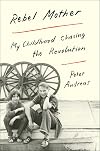
This is a book about a complicated, deep and enduring bond between a mother who searched for the revolution in South America in the 1960's-1980's and her son. Peter was abducted by his mother Carol after losing custody of him and from 5-11 years old moved from country to country in Carol's hope that she could find a place where justice and equality prevailed.
After I finished Rebel Mother I thought about all the ways that mother and son were alike. They were passionate, adventurous, and able show more to easily fit into different cultures and had the ability to keep their wits about them even in danger. But more importantly, Peter and Carol had a vast and deep connection to each other because Carol loved her son and Peter loved his mother. He loved her through danger, poverty, disease and poor choices in men and rotten parenting. Her firm and loving commitment to him kept them together even when it all seemed untenable. For me, having lived through much at that time, I know how close the revolution seemed and how wild and wonderful and scary and dangerous this time was. Carol fascinated me due to her fierceness, rock-bottom commitment for fairness and justice and of course, to her son. Her need to change the unquestioned contract of becoming a 1950's traditional wife and mother led to hard consequences and choices as it often does. And both mother and son had to live with that.
In many ways the epilogue is where Peter Andreas moves from actor to observer as he examines the impact of his childhood. There were many losses including, and most importantly, having a distant relationship to his father with no access to the safety and stability that he could provide. What I love about this section is that the author writes about his mother as a fully realized person not just as a son stuck in childhood who cannot see his mother for who she is. That can be hard to do.
Peter did not become a radical and his mother saw it as a betrayal. She wanted to have her sons follow and keep her revolutionary commitments and was sad and sometimes bitter that they did not. He discovered this by reading her journals after her death. It is the beauty of the book that Peter did keep her commitment. They are not the same but they are similar. Peter cares about justice, equality and border crossings, international economies. He also did this by writing a beautiful tribute to a complicated woman with tenderness and clarity.
Thank you to Edelweiss for allowing me to review this book. show less
After I finished Rebel Mother I thought about all the ways that mother and son were alike. They were passionate, adventurous, and able show more to easily fit into different cultures and had the ability to keep their wits about them even in danger. But more importantly, Peter and Carol had a vast and deep connection to each other because Carol loved her son and Peter loved his mother. He loved her through danger, poverty, disease and poor choices in men and rotten parenting. Her firm and loving commitment to him kept them together even when it all seemed untenable. For me, having lived through much at that time, I know how close the revolution seemed and how wild and wonderful and scary and dangerous this time was. Carol fascinated me due to her fierceness, rock-bottom commitment for fairness and justice and of course, to her son. Her need to change the unquestioned contract of becoming a 1950's traditional wife and mother led to hard consequences and choices as it often does. And both mother and son had to live with that.
In many ways the epilogue is where Peter Andreas moves from actor to observer as he examines the impact of his childhood. There were many losses including, and most importantly, having a distant relationship to his father with no access to the safety and stability that he could provide. What I love about this section is that the author writes about his mother as a fully realized person not just as a son stuck in childhood who cannot see his mother for who she is. That can be hard to do.
Peter did not become a radical and his mother saw it as a betrayal. She wanted to have her sons follow and keep her revolutionary commitments and was sad and sometimes bitter that they did not. He discovered this by reading her journals after her death. It is the beauty of the book that Peter did keep her commitment. They are not the same but they are similar. Peter cares about justice, equality and border crossings, international economies. He also did this by writing a beautiful tribute to a complicated woman with tenderness and clarity.
Thank you to Edelweiss for allowing me to review this book. show less
Awards


You May Also Like


Associated Authors
Statistics
- Works
- 29
- Also by
- 2
- Members
- 388
- Popularity
- #62,337
- Rating
- 3.8
- Reviews
- 9
- ISBNs
- 70
- Languages
- 6