
About the Author
Image credit: Vox Day.
Series
Works by Vox Day
The Irrational Atheist: Dissecting the Unholy Trinity of Dawkins, Harris, And Hitchens (2008) 115 copies, 2 reviews
SJWs Always Double Down: Anticipating the Thought Police (The Laws of Social Justice Book 2) (2017) 25 copies
Corporate Cancer: How to Work Miracles and Save Millions by Curing Your Company (2019) 17 copies, 1 review
Gravity Kills (Quantum Mortis, #2) — Author — 4 copies
Death and the Devil 1 copy
A Throne of Bones Vol. I 1 copy
A Reliable Source 1 copy
Hypergamouse 1 copy
Associated Works
The Anthology at the End of the Universe: Leading Science Fiction Authors on Douglas Adams' The Hitchhiker's Guide to th (2005) — Contributor — 139 copies, 2 reviews
You Do Not Talk About Fight Club: I Am Jack's Completely Unauthorized Essay Collection (2008) — Contributor — 79 copies, 2 reviews
Revisiting Narnia: Fantasy, Myth and Religion in C. S. Lewis' Chronicles (2005) — Contributor — 54 copies, 1 review
Tagged
Common Knowledge
- Legal name
- Beale, Theodore Robert
- Other names
- Day, Vox
Beale, Ted - Birthdate
- 1968-08-21
- Gender
- male
- Occupations
- video game designer
fiction writer - Organizations
- Castalia House
- Nationality
- USA
- Associated Place (for map)
- USA
Members
Reviews
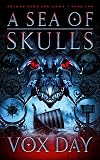
This rich, intensely detailed drama of a continent under seige by four fractally dynamic superfactions - two supernatural, two temporal - puts to shame the vast majority of 20th century epic fantasy. Only the Tolkiens' dual life works are ahead of the Arts of Dark and Light series (and Day is the only one still working on his!). Only Eddison's The Worm Ourboros is a somewhat close second to Sea of Skulls.
Dante's Divine Comedy is superior only in style, and that is only in its best show more translations or original Italian, but it is too rooted in the occult to as clearly illustrate the false beauty and counterfeit nature of evil quite as well as Sea of Skulls does.
The book also quite casually metatextually attacks the strengths of George R.R. Martin, Joe Abercrombie, Robert Zelazny and other champions of epic and martial fantasy. A Sea of Skulls exposes the various hamartiae of epic fiction while disarming them: the author eschews narrow quest plots, perspective bloat, theater-violence, character-death as plot editor, and every other "trick" to writing 1000-page epics. Instead, Day writes what he sees in his mind, and his mind is an encyclopedia of Selenothian history and prophetic vision.
There are cosmological flaws in the storytelling: at points it feels as if as if the world as described is anachronistically globular, and has some sense of a post-Copernican worldview. Perhaps this is intentional: the continent is indeed under tremendous flux, but this sense doesn't quite feel as cohesive as, say, the unspoken social expectations of the various cultures in conflict. Sea of Skulls is slow to reveal its mysteries and secrets, but it doesn't cheat - the hints are well structured, purposeful and timely, if well hidden.
Most remarkable is the profound empathy Sea of Skulls has for its invaders, monsters, evil-doers and innocents alike. It leaves all judgment to God and to the reader, and in doing so, is perhaps the most just fantasy novel I have ever read. show less
Dante's Divine Comedy is superior only in style, and that is only in its best show more translations or original Italian, but it is too rooted in the occult to as clearly illustrate the false beauty and counterfeit nature of evil quite as well as Sea of Skulls does.
The book also quite casually metatextually attacks the strengths of George R.R. Martin, Joe Abercrombie, Robert Zelazny and other champions of epic and martial fantasy. A Sea of Skulls exposes the various hamartiae of epic fiction while disarming them: the author eschews narrow quest plots, perspective bloat, theater-violence, character-death as plot editor, and every other "trick" to writing 1000-page epics. Instead, Day writes what he sees in his mind, and his mind is an encyclopedia of Selenothian history and prophetic vision.
There are cosmological flaws in the storytelling: at points it feels as if as if the world as described is anachronistically globular, and has some sense of a post-Copernican worldview. Perhaps this is intentional: the continent is indeed under tremendous flux, but this sense doesn't quite feel as cohesive as, say, the unspoken social expectations of the various cultures in conflict. Sea of Skulls is slow to reveal its mysteries and secrets, but it doesn't cheat - the hints are well structured, purposeful and timely, if well hidden.
Most remarkable is the profound empathy Sea of Skulls has for its invaders, monsters, evil-doers and innocents alike. It leaves all judgment to God and to the reader, and in doing so, is perhaps the most just fantasy novel I have ever read. show less

The difficult sequel
It is always difficult to make a sequel to a great book, so it was with trepidation that I started reading this tome. It was a hard slog at times, this book seems mostly concerned with setting up the epic conflict that will be resolved in future books, so we are introduced to a dizzying array of new characters and locations, but nothing of note happens. The plot hasn't advanced much since the last book. I get the idea of setting up an epic universe, but for a book of this show more size, it would be nice to get more than just setup for the next book. Also dearly missing from this book was the intense political/personal drama from Amorr that we saw in the last book. All the new characters that were introduced in this book were not developed enough to care about them, and all the characters that carried over from the last have been spread out all over the world, only interacting with their followers and a bunch of undeveloped, two-dimensional characters. Here's to hoping the next book will be more futtering, less foreplay. show less
It is always difficult to make a sequel to a great book, so it was with trepidation that I started reading this tome. It was a hard slog at times, this book seems mostly concerned with setting up the epic conflict that will be resolved in future books, so we are introduced to a dizzying array of new characters and locations, but nothing of note happens. The plot hasn't advanced much since the last book. I get the idea of setting up an epic universe, but for a book of this show more size, it would be nice to get more than just setup for the next book. Also dearly missing from this book was the intense political/personal drama from Amorr that we saw in the last book. All the new characters that were introduced in this book were not developed enough to care about them, and all the characters that carried over from the last have been spread out all over the world, only interacting with their followers and a bunch of undeveloped, two-dimensional characters. Here's to hoping the next book will be more futtering, less foreplay. show less
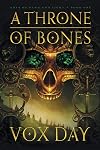
A Throne of Bones is the first in a proposed two-book series, Arts of Dark and Light. It is an epic fantasy in the best tradition. It is told in multiple POVs: in the Republic of Amorr we have Stratgister Militum Corvus, his son Marcus Clericus, his rival Severus Patronus, and his daughter Severa; in the kingdom of Savondir we have Sieur Theuderic, a battlemage; among the Dalarn Clans we have we have Fjotra, a refugee Reaver and daughter of Skuli Skullbreaker; and Lodi representing the show more dwarves.
Amorr is representative of the Roman Republic with a religious body that ties back to the Catholic church. Savondir harks back to medieval France, and the Dalarn clans seem to be Vikings. The author ties all these disparate cultures together masterfully and throws in some elves, goblins, orcs, and demons for good measure.
The Amorr sections show a detailed mastery of military tactics. I admit I was glad for my Latin background, but I think most readers will understand the gist of the verbiage from context. I found the battle descriptions to be extraordinary, very well-written though perhaps not to everyone's taste, and I very much enjoyed those sections. The rest of the worldbuilding is equally as good.
This is a long book, over 900 pages, but I never felt that it dragged. The story is well-paced as it proceeds along the various storylines. It is definitely a book any fantasy fans should enjoy. Now I just need to wait for the next book. show less
Amorr is representative of the Roman Republic with a religious body that ties back to the Catholic church. Savondir harks back to medieval France, and the Dalarn clans seem to be Vikings. The author ties all these disparate cultures together masterfully and throws in some elves, goblins, orcs, and demons for good measure.
The Amorr sections show a detailed mastery of military tactics. I admit I was glad for my Latin background, but I think most readers will understand the gist of the verbiage from context. I found the battle descriptions to be extraordinary, very well-written though perhaps not to everyone's taste, and I very much enjoyed those sections. The rest of the worldbuilding is equally as good.
This is a long book, over 900 pages, but I never felt that it dragged. The story is well-paced as it proceeds along the various storylines. It is definitely a book any fantasy fans should enjoy. Now I just need to wait for the next book. show less

I loved this book. Fast moving space adventure with characters that felt real and an intricate balance of power between the civilisations rulers, a power hungry prince and the blockaded post-human world where people are merging with AIs. The story builds steadily, drawing you in before unleashing a great finale. Highly recommended.
Lists
Awards


You May Also Like


Associated Authors
Statistics
- Works
- 42
- Also by
- 3
- Members
- 721
- Popularity
- #35,209
- Rating
- 3.5
- Reviews
- 32
- ISBNs
- 35
- Favorited
- 2