
James Scott Bell
Author of Plot & Structure
About the Author
Series
Works by James Scott Bell
The Art of War for Writers: Fiction Writing Strategies, Tactics, and Exercises (2009) 369 copies, 8 reviews
How to Write Dazzling Dialogue: The Fastest Way to Improve Any Manuscript (2014) 211 copies, 7 reviews
Write Your Novel From The Middle: A New Approach for Plotters, Pantsers and Everyone in Between (2014) 194 copies, 12 reviews
Revision and Self Editing for Publication: Techniques for Transforming Your First Draft into a Novel that Sells (2012) 78 copies, 2 reviews
The Mental Game of Writing: How to Overcome Obstacles, Stay Creative and Productive, and Free Your Mind for Success (2016) 53 copies, 3 reviews
Writing Fiction for All You're Worth: Strategies and Techniques for Taking Your Fiction to the Next Level (2012) 33 copies, 2 reviews
Fiction Attack!: Insider Secrets for Writing and Selling Your Novels & Stories For Self-Published and Traditional Authors (2012) 20 copies
Self-Publishing Attack! The 5 Absolutely Unbreakable Laws for Creating Steady Income Publishing Your Own Books (2012) 19 copies, 3 reviews
Writing Unforgettable Characters: How to Create Story People Who Jump Off the Page (Bell on Writing) (2020) 12 copies
Plotman to the Rescue: A Troubleshooting Guide to Fixing Your Toughest Plot Problems (2019) 11 copies
Marketing For Writers Who Hate Marketing: The No-Stress Way to Sell Books Without Losing Your Mind (2017) 10 copies, 1 review
Power Up Your Fiction: 125 Tips and Techniques for Next-Level Writing (Bell on Writing) (2023) 6 copies
Can't Stop Me 4 copies
Trouble is My Beat: The Bill Armbrewster, Hollywood Troubleshooter Mystery Novelettes in Classic Pulp Style (2022) 3 copies
Self-Publishing Attack!: The 5 Absolutely Unbreakable Laws for Creating Steady Income Publishing Your Own Books (2013) 2 copies
Super Structure 2 copies
Writing Unforgettable Characters 2 copies
Romeo Rules 2 copies
IMPASSE 1 copy
Revision & Self Editing 1 copy
Associated Works
Crafting Novels & Short Stories: The Complete Guide to Writing Great Fiction (Creative Writing Essentials) (2011) — Foreword — 179 copies, 1 review
Author in Progress: A No-Holds-Barred Guide to What It Really Takes to Get Published (2016) — Foreword — 72 copies, 1 review
Tagged
Common Knowledge
- Other names
- Bennett, K.
- Birthdate
- 1954-08-10
- Gender
- male
- Education
- University of California, Santa Barbara (BA)
University of Southern California Law School (JD) - Occupations
- lawyer
novelist - Nationality
- USA
- Places of residence
- Los Angeles, California, USA
- Associated Place (for map)
- California, USA
Members
Reviews
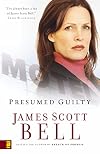
Usually I like Bell's books - you can tell that he is a lawyer and he gets the little details right. This book, however, left me confused. What exactly was the author trying to do? At times it was a murder mystery, the story of a pastor gone bad, a sermon against the evils of pornography and the first-hand glance at a woman who thought she knew her husband but had the rug pulled out from under her.
Plot aside, I also found character development to be shallow. The oldest child, Cara, never show more became real to the reader. She seemed to take everything in stride and was two-dimensional. The other child, Jared, was almost too over-the-top and his supposedly deep-seated problems that developed while serving in Iraq were resolved too quickly and painlessly.
Having never been married, I guess I can't really comment on the easy reconciliation between husband and wife after atrocious betrayals but as a trained marriage and family therapist I don't think it was realistic. Give this book a pass. show less
Plot aside, I also found character development to be shallow. The oldest child, Cara, never show more became real to the reader. She seemed to take everything in stride and was two-dimensional. The other child, Jared, was almost too over-the-top and his supposedly deep-seated problems that developed while serving in Iraq were resolved too quickly and painlessly.
Having never been married, I guess I can't really comment on the easy reconciliation between husband and wife after atrocious betrayals but as a trained marriage and family therapist I don't think it was realistic. Give this book a pass. show less
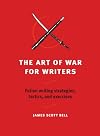
Bell's The Art of War for Writers is a pretty nifty little book that I picked up as a self-reward for achieving a writing goal. Hey, why not? Craft can always be improved, and this book can certainly help with that, whether you are a green recruit or a seasoned veteran.
This book is an overview book, making it no less useful, I might add. I found nuggets of information to store away and ponder that had been phrased perfectly in this book to get through my thick skull, even though I've read show more similar advice in other books that just didn't stick. Delivery of information is key to how it sticks with any individual.
I'm sure any who have sat down to seriously write a book could agree with the war metaphor. To write a book is a war with your soul, your inner demons, with the voices in your head clamouring for their stories to be shared, or with the ideas you yourself wish to share. Every session at the computer, or notebook, or typewriter is a battle to be won. Some go by with a breeze. Others are a struggle. Writing is a craft that requires firm discipline and dedication if you want to be serious about it.
There are three sections to the book. The first- recon- focuses on the mental aspects of writing, and preparing to write. The second- tactics- focuses more on the mechanics of writing. The last- strategy- focuses on publishing and promotion. I found the first two sections to be of the most use to me.
I loved that Bell scattered various quotes and stories throughout to help illustrate his points. One thing that definitely stuck with me was the advice regarding criticism, and how to deal with it. I can tend to take things rather harshly. :/
I also found the advice for setting quotas and goals useful. I can be terrible at procrastinating if I am unable to set aside a large chunk of 'uninterrupted' time for writing. If there's even the slightest chance I may be interrupted, then I often opt not to write. When you also work a full time job, and other obligations, settings aside large blocks of uninterrupted time is nigh impossible. It helped me realise that I don't need to be able to write 3000 words in a day (unrealistic for my busy schedule). Writing 500 is fine, so long as its consistent day after day.
As I mentioned, this is an overview book. If you are at all a serious writer, of course you are going to have more in-depth writing craft books on your shelves (or ereader). Bell's Art of War for Writer's is still a great addition to your writingcraft collection. show less
This book is an overview book, making it no less useful, I might add. I found nuggets of information to store away and ponder that had been phrased perfectly in this book to get through my thick skull, even though I've read show more similar advice in other books that just didn't stick. Delivery of information is key to how it sticks with any individual.
I'm sure any who have sat down to seriously write a book could agree with the war metaphor. To write a book is a war with your soul, your inner demons, with the voices in your head clamouring for their stories to be shared, or with the ideas you yourself wish to share. Every session at the computer, or notebook, or typewriter is a battle to be won. Some go by with a breeze. Others are a struggle. Writing is a craft that requires firm discipline and dedication if you want to be serious about it.
There are three sections to the book. The first- recon- focuses on the mental aspects of writing, and preparing to write. The second- tactics- focuses more on the mechanics of writing. The last- strategy- focuses on publishing and promotion. I found the first two sections to be of the most use to me.
I loved that Bell scattered various quotes and stories throughout to help illustrate his points. One thing that definitely stuck with me was the advice regarding criticism, and how to deal with it. I can tend to take things rather harshly. :/
I also found the advice for setting quotas and goals useful. I can be terrible at procrastinating if I am unable to set aside a large chunk of 'uninterrupted' time for writing. If there's even the slightest chance I may be interrupted, then I often opt not to write. When you also work a full time job, and other obligations, settings aside large blocks of uninterrupted time is nigh impossible. It helped me realise that I don't need to be able to write 3000 words in a day (unrealistic for my busy schedule). Writing 500 is fine, so long as its consistent day after day.
As I mentioned, this is an overview book. If you are at all a serious writer, of course you are going to have more in-depth writing craft books on your shelves (or ereader). Bell's Art of War for Writer's is still a great addition to your writingcraft collection. show less
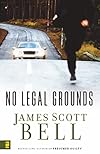
Another intense story; about a sociopath person out to make life fall apart for Attorney Sam Trask and his family. It wasn't a pleasant story line, but the author did a great job of making it seem very real.
Sam Trask thinks he has his life in order now that his dark days of drinking and all-consuming ambition have been given over to his Christian faith. But things will slowly start to unravel when an old college student seeks to gain access into his life. First his daughter goes off the deep show more end and wants to leave home and pursue her band and singing and wants nothing to do with her parents and their rules. Sam's job will suffer because of all his distractions and he will finally have to leave his law office. But the one constant is the way this man keeps showing up in Sam's life and causing disaster. It will climax in him taking their daughter and Sam having to on his own take off after her. As the title states, there is 'no legal grounds' to take this man down, so how far will Sam go to rescue his daughter and get rid of this mentally disturbed man. And just when you think the story is over, its not. show less
Sam Trask thinks he has his life in order now that his dark days of drinking and all-consuming ambition have been given over to his Christian faith. But things will slowly start to unravel when an old college student seeks to gain access into his life. First his daughter goes off the deep show more end and wants to leave home and pursue her band and singing and wants nothing to do with her parents and their rules. Sam's job will suffer because of all his distractions and he will finally have to leave his law office. But the one constant is the way this man keeps showing up in Sam's life and causing disaster. It will climax in him taking their daughter and Sam having to on his own take off after her. As the title states, there is 'no legal grounds' to take this man down, so how far will Sam go to rescue his daughter and get rid of this mentally disturbed man. And just when you think the story is over, its not. show less
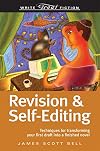
My suspicion is that there may be as many different ways to write a novel as there are novels. Certainly there are a lot of books on the market to aid and abet this questionable enterprise. There are probably also some books on how to write books providing advice to aspiring authors. Such a book would no doubt draw heavily on James Scott Bell’s highly regarded effort. It has many of the virtues of a book directed at motivated self-starters (i.e. those who’ve already completed a first show more draft of their future masterpiece). It doesn’t talk down. Bell assumes he is writing for writers like him who want practical advice on how to improve their fiction. It doesn’t seek to inspire or nurture the nascent writer. This is a book for people who’ve already been inspired and are now prepared to get thoroughly mucky turning their initial effort into something worth harvesting. It offers straightforward exercises that any author could perform in order to test their characters, plots, scenes, or dialogue. And the final, lengthy, section of the book is touted as “The Ultimate Revision Checklist”, though Bell suggests varying it to suit your needs. All of which makes this a very practical and useful resource. But if I’m right about there being a nearly infinite number of ways to write a novel, then there is still a chance that it might not be the book for you. In which case, you should probably set about writing your own book on how to write a novel. Or, just skip that step and get busy writing that novel itself.
For me, it wasn’t until chapter nine, “Voice and Style”, that I felt Bell had something important to convey. Unfortunately he immediately acknowledges that these are the two things it’s virtually impossible to teach. His advice — go read a lot of good stuff (novels, poetry, short stories) and write a lot of stuff too (novels, poetry, short stories). Eventually you’ll find your voice and when you do, well, you’ll really have something. It’s surprisingly sensible advice. Sensible in that I sometimes wonder if the people reading books advising authors have done enough reading themselves. Indeed, sometimes such books are written as though the reader may possibly never have encountered a novel before. If that is the case, then do start with chapter nine of this book and follow Bell’s advice. I think you can then skip on to chapter twelve, “Theme”. It’s the aboutness bit of a novel. If your novel isn’t about anything, then it would definitely be a good idea to think about how to work a theme into it. If you’ve got an idea of what your novel is about and you’ve got enough experience reading and writing to have found your unique voice and style, then all of the rest of the chapters of this book will help you in the practical project of turning your first draft into something polished. I look forward to reading the result. show less
For me, it wasn’t until chapter nine, “Voice and Style”, that I felt Bell had something important to convey. Unfortunately he immediately acknowledges that these are the two things it’s virtually impossible to teach. His advice — go read a lot of good stuff (novels, poetry, short stories) and write a lot of stuff too (novels, poetry, short stories). Eventually you’ll find your voice and when you do, well, you’ll really have something. It’s surprisingly sensible advice. Sensible in that I sometimes wonder if the people reading books advising authors have done enough reading themselves. Indeed, sometimes such books are written as though the reader may possibly never have encountered a novel before. If that is the case, then do start with chapter nine of this book and follow Bell’s advice. I think you can then skip on to chapter twelve, “Theme”. It’s the aboutness bit of a novel. If your novel isn’t about anything, then it would definitely be a good idea to think about how to work a theme into it. If you’ve got an idea of what your novel is about and you’ve got enough experience reading and writing to have found your unique voice and style, then all of the rest of the chapters of this book will help you in the practical project of turning your first draft into something polished. I look forward to reading the result. show less
Lists
Awards


You May Also Like


Associated Authors
Statistics
- Works
- 113
- Also by
- 3
- Members
- 7,225
- Popularity
- #3,386
- Rating
- 3.9
- Reviews
- 151
- ISBNs
- 167
- Languages
- 4
- Favorited
- 4
