
Stephen Buchmann
Author of Letters from the Hive: An Intimate History of Bees, Honey, and Humankind
About the Author
Image credit: Stephen L. Buchmann, Entomologist, University of Arizona
Works by Stephen Buchmann
Letters from the Hive: An Intimate History of Bees, Honey, and Humankind (2005) 208 copies, 4 reviews
The Reason for Flowers: Their History, Culture, Biology, and How They Change Our Lives (2015) 177 copies, 4 reviews
What a Bee Knows: Exploring the Thoughts, Memories, and Personalities of Bees (2023) 31 copies, 2 reviews
Associated Works
Tagged
Common Knowledge
- Legal name
- Buchmann, Stephen L.
- Gender
- male
- Occupations
- entomologist
- Organizations
- University of Arizona
Pollinator Partnership
National Academy of Sciences National Research Council - Short biography
- Steve's other passions include extreme resolution scanning (using Creo flatbed scanners), multi-focal imaging (Leica Z6 microscope), along with print-making and small fine art bronze sculptures. He's begun assembling hyperfocal images of native bees for an illustrated field guide to southwestern bees.
- Nationality
- USA
- Birthplace
- Rockford, Illinois, USA
- Places of residence
- Tuscon, Arizona, USA
- Associated Place (for map)
- USA
Members
Reviews
The Reason for Flowers: Their History, Culture, Biology, and How They Change Our Lives by Stephen Buchmann
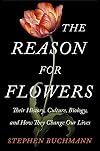
Buchmann sets out to basically explore everything there is to know about flowers: from the basics of how they help plants reproduce to their role in human culture and industry.
It's an interesting book, but very uneven. Buchmann is an entomologist, and he is at his best when he is talking about the relationship between flowers and bugs. There is a lot of fascinating stuff in those chapters. Some chapters are pretty interesting because they are about straightforward but interesting topics, show more such as the extent of the cut flower industry and the Chelsea Flower Show. But he's really out of his league when discussing things like flowers in literature, flowers in medicine, and flowers in cooking. The chapters on literature were particularly poorly-written - he just made a list of some famous books that mention flowers, instead of exploring bigger themes of how literature shows what flowers mean to humans, or how flowers are used as symbols, or how the use of flowers in literature has influenced trends in gardening and vice versa.
It's a huge challenge for a specialist in one field to write about other fields, so I'm not necessarily criticizing Buchmann for having weaknesses. The book would have been better if he had been more aware of his weaknesses and either brought in other writers to cover those topics outside of his expertise, or not tried to write about those topics. show less
It's an interesting book, but very uneven. Buchmann is an entomologist, and he is at his best when he is talking about the relationship between flowers and bugs. There is a lot of fascinating stuff in those chapters. Some chapters are pretty interesting because they are about straightforward but interesting topics, show more such as the extent of the cut flower industry and the Chelsea Flower Show. But he's really out of his league when discussing things like flowers in literature, flowers in medicine, and flowers in cooking. The chapters on literature were particularly poorly-written - he just made a list of some famous books that mention flowers, instead of exploring bigger themes of how literature shows what flowers mean to humans, or how flowers are used as symbols, or how the use of flowers in literature has influenced trends in gardening and vice versa.
It's a huge challenge for a specialist in one field to write about other fields, so I'm not necessarily criticizing Buchmann for having weaknesses. The book would have been better if he had been more aware of his weaknesses and either brought in other writers to cover those topics outside of his expertise, or not tried to write about those topics. show less
The Reason for Flowers: Their History, Culture, Biology, and How They Change Our Lives by Stephen Buchmann
If you think about all the ways flowers are in our lives, you’ll find they’re everywhere. That’s what Stephen Buchmann covers in “The Reason for Flowers,” a pleasant, well-written read. One of the main reasons I enjoy natural history writing is to learn, and there is a lot to be learned here. A well-published researcher, Buchmann writes with the organizational precision of a scientist, and the editing breaks down the chapters into linked nuggets. Due to this polished style, it show more makes for a long read; some might be better served if this were an audiobook – my only complaint. The author travels all over the world, and has a global audience in mind. As he lives and works in Arizona, many of his anecdotes come from there.
Buchmann is a bee biologist, so we learn a lot about them and other pollinators, which are so closely tied to flowers throughout evolutionary time. There is some fascinating description of how bees see flowers - and everything else. The three light receptors they have are not the same as those we have; their memory and visual processing time work at a different scale too, but one that suits them of course. They might even use electric signals with plants, to avoid redundant flower visits. Certain types of bees act like tuning forks (or electric toothbrushes) to remove pollen, and we should be aware that true honey bees are not always the best choice to pollinate your crop.
Having the science in the first part of the book makes it easier for non-botanists to follow the rest of the book, and he even encourages the reader to have a real flower accessible for reference. I found that if you don't have one at hand, looking at one the next chance you get will still be a good experience. The black and white images are a nice inclusion, too. If you do have access to flowers, he provides home science instructions for how to determine the scent of a flower, by concentrating its molecules in a sealed glass jar in sunlight. The Latinized scientific names are often included if you want to look up a certain plant.
Precious few flowers are fossilized, but ecologists have managed to work out how the first flowers evolved. In the second part, there is less science but some archaeology, and good history worked in, such as one of Darwin's many incredible predictions, and the ancient cultures of Egypt, China, Greece, Mexico, Iran to Spain and the colonial United States.
Moving on to other cultural uses are today's funerals and ancient rituals, spirituality and superstitions, popularity and tastes. I had read about flowers as code (I think in Jane Goodall’s “Seeds of Hope”); here he gives wide-ranging examples. He transitions from flower shows, such as “the Chelsea,” to maintenance and ethylene gas and ripening, or accelerated decomposition. There's a whole chapter about how flowers are especially grown and chemically treated in South America, flown and distributed in the U.S. year round. The largest building by footprint in the world in Amsterdam is a sort of flower warehouse, with a different auctioning system, and there is a growing center in Dubai.
There is some esoteric description of perfumes, and their pyramidal design, such that three layered or grouped scents with different molecular weights evaporate after different periods of time, to keep things interesting. Personally, I’d prefer to have no scent at all, but I can appreciate the aromas when they come from the flowers themselves.
Next are the origins of mentions of flowers in poetry in both western and eastern lineages, followed by an overview of art history with floral depictions – also worth looking up. From the Dutch trade empire and pre-Raphaelites to hippie vans and current photography and even scanning, flowers leave an impression. In the last part are scientific advancements thanks to flowers, notably Mendel and Darwin. However, his own interesting study of jojoba plants in a wind tunnel (they are wind-pollinated, and have special adaptations); comparing scent against visual mimicry in cactus flowers; and other neat experiments are discussed. Finally, some herbal treatments, or medicinal uses derived from flowers are featured. I didn’t realize that honey, with such a high sugar content, could be anti-microbial. Like any good nature book, he calls attention to the need for informed conservation at this important time for action and change. I remembered this timeless message written on a wall in Granada, Spain: “A thousand machines can never make a flower.”
For more reviews, follow my blog at: http://matt-stats.blogspot.com/ show less
Buchmann is a bee biologist, so we learn a lot about them and other pollinators, which are so closely tied to flowers throughout evolutionary time. There is some fascinating description of how bees see flowers - and everything else. The three light receptors they have are not the same as those we have; their memory and visual processing time work at a different scale too, but one that suits them of course. They might even use electric signals with plants, to avoid redundant flower visits. Certain types of bees act like tuning forks (or electric toothbrushes) to remove pollen, and we should be aware that true honey bees are not always the best choice to pollinate your crop.
Having the science in the first part of the book makes it easier for non-botanists to follow the rest of the book, and he even encourages the reader to have a real flower accessible for reference. I found that if you don't have one at hand, looking at one the next chance you get will still be a good experience. The black and white images are a nice inclusion, too. If you do have access to flowers, he provides home science instructions for how to determine the scent of a flower, by concentrating its molecules in a sealed glass jar in sunlight. The Latinized scientific names are often included if you want to look up a certain plant.
Precious few flowers are fossilized, but ecologists have managed to work out how the first flowers evolved. In the second part, there is less science but some archaeology, and good history worked in, such as one of Darwin's many incredible predictions, and the ancient cultures of Egypt, China, Greece, Mexico, Iran to Spain and the colonial United States.
Moving on to other cultural uses are today's funerals and ancient rituals, spirituality and superstitions, popularity and tastes. I had read about flowers as code (I think in Jane Goodall’s “Seeds of Hope”); here he gives wide-ranging examples. He transitions from flower shows, such as “the Chelsea,” to maintenance and ethylene gas and ripening, or accelerated decomposition. There's a whole chapter about how flowers are especially grown and chemically treated in South America, flown and distributed in the U.S. year round. The largest building by footprint in the world in Amsterdam is a sort of flower warehouse, with a different auctioning system, and there is a growing center in Dubai.
There is some esoteric description of perfumes, and their pyramidal design, such that three layered or grouped scents with different molecular weights evaporate after different periods of time, to keep things interesting. Personally, I’d prefer to have no scent at all, but I can appreciate the aromas when they come from the flowers themselves.
Next are the origins of mentions of flowers in poetry in both western and eastern lineages, followed by an overview of art history with floral depictions – also worth looking up. From the Dutch trade empire and pre-Raphaelites to hippie vans and current photography and even scanning, flowers leave an impression. In the last part are scientific advancements thanks to flowers, notably Mendel and Darwin. However, his own interesting study of jojoba plants in a wind tunnel (they are wind-pollinated, and have special adaptations); comparing scent against visual mimicry in cactus flowers; and other neat experiments are discussed. Finally, some herbal treatments, or medicinal uses derived from flowers are featured. I didn’t realize that honey, with such a high sugar content, could be anti-microbial. Like any good nature book, he calls attention to the need for informed conservation at this important time for action and change. I remembered this timeless message written on a wall in Granada, Spain: “A thousand machines can never make a flower.”
For more reviews, follow my blog at: http://matt-stats.blogspot.com/ show less
Buchman is a beekeeper and professor of entomology with international experience in his field. This book looks at the history of bee keeping and honey gathering from as far back as the caveman and includes a "honey hunt" in Malaysia, the ways of the Medieval beekeeper and the sacred and medicinal uses of honey in cultures around the world. These chapters tend to get too florid for my taste, and at one point, weird, with a short section titled "Oh, to Be a Bee!" as the author expresses the show more longing to be one and all the great things that would entail. I think these issues with the writing style might be the co-author's input, because once it gets down to facts, things get much better. We have discussions on the life of a bee, hive activity, how a Queen is created, how bees make honey and the problems of the globalization of the honey industry. Then there is a section of the different types of honey that can be found worldwide (I didn't know blueberry honey existed, but oh, how I want some), and a section of honey recipes. show less
Far more than "bee vomit," honey secured its place in human history very early on. From prehistoric cave paintings depicting honey-gathering straight through modern beekeeping, Honey Bees provides a brief history of the sticky sweet. Buchmann discusses life inside a hive, the origins of beekeeping and the development of the typical man-made hive, and the wide variety of health benefits of honey, from its healthy sweetness in cooking to its antiseptic properties. Appendices provide further show more information, resources for those interested in beekeeping and/or purchasing geographically-specific honey varieties, and a chapter-by-chapter list of his sources.
The information contained in this slim volume is interesting and the writing is lively, but where the book fails is in its organization. (A full chapter is devoted to descriptions of honeys from around the world, while descriptions of different types of bees, both honey-producing and otherwise, is relegated to an appendix.) One long chapter reads like a travel essay on an author's eco-tourist trip to watch a ritual Malaysian honey hunt, which, while interesting, does not fit the informative tone of the rest of the book. Colony Collapse Disorder, the #1 Bee Issue of the last 10 years, gets only a half-page mention in the Afterword, with no discussion of its potential environmental impact. I have no reason to doubt the veracity of the book's information as a whole, but glossing over CCD makes me wonder what else might be left out.
A good book for upper-elementary and middle-school readers interested in bugs, bees, or honey.
(Admittedly I picked it up because I have Concerns that CCD is going to be what leads to the eventual collapse of civilization. I'm relieved to learn--in this book!--that bees are responsible for pollinating only 35% of our food supply, but horrifyingly that 35% is pretty much all fruits and vegetables. Without bees, we're hosed, and the bees are disappearing. Food is already increasing in cost; a decrease in supply will lead to malnutrition and starvation, which will in turn lead--long-term, I mean--to the eventual "Colony Collapse" of humans. ) show less
The information contained in this slim volume is interesting and the writing is lively, but where the book fails is in its organization. (A full chapter is devoted to descriptions of honeys from around the world, while descriptions of different types of bees, both honey-producing and otherwise, is relegated to an appendix.) One long chapter reads like a travel essay on an author's eco-tourist trip to watch a ritual Malaysian honey hunt, which, while interesting, does not fit the informative tone of the rest of the book. Colony Collapse Disorder, the #1 Bee Issue of the last 10 years, gets only a half-page mention in the Afterword, with no discussion of its potential environmental impact. I have no reason to doubt the veracity of the book's information as a whole, but glossing over CCD makes me wonder what else might be left out.
A good book for upper-elementary and middle-school readers interested in bugs, bees, or honey.
(Admittedly I picked it up because I have Concerns that CCD is going to be what leads to the eventual collapse of civilization. I'm relieved to learn--in this book!--that bees are responsible for pollinating only 35% of our food supply, but horrifyingly that 35% is pretty much all fruits and vegetables. Without bees, we're hosed, and the bees are disappearing. Food is already increasing in cost; a decrease in supply will lead to malnutrition and starvation, which will in turn lead--long-term, I mean--to the eventual "Colony Collapse" of humans. ) show less
Lists
Awards


You May Also Like


Associated Authors
Statistics
- Works
- 8
- Also by
- 1
- Members
- 679
- Popularity
- #37,220
- Rating
- 3.6
- Reviews
- 12
- ISBNs
- 31
- Languages
- 2