

Jetta Carleton (1913–1999)
Author of The Moonflower Vine
About the Author
Image credit: The Savitar, p. 45, 1937 by Students of the University of Missouri.
Works by Jetta Carleton
Associated Works
Vermist...; Wil jij zeven kinderen?; Florence Nightingale; Als de avondwinde bloeit — Contributor — 1 copy, 1 review
Tagged
Common Knowledge
- Canonical name
- Carleton, Jetta
- Legal name
- Lyon, Jetta Carleton
- Birthdate
- 1913
- Date of death
- 1999-12-28
- Gender
- female
- Education
- University of Missouri (MA)
Cottey College - Occupations
- teacher
radio copywriter
television copywriter
publisher - Organizations
- Girl Scouts of America
Delta Tau Kappa
Lightning Tree Publishing House - Awards and honors
- Poet of the Year ( [1936])
Rittenhouse Award (Life Time Contribution in Regional Publishing ∙ 1991) - Nationality
- USA (birth)
- Birthplace
- Holden, Missouri, USA
- Places of residence
- Santa Fe, New Mexico, USA
Holden, Missouri, USA
Joplin, Missouri, USA
Kansas City, Missouri, USA
Hoboken, New Jersey, USA - Place of death
- Santa Fe, New Mexico, USA
- Burial location
- Santa Fe, New Mexico, USA (Cremated, ashes scattered in the Santa Fe Foothills)
- Associated Place (for map)
- USA
Members
Discussions
June 2012: Clair de Lune in Missouri Readers (June 2012)
Reviews
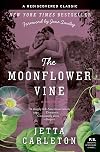
Though I'd never heard of this "timeless American classic" before, thanks to the Missouri Readers group, I picked it up and read it. I'm glad I did as it deserves every bit of praise, and more.
I tend to prefer plot-driven books with fairly well-drawn characters secondary so, during the first part of the book, I wasn't very happy. The book about a family on a western Missouri farm during the first half of the 20th century is told at a slow pace. I griped that there was no plot but suddenly show more realized that there was plot and I just hadn't realized it.
The characters--a farmer/schoolteacher and his wife and their daughters--are extremely well drawn. Each section is told from the point of view of one of the characters but the events often don't overlap. The whole family seems quite ordinary but, like any family, there are secrets and there's more going on than appears on the surface.
This is a haunting, unforgettable book and it's likely to be one of my favorite fictional works of the year. It is an American masterpiece from a "one-hit wonder" author. show less
I tend to prefer plot-driven books with fairly well-drawn characters secondary so, during the first part of the book, I wasn't very happy. The book about a family on a western Missouri farm during the first half of the 20th century is told at a slow pace. I griped that there was no plot but suddenly show more realized that there was plot and I just hadn't realized it.
The characters--a farmer/schoolteacher and his wife and their daughters--are extremely well drawn. Each section is told from the point of view of one of the characters but the events often don't overlap. The whole family seems quite ordinary but, like any family, there are secrets and there's more going on than appears on the surface.
This is a haunting, unforgettable book and it's likely to be one of my favorite fictional works of the year. It is an American masterpiece from a "one-hit wonder" author. show less

I read a lot of books, both old and new, some are good, some not so good, but this one, Jetta Carleton's THE MOONFLOWER VINE (first published in 1962), is simply one of the best damn Stories I've read in a long time. And I capitalized Story purposely, because Carleton could flat out tell a STORY that made you care about her real-as-life characters that kept you rooting for them and turning the pages to find out what happens to them next. The Soames family is one you'll be thinking about for show more a long time once you close the covers of this book. There's Matthew, a dirt poor west Missouri farmer who pulls himself up by his own bootstraps (I've always liked that old expression, which certainly fits here) and his unusual love of learning to become a teacher (as well as a school superintendent eventually). But he also hangs onto his farming roots, moving from town back to the farm every summer. His wife, Callie, nearly illiterate, seems an unlikely match for Matthew, but she loves him with a fierceness and loyalty that is a mix of pleasure and pain, and in spite of her knowledge of his various annual infatuations with pretty female students. Part of her forbearance is because she harbors a dark and painful secret of her own. They have four daughters: Jessica, Leonie, Mathy, and Mary Jo - every one of them very different individuals. In a story that begins at the end of the 19th century and covers more than fifty years, Carleton lays bare all the longings, frustrations, heartreaks and painful history of the Soames family as the daughters grow up, marry and begin lives of their own, and Matthew and Callie grow old together, finally finding a kind of peace in their shared sorrows and long history together.
Carleton's tale of the Soameses reminded me of various other books - James Drought's THE GYPSY MOTHS, John Williams's STONER, and maybe a little bit of Grace Metallious's PEYTON PLACE. Or perhaps the film, MR. HOLLAND'S OPUS. The truth is THE MOONFLOWER VINE is a one of a kind book. And in fact it was the only published work of Jetta Carleton, who died in 1999. Maybe that's why it has been compared to TO KILL A MOCKING BIRD. To my mind, this was not really an apt comparison, as Matthew Soames seemed a much more fallible and human hero that the redoubtable Atticus Finch. Nope, with the Soameses Carleton has created some of the most memorable and unique fictional characters of the twentieth century. THE MOONFLOWER VINE is a book that deserves its present resurgence and more: attention from generations of readers to come. Very highly recommended. show less
Carleton's tale of the Soameses reminded me of various other books - James Drought's THE GYPSY MOTHS, John Williams's STONER, and maybe a little bit of Grace Metallious's PEYTON PLACE. Or perhaps the film, MR. HOLLAND'S OPUS. The truth is THE MOONFLOWER VINE is a one of a kind book. And in fact it was the only published work of Jetta Carleton, who died in 1999. Maybe that's why it has been compared to TO KILL A MOCKING BIRD. To my mind, this was not really an apt comparison, as Matthew Soames seemed a much more fallible and human hero that the redoubtable Atticus Finch. Nope, with the Soameses Carleton has created some of the most memorable and unique fictional characters of the twentieth century. THE MOONFLOWER VINE is a book that deserves its present resurgence and more: attention from generations of readers to come. Very highly recommended. show less
Maybe that was the way it went, that all your life you heard the singing and never got any closer. There were things you wanted all your life, and after a while and all of a sudden, you weren’t any closer than you ever were and there was no time left.
This is a novel about life, the messy, chaotic, craziness; the infinite variety; the joy and the sorrow. It is a novel about understanding how lives intertwine and yet how they remain separate; how we depend upon one another, and how we wish show more to spread our own wings and find our own way. It is about motherhood, fatherhood, sisterhood, and marriage, and the secret, internal lives, each of us lives, whether we intend to or not.
Beautifully written and deeply thoughtful, there are sections of this book that made me feel I was looking at my own reflection, even though none of the events that make up the plot had any semblance to my own life at all. There is a discussion of the nature of God that must surely be among the best treatments of the subject in print, for at its premise lies the essential question that guides belief and faith in the face of all the unfair and inexplicable tragedies every man is sure to know.
Perhaps the greatest struggle in our lives is to come to terms with who we are, as an individual, as a person unique from but in concert with others, a person with faults that we struggle not to have define us. Perhaps the only way to discover that person is to live long enough and to look backward, and perhaps all the looking back in the world will not truly tell us who we are in time. I found this book to be peopled with some of the most realistic characters in fiction--not a perfect saint or an absolute devil among them.
Suddenly it seemed to me that I looked back from a great distance on that smile and saw it all again - the smile and the day, the whole sunny, sad, funny, wonderful day and all the days that we had spent here together. What was I going to do when such days came no more? There could not be many; for we were a family growing old. And how would I learn to live without these people? I who needed them so little that I could stay away all year - what should I do without them?
My immediate reaction was that I would gladly read every word Jetta Carlton had ever written, then sadly discovered that would entail reading only one more book. I could wish for dozens, should they all be as brilliant as this. show less
This is a novel about life, the messy, chaotic, craziness; the infinite variety; the joy and the sorrow. It is a novel about understanding how lives intertwine and yet how they remain separate; how we depend upon one another, and how we wish show more to spread our own wings and find our own way. It is about motherhood, fatherhood, sisterhood, and marriage, and the secret, internal lives, each of us lives, whether we intend to or not.
Beautifully written and deeply thoughtful, there are sections of this book that made me feel I was looking at my own reflection, even though none of the events that make up the plot had any semblance to my own life at all. There is a discussion of the nature of God that must surely be among the best treatments of the subject in print, for at its premise lies the essential question that guides belief and faith in the face of all the unfair and inexplicable tragedies every man is sure to know.
Perhaps the greatest struggle in our lives is to come to terms with who we are, as an individual, as a person unique from but in concert with others, a person with faults that we struggle not to have define us. Perhaps the only way to discover that person is to live long enough and to look backward, and perhaps all the looking back in the world will not truly tell us who we are in time. I found this book to be peopled with some of the most realistic characters in fiction--not a perfect saint or an absolute devil among them.
Suddenly it seemed to me that I looked back from a great distance on that smile and saw it all again - the smile and the day, the whole sunny, sad, funny, wonderful day and all the days that we had spent here together. What was I going to do when such days came no more? There could not be many; for we were a family growing old. And how would I learn to live without these people? I who needed them so little that I could stay away all year - what should I do without them?
My immediate reaction was that I would gladly read every word Jetta Carlton had ever written, then sadly discovered that would entail reading only one more book. I could wish for dozens, should they all be as brilliant as this. show less

Appearances, propriety, morality, and the restrictions placed on women. Although Jetta Carleton wrote Clair de Lune in another era, the issues of acceptibility, expectations, and obligations still dog us today.
Set in 1941 during the spring before Pearl Harbor when there was still some hope that the US would not get involved in the war in Europe, Clair de Lune is the story of a young woman named Allen Liles. Having grown up on a farm, Allen earned her masters degree so that she could teach show more college on the way to her ultimate dream of being a writer in New York City. Her debts and her mother's desire for her railroad her into accepting a job teaching English at a small community college in a Missouri city even as she keeps a tentative grasp on her dream of becoming a writer herself. And although teaching is not her dream, Allen is quite a dedicated teacher, interested in her subject matter and desirous of challenging her students. She is much younger than most of her colleagues and so her personal life is quiet, unremarkable, and lonely, even boring.
Then Allen, thanks to her mother's idea, decides to add a class for those students who are motivated and intelligent. And in this class she discovers two students, George and Toby, with whom she becomes friendly, inviting them back to her apartment for impromptu literary salons of a sort. Because they are so close in age, the three of them quickly lose their prescribed roles of students and teacher. This is problematic both ethically and socially and could cost Allen her job. But none of this occurs to her as she enjoys an almost carefree friendship with the two young men, roaming the streets of the city with them after dark, exporing their town, drinking and playing about, until word gets out about her inappropriate friendship. And then Allen must decide what it is she really wants out of her life.
Allen as a character is both sad and admirable. She knows that the constrained life of women in the early 1940's, marriage and motherhood, is not her goal even though this isolates her from her peers and co-workers. Her only young female colleague, Maxine, lives out the engagement and marriage role concurrently with Allen's innocent cavorting and Allen watches clinically, knowing that Maxine's choices won't be hers. But the courage to strike out counter to society's expectations remains cloaked throughout most of the narrative.
As America slowly wakes from its pre-war innocence, so too does Allen Liles. While the narrative itself is fairly quiet, mirroring Allen's life, it builds a narrative tension that is both expected and unavoidable but right and necessary to Allen's becoming her true self. The writing is lovely and poetic and while Allen is the only character fully developed, this is pitch perfect reflecting her solitary life and the superficial way that she never really fully knows those around her, colleague, acquaintances, and even George and Toby. Carleton has written a thoughtful and deep examination of what it means to settle and the courage it takes to break free of the obligations and expectations that led to the settling in the first place. This novel depicts its time beautifully but it makes us stop and reflect on these same questions now. show less
Set in 1941 during the spring before Pearl Harbor when there was still some hope that the US would not get involved in the war in Europe, Clair de Lune is the story of a young woman named Allen Liles. Having grown up on a farm, Allen earned her masters degree so that she could teach show more college on the way to her ultimate dream of being a writer in New York City. Her debts and her mother's desire for her railroad her into accepting a job teaching English at a small community college in a Missouri city even as she keeps a tentative grasp on her dream of becoming a writer herself. And although teaching is not her dream, Allen is quite a dedicated teacher, interested in her subject matter and desirous of challenging her students. She is much younger than most of her colleagues and so her personal life is quiet, unremarkable, and lonely, even boring.
Then Allen, thanks to her mother's idea, decides to add a class for those students who are motivated and intelligent. And in this class she discovers two students, George and Toby, with whom she becomes friendly, inviting them back to her apartment for impromptu literary salons of a sort. Because they are so close in age, the three of them quickly lose their prescribed roles of students and teacher. This is problematic both ethically and socially and could cost Allen her job. But none of this occurs to her as she enjoys an almost carefree friendship with the two young men, roaming the streets of the city with them after dark, exporing their town, drinking and playing about, until word gets out about her inappropriate friendship. And then Allen must decide what it is she really wants out of her life.
Allen as a character is both sad and admirable. She knows that the constrained life of women in the early 1940's, marriage and motherhood, is not her goal even though this isolates her from her peers and co-workers. Her only young female colleague, Maxine, lives out the engagement and marriage role concurrently with Allen's innocent cavorting and Allen watches clinically, knowing that Maxine's choices won't be hers. But the courage to strike out counter to society's expectations remains cloaked throughout most of the narrative.
As America slowly wakes from its pre-war innocence, so too does Allen Liles. While the narrative itself is fairly quiet, mirroring Allen's life, it builds a narrative tension that is both expected and unavoidable but right and necessary to Allen's becoming her true self. The writing is lovely and poetic and while Allen is the only character fully developed, this is pitch perfect reflecting her solitary life and the superficial way that she never really fully knows those around her, colleague, acquaintances, and even George and Toby. Carleton has written a thoughtful and deep examination of what it means to settle and the courage it takes to break free of the obligations and expectations that led to the settling in the first place. This novel depicts its time beautifully but it makes us stop and reflect on these same questions now. show less
Lists
Awards

You May Also Like


Associated Authors
Statistics
- Works
- 3
- Also by
- 2
- Members
- 741
- Popularity
- #34,275
- Rating
- 3.9
- Reviews
- 46
- ISBNs
- 38
- Languages
- 6