

Daniel Chamovitz
Author of What a Plant Knows: A Field Guide to the Senses
About the Author
Daniel Chamovitz, Ph.D., is the director of the Manna Center for Plant Biosciences at Tel Aviv University. He has lectured at botanical gardens around the world. His work has been featured in The Boston Globe, The Wall Street Journal, and The Daily Beast, and on NPR, the BBC, and more. Chamovitz show more lives with his wife and three children in Hod HaSharon, Israel. You can visit his website at www.danielchamovitz.com. show less
Works by Daniel Chamovitz
What a Plant Knows: A Field Guide to the Senses: Updated and Expanded Edition (2017) 103 copies, 1 review
Was Pflanzen wissen 3 copies
Tagged
Common Knowledge
Members
Reviews
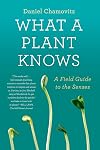
[NOTE: this is not The Secret Life of Plants, a poor pseudo-science book from the '7os.]
This is one of the coolest pop-science books I have read in a while. Chamovitz does a great job of explaining the scientific details of the subject, and admitting frankly where our knowledge currently ends. The subject is: do plants have senses like we do? Do they have a sense of touch, taste, smell, hearing? The answers are intriguing and gratifying. (And it isn't very long, either.) I heartily recommend show more this one. show less
This is one of the coolest pop-science books I have read in a while. Chamovitz does a great job of explaining the scientific details of the subject, and admitting frankly where our knowledge currently ends. The subject is: do plants have senses like we do? Do they have a sense of touch, taste, smell, hearing? The answers are intriguing and gratifying. (And it isn't very long, either.) I heartily recommend show more this one. show less
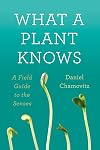
Interesting, but also nicely soporific. Though short and not difficult, it eased me to sleep three nights running. The author successfully convinces me that plants have the equivalent of all our senses, and even the ability to form memories... but thankfully they don't have a brain. If they could "care" about being stressed, thirsty, etc., then even my efforts to be more vegan wouldn't be enough.
Btw, some of us who are older might recall Bird's 'The Secret Life of Plants.' This book debunks show more that mess that became far too popular. He wants us to appreciate the diversity of life on Earth, and our common origins (way back, of course), and he wants us to care. And I think he will succeed with most people who read this because it is scientific, but is also, in a sense, inclined toward the spiritual. show less
Btw, some of us who are older might recall Bird's 'The Secret Life of Plants.' This book debunks show more that mess that became far too popular. He wants us to appreciate the diversity of life on Earth, and our common origins (way back, of course), and he wants us to care. And I think he will succeed with most people who read this because it is scientific, but is also, in a sense, inclined toward the spiritual. show less
Fascinating look at how plants process information about the world around them. Plants can't move, which means that they must be able to respond to their environment, which means they have to be able to sense the world around them. Chamovitz stays very down-to-earth, though, and book is very factual and he describes the research that led scientists to understand how plants work. Well-written and very interesting!
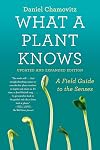
This is a fascinating look at what senses a plant has, and how they are similar to (or different from) ours. Chamovitz takes us through the different senses and gives us a look at what a plant can see, smell, and feel, showing the scientific process while keeping the language simple enough for the average person to understand. (Though the references in the back provide plenty of additional material if you want a deeper dive.)
Awards

You May Also Like


Statistics
- Works
- 9
- Members
- 567
- Popularity
- #44,117
- Rating
- 3.8
- Reviews
- 11
- ISBNs
- 22
- Languages
- 8