
Hal Clement (1922–2003)
Author of Mission of Gravity
About the Author
Disambiguation Notice:
Hal Clement was the pseudonym used by American science fiction writer Harry Clement Stubbs.
Image credit: Courtesy of Cap. Phil and the Destines website ... http://www.captphilonline.com/EssentialDestinies_Authors.html
Series
Works by Hal Clement
The Essential Hal Clement Volume 3: Variations on a Theme by Sir Isaac Newton: The Mesklin stories (2000) 83 copies
Dust Rag 5 copies
The Foundling Stars [short story] 5 copies
Trojan Fall [short story] 4 copies
A Question Of Guilt 4 copies
Assumption Unjustified 4 copies
Classic Science Fiction Volume 2 3 copies
Blot 3 copies
Answer 3 copies
Fireproof [short story] 3 copies
Sortie {short story} 2 copies
Seasoning 2 copies
Mistaken for Granted {short story} 2 copies
Critical Factor 2 copies
Science Fiction Voices #1 1 copy
Chips On Distant Shoulders 1 copy
Bd. 210. Symbiose (T. 2) 1 copy
Bd. 209. Symbiose (T. 1) 1 copy
Mesklin Series & More 1 copy
Mundo aquático 1 copy
The Lunar Lichen 1 copy
Il cerchio di fuoco 1 copy
Antologia scolastica n. 3 1 copy
Antologia scolastica n. 2 1 copy
Arena 1 copy
Science Fiction and Fantasy Writers of America Handbook: The Professional Writer's Guide to Being Professional (2002) — Editor — 1 copy
Star Light part 3 1 copy
Whirligig World 1 copy
Epilogue: Lessons 1 copy
Star Light 2 1 copy
Associated Works
The Year's Best Science Fiction: Seventeenth Annual Collection (2000) — Contributor — 557 copies, 2 reviews
Science Fiction Today and Tomorrow: A Discursive Symposium (1974) — Contributor — 101 copies, 2 reviews
The Prentice Hall Anthology of Science Fiction and Fantasy (2000) — Contributor — 100 copies, 2 reviews
Visions of Tomorrow: Science Fiction Predictions that Came True (2010) — Contributor — 40 copies, 1 review
Isaac Asimov's Science Fiction Magazine: Vol. 2, No. 5 [September-October 1978] (1978) — Contributor — 19 copies
Tagged
Common Knowledge
- Legal name
- Stubbs, Harry Clement
- Other names
- Richard, George (as artist)
Clement, Henry
Clement, Harry
Clement, Harry C.
Stubbs, Harry Clement (birth name) - Birthdate
- 1922-05-30
- Date of death
- 2003-10-29
- Gender
- male
- Education
- Harvard University (B.S., Astronomy, 1943)
Boston University (M.Ed., 1946)
Simmons College (M.S. Chemistry, 1963) - Occupations
- teacher
artist
pilot - Organizations
- Science Fiction and Fantasy Writers of America
- Awards and honors
- SFWA Grand Master (1998)
SF Hall Of Fame (Living Inductee, 1998)
E.E. Smith Memorial Award for Imaginative Fiction (1969)
E.E. Smith Memorial Award for Imaginative Fiction (1997) - Cause of death
- complications of diabetes
- Nationality
- USA
- Birthplace
- Somerville, Massachusetts, USA
- Place of death
- Milton, Massachusetts, USA
- Map Location
- Massachusetts, USA
- Disambiguation notice
- Hal Clement was the pseudonym used by American science fiction writer Harry Clement Stubbs.
Members
Reviews
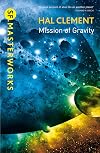
King Solomon's Mines in Space
Mission of Gravity is a sf classic because of its compelling world building: an extremely fast-spinning planet with a gravity 700 times that of earth at its poles. It is marred however by totally unconvincing inhabitants. The Mesklinites encountered by the "Earthmen"--back in 1953, the idea of female scientists or astronauts apparently was inconceivable even for a science fiction author--speak better English than most native speakers on earth, and they behave and show more think like humans. Also their civilization is entirely human even though they are caterpillars. With a captain and first mate, even the command structure of the raft Bree is that of a western European/American ship. Convincing alien life is also part of compelling world building and the novel entirely fails in that respect. Nothing on Mesklin feels really alien.
An even bigger problem is the absence of any conflict to drive the story. The leading earthman, Lackland, and leading Mesklinite, Barlennan (yes, the aliens have human names, too), interact so awfully friendly and harmoniously that it becomes boring from very early on. In the beginning there is a hint that Barlennan has a hidden agenda; but in the end that turns out to be nothing bad really. Also, the title's second meaning of "something of great importance" doesn't come into its own: the information gathered about the planet by the lost probe that the Mesklinites have to recover is no doubt scientifically interesting but not really a matter of life and death.
One could also mention the colonialist subtext of the novel. The Mesklinite explorers and their superior Terran mentors behave like European explorers in "Dark Africa". They hunt big game, are attacked by primitive natives and trade peacefully with friendly primitives, making maps along the way to make the unknown territory controllable. But I guess all that was only normal in the 1950s western view of the world. show less
Mission of Gravity is a sf classic because of its compelling world building: an extremely fast-spinning planet with a gravity 700 times that of earth at its poles. It is marred however by totally unconvincing inhabitants. The Mesklinites encountered by the "Earthmen"--back in 1953, the idea of female scientists or astronauts apparently was inconceivable even for a science fiction author--speak better English than most native speakers on earth, and they behave and show more think like humans. Also their civilization is entirely human even though they are caterpillars. With a captain and first mate, even the command structure of the raft Bree is that of a western European/American ship. Convincing alien life is also part of compelling world building and the novel entirely fails in that respect. Nothing on Mesklin feels really alien.
An even bigger problem is the absence of any conflict to drive the story. The leading earthman, Lackland, and leading Mesklinite, Barlennan (yes, the aliens have human names, too), interact so awfully friendly and harmoniously that it becomes boring from very early on. In the beginning there is a hint that Barlennan has a hidden agenda; but in the end that turns out to be nothing bad really. Also, the title's second meaning of "something of great importance" doesn't come into its own: the information gathered about the planet by the lost probe that the Mesklinites have to recover is no doubt scientifically interesting but not really a matter of life and death.
One could also mention the colonialist subtext of the novel. The Mesklinite explorers and their superior Terran mentors behave like European explorers in "Dark Africa". They hunt big game, are attacked by primitive natives and trade peacefully with friendly primitives, making maps along the way to make the unknown territory controllable. But I guess all that was only normal in the 1950s western view of the world. show less

Set seven years (though written nearly thirty years) after Needle, in which the Hunter, a 4 lb blob of green jelly, arrived on a small island in the Pacific in pursuit of a criminal of his species and took up symbiotic residence in the body of teenager Bob; together they deduced the location of, and destroyed, the criminal. The Hunter remained with Bob through college years away from home, and now they have returned to the island, with a problem: Bob is mysteriously ill with weakness and show more fatigue, and the Hunter believes his presence to be the cause, but is also afraid to leave because Bob’s immune system has become dependent. The Hunter is a detective, not trained in medical matters, and decides the best hope for a solution is to find others of his species with more expertise. How? Well in the previous book, a component from the criminal’s space capsule was found in the ocean. And since then, the Hunter has gone through a college astronomy course, and realized that the “people” from his home planet should be able to figure out where he crashed. Perhaps they are on the island, but don’t know where the Hunter is or whether he survived, don’t know what happened to the criminal, and can’t reveal themselves.
In Needle, Bob told nobody about the Hunter except the island doctor, most of the dialog was internal between Bob and the Hunter, and most of the activity consisted of Bob roaming the island with a bunch of buddies. Since then, Bob has told his parents. Now he and the Hunter need help exploring the coast for clues. It happens that the doctor’s daughter Jenny, who works in the office organizing medical records, has a boat that she constructed from a kit, and a buddy’s sister Maeta, who works in the library and is processing the college textbooks that Bob brought home, is an excellent swimmer. And Bob now has a little sister, and his mother and the doctor’s wife get involved out of concern and interest. So suddenly females abound. The author is maybe a tad at pains to observe that Bob can be “slow on the uptake” in comparison to Jenny and Maeta, even though he went to college and they did not, and that traits such as bossiness and wishful thinking are general human foibles rather than feminine, as if these are new ideas that haven’t quite sunk in and need explicit statement and repetition, but these are mere quibbles of datedness. The overall impression is more human. There is also a troubled little boy who wants to be included, but has a reputation for playing mean-spirited practical jokes. As in the previous book, geeky bits are scattered throughout, such as a lesson on osmosis, and the “vector sum” of a route to the beach, but in this book are more naturally integrated and less expoundingly tedious. With the wider cast of characters and interaction, I was enjoyably engaged in the story.
(read 4 Jan 2013) show less
In Needle, Bob told nobody about the Hunter except the island doctor, most of the dialog was internal between Bob and the Hunter, and most of the activity consisted of Bob roaming the island with a bunch of buddies. Since then, Bob has told his parents. Now he and the Hunter need help exploring the coast for clues. It happens that the doctor’s daughter Jenny, who works in the office organizing medical records, has a boat that she constructed from a kit, and a buddy’s sister Maeta, who works in the library and is processing the college textbooks that Bob brought home, is an excellent swimmer. And Bob now has a little sister, and his mother and the doctor’s wife get involved out of concern and interest. So suddenly females abound. The author is maybe a tad at pains to observe that Bob can be “slow on the uptake” in comparison to Jenny and Maeta, even though he went to college and they did not, and that traits such as bossiness and wishful thinking are general human foibles rather than feminine, as if these are new ideas that haven’t quite sunk in and need explicit statement and repetition, but these are mere quibbles of datedness. The overall impression is more human. There is also a troubled little boy who wants to be included, but has a reputation for playing mean-spirited practical jokes. As in the previous book, geeky bits are scattered throughout, such as a lesson on osmosis, and the “vector sum” of a route to the beach, but in this book are more naturally integrated and less expoundingly tedious. With the wider cast of characters and interaction, I was enjoyably engaged in the story.
(read 4 Jan 2013) show less
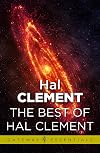
I suppose I shouldn’t be surprised that the stories here were puzzles in a light narrative wrapper rather than actual stories with real people. Although I’ve enjoyed some of the author’s other work, this collection didn’t gel with me. I bailed after “Uncommon Sense”. Overall, the environmental descriptions were presumably there to lay out the issue being demonstrated so the reader could follow along with the problem-solving. But without actual diagrams, they meant nothing to me. show more I also got a weeny bit tired of judgemental statements along the lines of, “For some reason, despite this information, our intrepid protagonists didn’t spot some obvious issue…” when I certainly couldn’t see whatever he meant either. I freely admit my ignorance, but having my nose rubbed in it wasn’t helpful or fun. show less

Hard SF, with some interesting elements but I found it hard to engage.
One interesting element are the black and white illustrations by Janet Aulisio. Often such illustrations in paperbacks are a few smudgy pictures, but these are nice clean detailed drawings introducing every chapter. Like the novel, they're fascinating at the start but the fascination wears thin with repetition.
Another interesting element is the chapter titling. They're all "word, word" titles. Here are the first three: show more "Delivery, Delayed", "Cooling, Carefully", and "Morals, Mostly".
Being a Clement novel, the world-building is solid. It's a far future Earth, pretty unrecognizable because nitrogen fixation has run rampant and removed almost all the oxygen from the atmosphere. There are two major kinds of "life" -- nitro-life adapted to this new world, and pseudo-life, which appears to artificial organic life, created in the last gasp of advanced science, to extract oxygen in limited form for use in masks and small breathing rooms called jails for some reason. Access to the jails is through underwater passages that serve as a seal to keep the oxygen in place.
The main characters are a Nomad couple and their daughter and an alien companion whose backstory is only revealed in the last third or so of the book. They are serviceable characters. A nice touch is that the wife is clearly the brains of the outfit and the husband knows it.
The plot is already fading from memory. The Nomads brought some trade goods (copper and glass gathered from the ocean) to the Hillers (land people), but instead of being paid, the husband is captured by a renegade subgroup called Delinquents who want to restore the high oxygen atmosphere.
The ending is still mostly a mystery to me. I think I needed to remember more high school chemistry to understand the revelations in the final chapter.
The writing shows many signs of old-fashioned Analog SF. Clement is stingy with details on what happened to Earth, but feels free to toss in observations comparing his characters to people like us.
This is a tough call. Interesting but I can't see recommending it to anyone other than a hard SF fan. show less
One interesting element are the black and white illustrations by Janet Aulisio. Often such illustrations in paperbacks are a few smudgy pictures, but these are nice clean detailed drawings introducing every chapter. Like the novel, they're fascinating at the start but the fascination wears thin with repetition.
Another interesting element is the chapter titling. They're all "word, word" titles. Here are the first three: show more "Delivery, Delayed", "Cooling, Carefully", and "Morals, Mostly".
Being a Clement novel, the world-building is solid. It's a far future Earth, pretty unrecognizable because nitrogen fixation has run rampant and removed almost all the oxygen from the atmosphere. There are two major kinds of "life" -- nitro-life adapted to this new world, and pseudo-life, which appears to artificial organic life, created in the last gasp of advanced science, to extract oxygen in limited form for use in masks and small breathing rooms called jails for some reason. Access to the jails is through underwater passages that serve as a seal to keep the oxygen in place.
The main characters are a Nomad couple and their daughter and an alien companion whose backstory is only revealed in the last third or so of the book. They are serviceable characters. A nice touch is that the wife is clearly the brains of the outfit and the husband knows it.
The plot is already fading from memory. The Nomads brought some trade goods (copper and glass gathered from the ocean) to the Hillers (land people), but instead of being paid, the husband is captured by a renegade subgroup called Delinquents who want to restore the high oxygen atmosphere.
The ending is still mostly a mystery to me. I think I needed to remember more high school chemistry to understand the revelations in the final chapter.
The writing shows many signs of old-fashioned Analog SF. Clement is stingy with details on what happened to Earth, but feels free to toss in observations comparing his characters to people like us.
This is a tough call. Interesting but I can't see recommending it to anyone other than a hard SF fan. show less
Lists
SF Masterworks (1)
Awards


You May Also Like


Associated Authors
Statistics
- Works
- 97
- Also by
- 60
- Members
- 6,392
- Popularity
- #3,852
- Rating
- 3.7
- Reviews
- 105
- ISBNs
- 140
- Languages
- 10
- Favorited
- 19