
Daniel C. Dennett (1942–2024)
Author of Darwin's Dangerous Idea: Evolution and the Meanings of Life
About the Author
Daniel C. Dennett is a University Professor and Austin B. Fletcher Professor of Philosophy at Tufts University and the author of numerous books including Intuition Pumps and Other Tools for Thinking, Breaking the Spell, Darwin's Dangerous Idea, and Consciousness Explained.
Image credit: Credit: David Orban, 2006
Works by Daniel C. Dennett
The Mind's I: Fantasies and Reflections on Self and Soul (1981) — Composer; Contributor; Introduction — 3,013 copies, 24 reviews
The Dennett Quartet: A Boxed Set of Brainstorms, Elbow Room, The Intentional Stance, and Brainchildren (1998) 8 copies
Animal Consciousness 2 copies
Journal of Consciousness Studies (Controversies in Science & the Humanities, Volume 2, No. 4 (1995)) 1 copy
Magic of Consciousness 1 copy
Postmodernism and Truth 1 copy
A Hearing for Libertarianism 1 copy
Mecanismo y responsabilidad 1 copy
Associated Works
The Extended Phenotype: The Long Reach of the Gene (1982) — Afterword, some editions — 1,663 copies, 12 reviews
This Will Make You Smarter: New Scientific Concepts to Improve Your Thinking (Edge Question Series) (2012) — Contributor — 906 copies, 17 reviews
What Is Your Dangerous Idea? Today's Leading Thinkers on the Unthinkable (2007) — Contributor — 668 copies, 8 reviews
Philosophers without Gods: Meditations on Atheism and the Secular Life (2007) — Contributor — 248 copies, 2 reviews
A Glorious Accident: Understanding Our Place in the Cosmic Puzzle (1993) — Contributor — 236 copies, 7 reviews
Mind Design II: Philosophy, Psychology, and Artificial Intelligence (1997) — Contributor — 164 copies
Stepping Through the Stargate: Science, Archaeology and the Military in Stargate SG1 (2004) — Contributor — 104 copies, 1 review
Leaps of Faith: Science, Miracles, and the Search for Supernatural Consolation (1996) — Foreword, some editions — 67 copies
The Crucible of Consciousness: An Integrated Theory of Mind and Brain (1999) — Foreword, some editions — 58 copies, 2 reviews
From Darwin to Derrida: Selfish Genes, Social Selves, and the Meanings of Life (The MIT Press) (2020) — Foreword, some editions — 53 copies
The Philosophy of Daniel Dennett (Philosophical Topics, Volume 22, Number 1 & 2 Spring and Fall 1994) (1995) — Contributor — 4 copies
Tagged
Common Knowledge
- Legal name
- Dennett, Daniel Clement, III
- Birthdate
- 1942-03-28
- Date of death
- 2024-04-19
- Gender
- male
- Education
- Wesleyan University
Harvard University (BA|Philosophy)
University of Oxford (DPhil|Philosophy) - Occupations
- philosopher
university professor - Relationships
- Dennett, Daniel C., Jr. (father)
- Nationality
- USA
- Birthplace
- Boston, Massachusetts, USA
- Places of residence
- North Andover, Massachusetts, USA
- Associated Place (for map)
- Massachusetts, USA
Members
Reviews
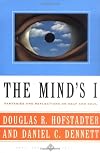
Neither Douglas Hofstadter nor Daniel Dennett are easy writers to read quickly. Dennett’s Darwin’s Dangerous Idea and Hofstadter’s Surfaces and Essences are two of the most demanding books I’ve picked up in the recent past. Luckily, in The Mind’s I, an effort that combines both their talents, they find a way to better let their readers in. This book looks at the philosophical concept of the self—how a mind views itself—through the writings of other people. Hofstadter and show more Dennett use historic and imaginative accounts written by Jorge Luis Borges, Alan Turing, Richard Dawkins, and many others as points of reflection from which they can get into their intended philosophical discussions. This helps accomplish two very interesting goals: pointing the reader towards other authors they might not have known before and helping the reader through some of the more complex thought experiments surrounding the concept of the self. All throughout the book there are smatterings of philosophy, fiction, physics, and even free will. They manage to steer clear of the more tautological loops that philosophy sometimes falls in to, and in the end, arrange a very good book that makes the reader think deeply without straining themselves. An intense but intriguing read. show less
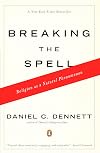
Dennett is much more readable than many of today's philosophers. He doesn't obscure his ideas behind a wall of abstruse language designed more to befuddle than illuminate. Maybe that's why he has become so controversial when other writers on the same topic have not: people can actually understand what he's saying. Dennett calls for a new paradigm that allows for the open, honest criticism of religion just as other fields of study are openly evaluated. I recommend this book for anyone; and I show more promise, you won't be struck by lightning if you read it (or at least, I wasn't. I don't actually control lightning, so maybe I should say it's improbable.) show less
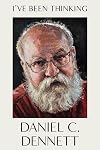
Dennett tells his tale. Settles some scores, though none too scandalous. His writing about going broke in Europe with his family while middle aged is painfully honest, if funny. Compels me to revisit the work, and did I ever finish Content and Consciousness?
Reading Darwin's Dangerous Idea was like water in a desert oasis. A life well done.
Reading Darwin's Dangerous Idea was like water in a desert oasis. A life well done.
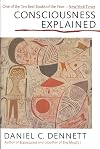
Daniel Dennett's eliminative materialism tries to cut through the hard problem of consciousness by completely removing the concept of qualia as a wrongheaded folk psychological epiphenomenon and replacing it with reductionist models of self-reflection and intentionality. To give him credit, if his thesis is correct then he really has explained consciousness, at least from a high-level conceptual perspective without the messy details. While I do think a lot of what he writes about is on the show more right track, I fear he goes one step too far by prematurely declaring qualia an illusion through a priori reasoning without any empirical justification. The problem of empirically understanding qualia is unique mainly because of the epistemological limitation of probing subjective experiences which breaks with the historically objective methods of scientific investigation. Dennett introduces heterophenomenology as a possible way to circumvent this limitation, but I feel it is just a sideshow that doesn't address the core of the problem. Furthermore, due to this epistemological limitation, the ontological reality of qualia is left as mysterious as ever, that doesn't mean it will always be mysterious, but for the moment it has not been explained, despite Dennett's claims. I can sympathize with Dennett's project, I don't think the alternatives to his views have been very fruitful either, for example, I agree with him that Chalmers' p-zombie thought experiment is an incoherent idea, however, just because your opponents are wrong doesn't mean you are right. I still liked the book, I think Dennett's ideas are helpful and point the way towards further research, but I'll stop short in agreeing with him that consciousness has been conceptually explained. Explained away, maybe, but not explained. show less
Lists
Awards


You May Also Like


Associated Authors
Statistics
- Works
- 43
- Also by
- 28
- Members
- 17,433
- Popularity
- #1,268
- Rating
- 3.8
- Reviews
- 228
- ISBNs
- 314
- Languages
- 18
- Favorited
- 93

