
Daniel Mark Epstein
Author of The Lincolns: Portrait of a Marriage
About the Author
Daniel Mark Epstein is an award-winning essayist, poet, playwright, translator, biographer, and musician. He's won the Prix de Rome, received a Guggenheim Fellowship, and been anthologized in several collections of essays and poetry. His books include biographies of Aimee Semple McPherson and Nat show more King Cole, and seven volumes of poetry. He lives in Baltimore, Maryland. (Bowker Author Biography) show less
Works by Daniel Mark Epstein
What Lips My Lips Have Kissed: The Loves and Love Poems of Edna St. Vincent Millay (2001) 216 copies, 5 reviews
Associated Works
Literary Genius: 25 Classic Writers Who Define English & American Literature (2007) — Contributor — 95 copies, 2 reviews
Rapture and Melancholy: The Diaries of Edna St. Vincent Millay (2022) — Editor — 37 copies, 1 review
Tagged
Common Knowledge
- Legal name
- Epstein, Daniel Mark
- Other names
- Epstein, Dan
- Birthdate
- 1948-10-25
- Gender
- male
- Education
- Kenyon College (BA ∙ 1970)
University of Virginia - Occupations
- poet
dramatist
biographer - Awards and honors
- American Academy of Arts and Letters Academy Award (Literature, 2006)
- Relationships
- Epstein, Donald David (père)
Stevens, Linda (Soeur) - Nationality
- USA
- Birthplace
- Washington, D.C., USA
- Places of residence
- West Hyattsville, Maryland, USA
Vienna, Maryland, USA - Associated Place (for map)
- Maryland, USA
Members
Reviews
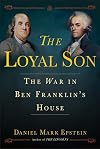
This biography of William Franklin is subtitled "The War in Benjamin Franklin's House", which is very apt, as it refers to both The War (for American Independence) and how it affected the Franklin family, and the war between Ben and his son William, a Royal Governor of New Jersey who never wavered from his staunch Loyalist views, despite the hardships and tragedies that descended on him and his family as a result. It is much more than William's life story; the insights into our country's show more origins revealed here are eye-opening, and often unsettling. You think you know your American History when you've gone over the high points from sixth grade on, but The Loyal Son is full of real-life drama, nitty-gritty politics and detail we never learned in school. The existence of Dr. Franklin's illegitimate son by a woman whose identity we can't be sure of was something I only became aware of in the last 20 years or so. The terror in which Tory families found themselves living once the Sons of Liberty and other patriots began to get the upper hand; the utter bloody stupidity of the Crown; the difficulty of communicating and traveling between Europe and North America; the incredible fortitude of Ben Franklin; it's all so thoroughly illuminated here. Epstein is not quite in the same class as an author of narrative non-fiction as David McCullough or Tony Horwitz, but this in-depth look, from opposite perspectives, at the wheeling-dealing, scheming and personal sacrifice of participants in the events leading up to and following the American Revolution is one of the most fascinating historical accounts I've read in some time. This would make grand mini-series fodder, if done along the lines of PBS's John Adams, for instance.
Review written December 2017 show less
Review written December 2017 show less
 This review was written for LibraryThing Early Reviewers.
Summary: The history of relations between Ben and his illegitimate son William Franklin, from filial loyalty to estranged parties as a consequence of the Revolutionary War, and each man’s choices.
I’ve read a biography of Ben Franklin and numerous histories of the Revolutionary War, and had never realized how deeply estranged Franklin and his son were until I read Daniel Mark Epstein’s well-researched study of the lives and the tragic relationship of these two men.
It was not always so. show more William, an illegitimate offspring of Franklin’s, was raised as a son by him and Deborah. They worked side by side in the affairs of Philadelphia, fought alongside each other against Indian attacks, and went to England together to plead against the Penn family, who as proprietors of Pennsylvania enjoyed an exemption from taxes for defense of the Commonwealth. Franklin supported William in his legal studies while William was at his side in his laboratory and often his emissary in legal pleadings with the Solicitor General. They were engaged together in a land deal for western lands. William gained such a reputation that he even marched in George III’s coronation procession while Ben observed from a distance. While in England William met and married Elizabeth, shortly before they all left for America.
For a few short years, the family was together as Elizabeth gave birth to William Temple Franklin (who would be known as Temple). Ben returned to England as a representative of the colonies for their growing list of grievances against England. William eventually secures an appointment from the Royal Court as governor of New Jersey. From here their paths begin to diverge. Ben becomes increasingly disenchanted with England and concludes that independence for the colonies is the only answer. William remains a loyal to the crown, executing his office well (New Jersey being among the last to join to movement for independence). When Ben becomes involved in the cause against fellow governor Thomas Hutchinson of Massachusetts, the divide becomes greater.
After a brief return to America in 1775 (after Deborah had died of stroke during his long absence) and the signing of the Declaration of Independence, Ben went to France as America’s emissary, taking Temple, who played a role similar to William in his earlier years. Before he departed, he tried to intercede with William to withdraw from his governorship gracefully. William, stood firm, until finally arrested. When paroled, he acted subversively, endorsing pardons of New Jersey loyalists and otherwise acting to subvert the revolution. When discovered, William is imprisoned under deplorable conditions in Litchfield. Ostensibly, Ben does, and can do nothing without seeming in complicity with the son and giving fodder to his own enemies in the colonies. Eventually, in ill health, he is released, but too late to comfort Elizabeth, who dies in New York City. Instead of leaving the country, William continues efforts to mobilize loyalists in subversive activities in support of England, including and indirect role in the seizure and hanging death of hated Captain Jack Huddy.
Only when peace is finally achieved is an attempt made at reconciliation. William makes the first move, in a moving letter of apology to his father, to which Ben responds with coldness. Eventually the two meet, but only for William to sign over lands to satisfy debts to his father. They remained estranged for the rest of their lives, and it was Temple, and not William, who remained in England on a government pension, who inherited from Ben. Sadly, Temple did not otherwise benefit from the influence of his illustrious grandfather, living a dissolute life without direction or purpose.
The “loyal” in Epstein’s title underscores the crux of this book, William’s choice of loyalty to Crown above family. It might have been one thing had he fulfilled his office of governor until displaced. His persistence in the loyalist cause, against all his father and family held dear was fatal to his relationship with Ben, who could not forgive this. Yet one wonders if things might have been different had Ben been more present as a father, particularly in that critical period after he was arrested, and eventually transported to Connecticut. Did his resistance stem in part from his father’s absence when his mother Deborah’s health was failing, while Franklin engaged in affairs with other women?
While William comes off as stubborn, and from an American point of view, a traitor to his country, Ben Franklin comes off little better, and perhaps worse–more interested in money owed than in restoring the son who once worked and fought at his side. Each had betrayed the loyalty of the other, yet it is a mark against the legacy of the elder Franklin that he was so unwilling to forgive. One may attribute this to the exigencies of war which often presses people to hard choices, yet in Epstein’s telling, the elder Franklin comes off poorly.
Epstein shows us a side of Ben Franklin’s life that has been muted in many portrayals of this founder, as well as giving us a full-bodied rendering of William. One unusual aspect of this rendering is the debt Epstein acknowledges to William Herbert Mariboe, whose unpublished 1962 doctoral dissertation on William Franklin he calls “the best biography of William Franklin ever written.” One wonders what might have been if such generosity had existed between father and son Franklin. Sadly, that is a story not to be told.
____________________________
Disclosure of Material Connection: I received this book free from the publisher via LibraryThing’s Early Reviewers program. I was not required to write a positive review. The opinions I have expressed are my own. show less
I’ve read a biography of Ben Franklin and numerous histories of the Revolutionary War, and had never realized how deeply estranged Franklin and his son were until I read Daniel Mark Epstein’s well-researched study of the lives and the tragic relationship of these two men.
It was not always so. show more William, an illegitimate offspring of Franklin’s, was raised as a son by him and Deborah. They worked side by side in the affairs of Philadelphia, fought alongside each other against Indian attacks, and went to England together to plead against the Penn family, who as proprietors of Pennsylvania enjoyed an exemption from taxes for defense of the Commonwealth. Franklin supported William in his legal studies while William was at his side in his laboratory and often his emissary in legal pleadings with the Solicitor General. They were engaged together in a land deal for western lands. William gained such a reputation that he even marched in George III’s coronation procession while Ben observed from a distance. While in England William met and married Elizabeth, shortly before they all left for America.
For a few short years, the family was together as Elizabeth gave birth to William Temple Franklin (who would be known as Temple). Ben returned to England as a representative of the colonies for their growing list of grievances against England. William eventually secures an appointment from the Royal Court as governor of New Jersey. From here their paths begin to diverge. Ben becomes increasingly disenchanted with England and concludes that independence for the colonies is the only answer. William remains a loyal to the crown, executing his office well (New Jersey being among the last to join to movement for independence). When Ben becomes involved in the cause against fellow governor Thomas Hutchinson of Massachusetts, the divide becomes greater.
After a brief return to America in 1775 (after Deborah had died of stroke during his long absence) and the signing of the Declaration of Independence, Ben went to France as America’s emissary, taking Temple, who played a role similar to William in his earlier years. Before he departed, he tried to intercede with William to withdraw from his governorship gracefully. William, stood firm, until finally arrested. When paroled, he acted subversively, endorsing pardons of New Jersey loyalists and otherwise acting to subvert the revolution. When discovered, William is imprisoned under deplorable conditions in Litchfield. Ostensibly, Ben does, and can do nothing without seeming in complicity with the son and giving fodder to his own enemies in the colonies. Eventually, in ill health, he is released, but too late to comfort Elizabeth, who dies in New York City. Instead of leaving the country, William continues efforts to mobilize loyalists in subversive activities in support of England, including and indirect role in the seizure and hanging death of hated Captain Jack Huddy.
Only when peace is finally achieved is an attempt made at reconciliation. William makes the first move, in a moving letter of apology to his father, to which Ben responds with coldness. Eventually the two meet, but only for William to sign over lands to satisfy debts to his father. They remained estranged for the rest of their lives, and it was Temple, and not William, who remained in England on a government pension, who inherited from Ben. Sadly, Temple did not otherwise benefit from the influence of his illustrious grandfather, living a dissolute life without direction or purpose.
The “loyal” in Epstein’s title underscores the crux of this book, William’s choice of loyalty to Crown above family. It might have been one thing had he fulfilled his office of governor until displaced. His persistence in the loyalist cause, against all his father and family held dear was fatal to his relationship with Ben, who could not forgive this. Yet one wonders if things might have been different had Ben been more present as a father, particularly in that critical period after he was arrested, and eventually transported to Connecticut. Did his resistance stem in part from his father’s absence when his mother Deborah’s health was failing, while Franklin engaged in affairs with other women?
While William comes off as stubborn, and from an American point of view, a traitor to his country, Ben Franklin comes off little better, and perhaps worse–more interested in money owed than in restoring the son who once worked and fought at his side. Each had betrayed the loyalty of the other, yet it is a mark against the legacy of the elder Franklin that he was so unwilling to forgive. One may attribute this to the exigencies of war which often presses people to hard choices, yet in Epstein’s telling, the elder Franklin comes off poorly.
Epstein shows us a side of Ben Franklin’s life that has been muted in many portrayals of this founder, as well as giving us a full-bodied rendering of William. One unusual aspect of this rendering is the debt Epstein acknowledges to William Herbert Mariboe, whose unpublished 1962 doctoral dissertation on William Franklin he calls “the best biography of William Franklin ever written.” One wonders what might have been if such generosity had existed between father and son Franklin. Sadly, that is a story not to be told.
____________________________
Disclosure of Material Connection: I received this book free from the publisher via LibraryThing’s Early Reviewers program. I was not required to write a positive review. The opinions I have expressed are my own. show less
This review was written for LibraryThing Early Reviewers.For the many of us who grew up believing the Founding Fathers were near perfection, this book will come as a revelation. Yes, of course we knew they had flaws, but somehow we imagined the likes of Washington, Jefferson, Madison, Adams and Franklin were men so extraordinary these flaws were minimal, forgivable, understandable.
There is no question that Franklin was remarkable. But after reading this book I also discovered that he could be cruel - and to his own son.
The two, of course, took show more opposite sides in the Revolutionary War and Franklin never forgave his son, William, for his position. In fact, many years later he wrote William a letter going on and on about how awful he was for siding with the British. Clearly this was not because Franklin was so convinced the Americans were right but because William dared take a different position from his father. And Franklin's insistence that William pay back every cent he borrowed from his father - even keeping detailed records to make certain he did so - signal a kind of control that must have been stifling. It was a strange relationship made all the stranger by the fact that Franklin was a philanderer and a husband who did not come home from abroad even when he knew his wife was ill.
"The Loyal Son" is brilliantly written. It's insightful and revealing, a fascinating portrait of two (and sometimes three - there's a lot of information about William's indulged son, Temple) men caught up in a profound time. I learned a great deal about history and many of the players in the Revolution, and I had the opportunity to see inside the relationship of a powerful father and son which, ultimately, was desperately sad. show less
There is no question that Franklin was remarkable. But after reading this book I also discovered that he could be cruel - and to his own son.
The two, of course, took show more opposite sides in the Revolutionary War and Franklin never forgave his son, William, for his position. In fact, many years later he wrote William a letter going on and on about how awful he was for siding with the British. Clearly this was not because Franklin was so convinced the Americans were right but because William dared take a different position from his father. And Franklin's insistence that William pay back every cent he borrowed from his father - even keeping detailed records to make certain he did so - signal a kind of control that must have been stifling. It was a strange relationship made all the stranger by the fact that Franklin was a philanderer and a husband who did not come home from abroad even when he knew his wife was ill.
"The Loyal Son" is brilliantly written. It's insightful and revealing, a fascinating portrait of two (and sometimes three - there's a lot of information about William's indulged son, Temple) men caught up in a profound time. I learned a great deal about history and many of the players in the Revolution, and I had the opportunity to see inside the relationship of a powerful father and son which, ultimately, was desperately sad. show less
This review was written for LibraryThing Early Reviewers.In The Loyal Son: The War in Ben Franklin’s House, Daniel Mark Epstein examines the relationship between Benjamin Franklin and his son William Franklin, the royal governor of New Jersey, beginning with William’s birth through Ben’s death. Though many have chronicled Franklin’s life, Epstein describes the hesitancy of biographers to engage with his personal life, especially that of his family, writing, “His relationship with his son, in particular, has been passed over as an show more inconvenience, an embarrassment – an unseemly feature – that does not fit the profile that has long served our beloved founding father” (pg. 390). While Benjamin and his son William maintained an unusually close relationship for an eighteenth century family early on, the strain between them began to show during their time in London as officials representing Pennsylvania.
Epstein describes Ben Franklin’s projection of his longing for Polly Stevenson, his London landlady’s daughter, onto his son, whom he hoped would pursue the young woman. He writes, “If Ben and William had not been so attached to each other, then this projection of the father’s desire upon the son might not have occurred. But it did. This was part of the uneasiness that was beginning to disconnect them” (pg. 78). Also at this time, and “for reasons no one can quite understand, Franklin kept strict account of the money his son owed him, as if William had been a friend or client and not a blood relative. William, having no other father but this one whom he adored, simply accepted the condition, and with it his father’s harping on the debt as it mounted. He promised to make good on it, and one day he would, with penal interest” (pg. 97).
After their return to America, tensions developed between the colonies and England. Epstein describes how these tensions mirrored those of Ben and William, writing, “While William Franklin was using his powers of persuasion to manage the wild emotions of street gangs, his father at that moment was writing a fiery letter to Charles Thomson, the leader of Philadelphia’s Sons of Liberty…Unknowingly, father and son had taken conflicting positions” (pg. 143). Even during this conflict, the two remained in contact. Franklin gave his son a backhanded compliment in his congratulations for the son’s election to the Society for Propagating the Gospel, touting his own successes instead. Epstein summarizes this letter, writing, “This passage removes any doubt that might remain about the dynamic between father and son – in this particular. Benjamin Franklin is in open, unabashed competition with his forty-year-old son. Yet William, on his side, confident in his own considerable abilities, doe not now, and will never, play that game” (pg. 156). The rift between the two only widened due to Benjamin’s disappointment that his son had become “a thorough courtier” (pg. 183) and William’s disappointment that Benjamin did not return from London prior to his wife’s (and William’s adoptive mother’s) funeral (pg. 198).
Despite Ben and William’s rift, Epstein describes how outsiders viewed it, writing, “There were cynics who would always believe the father and son conspired to take opposite sides of the conflict so that whoever won might save the other and the family fortune” (pg. 229). Despite this opinion, William’s position as the “last royal governor conducting the king’s business in America” made him “a public spectacle” as his drama unfolded “in the pages of the newspaper [Benjamin] had founded” (pg. 238). Eventually, colonial forces placed William under house arrest before transferring him to Litchfield prison in Connecticut. At this time, William wrote a letter invoking his father’s service to Congress in his plea for clemency. Epstein writes, “This letter, unfamiliar to previous biographers, concludes with the only recorded appeal from William Franklin invoking his father” (pg. 293). This new evidence further demonstrates the valuable contribution that Epstein offers to Franklin scholarship. Despite this appeal, by 1781 Franklin was no longer in communication with his son while William “had become the most influential, the most revered, and probably the most powerful American loyalist” (pg. 325). Even when they rekindled their correspondence after the war, Epstein describes how it was strained and how Franklin recovered the debt he believed William owed him (pg. 370-371).
Epstein’s biography is thoroughly researched and helps complicate the traditional image we hold of a Founding Father, humanizing him in the process. The level of research is admirable and Epstein engages with the historiography while simultaneously brining in his own newly discovered sources. On a personal note, as a PhD student studying history I found Epstein’s story of Dr. William Herbert Mariboe particularly inspiring. Mariboe extensively researched William Franklin in the 1950s, defending his dissertation in 1962, and then vanished into obscurity. Epstein argues that Mariboe’s dissertation should have won the Pulitzer Prize in biography, but that prize was not given in 1962 and Mariboe never published his dissertation. Epstein concludes, “And so, you graduate students, scholars, historians, toiling in the libraries and archives here and abroad, look upon the example of William Mariboe and be humbled and consoled. Your work matters whether it gets published or not” (pg. 391). show less
Epstein describes Ben Franklin’s projection of his longing for Polly Stevenson, his London landlady’s daughter, onto his son, whom he hoped would pursue the young woman. He writes, “If Ben and William had not been so attached to each other, then this projection of the father’s desire upon the son might not have occurred. But it did. This was part of the uneasiness that was beginning to disconnect them” (pg. 78). Also at this time, and “for reasons no one can quite understand, Franklin kept strict account of the money his son owed him, as if William had been a friend or client and not a blood relative. William, having no other father but this one whom he adored, simply accepted the condition, and with it his father’s harping on the debt as it mounted. He promised to make good on it, and one day he would, with penal interest” (pg. 97).
After their return to America, tensions developed between the colonies and England. Epstein describes how these tensions mirrored those of Ben and William, writing, “While William Franklin was using his powers of persuasion to manage the wild emotions of street gangs, his father at that moment was writing a fiery letter to Charles Thomson, the leader of Philadelphia’s Sons of Liberty…Unknowingly, father and son had taken conflicting positions” (pg. 143). Even during this conflict, the two remained in contact. Franklin gave his son a backhanded compliment in his congratulations for the son’s election to the Society for Propagating the Gospel, touting his own successes instead. Epstein summarizes this letter, writing, “This passage removes any doubt that might remain about the dynamic between father and son – in this particular. Benjamin Franklin is in open, unabashed competition with his forty-year-old son. Yet William, on his side, confident in his own considerable abilities, doe not now, and will never, play that game” (pg. 156). The rift between the two only widened due to Benjamin’s disappointment that his son had become “a thorough courtier” (pg. 183) and William’s disappointment that Benjamin did not return from London prior to his wife’s (and William’s adoptive mother’s) funeral (pg. 198).
Despite Ben and William’s rift, Epstein describes how outsiders viewed it, writing, “There were cynics who would always believe the father and son conspired to take opposite sides of the conflict so that whoever won might save the other and the family fortune” (pg. 229). Despite this opinion, William’s position as the “last royal governor conducting the king’s business in America” made him “a public spectacle” as his drama unfolded “in the pages of the newspaper [Benjamin] had founded” (pg. 238). Eventually, colonial forces placed William under house arrest before transferring him to Litchfield prison in Connecticut. At this time, William wrote a letter invoking his father’s service to Congress in his plea for clemency. Epstein writes, “This letter, unfamiliar to previous biographers, concludes with the only recorded appeal from William Franklin invoking his father” (pg. 293). This new evidence further demonstrates the valuable contribution that Epstein offers to Franklin scholarship. Despite this appeal, by 1781 Franklin was no longer in communication with his son while William “had become the most influential, the most revered, and probably the most powerful American loyalist” (pg. 325). Even when they rekindled their correspondence after the war, Epstein describes how it was strained and how Franklin recovered the debt he believed William owed him (pg. 370-371).
Epstein’s biography is thoroughly researched and helps complicate the traditional image we hold of a Founding Father, humanizing him in the process. The level of research is admirable and Epstein engages with the historiography while simultaneously brining in his own newly discovered sources. On a personal note, as a PhD student studying history I found Epstein’s story of Dr. William Herbert Mariboe particularly inspiring. Mariboe extensively researched William Franklin in the 1950s, defending his dissertation in 1962, and then vanished into obscurity. Epstein argues that Mariboe’s dissertation should have won the Pulitzer Prize in biography, but that prize was not given in 1962 and Mariboe never published his dissertation. Epstein concludes, “And so, you graduate students, scholars, historians, toiling in the libraries and archives here and abroad, look upon the example of William Mariboe and be humbled and consoled. Your work matters whether it gets published or not” (pg. 391). show less
This review was written for LibraryThing Early Reviewers.Lists
THE WAR ROOM (1)
You May Also Like


Associated Authors
Statistics
- Works
- 19
- Also by
- 4
- Members
- 1,419
- Popularity
- #18,131
- Rating
- 4.0
- Reviews
- 84
- ISBNs
- 70
- Languages
- 6

