
Harold Evans (1928–2020)
Author of The American Century
About the Author
From 1997 to 1999, Harold Evans was Editorial Director and Vice Chairman of U.S. News and World Report, the New York Daily News, and Fast Company. He was President and Publisher of the Random House Trade Group from 1990 to 1997. He lives in New York City. (Bowker Author Biography) Harold Evans was show more an American- British Journalist, author and publisher. He was born, Harold Matthew Evans, in Manchester, England, on June 28, 1928. He got his first job in 1944 at a weekly, The Ashton-under-Lyne Reporter, before serving in the Royal Air Force from 1946 to 1949. He studied economics and political science at the University of Durham, graduating in 1952, and then joined The Manchester Evening News as a reporter and editorial writer. He continued his studies at the University of Chicago and Stanford University on an American fellowship from 1956 to 1957. In 1961, Mr. Evans became editor of The Northern Echo, a paper in Darlington, a working-class area in northeast England. A few years later, in 1966, he was hired in 1966 by The Sunday Times, he became editor a year later and transformed the weekly into Britain's best investigative paper. In 1982, he was forced out as editor of the Times of London and reinvented himself in the United States as a publisher, author. He taught at Duke and Yale Universities, became editor of the book publisher The Atlantic Monthly Press and took up the post of editorial director of the newsmagazine U.S. News & World Report. He was the founding editor of Condé Nast Traveler, where he worked from 1986 to 1990. From 1990 to 1997, he was president and publisher of Random House. He became an American citizen in 1993. After leaving Random House in 1997, he was an executive of The Daily News in New York, U.S. News & World Report (in a second stint), The Atlantic Monthly and the business magazine Fast Company. In 2011, he was named editor at large of the Reuters news agency. He was knighted in 2004 for his services to journalism, despite having left Britain 20 years earlier and becoming an American citizen. As an author, Evans's books include The American Century (1998, with Gail Buckland and Kevin Baker); War Stories: Reporting in the Time of Conflict from the Crimea to Iraq (2003); They Made America: From the Steam Engine to the Search Engine, Two Centuries of Innovators (2004, with Gail Buckland and David Lefer); My Paper Chase: True Stories of Vanished Times (2009), his memoir; and Do I Make Myself Clear? Why Writing Well Matters (2018). Harold Matthew Evans died on September 23, 2020, at the age of 92. (Bowker Author Biography) show less
Series
Works by Harold Evans
They Made America: From the Steam Engine to the Search Engine: Two Centuries of Innovators (2004) 342 copies, 2 reviews
The BBC Reports: On America, Its Allies and Enemies, and the Counterattack on Terrorism (2002) — Introduction — 21 copies
Associated Works
Alistair Cooke's American Journey: Life on the Home Front in the Second World War (2006) — Foreword, some editions — 116 copies
Tagged
Common Knowledge
- Canonical name
- Evans, Harold
- Legal name
- Evans, Sir Harold Matthew
- Birthdate
- 1928-06-28
- Date of death
- 2020-09-23
- Gender
- male
- Education
- Durham University (BA|1952|MA|1962)
Brookdale High School, Newton Heath, England, UK - Occupations
- editor
professor
publisher
writer
journalist - Organizations
- Manchester Evening News
The Northern Echo
The Sunday Times
The Times
Goldcrest Films
Duke University (show all 12)
U.S. News & World Report
Condé Nast Traveler
Random House
Daily News (New York)
The Atlantic Monthly
Royal Air Force - Awards and honors
- Knight Bachelor (2004)
Kraszna-Krausz Foundation's Outstanding Contribution to Publishing Award (2015)
Hood Medal (1980) - Relationships
- Brown, Tina (wife)
- Short biography
- Sir Harold Evans, is the author of The American Century (Knopf, 1998), 700 pages with 900 photographs. In 2004 he completed work on a history of 200 years of innovation entitled They Made America: From the Steam Engine to the Search Engine: Two Centuries of Innovators. Little, Brown and Company, (a division of Hachette Book Group USA). This 500-page book was the basis of a four-part PBS series, produced by WGBH, makers of The American Experience. For the first installment in the series Evans was nominated with Carl Charlson for an award by the Writers’ Guild of America for “the outstanding script of 2004 in the category of documentary, other than current affairs.”
An innovative educational company, Contemporary Learning Systems, received a a grant from the Marion Kauffman Davis Foundation to prepare interactive college courses on innovation starting in 2009 based on They Made America . The pilot website is www.innovationcourse.org.
Evans was the President and Publisher of Random House Trade Group from 1990-1997. From 1997-1999 he was Editorial Director and Vice Chairman of U.S. News & World Report, the New York Daily News, The Atlantic Monthly and Fast Company, a position from which he resigned in January 2000 to devote himself full-time to major writing and television projects. (Evans remains a Contributing Editor at U.S. News & World Report). In 2002, The Freedom Forum invited Evans to be the guest curator of its Newseum exhibition “War Stories: Reporting in the Time of Conflict” and subsequently he wrote a monograph entitled War Stories: Reporting in the Time of Conflict From the Crimea to Iraq (Bunker Hill Publishing).
Before moving to the United States, Evans was the editor of The Sunday Times from 1967 to 1981, and editor of The Times from 1981 to 1982. His account of these years was published in his No. 1 UK best-seller Good Times, Bad Times. Evans ended his year at The Times shortly after being named Editor of the Year by Granada Television’s What the Papers Say. In his editing years, he wrote a five-volume manual entitled Editing and Design, which became the standard work for the training of journalists. Two volumes, Essential English and Pictures on a Page, were recently republished. In 1999, in the United States, he received the Lifetime Achievement Award from the International Center of Photography.
Evans graduated from Durham University in the U.K. in 1952 with honors in politics and economics, after service in the Royal Air Force. In 1956, he was awarded a Harkness Fellowship for two years of travel and study in the U.S. He did postgraduate work at the Universities of Chicago and Stanford for a Masters thesis on the reporting of foreign policy.
Evans was awarded a Doctorate in Civil Law by Durham University, and holds doctorates from the universities of London, Sterling and Teesside. In 2004, he was honored for services to journalism with a knighthood.
Sir Harold lives in New York City with his wife, Tina Brown, and their two children. - Cause of death
- congestive heart failure
- Nationality
- UK (birth)
USA (naturalized 1993) - Birthplace
- Eccles, Lancashire, England, UK
- Places of residence
- New York, New York, USA
- Associated Place (for map)
- England, UK
Members
Reviews
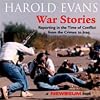
This short book is based on an exhibition of the same name held at the Newseum, Washington and curated by Harold Evans, one-time editor of the London 'Times'. It starts out fairly simply with the historical story of war journalism, looking at its historical precedents such as Julius Caesar's account of the Gallic Wars and Thucydides writing about the Peloponnesian War. But these were accounts from people who were directly involved as protagonists; the first instance of dedicated and show more independent war reporting was Roger Fenton's reporting from the Crimean War.
There are short pen portraits of important war correspondents from history, though many of them are written in the third person present tense, which some readers find irritating.
But from about the third chapter onwards, the book turns to discussing serious issues, such as the role of the war reporter and their obligation to report honestly and without bias (and the way those objectives have been subverted by politicians and editors). It discusses the way that public opinion can be manipulated to throw up smokescreens, suggesting that the journalist is in some way the enemy in order to conceal the politicians' own shortcomings, errors or duplicity. It puts the question: how far should a war reporter report, and should they intervene in any way? Does their very presence in a conflict zone influence the combatants, for good or ill?
The book asks serious questions that need to be repeated often. In these days of "fake news" and ludicrous accusations of conspiracy and censorship, this is a book whose message will most likely go unheard, which is a shame. The first thing a democratic society needs is accurate and unbiased information. Reporters who go into conflict zones are putting their lives on the line - and losing them - to try to bring us that thing, and those who seek to subvert that free flow of information - politicians of government or opposition, or editors and executives seeking to further their own agendas where truth becomes inconvenient - are the real enemies of the people. show less
There are short pen portraits of important war correspondents from history, though many of them are written in the third person present tense, which some readers find irritating.
But from about the third chapter onwards, the book turns to discussing serious issues, such as the role of the war reporter and their obligation to report honestly and without bias (and the way those objectives have been subverted by politicians and editors). It discusses the way that public opinion can be manipulated to throw up smokescreens, suggesting that the journalist is in some way the enemy in order to conceal the politicians' own shortcomings, errors or duplicity. It puts the question: how far should a war reporter report, and should they intervene in any way? Does their very presence in a conflict zone influence the combatants, for good or ill?
The book asks serious questions that need to be repeated often. In these days of "fake news" and ludicrous accusations of conspiracy and censorship, this is a book whose message will most likely go unheard, which is a shame. The first thing a democratic society needs is accurate and unbiased information. Reporters who go into conflict zones are putting their lives on the line - and losing them - to try to bring us that thing, and those who seek to subvert that free flow of information - politicians of government or opposition, or editors and executives seeking to further their own agendas where truth becomes inconvenient - are the real enemies of the people. show less
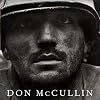
An important but troubling book. McCullin is probably the best photographer of war and conflict to come out of the 20th Century; by which I mean that his images are disturbing and powerful.
This book is an overview of his career up to about 2001, and it is bookended by images he took of the Somerset Levels and other landscapes after his "retirement". Even these images, taken in monochrome in wintry conditions, have a bleakness about them that suggests that after a career exposed to and show more exposing real-world horror, McCullin shuns conventional beauty in favour of truth.
The book then chronicles his early work as a documentary photojournalist in London and other parts of the UK, and then plunges us into conflict, starting with Cyprus in 1964 and ending in Beirut in 1982. The dark side of the 20th century is exposed here for all to see; and some of his non-conflict work, such as pictures of industrial decline from Britain in the 1970s or homelessness in London in 1969, is set in chronological order so we can see that darkness was not absent from our own shores in that time.
The book ends with a section called 'Upriver', which contains images of indigenous peoples of Asia and Indonesia, all linked with themes of rivers and seas, before ending with some final images of the Somerset Levels again.
McCullin was in the thick of the action and was wounded in Cambodia in 1970. He has recently announced that at the age of 77 he is going to go to Syria to photograph the conflict there, probably as an act of defiance towards the state of modern commercial news photography, with its emphasis on celebrity and citizen photojournalism, with all its baggage of potential bias and free use by lazy news editors. It is an honest intention, and this book reflects that stark honesty in McCullin's whole career. show less
This book is an overview of his career up to about 2001, and it is bookended by images he took of the Somerset Levels and other landscapes after his "retirement". Even these images, taken in monochrome in wintry conditions, have a bleakness about them that suggests that after a career exposed to and show more exposing real-world horror, McCullin shuns conventional beauty in favour of truth.
The book then chronicles his early work as a documentary photojournalist in London and other parts of the UK, and then plunges us into conflict, starting with Cyprus in 1964 and ending in Beirut in 1982. The dark side of the 20th century is exposed here for all to see; and some of his non-conflict work, such as pictures of industrial decline from Britain in the 1970s or homelessness in London in 1969, is set in chronological order so we can see that darkness was not absent from our own shores in that time.
The book ends with a section called 'Upriver', which contains images of indigenous peoples of Asia and Indonesia, all linked with themes of rivers and seas, before ending with some final images of the Somerset Levels again.
McCullin was in the thick of the action and was wounded in Cambodia in 1970. He has recently announced that at the age of 77 he is going to go to Syria to photograph the conflict there, probably as an act of defiance towards the state of modern commercial news photography, with its emphasis on celebrity and citizen photojournalism, with all its baggage of potential bias and free use by lazy news editors. It is an honest intention, and this book reflects that stark honesty in McCullin's whole career. show less
I needed this book. Everybody needs this book - even if English is not your language of choice. In an age when degenerated vernacular makes its way into electronic mail, and worse... papers, reports, news stories...when the idiotic term "fake news" is slung with chopped sentence fragments of Twit-verse...the need to write well has never been more, ... needed.
This was listed as a reference in a class on writing I had last month and as I had it on my "someday" list, I bumped it up to "now". show more Evans has an impressive pedigree and writes with authority and knowledge. He also writes for a reader, no stretch given his editorial positions. In three parts, he breaks down the mechanics of writing well, focuses the reader on making words count and focusing on meanings, and explores the consequences of bad writing. And on the mechanics, I had difficulty not succumbing to monologophobia when writing that last sentence. Coined apparently by Theodore Bernstein, a monologophobe is "a guy who would rather walk naked in front of Saks Fifth Avenue than be caught using the same word twice in three lines." ("God said 'Let there be light,' and there was solar illumination.") Evans might have convinced me that there is nothing wrong with repeating the correct word.
Full of tools, great stories, even better examples of actual editing for content and communication, I'll be returning to this (particularly as I has to write a research paper for a course administrator who seemingly thinks just like Evans...)
Evans gets a sixth, invisible star for skewering the tragedy of what writing and communication has become since the ... come on, you can do it... tragedy... of 2016. show less
This was listed as a reference in a class on writing I had last month and as I had it on my "someday" list, I bumped it up to "now". show more Evans has an impressive pedigree and writes with authority and knowledge. He also writes for a reader, no stretch given his editorial positions. In three parts, he breaks down the mechanics of writing well, focuses the reader on making words count and focusing on meanings, and explores the consequences of bad writing. And on the mechanics, I had difficulty not succumbing to monologophobia when writing that last sentence. Coined apparently by Theodore Bernstein, a monologophobe is "a guy who would rather walk naked in front of Saks Fifth Avenue than be caught using the same word twice in three lines." ("God said 'Let there be light,' and there was solar illumination.") Evans might have convinced me that there is nothing wrong with repeating the correct word.
Full of tools, great stories, even better examples of actual editing for content and communication, I'll be returning to this (particularly as I has to write a research paper for a course administrator who seemingly thinks just like Evans...)
Evans gets a sixth, invisible star for skewering the tragedy of what writing and communication has become since the ... come on, you can do it... tragedy... of 2016. show less
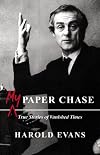
Really excellent book by Harold Evans, who grew up in a working class family in northern England. Class lines were much harsher then, and it was rare for someone of his class to have much opportunity to get ahead. He began working on newspapers in his teens, and managed to get into college in Durham and get his degree. From there his rise in newspapers was steady until becoming editor of the Sunday Times for 14 years. He left due to disagreements with Rupert Murdoch who bought the Times show more papers. He and his second wife, Tina Brown, who has been editor of Vanity Fair and the New Yorker, came to the US where he worked for U.S News and World Report, Conde Nast Traveler, and Random House.
He's led an interesting life. Truly, though, the pleasure in this book is hearing from an intelligent, knowledgeable man who has always been passionate about his work, and clear-eyed about the difficulties in getting the best news to the world. He discusses in some depth certain stories he was involved with that illustrate the glories and problems in the newspaper business. For example, he followed for years the cases of the thalidomide babies in Britain, and he pushed hard to keep the story covered and see that the government didn't simply ignore their needs. For intrigue, he shows how his team followed the story of the traitor Kim Philby and revealed as much as they could about it.
As a native of the U.S. South it was interesting to hear his experience of the South during his first trip to the U.S. in 1956. He saw the horrors of the racism, and found it hard to reconcile with how nice white Southerners were to him even while expressing Neanderthalic opinions on race.
Excellent book. show less
He's led an interesting life. Truly, though, the pleasure in this book is hearing from an intelligent, knowledgeable man who has always been passionate about his work, and clear-eyed about the difficulties in getting the best news to the world. He discusses in some depth certain stories he was involved with that illustrate the glories and problems in the newspaper business. For example, he followed for years the cases of the thalidomide babies in Britain, and he pushed hard to keep the story covered and see that the government didn't simply ignore their needs. For intrigue, he shows how his team followed the story of the traitor Kim Philby and revealed as much as they could about it.
As a native of the U.S. South it was interesting to hear his experience of the South during his first trip to the U.S. in 1956. He saw the horrors of the racism, and found it hard to reconcile with how nice white Southerners were to him even while expressing Neanderthalic opinions on race.
Excellent book. show less
Lists
Awards


You May Also Like


Associated Authors
Statistics
- Works
- 44
- Also by
- 7
- Members
- 1,918
- Popularity
- #13,418
- Rating
- 4.0
- Reviews
- 22
- ISBNs
- 106
- Languages
- 5
- Favorited
- 1
