
David Hackett Fischer
Author of Albion's Seed: Four British Folkways in America
About the Author
David Hackett Fischer is University Professor and Warren Professor of History at Brandeis University in Massachusetts. He is the author of numerous books, including Washington's Crossing, which won the Pulitzer Prize in history.
Image credit: Courtesy of David Hackett Fischer
Works by David Hackett Fischer
Fairness and Freedom: A History of Two Open Societies, New Zealand and the United States (2012) 96 copies
The Revolution of American Conservatism: The Federalist Party in the Era of Jeffersonian Democracy (1965) 30 copies
The David Hackett Fischer Set: Consisting of Liberty and Freedom and Washington's Crossing (2005) 6 copies
Associated Works
Tagged
Common Knowledge
- Canonical name
- Fischer, David Hackett
- Legal name
- Fischer, David Hackett
- Birthdate
- 1935-12-02
- Gender
- male
- Education
- Princeton University (BA | History | 1958)
Johns Hopkins University (PhD | History | 1962) - Occupations
- professor
historian - Organizations
- Brandeis University
American Historical Association
Institute of Early American History and Culture
Hakluyt Society
Century Association - Awards and honors
- American Academy of Arts & Sciences (1995)
Pulitzer Prize in History (2005)
Honorary member, The Society of the Cincinnati (2006)
Pritzker Literature Award for Lifetime Achievement in Military Writing (2015)
Richard M. Weaver Award (1996)
Irving Kristol Award (2006) (show all 8)
Carnegie Prize (1990)
American Antiquarian Society (1971) - Short biography
- David Hackett Fischer is University Professor and Earl Warren Professor of History at Brandeis University.
- Nationality
- USA
- Birthplace
- Baltimore, Maryland, USA
- Places of residence
- Wayland, Massachusetts, USA
- Associated Place (for map)
- USA
Members
Reviews

Tracing four American folkways from the English settlers who first established them, Fisher argues that many practices we now deem characteristically American were actually transplants from English cultures, preserved in immigrants’ practices longer than they survived in the mother country. He covers the Puritans, Virginia Cavaliers and the poorer people they brought along, the Quakers, and the Scotch-Irish back-country folks. It’s hard not to see the Quakers coming off best here—the show more Cavaliers and the back-country traditions involve a lot of violence and indifference to education/fetishization of hierarchy, and the Puritans are really protective if you’re one of them and really not if you’re not. A fascinating read. Whether Fisher’s repeated claims that “these practices persist today almost unchanged” are true, however, seems a bit dubious, though it is probably worth noting that Puritan Massachusetts kept trying to punish people for reading porn long into the twentieth century, after most of the country had given up. show less
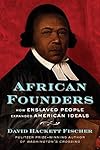
This book is not for the anti-racist.
While the author seems to highlight the ways America benefited from the influences of its enslaved population (which I do believe is true), I do not trust his base ideals - that American values of liberty and freedom have triumphed over tyranny and slavery. It would be disingenuous at best to study slavery in America without connecting slavery and white supremacy to the continual oppression of minorities by white Americans, and that’s what this book show more does. The author gives a timeline that would seem to eradicate slavery and the oppression of black Americans from the prohibition of the foreign slave trade in 1808 to the Fourteenth Amendment in 1868 which grants all citizens “equal protections of the laws” with no distinctions of race.
What is not mentioned is how the years after slavery was abolished in 1865 saw many institutions and laws established to perpetuate oppression or how black people in this country are still subjected to different treatment under the law, despite the inclusive wording of those amendments. Let no one forget that it’s still legal to use prisoners for slave labor, and the system is set up to disproportionately incarcerate people of color. Liberty and freedom are nominal values at best for minorities in this country, and the author is openly critical of any attempt to view American history in a way that he calls “deeply negative” - giving more attention to slavery, racism, inequality, injustice, and corruption. He also calls the demand for political correctness a “hostile assault” on the ideas of open inquiry and empirical truth previously used in historical research and says that not only has public discourse in the twenty-first century seen a growing disregard for truth but that the new rhetoric is suffering from deliberate falsehoods. Ironically, I agree with that somewhat, but in literally the opposite way than what he meant.
Calling out America’s history of institutionalized racism and white supremacy is not a disregard for truth. It is a call for previously hidden or ignored truths to be brought into the open.
I am just perplexed by this book. It openly admits that most of America’s enslaved people were taken directly from their own homeland and acknowledges that those enslaved people suffered extreme cruelty and abuse that, thanks to more research and empirical evidence, was even worse than many historians previously thought. And yet the overall tone of the work is positive towards America as an institution. He proves that white slave owners were horrifically savage, admits to the atrocities forced upon black people both born in Africa and born in America, and then speaks derisively of the way many Americans view our history negatively in the twenty-first century, particularly in the years he wrote this book (2020 and 2021). Hmm…what movements around that time could possibly have contributed to the author’s disdain of “political correctness” and “negative” views on American history? This guy praises empirical evidence in historical research and then acts like we should ignore all the ways in which America has never really been about liberty and freedom for ALL.
My initial reaction to the book was full of red flags. White author show less
While the author seems to highlight the ways America benefited from the influences of its enslaved population (which I do believe is true), I do not trust his base ideals - that American values of liberty and freedom have triumphed over tyranny and slavery. It would be disingenuous at best to study slavery in America without connecting slavery and white supremacy to the continual oppression of minorities by white Americans, and that’s what this book show more does. The author gives a timeline that would seem to eradicate slavery and the oppression of black Americans from the prohibition of the foreign slave trade in 1808 to the Fourteenth Amendment in 1868 which grants all citizens “equal protections of the laws” with no distinctions of race.
What is not mentioned is how the years after slavery was abolished in 1865 saw many institutions and laws established to perpetuate oppression or how black people in this country are still subjected to different treatment under the law, despite the inclusive wording of those amendments. Let no one forget that it’s still legal to use prisoners for slave labor, and the system is set up to disproportionately incarcerate people of color. Liberty and freedom are nominal values at best for minorities in this country, and the author is openly critical of any attempt to view American history in a way that he calls “deeply negative” - giving more attention to slavery, racism, inequality, injustice, and corruption. He also calls the demand for political correctness a “hostile assault” on the ideas of open inquiry and empirical truth previously used in historical research and says that not only has public discourse in the twenty-first century seen a growing disregard for truth but that the new rhetoric is suffering from deliberate falsehoods. Ironically, I agree with that somewhat, but in literally the opposite way than what he meant.
Calling out America’s history of institutionalized racism and white supremacy is not a disregard for truth. It is a call for previously hidden or ignored truths to be brought into the open.
I am just perplexed by this book. It openly admits that most of America’s enslaved people were taken directly from their own homeland and acknowledges that those enslaved people suffered extreme cruelty and abuse that, thanks to more research and empirical evidence, was even worse than many historians previously thought. And yet the overall tone of the work is positive towards America as an institution. He proves that white slave owners were horrifically savage, admits to the atrocities forced upon black people both born in Africa and born in America, and then speaks derisively of the way many Americans view our history negatively in the twenty-first century, particularly in the years he wrote this book (2020 and 2021). Hmm…what movements around that time could possibly have contributed to the author’s disdain of “political correctness” and “negative” views on American history? This guy praises empirical evidence in historical research and then acts like we should ignore all the ways in which America has never really been about liberty and freedom for ALL.
My initial reaction to the book was full of red flags. White author show less

What I particularly enjoy about David Hackett Fischer’s books is that he is a practitioner of what I like to call “thick history”. On the one hand, he is a throwback to older generations of historians who wrote history as the acts of remarkable individuals – heroes. The Samuel de Champlain who emerges from the pages of this book is definitely that. At the same time, Fischer is informed by the broad range of developments in the practice and writing of history that emerged during the show more course of the twentieth century: the new social history, ethnography, economic history, and so on. Whatever his topic, he has an eye for the role of folkways, of speech patterns, and styles of architecture in recovering the past. On top of this, he is unabashed in his devotion to what some feel is an irreconcilable pair of opposites, “the study of the past on its own terms and at the same time [to] link it with the present” (p. 567).
The “dream” at the core of this book is Champlain’s humanistic vision of a world of tolerance and cooperation in the North American forest, as different as possible from the world of cruelty and religious intolerance into which he was born in France. An early assignment as an intelligence agent (= “spy”) in New Spain showed him one possible way of dealing with the native populations of the western hemisphere, and it appalled him. From his first voyage along the St. Lawrence River, his approach was unusual. He was vitally interested in the native population. While there were aspects of their lives that met with his disapproval, there was much more that he found to admire. In return, the natives experienced in Champlain a man unlike many of those they would encounter: a man who listened, who sought to understand, and one who kept his word. He was not the only one, but there were too few like him.
There is a sense of tragedy in the account, not only in the tale of a man whose devotion to his goal and his manifold skills in pursuing it enabled him to overcome many obstacles and reversals, both in the New World and back home in the Old. More than that, there is the sense of a missed opportunity, a sense that Champlain’s dream died with him. Yet this reader was left wondering what chance the dream had of fulfilment. Champlain avoided violence against the native inhabitants, certainly laudable, yet the diseases carried by the settlers he imported proved as deadly as any weapons he could have wielded. He had the fortune of dying of a stroke before epidemics ravaged the Huron nation. What were the real prospects for the achievement of his dream, even had his masters back home, Louis XIII and Richelieu, subscribed to it? Of course we cannot know. Nevertheless it remains incontestable that Champlain accomplished much; more important than the amount of his achievement or its permanence, however, was the way he achieved what he did. The age in which he lived would have made it easier for him to act very differently than he did – less honorably, less peaceably, less tolerantly. What I felt ennobling in reading this book was that, by doing things in the way he did, Champlain met with more success than those who employed more conventional methods.
Symptomatic of the thoroughness of Fischer’s approach is a section he wedges between the final chapter of his text and the sixteen appendices that follow, entitled Memories of Champlain. In it, he surveys the historiography of Champlain over four centuries. He shows a virtuostic mastery of the material; more than that, a magnanimous spirit that values the achievement of various schools and tendencies, even those with which he disagrees. In this way, Fischer is not unlike Champlain.
Highly recommended. show less
The “dream” at the core of this book is Champlain’s humanistic vision of a world of tolerance and cooperation in the North American forest, as different as possible from the world of cruelty and religious intolerance into which he was born in France. An early assignment as an intelligence agent (= “spy”) in New Spain showed him one possible way of dealing with the native populations of the western hemisphere, and it appalled him. From his first voyage along the St. Lawrence River, his approach was unusual. He was vitally interested in the native population. While there were aspects of their lives that met with his disapproval, there was much more that he found to admire. In return, the natives experienced in Champlain a man unlike many of those they would encounter: a man who listened, who sought to understand, and one who kept his word. He was not the only one, but there were too few like him.
There is a sense of tragedy in the account, not only in the tale of a man whose devotion to his goal and his manifold skills in pursuing it enabled him to overcome many obstacles and reversals, both in the New World and back home in the Old. More than that, there is the sense of a missed opportunity, a sense that Champlain’s dream died with him. Yet this reader was left wondering what chance the dream had of fulfilment. Champlain avoided violence against the native inhabitants, certainly laudable, yet the diseases carried by the settlers he imported proved as deadly as any weapons he could have wielded. He had the fortune of dying of a stroke before epidemics ravaged the Huron nation. What were the real prospects for the achievement of his dream, even had his masters back home, Louis XIII and Richelieu, subscribed to it? Of course we cannot know. Nevertheless it remains incontestable that Champlain accomplished much; more important than the amount of his achievement or its permanence, however, was the way he achieved what he did. The age in which he lived would have made it easier for him to act very differently than he did – less honorably, less peaceably, less tolerantly. What I felt ennobling in reading this book was that, by doing things in the way he did, Champlain met with more success than those who employed more conventional methods.
Symptomatic of the thoroughness of Fischer’s approach is a section he wedges between the final chapter of his text and the sixteen appendices that follow, entitled Memories of Champlain. In it, he surveys the historiography of Champlain over four centuries. He shows a virtuostic mastery of the material; more than that, a magnanimous spirit that values the achievement of various schools and tendencies, even those with which he disagrees. In this way, Fischer is not unlike Champlain.
Highly recommended. show less

I loved this book. The writing is easy to read and not too dense, unlike some histories. Fischer starts out giving us a good deal of background information that helps us to better understand the events that will follow. Some readers might get bored at this point, but I did not, and I found the information helpful. Fischer describes the make-up of all the armies involved: American, British, and Hessian, as well as their uniforms and weaponry.
Fischer starts the meat of the book with the show more campaign plans for both sides and the battle in New York. By this time, I am very familiar with that battle, but it's necessary to understand it in order to understand the situation leading to the famous crossing. What I really appreciated was Fischer's detailed description of the American army's retreat across New Jersey, because that normally seems to take only a few sentences in most histories, and what happened then has been rather fuzzy to me. Fischer also talks about the behavior of the British in New Jersey. The army took grain and livestock from the farmers to feed their soldiers. But their behavior was extremely boorish, and many took to plundering and even rape, even though this was against the rules the army was supposed to follow. Of course, this inspired groups of civilians to begin to oppose the British occupation, and they began to harass the British. All of this was new to me.
Fischer thoroughly describes Washington's crossing of the Delaware and the attack on Trenton. He debunks the reports that the Hessians were drunk and unprepared. He also tells us about planned simultaneous attacks on a couple of other locations that fell apart. Did you know there was a second battle of Trenton? Fischer gives as full a recounting of that battle as he did the first one. This was apparently a very important encounter during the Revolution, and has mostly been overlooked by history. One participant "always remembered the stand at Assunpink as the critical moment of the war." This is immediately followed by the attack at Princeton, which is given another full account here. I've read about that battle before but again, not in the detail we get here. Fischer concludes with an analysis of what this campaign meant to the Revolution. He asserts that "the battles at Trenton and Princeton and the Forage War were not small symbolic victories, as many historians have regarded them. The winter campaign inflicted severe damage on British and Hessian forces."
Washington's Crossing gives a clear picture of what happened during the initial campaigns of the Revolution. Fischer includes a large number of footnotes, appendices, and an extensive bibliography, evidence of the research that went into the book. There's also a Historiography discussing interpretations of The Crossing from many viewpoints over time. Overall, the book provides excellent coverage of the entire campaign. This is the way history should be written. show less
Fischer starts the meat of the book with the show more campaign plans for both sides and the battle in New York. By this time, I am very familiar with that battle, but it's necessary to understand it in order to understand the situation leading to the famous crossing. What I really appreciated was Fischer's detailed description of the American army's retreat across New Jersey, because that normally seems to take only a few sentences in most histories, and what happened then has been rather fuzzy to me. Fischer also talks about the behavior of the British in New Jersey. The army took grain and livestock from the farmers to feed their soldiers. But their behavior was extremely boorish, and many took to plundering and even rape, even though this was against the rules the army was supposed to follow. Of course, this inspired groups of civilians to begin to oppose the British occupation, and they began to harass the British. All of this was new to me.
Fischer thoroughly describes Washington's crossing of the Delaware and the attack on Trenton. He debunks the reports that the Hessians were drunk and unprepared. He also tells us about planned simultaneous attacks on a couple of other locations that fell apart. Did you know there was a second battle of Trenton? Fischer gives as full a recounting of that battle as he did the first one. This was apparently a very important encounter during the Revolution, and has mostly been overlooked by history. One participant "always remembered the stand at Assunpink as the critical moment of the war." This is immediately followed by the attack at Princeton, which is given another full account here. I've read about that battle before but again, not in the detail we get here. Fischer concludes with an analysis of what this campaign meant to the Revolution. He asserts that "the battles at Trenton and Princeton and the Forage War were not small symbolic victories, as many historians have regarded them. The winter campaign inflicted severe damage on British and Hessian forces."
Washington's Crossing gives a clear picture of what happened during the initial campaigns of the Revolution. Fischer includes a large number of footnotes, appendices, and an extensive bibliography, evidence of the research that went into the book. There's also a Historiography discussing interpretations of The Crossing from many viewpoints over time. Overall, the book provides excellent coverage of the entire campaign. This is the way history should be written. show less
Lists
Economics (1)
Awards


You May Also Like


Associated Authors
Statistics
- Works
- 15
- Also by
- 1
- Members
- 8,858
- Popularity
- #2,704
- Rating
- 4.2
- Reviews
- 136
- ISBNs
- 81
- Languages
- 3
- Favorited
- 35

