

Lynn Flewelling
Author of Luck in the Shadows
About the Author
Image credit: Photo by Richard Wicka © 2005
Series
Works by Lynn Flewelling
By The River [short story] 16 copies
Nightrunner Series: Luck in the Shadows, Shadows Return, Traitor's Moon, Stalking Darkness (2010) 1 copy
Raven's Cut 1 copy
Perfection [short story] 1 copy
Associated Works
Tagged
Common Knowledge
- Legal name
- Beaulieu, Lynn Elizabeth (birth)
- Birthdate
- 1958-10-20
- Gender
- female
- Occupations
- teacher
house painter
necropsy technician
freelance editor
fantasy writer
journalist - Organizations
- Science Fiction and Fantasy Writers of America
Broad Universe - Agent
- The Knight Agency
- Nationality
- USA
- Birthplace
- Presque Isle, Maine, USA
- Places of residence
- Presque Isle, Maine, USA (birth)
East Aurora, New York, USA
Redlands, California, USA - Associated Place (for map)
- USA
Members
Reviews
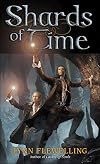
Shards of Time by Lynn Flewelling is the final book in the Nightrunner series, following Thero, Alec, Seregil and Micum as they investigate the murder of a nobleman in a locked room.
I really enjoyed this as a close to the series. The broader cast helps the world feel settled rather than narrowing, and Klia’s presence as a central character shifts the balance in a way that feels overdue rather than corrective. That is echoed again in the inclusion of the female doctor, which quietly expands show more who is allowed authority within the story.
What stayed with me most is how the different strands are allowed to sit alongside the central mystery without feeling like distractions. Mika’s role as Thero’s apprentice, Seregil beginning to build something more permanent, and Klia’s pregnancy all carry a sense of continuation rather than interruption. Alec’s experience of death, and the unique role it allows him to inhabit this novel, feels like a thread the series has been working toward, and it lands here will in giving him opportunity to really stretch his wings independent of Seregil.
The ending moves through the expected large scale confrontation, but what lingers is the gentler sense of what comes next. It reads less like a final full stop and more like a widening out, a suggestion that these lives continue beyond the page. show less
I really enjoyed this as a close to the series. The broader cast helps the world feel settled rather than narrowing, and Klia’s presence as a central character shifts the balance in a way that feels overdue rather than corrective. That is echoed again in the inclusion of the female doctor, which quietly expands show more who is allowed authority within the story.
What stayed with me most is how the different strands are allowed to sit alongside the central mystery without feeling like distractions. Mika’s role as Thero’s apprentice, Seregil beginning to build something more permanent, and Klia’s pregnancy all carry a sense of continuation rather than interruption. Alec’s experience of death, and the unique role it allows him to inhabit this novel, feels like a thread the series has been working toward, and it lands here will in giving him opportunity to really stretch his wings independent of Seregil.
The ending moves through the expected large scale confrontation, but what lingers is the gentler sense of what comes next. It reads less like a final full stop and more like a widening out, a suggestion that these lives continue beyond the page. show less
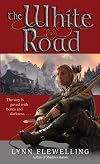
I found The White Road a definite step up from book four. After so much of the previous volume being shaped by captivity and the upheaval of Sebrahn entering Alec and Seregil’s lives, this one has much more momentum. The journey structure helps a lot, and it gives the characters room to feel more like themselves again.
What worked best for me was the shift in Alec and Seregil’s dynamic. There was less emphasis on jealousy, and more sense of two people trying to maturely talk through what show more this strange new responsibility means. That made the relationship feel easier and more settled, even while the situation itself remained unsettling. I also appreciated the way the book used that search for answers to open out more of Seregil’s past and Alec’s heritage, while giving a little more insight into Sebrahn and his bond with Alec, though not enough for everything to fully click into place.
The audiobook continued to be a mixed experience for me. I still found the narrator a bit difficult, particularly where mispronunciations kept pulling me out of the story, and some of the voice choices did not suggest much confidence with different accents.
I did still have some of the same reservations from book 4: I would have liked more female characters in the mix, and I wanted a stronger sense of interiority or specificity from some of the antagonists. In particular, Seregil’s ex felt a little too close to caricature on reappearance.
My main issue was with the ending, which felt as though it fizzled rather than landed. There is a lot of build-up, but the final stretch came across less as revelation than as a sequence of events, and I almost missed the point where the company parted. I am not sure whether that is because the finale is intentionally muted, or because several close calls in quick succession started to cancel each other out and reduce the impact. Either way, I was left feeling that the novel had assembled a good deal of tension without quite converting it into a memorable close.
Even so, I enjoyed this more than the previous book. The increased pace helped, Alec and Seregil felt more recognisably themselves, and the broader excavation of past and heritage gave the story something worthwhile to chew on. It is not quite up there with the first three for me, but I already have the next two and I am still happy to keep going. show less
What worked best for me was the shift in Alec and Seregil’s dynamic. There was less emphasis on jealousy, and more sense of two people trying to maturely talk through what show more this strange new responsibility means. That made the relationship feel easier and more settled, even while the situation itself remained unsettling. I also appreciated the way the book used that search for answers to open out more of Seregil’s past and Alec’s heritage, while giving a little more insight into Sebrahn and his bond with Alec, though not enough for everything to fully click into place.
The audiobook continued to be a mixed experience for me. I still found the narrator a bit difficult, particularly where mispronunciations kept pulling me out of the story, and some of the voice choices did not suggest much confidence with different accents.
I did still have some of the same reservations from book 4: I would have liked more female characters in the mix, and I wanted a stronger sense of interiority or specificity from some of the antagonists. In particular, Seregil’s ex felt a little too close to caricature on reappearance.
My main issue was with the ending, which felt as though it fizzled rather than landed. There is a lot of build-up, but the final stretch came across less as revelation than as a sequence of events, and I almost missed the point where the company parted. I am not sure whether that is because the finale is intentionally muted, or because several close calls in quick succession started to cancel each other out and reduce the impact. Either way, I was left feeling that the novel had assembled a good deal of tension without quite converting it into a memorable close.
Even so, I enjoyed this more than the previous book. The increased pace helped, Alec and Seregil felt more recognisably themselves, and the broader excavation of past and heritage gave the story something worthwhile to chew on. It is not quite up there with the first three for me, but I already have the next two and I am still happy to keep going. show less

Casket of Souls by Lynn Flewelling returns Alec and Seregil to familiar ground, with dual plot lines that move between court intrigue around the succession and the emergence of a suspicious new plague in the poorer part of the city.
The two threads work well to maintain momentum, particularly as much of the action remains within the city where there is limited variation in setting. The shifting focus helps the narrative feel active rather than enclosed. It was also particularly enjoyable to show more spend more time with the female characters, both the royals in Princesses Klia and Elani, and Captain Beka. The maternal royal line remains an interesting subversion of expected norms, though it sits in some tension with the concentration of male authority in key advisory roles: Korathan leading the blue coats, Thero as wizard, and Valerius as head of the physicians. That contrast slightly complicates the sense that a female succession line meaningfully reshapes the structure around it - makes it ultimately feel a bit more token.
The antagonists, Atre and Brader, feel more distant to me. Their actions are clearly positioned as extreme, and Brader's conscience is picking at him, but the motivations Atre could have to justify his behaviour didn't come across convincingly, which I'd have expected from the elements in his pov. Without that conviction, the escalation toward the ending felt more contrived. I'd also agree with other reviews that it took longer than I expected for Alec and Seregil to suspect deliberate interference, particularly given their prior experiences with magic. Even Thero, who might be most attuned to such possibilities, seems slow to consider that the stolen objects could hold or channel power.
It does continue to deserve credit that Flewelling was carving a path that had not been well trodden with LGBT leads in adventure fantasy, and this series helped move a dial that could subsequently be pushed further. The humour and affection in Alec and Seregil's relationship are a very easy and enjoyable read, and I am a big fan of this sort of story when the sexuality of the LGBT characters 'happens to be' rather than making for a significant plot point.
Overall, I enjoyed this more than the previous two books, though it still feels lighter in narrative weight than the original trilogy. It reads less as a tightly constructed arc and more as a return to familiar characters, where some roughness is easier to accept because of that attachment. That attachment will still carry me through to the finale though. show less
The two threads work well to maintain momentum, particularly as much of the action remains within the city where there is limited variation in setting. The shifting focus helps the narrative feel active rather than enclosed. It was also particularly enjoyable to show more spend more time with the female characters, both the royals in Princesses Klia and Elani, and Captain Beka. The maternal royal line remains an interesting subversion of expected norms, though it sits in some tension with the concentration of male authority in key advisory roles: Korathan leading the blue coats, Thero as wizard, and Valerius as head of the physicians. That contrast slightly complicates the sense that a female succession line meaningfully reshapes the structure around it - makes it ultimately feel a bit more token.
The antagonists, Atre and Brader, feel more distant to me. Their actions are clearly positioned as extreme, and Brader's conscience is picking at him, but the motivations Atre could have to justify his behaviour didn't come across convincingly, which I'd have expected from the elements in his pov. Without that conviction, the escalation toward the ending felt more contrived. I'd also agree with other reviews that it took longer than I expected for Alec and Seregil to suspect deliberate interference, particularly given their prior experiences with magic. Even Thero, who might be most attuned to such possibilities, seems slow to consider that the stolen objects could hold or channel power.
It does continue to deserve credit that Flewelling was carving a path that had not been well trodden with LGBT leads in adventure fantasy, and this series helped move a dial that could subsequently be pushed further. The humour and affection in Alec and Seregil's relationship are a very easy and enjoyable read, and I am a big fan of this sort of story when the sexuality of the LGBT characters 'happens to be' rather than making for a significant plot point.
Overall, I enjoyed this more than the previous two books, though it still feels lighter in narrative weight than the original trilogy. It reads less as a tightly constructed arc and more as a return to familiar characters, where some roughness is easier to accept because of that attachment. That attachment will still carry me through to the finale though. show less
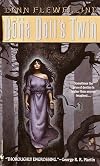
This is, without a doubt, one of the most interesting books I've read where almost nothing happens. It is the fantasy equivalent of [b:Something Happened|10718|Something Happened|Joseph Heller|https://images.gr-assets.com/books/1388183272s/10718.jpg|2703812], by Joseph Heller, when almost assuredly, very little does. Honestly, I'm a little surprised I haven't heard fans of [b:The Way of Kings|7235533|The Way of Kings (The Stormlight Archive, #1)|Brandon show more Sanderson|https://images.gr-assets.com/books/1388184640s/7235533.jpg|8134945] raving about this, the three-dimensional statue to Sanderson's bas-relief; though there is a solid sense of world-building, the focus here is thorough character development. And that is, perhaps, why I couldn't ultimately throw this on the DNF pile (besides Cillian's threat of terrorizing me with nitrite-filled intestinal casings), and why a part of me is considering continuing the series.
The writing is, quite honestly, some of the most solid I've read in epic fantasy in a long while. Descriptive and evocative; Flewelling does atmosphere very well. Which is fortunate, as a ghost is a critical character.
The blurb, as almost always, gets it wrong. This is about the kingdom Skala in the microcosm of the king's sister and her child. It begins with the well-known foretelling, "so long as a daughter of Thelatimos' line defends and rules, Skala shall never be subjugated," the Oracle whispered." A sympathetic advisor offers the king another explanation and female relatives to the throne begin meeting mysterious accidents. An elderly female wizard, Iya, and her protégé receive a vision from their god about how to save the kingdom from invaders. They develop an awful plan to protect the king's sister's unborn child. The king's sister is due with twins, and the night they are born, some truly awful magic is done. Tobin, of course, knows none of this growing up, only that he has a ghostly brother haunting him and his mother. His mother has gone mad and doesn't seem to notice the ghost, at least not in the same way. From there, the narrative follows Tobin through the next few years of his life.
"The princess sat by the fire, sewing away as madly as ever. For the first time since the birth, she had changed her nightdress for a loose gown and put on her rings again. The hem was wet and streaked with mud. Ariani's long hair hung in damp strands around her face. The window was shut tight as always, but Nari could smell the night air on her, and the hint of something else besides. Nari wrinkled her nose, trying to place the raw, unpleasant odor."
Although Flewelling plays a bit with the early narrative--the first couple of chapters from the point of view of the wizards, Iya and Arkoniel; the third from a hill-witch, Lhel; and the fourth from Nani, the witness to the birth and wetnurse--the majority of the remaining story is from Tobin's, with occasional forays into Arkoniel's thoughts as he works to protect Tobin, the future queen.
It's a great premise, and quite honestly, I think I picked it up partly to see how a fantasy book would deal with gender identity/assignment. Alas that this part of the trilogy is very straightforward (ha-ha); young Tobin is convinced he is male, although he has moments of feeling troubled by wanting a doll when very young. I'm almost tempted to pick up the next book for the psychology of the issue; it's a very cruel thing that Iya, Arkoniel, Lhel and Tobin's father have done. You see, Tobin is not gender dysmorphic--his belief in his gender matches his appearance--but will have to be told, eventually, that (s)he is not what (s)he thinks.
What I ended up with instead of an exploration of gender is Tobin learning to deal with the ghost/poltergeist Brother and his efforts to find his place in the household. It is an immersive story; when I read, I could see it happening very clearly in my mind's eye and was engrossed in the detail of the story. But--and this is a big one--when I set it down, it was without deep regret, and there was no particular impetus to pick it up again. I don't know what to make of that; the combination of absorbing without addicting is very rare in the books I read. Had I felt like being unkind, I might point out how each chapter has a semi-significant event. For instance, in chapter 16, Arkoniel comes to visit Tobin and becomes his tutor; in chapter 18, Arkoniel suggests to Tobin's father, the prince, that they find him a young companion, and in chapter 23, Tobin gets his own squire. This is, perhaps, The Belgariad at quarter speed (with better writing).
Would I read it again? Hell, no. Would I read the next? Possibly. It depends on what threats incentives Cillian offers me.
As an aside, this has been on my TBR list since 2011. I'm not quite sure what that says, but it seems appropriate. show less
The writing is, quite honestly, some of the most solid I've read in epic fantasy in a long while. Descriptive and evocative; Flewelling does atmosphere very well. Which is fortunate, as a ghost is a critical character.
The blurb, as almost always, gets it wrong. This is about the kingdom Skala in the microcosm of the king's sister and her child. It begins with the well-known foretelling, "so long as a daughter of Thelatimos' line defends and rules, Skala shall never be subjugated," the Oracle whispered." A sympathetic advisor offers the king another explanation and female relatives to the throne begin meeting mysterious accidents. An elderly female wizard, Iya, and her protégé receive a vision from their god about how to save the kingdom from invaders. They develop an awful plan to protect the king's sister's unborn child. The king's sister is due with twins, and the night they are born, some truly awful magic is done. Tobin, of course, knows none of this growing up, only that he has a ghostly brother haunting him and his mother. His mother has gone mad and doesn't seem to notice the ghost, at least not in the same way. From there, the narrative follows Tobin through the next few years of his life.
"The princess sat by the fire, sewing away as madly as ever. For the first time since the birth, she had changed her nightdress for a loose gown and put on her rings again. The hem was wet and streaked with mud. Ariani's long hair hung in damp strands around her face. The window was shut tight as always, but Nari could smell the night air on her, and the hint of something else besides. Nari wrinkled her nose, trying to place the raw, unpleasant odor."
Although Flewelling plays a bit with the early narrative--the first couple of chapters from the point of view of the wizards, Iya and Arkoniel; the third from a hill-witch, Lhel; and the fourth from Nani, the witness to the birth and wetnurse--the majority of the remaining story is from Tobin's, with occasional forays into Arkoniel's thoughts as he works to protect Tobin, the future queen.
It's a great premise, and quite honestly, I think I picked it up partly to see how a fantasy book would deal with gender identity/assignment. Alas that this part of the trilogy is very straightforward (ha-ha); young Tobin is convinced he is male, although he has moments of feeling troubled by wanting a doll when very young. I'm almost tempted to pick up the next book for the psychology of the issue; it's a very cruel thing that Iya, Arkoniel, Lhel and Tobin's father have done. You see, Tobin is not gender dysmorphic--his belief in his gender matches his appearance--but will have to be told, eventually, that (s)he is not what (s)he thinks.
What I ended up with instead of an exploration of gender is Tobin learning to deal with the ghost/poltergeist Brother and his efforts to find his place in the household. It is an immersive story; when I read, I could see it happening very clearly in my mind's eye and was engrossed in the detail of the story. But--and this is a big one--when I set it down, it was without deep regret, and there was no particular impetus to pick it up again. I don't know what to make of that; the combination of absorbing without addicting is very rare in the books I read. Had I felt like being unkind, I might point out how each chapter has a semi-significant event. For instance, in chapter 16, Arkoniel comes to visit Tobin and becomes his tutor; in chapter 18, Arkoniel suggests to Tobin's father, the prince, that they find him a young companion, and in chapter 23, Tobin gets his own squire. This is, perhaps, The Belgariad at quarter speed (with better writing).
Would I read it again? Hell, no. Would I read the next? Possibly. It depends on what threats incentives Cillian offers me.
As an aside, this has been on my TBR list since 2011. I'm not quite sure what that says, but it seems appropriate. show less
Lists
Awards


You May Also Like


Associated Authors
Statistics
- Works
- 24
- Also by
- 4
- Members
- 14,256
- Popularity
- #1,617
- Rating
- 4.0
- Reviews
- 316
- ISBNs
- 134
- Languages
- 7
- Favorited
- 111