
Michael Foot (1913–2010)
Author of H.G.: The History of Mr Wells
About the Author
Disambiguation Notice:
This page contains books by Michael Mackintosh Foot (1913-2010) the British Labour Party politician and journalist, author of biographies of H.G. Wells and Aneurin Bevan, The Pen and the Sword, etc.
Please do not combine him with Michael Richard Daniell Foot (born 1919), the military historian
Works by Michael Foot
Guilty men, 1957: Suez and Cyprus 3 copies
Who are the patriots? 1 copy
Michael Foot at Ninety 1 copy
Guilty men, 1957 1 copy
Associated Works
Gulliver's Travels (1726) — Introduction, some editions; Introduction, some editions — 20,979 copies, 191 reviews
On the Firing Line: The Public Life of Our Public Figures (1989) — Contributor — 126 copies, 1 review
The Pleasure of Reading: 43 Writers on the Discovery of Reading and the Books That Inspired Them (2015) — Contributor — 104 copies, 2 reviews
Reportage : (Funny, But Not Vulgar; Down & Out in Paris & London; Homage to Catalonia; My Country Right Or Left; The Road to Wigan Pier) (1998) — Introduction, some editions — 27 copies
Tagged
Common Knowledge
- Legal name
- Foot, Michael Mackintosh
- Birthdate
- 1913-07-23
- Date of death
- 2010-03-03
- Gender
- male
- Education
- Plymouth College Preparatory School, Plymouth, England, UK
Leighton Park School, Reading, England, UK
University of Oxford (Wadham College) - Occupations
- shipping clerk
journalist
politician
Leader of the Opposition
Leader of the House of Commons of the United Kingdom (1976-1979)
Leader of the Labour Party of the United Kingdom (1980-1983) (show all 10)
Lord President of the Council of the United Kingdom (1976-1979)
United Kingdom Secretary of State for Employment (1974-1976)
Member of the Parliament of the United Kingdom (1960-1983)
Member of the Parliament of the United Kingdom (1945-1955) - Organizations
- Labour Party (Labour Party Leader)
Parliament of the United Kingdom - Relationships
- Craigie, Jill (wife)
Foot, Paul (nephew)
Foot, Hugh (brother)
Foot, Isaac (father)
Foot, Dingle (brother) - Nationality
- England
UK - Birthplace
- Plymouth, Devon, England, UK
- Places of residence
- Plymouth, Devon, England, UK
Hampstead, London, England, UK - Place of death
- Hampstead, London, England, UK
- Disambiguation notice
- This page contains books by Michael Mackintosh Foot (1913-2010) the British Labour Party politician and journalist, author of biographies of H.G. Wells and Aneurin Bevan, The Pen and the Sword, etc.
Please do not combine him with Michael Richard Daniell Foot (born 1919), the military historian - Associated Place (for map)
- England, UK
Members
Reviews
Guilty Men by Cato
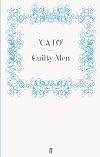
Every time I think that the news is awful, that things cannot be worse, I try to imagine what it was like in the spring of 1940. The Germans took basically all of western Europe in a series of lightning strikes, eventually defeating the most powerful military on the continent, the French. The British managed to evacuate hundreds of thousands of their troops from Dunkirk, but just barely. A German invasion of England seemed imminent.
At this dark time, three journalists — including future show more Labour Party leader Michael Foot — wrote this short book. The ‘guilty men’ of the title are not just the appeasers, above all Chamberlain, but all the other Tory fools who saw no particular need to get Britain ready for the coming war. Their blind overconfidence — believing in the futility of war, in Mr. Hitler’s trustworthiness, in the invincibility of the British empire — led them to do almost nothing to re-arm in time. It was only with Winston Churchill’s arrival at Number 10 that Britain’s real war against Germany began.
At the time, the book was hated by most reviewers. But it was a hugely popular best-seller and I can see why. The case against Chamberlain and his cronies, usually based on their own words, is essentially unanswerable. Yet even today there are people — including some noted historians — who buy into the myth that Britain used the year after the Munich pact, as well as the next eight months of ‘phoney war’, to rearm. They did nothing of the sort. When the British forces were being kicked off the continent it was entirely due to the fact that the Germans too had time to rearm, which they did rather effectively, and their Wehrmacht and Luftwaffe were far better equipped and battle-ready than the British forces trapped on that French beach.
Looking back decades later, Michael Foot wrote about the revisionists who were already encouraging a more generous evaluation of Chamberlain. He would have none of it. The old umbrella-carrying fool, with a worthless piece of paper in his hands, proclaiming ‘peace in our time’ when there was no peace — he nearly brought an end to Britain as an independent country. Churchill arrived in the nick of time to prevent a disaster.
There are bits of this hastily-scribbled book that don’t read as well today as they may have in 1940. The comments about Poland, for example, are very unfair to the Poles and inaccurate too. But on the whole, this books and the arguments it makes about appeasement and the need to stand up to bullying dictators is as relevant today as when it was first written. show less
At this dark time, three journalists — including future show more Labour Party leader Michael Foot — wrote this short book. The ‘guilty men’ of the title are not just the appeasers, above all Chamberlain, but all the other Tory fools who saw no particular need to get Britain ready for the coming war. Their blind overconfidence — believing in the futility of war, in Mr. Hitler’s trustworthiness, in the invincibility of the British empire — led them to do almost nothing to re-arm in time. It was only with Winston Churchill’s arrival at Number 10 that Britain’s real war against Germany began.
At the time, the book was hated by most reviewers. But it was a hugely popular best-seller and I can see why. The case against Chamberlain and his cronies, usually based on their own words, is essentially unanswerable. Yet even today there are people — including some noted historians — who buy into the myth that Britain used the year after the Munich pact, as well as the next eight months of ‘phoney war’, to rearm. They did nothing of the sort. When the British forces were being kicked off the continent it was entirely due to the fact that the Germans too had time to rearm, which they did rather effectively, and their Wehrmacht and Luftwaffe were far better equipped and battle-ready than the British forces trapped on that French beach.
Looking back decades later, Michael Foot wrote about the revisionists who were already encouraging a more generous evaluation of Chamberlain. He would have none of it. The old umbrella-carrying fool, with a worthless piece of paper in his hands, proclaiming ‘peace in our time’ when there was no peace — he nearly brought an end to Britain as an independent country. Churchill arrived in the nick of time to prevent a disaster.
There are bits of this hastily-scribbled book that don’t read as well today as they may have in 1940. The comments about Poland, for example, are very unfair to the Poles and inaccurate too. But on the whole, this books and the arguments it makes about appeasement and the need to stand up to bullying dictators is as relevant today as when it was first written. show less

Michael Foot was a longtime power in the UK Labour Party (leading the party in the early 1980s), and a longtime leader in Socialist thought (among other things, being the editor of Tribune, a leading Socialist weekly). So he is, in one sense, a logical man to write a biography of Aneurin Bevan, the standout Labour Party figure of the 1940s and 1950s. The thing is, of course, that in spite of what Foot says, it's not really an unbiased look, since Foot clearly loved Bevan, and indeed Foot show more pops in and out of the narrative, especially toward the later half of this book, which deals with Bevan's career during a period of Labour party dominance (1945-1951), then turmoil (1951-1960). Even two of Bevan's more notorious ventures, such as his labeling of the Conservatives as "vermin" and a comment about needing the H-Bomb, are more or less handled delicately. Hugh Gaitskell (Clement Attlee's successor as Labour Party leader) comes in for some very rough treatment, and Herbert Morrisson, not much better; both were, of course, leaders of the right wing of the Labour Party. One probably needs a scorecard going into the book to catch some of Foot's feelings toward the main characters. There's also a question of Foot brushing off as a fabrication the famous story about Bevan and two colleagues being drunk at a conference in Venice -- there's actually some significant dispute about it, based on statements made (or allegedly made) by one of the parties in question. Read with caution -- though the prose is mostly entertaining, except where Foot drones on with extended quotes. show less

Anyone bemoaning the declining standards of the British press should be forced to read this book. It is the story of the beginnings of a newspaper industry, with particular reference to Jonathan Swift, its first feared protagonist.
Newspapers grew from pamphlets distributed by people keen to air their prejudices upon the general public and, from the out set, newspapers were little more than a collection of such bias rancour. Nowadays, the fact that a journalist is paid to set out views with show more which he may not concur for financial reward is accepted: Swift was something of a first in this field: he started out as a Whig supported but, was all too easily lured, by money and the illusion of being an equal in the Tory ranks, into assisting Harley, and then, when his influence waned, St John, to destroy the Duke of Marlborough, for Tory political ends. What has changed in three hundred years?
Michael Foot takes a surprisingly friendly attitude to Swift perhaps because his own political sympathies moved away from the Liberal Party, the modern home of Whig views. Foot treats Swift as a great writer, which he undoubtedly was, but also as a bit of a scallywag, which sells his treachery to former friends a little light, in my humble estimation. A good read, non the less. show less
Newspapers grew from pamphlets distributed by people keen to air their prejudices upon the general public and, from the out set, newspapers were little more than a collection of such bias rancour. Nowadays, the fact that a journalist is paid to set out views with show more which he may not concur for financial reward is accepted: Swift was something of a first in this field: he started out as a Whig supported but, was all too easily lured, by money and the illusion of being an equal in the Tory ranks, into assisting Harley, and then, when his influence waned, St John, to destroy the Duke of Marlborough, for Tory political ends. What has changed in three hundred years?
Michael Foot takes a surprisingly friendly attitude to Swift perhaps because his own political sympathies moved away from the Liberal Party, the modern home of Whig views. Foot treats Swift as a great writer, which he undoubtedly was, but also as a bit of a scallywag, which sells his treachery to former friends a little light, in my humble estimation. A good read, non the less. show less
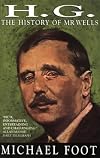
Michael Foot - surely one of the most intellectual figures ever to lead a major political party - offers here a very interesting insight into the literary and political thought of H G Wells. There is so much more to the great author than the very famous science fiction novels (or "scientific romances" in the misleading parlance of the day) for which he is most famous today, great seminal examples though those are of early SF. This books traces the development of his thinking and his often show more perceptive insight into world affairs and scientific progress. If I had a small criticism, it would be that one can sometimes get bogged down by some of the lengthy extracts from some of his works and correspondence with other leading intellectual lights. A fascinating study of a man who is so much more than just the founding father of science fiction (and that would be significant enough in itself - and for my money he is more worthy to occupy that station than Jules Verne, who was more of a scientific adventure writer, albeit a very good one). show less
Lists
THE WAR ROOM (1)
You May Also Like


Associated Authors
Statistics
- Works
- 21
- Also by
- 14
- Members
- 519
- Popularity
- #47,859
- Rating
- 3.7
- Reviews
- 10
- ISBNs
- 39
- Favorited
- 1
