
Petr Ginz (1928–1944)
Author of The Diary of Petr Ginz
About the Author
Works by Petr Ginz
Ein Koffer spricht — Lyrics — 2 copies
Tagged
Common Knowledge
- Canonical name
- Ginz, Petr
- Legal name
- Ginz, Petr
- Other names
- Ginz, Peter
- Birthdate
- 1928-02-01
- Date of death
- 1944-09-28
- Gender
- male
- Occupations
- Diarist
- Relationships
- Pressburger, Chava (sister)
Ginz, Otto (father) - Short biography
- Petr Ginz, born in Prague in 1928 of a Jewish father and a gentile mother, spent his adolescence in the Theresienstadt ghetto. He was remarkably talented at writing and drawing and edited the youth newspaper Vedem ‘We are the Leaders’. He died in Auschwitz in the fall of 1944, when he was sixteen.
- Nationality
- Czechoslovakia
- Places of residence
- Prague, Czechoslovakia
Theresienstadt concentration camp - Place of death
- Auschwitz
- Burial location
- Auschwitz
- Map Location
- Tchécoslovaquie
- Associated Place (for map)
- Prague, Czechoslovakia
Members
Discussions
seriuous problem : wrong character encoding in search at add touchstone in Bug Collectors (September 2012)
Jeder Mensch hat einen Namen in Zwischen �t�p� und Wirklichkeit: Konstruierte Sprachen für die gl�b�l�s�rt� Welt (July 2012)
WP:List of posthumous publications of Holocaust victims in Collaborative work (April 2012)
Reviews
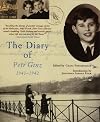
This diary is an account of Petr Ginz's life as a 14 year old boy in the time of the Holocaust. It is written in a wonderfully - and often heartbreaking - open and frank style that couldn't possibly fail to touch the reader deeply.
The events, which led to the discovery of this diary, are almost as fascinating as the book itself. The following is taken from the back of the book:
In 2003, before setting out on the ill-fated Columbia space shuttle, Ilan Ramon - the first-ever Israeli astronaut show more and a son of Auschwitz survivors - sought to bring something on his voyage to commemorate the Holocaust. At the suggestion of the Yad Vashem Holocaust Memorial, he took Moon Landscape, a small drawing made in 1942 by a Prague teenager, Petr Ginz who died in Auschwitz.
After the shuttle's tragic explosion on February 1, 2003 - what would have been Ginz's seventy-fifth birthday - news reports of the teenage prodigy and his painting reached Prague, where a man made a startling discovery: he was in possession of Ginz's wartime diary, which had been hidden away in his attic for decades. Soon thereafter, the diary made its way to Petr's sister, Chava Pressburger, who instantly recognized her brother's handwriting and his playful but precociously perceptive voice in its pages. The diary has since been published throughout Europe, where it has moved thousands of readers and become an international best seller.
I have read many books on this subject and as tragic and devastating as many of those books are, few are written from the eyes of a child and I think for me it was the backdrop of hatred, brutality and despair mixed with such innocence, hope, and playfulness that made this one of the most touching accounts I have read.
I liked that the book is sprinkled throughout with some of Petr Ginz's artwork and the drawings are just incredible. It's a great pity that he died so young, as I could see from the artwork, and from his writing, that he had a great deal to offer the world. I think the thing that struck me most, was the fact that regardless of how tough life became, he was dedicated to learning and exploring culture. He comes across as so much older than his actual years. His knowledge of music and authors is great and it is clear in the entries where he discusses school, that he is probably the brightest student in the class, if not the whole school.
This was a fantastic book and I loved that Petr's sister added notes throughout to explain the background a little on some days, and shares extra information about this wonderful boy.
The Diary of Petr Ginz is one of my favourite reads of the year. I can't imagine anyone reading this book and not being incredibly moved by it. show less
The events, which led to the discovery of this diary, are almost as fascinating as the book itself. The following is taken from the back of the book:
In 2003, before setting out on the ill-fated Columbia space shuttle, Ilan Ramon - the first-ever Israeli astronaut show more and a son of Auschwitz survivors - sought to bring something on his voyage to commemorate the Holocaust. At the suggestion of the Yad Vashem Holocaust Memorial, he took Moon Landscape, a small drawing made in 1942 by a Prague teenager, Petr Ginz who died in Auschwitz.
After the shuttle's tragic explosion on February 1, 2003 - what would have been Ginz's seventy-fifth birthday - news reports of the teenage prodigy and his painting reached Prague, where a man made a startling discovery: he was in possession of Ginz's wartime diary, which had been hidden away in his attic for decades. Soon thereafter, the diary made its way to Petr's sister, Chava Pressburger, who instantly recognized her brother's handwriting and his playful but precociously perceptive voice in its pages. The diary has since been published throughout Europe, where it has moved thousands of readers and become an international best seller.
I have read many books on this subject and as tragic and devastating as many of those books are, few are written from the eyes of a child and I think for me it was the backdrop of hatred, brutality and despair mixed with such innocence, hope, and playfulness that made this one of the most touching accounts I have read.
I liked that the book is sprinkled throughout with some of Petr Ginz's artwork and the drawings are just incredible. It's a great pity that he died so young, as I could see from the artwork, and from his writing, that he had a great deal to offer the world. I think the thing that struck me most, was the fact that regardless of how tough life became, he was dedicated to learning and exploring culture. He comes across as so much older than his actual years. His knowledge of music and authors is great and it is clear in the entries where he discusses school, that he is probably the brightest student in the class, if not the whole school.
This was a fantastic book and I loved that Petr's sister added notes throughout to explain the background a little on some days, and shares extra information about this wonderful boy.
The Diary of Petr Ginz is one of my favourite reads of the year. I can't imagine anyone reading this book and not being incredibly moved by it. show less
This diary is an account of Petr Ginz's life as a 14 year old boy in the time of the Holocaust. It is written in a wonderfully - and often heartbreaking - open and frank style that couldn't possibly fail to touch the reader deeply.
The events, which led to the discovery of this diary, are almost as fascinating as the book itself. The following is taken from the back of the book:
In 2003, before setting out on the ill-fated Columbia space shuttle, Ilan Ramon - the first-ever Israeli astronaut show more and a son of Auschwitz survivors - sought to bring something on his voyage to commemorate the Holocaust. At the suggestion of the Yad Vashem Holocaust Memorial, he took Moon Landscape, a small drawing made in 1942 by a Prague teenager, Petr Ginz who died in Auschwitz.
After the shuttle's tragic explosion on February 1, 2003 - what would have been Ginz's seventy-fifth birthday - news reports of the teenage prodigy and his painting reached Prague, where a man made a startling discovery: he was in possession of Ginz's wartime diary, which had been hidden away in his attic for decades. Soon thereafter, the diary made its way to Petr's sister, Chava Pressburger, who instantly recognized her brother's handwriting and his playful but precociously perceptive voice in its pages. The diary has since been published throughout Europe, where it has moved thousands of readers and become an international best seller.
I have read many books on this subject and as tragic and devastating as many of those books are, few are written from the eyes of a child and I think for me it was the backdrop of hatred, brutality and despair mixed with such innocence, hope, and playfulness that made this one of the most touching accounts I have read.
I liked that the book is sprinkled throughout with some of Petr Ginz's artwork and the drawings are just incredible. It's a great pity that he died so young, as I could see from the artwork, and from his writing, that he had a great deal to offer the world. I think the thing that struck me most, was the fact that regardless of how tough life became, he was dedicated to learning and exploring culture. He comes across as so much older than his actual years. His knowledge of music and authors is great and it is clear in the entries where he discusses school, that he is probably the brightest student in the class, if not the whole school.
This was a fantastic book and I loved that Petr's sister added notes throughout to explain the background a little on some days, and shares extra information about this wonderful boy.
The Diary of Petr Ginz is one of my favourite reads of the year. I can't imagine anyone reading this book and not being incredibly moved by it. show less
The events, which led to the discovery of this diary, are almost as fascinating as the book itself. The following is taken from the back of the book:
In 2003, before setting out on the ill-fated Columbia space shuttle, Ilan Ramon - the first-ever Israeli astronaut show more and a son of Auschwitz survivors - sought to bring something on his voyage to commemorate the Holocaust. At the suggestion of the Yad Vashem Holocaust Memorial, he took Moon Landscape, a small drawing made in 1942 by a Prague teenager, Petr Ginz who died in Auschwitz.
After the shuttle's tragic explosion on February 1, 2003 - what would have been Ginz's seventy-fifth birthday - news reports of the teenage prodigy and his painting reached Prague, where a man made a startling discovery: he was in possession of Ginz's wartime diary, which had been hidden away in his attic for decades. Soon thereafter, the diary made its way to Petr's sister, Chava Pressburger, who instantly recognized her brother's handwriting and his playful but precociously perceptive voice in its pages. The diary has since been published throughout Europe, where it has moved thousands of readers and become an international best seller.
I have read many books on this subject and as tragic and devastating as many of those books are, few are written from the eyes of a child and I think for me it was the backdrop of hatred, brutality and despair mixed with such innocence, hope, and playfulness that made this one of the most touching accounts I have read.
I liked that the book is sprinkled throughout with some of Petr Ginz's artwork and the drawings are just incredible. It's a great pity that he died so young, as I could see from the artwork, and from his writing, that he had a great deal to offer the world. I think the thing that struck me most, was the fact that regardless of how tough life became, he was dedicated to learning and exploring culture. He comes across as so much older than his actual years. His knowledge of music and authors is great and it is clear in the entries where he discusses school, that he is probably the brightest student in the class, if not the whole school.
This was a fantastic book and I loved that Petr's sister added notes throughout to explain the background a little on some days, and shares extra information about this wonderful boy.
The Diary of Petr Ginz is one of my favourite reads of the year. I can't imagine anyone reading this book and not being incredibly moved by it. show less
This has the same flaws and virtues as Anne Frank's diary, or any Holocaust diary for that matter. Petr's story is poignant, especially given his intelligence and artistic/literary talent, and the reader inevitably wonders what sort of contributions he would have made to the world if he hadn't been murdered in Auschwitz at the age of 16. His essays and drawings show great promise. The list of characters at the end of the story, and their fates (most were lost to the Holocaust) can bring show more tears to your eyes.
But Petr's diary itself, the bulk of the book, is quite banal and boring with entries like "Home all this morning, then this afternoon at school." Just a few spare sentences of the day's activities. It was obviously not meant to be read by anyone else, and it shows very little of the spirit of the boy behind the pen. This book would have been better off as a memoir, or a biography of Petr with excerpts from his diary, rather than the whole thing which is a slog to get through.
Another problem: I don't know whether this was done intentionally or not, but the book fails to show at ALL just what an unpleasant place Petr was being sent to. They make Terezin/Theresienstadt, the concentration camp he was deported to once he turned 14, sound like an arts camp or boarding school. When in fact it may not have been Auschwitz, but it was a terrible place to live with rampant overcrowding and starvation and overwork and disease, and many people died there. I don't understand why the book mislead the reader in that way. show less
But Petr's diary itself, the bulk of the book, is quite banal and boring with entries like "Home all this morning, then this afternoon at school." Just a few spare sentences of the day's activities. It was obviously not meant to be read by anyone else, and it shows very little of the spirit of the boy behind the pen. This book would have been better off as a memoir, or a biography of Petr with excerpts from his diary, rather than the whole thing which is a slog to get through.
Another problem: I don't know whether this was done intentionally or not, but the book fails to show at ALL just what an unpleasant place Petr was being sent to. They make Terezin/Theresienstadt, the concentration camp he was deported to once he turned 14, sound like an arts camp or boarding school. When in fact it may not have been Auschwitz, but it was a terrible place to live with rampant overcrowding and starvation and overwork and disease, and many people died there. I don't understand why the book mislead the reader in that way. show less
This is the diary of Petr (Peter) Ginz, a Jewish teenager living in Prague, Czechoslaviakia during the middle years of WW2.
The diary was fascinating to read. This Kid Petr was interested in so many different subjects, especially science, just like me!! He was also a rather good artist as well. Many of his drawings and artworks have survived as well as some of his diaries.
Petr was sent to the Theresienstadt Ghetto in 1942 when he was 14 years old. His younger sister Eva arrived at show more Theresienstadt in 1944 when she also turned 14. Petr was shipped off to Auschwitz some 2 months after Eva's arrival.
Eva Ginzova was liberated from Theresienstadt in 1945. She is now called Chava Pressburger.
The diary entries were interesting - well those that said more then just, went to school, went home, or nothing special.
The only complaint I have is that the list of people and relatives whom Petr mentions is not at the front of the diary. Instead this list is found at the back. So I went through the diary not knowing who everyone was in relation to Petr.
That lack of names (at the front) drops this down to 4 stars. show less
The diary was fascinating to read. This Kid Petr was interested in so many different subjects, especially science, just like me!! He was also a rather good artist as well. Many of his drawings and artworks have survived as well as some of his diaries.
Petr was sent to the Theresienstadt Ghetto in 1942 when he was 14 years old. His younger sister Eva arrived at show more Theresienstadt in 1944 when she also turned 14. Petr was shipped off to Auschwitz some 2 months after Eva's arrival.
Eva Ginzova was liberated from Theresienstadt in 1945. She is now called Chava Pressburger.
The diary entries were interesting - well those that said more then just, went to school, went home, or nothing special.
The only complaint I have is that the list of people and relatives whom Petr mentions is not at the front of the diary. Instead this list is found at the back. So I went through the diary not knowing who everyone was in relation to Petr.
That lack of names (at the front) drops this down to 4 stars. show less
Lists
You May Also Like


Associated Authors
Statistics
- Works
- 5
- Members
- 254
- Popularity
- #90,186
- Rating
- 3.7
- Reviews
- 11
- ISBNs
- 21
- Languages
- 10
- Favorited
- 2
