
Wayne Grady
Author of Tree: A Life Story
About the Author
Wayne Grady was born in 1948 in Windsor, Ontario. He attended Carleton University where he earned a B.A. in English. He is a freelance magazine writer and author of several books. He is the former editor of Harrowsmith magazine. He has also translated several French novels into English. He has been show more shortlisted for the Toronto Book Award and the Governor General's Award for Translation, for Black Squirrel, by Daniel Poliquin. He received the Governor General's Award for Translation, for On the Eighth Day, by Antoine Maillet and John Glassco Prize for Literary Translation, for Christopher Cartier of Hazelnut, by Antoine Maillet. He lives in Kingston, Ontario. (Bowker Author Biography) show less
Series
Works by Wayne Grady
Bright Stars, Dark Trees, Clear Water: Nature Writings from North of the Border (A Nonpareil Book) (2001) — Editor — 18 copies
Dark Waters Dancing to a Breeze: A Literary Companion to Rivers and Lakes (Literary Companions To...) (2007) — Editor — 13 copies
The Quiet Limit of the World: A Journey to the North Pole to Investigate Global Warming (1997) 9 copies
Green home 1 copy
Greenhome 1 copy
Associated Works
Lost Classics: Writers on Books Loved and Lost, Overlooked, Under-read, Unavailable, Stolen, Extinct, or Otherwise Out of Commission (2000) — Contributor — 320 copies, 6 reviews
L'écureuil noir: Roman (Littérature) (French Edition) (1994) — Translator, some editions — 10 copies
Tagged
Common Knowledge
- Birthdate
- 1948
- Gender
- male
- Education
- Carleton University (BA|English|1971)
- Occupations
- author
- Relationships
- Simonds, Merilyn (wife)
- Nationality
- Canada
- Birthplace
- Windsor, Ontario, Canada
- Places of residence
- Windsor, Ontario, Canada
Kingston, Ontario, Canada - Associated Place (for map)
- Ontario, Canada
Members
Reviews
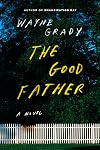
Having read and enjoyed Wayne Grady’s previous novels (Emancipation Day and Up From Freedom), I certainly wanted to read his latest. It did not disappoint.
The book focuses on a father-daughter relationship. Harry Bowes moves to Toronto from the small town of White Falls (“on the Madawaska River, between Ottawa and Peterborough”) to take a teaching job; he leaves behind his wife and ten-year-old daughter Daphne. He never lives in White Falls again because his marriage ends in divorce show more and he eventually remarries. He remains in contact with Daphne, visiting her and having her visit him, but their connection is eroded.
Daphne feels abandoned by her father, and the loving young girl is replaced by a hostile young woman who seems determined to totally destroy her relationship with Harry; she physically distances herself from him and limits contact with him. Then she abandons her studies and begins self-medicating with drugs and alcohol. A crisis brings them together physically, but will they be able to bridge the emotional distance?
I found myself frustrated with Harry. He is supposed to be the adult, but he does not behave as one. He doesn’t give much thought to how his move from home will affect his daughter. He doesn’t even tell her that he’s leaving; he just assumes she will be alright: “The relationship and trust and companionship he had built up with her over the years would ripen.” Later, when it’s obvious that Daphne is not doing well, he has to be pushed to make more than a cursory effort to contact her. Rather than reach out to find out exactly what Daphne is doing, he imagines best-case scenarios, “picturing her in a bright, cheerful apartment, with hardwood floors and tall windows that let in plenty of sunlight. . . . Food in the refrigerator, healthful food, smoked salmon, Boston lettuce, and a jar of real capers . . . and a small wine rack with bottles of a clear Okanagan sauvignon blanc.” Harry is so right when he comments on his passivity: “’I think I may just have been doing what was easiest for me.’”
I sometimes found myself equally frustrated with Daphne. Her behaviour as a child is understandable; she feels abandoned by her father with whom she had a close bond. She looks for affection and attention elsewhere. As a young adult, however, she makes choices that seem to be intended to punish her father because she cannot forgive him, even when those same choices destroy her own life. She is so focused on what she sees as her father’s betrayal that she continues to blame him and wallow in self-pity when, in fact, she bears responsibility for her actions. It takes a long time for her to admit that maybe her father’s leaving was “more a mistake than a premeditated desertion.”
The novel provides a dual perspective; the reader sees both Harry and Daphne’s points of view. It is so realistic to read Harry saying, “’Daphne isn’t always there. She’s always somewhere else’” and later, when he argues, “’I was always there for you’” have Daphne counter with “’Always there, never here.’”
In Daphne’s chapters, when she is facing a personal crisis and resorts to drugs again and again, she refers to herself in the second person. This approach is somewhat disorienting but very effectively shows the chaos in her life.
There are two aspects which I particularly enjoyed. As a former English teacher, I loved the many literary allusions. Shakespeare is quoted often, but W. B. Yeats and Walter Raleigh and Matt Cohen and Robertson Davies and Edna O’Brien and Siri Hustvedt and others are referenced. Though White Falls is fictional, I grew up in the Madawaska Valley so references to “the Madawaska Valley accent” and “Madawaska Grunge” made me smile, as did mentions of Pembroke and Foymount.
The father-daughter relationship is portrayed so realistically that readers who are fathers or daughters will be inspired to examine their own relationships. The novel reminds us that love requires “So much forgiveness . . . so much overlooking of hurt, so much emphasis on intentionality” and that love has many shapes. Such a though-provoking book should be read.
Note: I received an eARC from the publisher via NetGalley.
Please check out my reader's blog (https://schatjesshelves.blogspot.com/) and follow me on Twitter (@DCYakabuski). show less
The book focuses on a father-daughter relationship. Harry Bowes moves to Toronto from the small town of White Falls (“on the Madawaska River, between Ottawa and Peterborough”) to take a teaching job; he leaves behind his wife and ten-year-old daughter Daphne. He never lives in White Falls again because his marriage ends in divorce show more and he eventually remarries. He remains in contact with Daphne, visiting her and having her visit him, but their connection is eroded.
Daphne feels abandoned by her father, and the loving young girl is replaced by a hostile young woman who seems determined to totally destroy her relationship with Harry; she physically distances herself from him and limits contact with him. Then she abandons her studies and begins self-medicating with drugs and alcohol. A crisis brings them together physically, but will they be able to bridge the emotional distance?
I found myself frustrated with Harry. He is supposed to be the adult, but he does not behave as one. He doesn’t give much thought to how his move from home will affect his daughter. He doesn’t even tell her that he’s leaving; he just assumes she will be alright: “The relationship and trust and companionship he had built up with her over the years would ripen.” Later, when it’s obvious that Daphne is not doing well, he has to be pushed to make more than a cursory effort to contact her. Rather than reach out to find out exactly what Daphne is doing, he imagines best-case scenarios, “picturing her in a bright, cheerful apartment, with hardwood floors and tall windows that let in plenty of sunlight. . . . Food in the refrigerator, healthful food, smoked salmon, Boston lettuce, and a jar of real capers . . . and a small wine rack with bottles of a clear Okanagan sauvignon blanc.” Harry is so right when he comments on his passivity: “’I think I may just have been doing what was easiest for me.’”
I sometimes found myself equally frustrated with Daphne. Her behaviour as a child is understandable; she feels abandoned by her father with whom she had a close bond. She looks for affection and attention elsewhere. As a young adult, however, she makes choices that seem to be intended to punish her father because she cannot forgive him, even when those same choices destroy her own life. She is so focused on what she sees as her father’s betrayal that she continues to blame him and wallow in self-pity when, in fact, she bears responsibility for her actions. It takes a long time for her to admit that maybe her father’s leaving was “more a mistake than a premeditated desertion.”
The novel provides a dual perspective; the reader sees both Harry and Daphne’s points of view. It is so realistic to read Harry saying, “’Daphne isn’t always there. She’s always somewhere else’” and later, when he argues, “’I was always there for you’” have Daphne counter with “’Always there, never here.’”
In Daphne’s chapters, when she is facing a personal crisis and resorts to drugs again and again, she refers to herself in the second person. This approach is somewhat disorienting but very effectively shows the chaos in her life.
There are two aspects which I particularly enjoyed. As a former English teacher, I loved the many literary allusions. Shakespeare is quoted often, but W. B. Yeats and Walter Raleigh and Matt Cohen and Robertson Davies and Edna O’Brien and Siri Hustvedt and others are referenced. Though White Falls is fictional, I grew up in the Madawaska Valley so references to “the Madawaska Valley accent” and “Madawaska Grunge” made me smile, as did mentions of Pembroke and Foymount.
The father-daughter relationship is portrayed so realistically that readers who are fathers or daughters will be inspired to examine their own relationships. The novel reminds us that love requires “So much forgiveness . . . so much overlooking of hurt, so much emphasis on intentionality” and that love has many shapes. Such a though-provoking book should be read.
Note: I received an eARC from the publisher via NetGalley.
Please check out my reader's blog (https://schatjesshelves.blogspot.com/) and follow me on Twitter (@DCYakabuski). show less
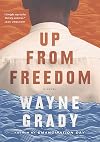
Virgil Moody “vowed he would never own slaves, never be like his father” but when he left home “he’d taken Annie [a house slave] from his father’s plantation.” Moody discovered that Annie was pregnant but he comes to think of her and her son Lucas as his family. This family is broken apart when Lucas falls in love with a slave belonging to their neighbour and flees with her. Virgil sets out to find him, enroute encountering people with differing attitudes to slavery. Eventually, show more he finds himself in Freedom, Indiana, where he meets Tamsey and her family who are trying to escape the reach of the Fugitive Slave Act.
Though Virgil is searching for Lucas, his journey is very much a journey of self-discovery. At the beginning he fails to understand that his actions make him complicit in slavery. He claims to abhor slavery, but he fights on the side of Texas in the Mexican-American War knowing that “Texans were fighting for slavery.” He convinces himself that he saved Annie from his father’s cruelty but he never asked her if she wanted to come with him. He claims that he knows Annie stayed with him because she wanted to “’because she didn’t leave’.” Virgil thinks “of Annie as his wife and Lucas as their son” but “Annie hadn’t been as comfortable with that as he was [because] the consequences for her were far greater than they were for him.” Virgil tells Lucas, “’I always raised you like a son’” but Lucas points out, “’Did you? Wouldn’t you have sent your son to school?’” At one point, Annie asks Virgil to talk to Lucas but Virgil replies, “’He’s your son’” and she responds with “’But he your slave!’” And Virgil never actually frees them!
Gradually, Virgil comes to realize that he could have done more. When Annie and Lucas have to stay in steerage, “suffocated below on straw mats and were fed gruel,” aboard a steamer while he “slept comfortably in his cabin, on clean sheets and in fresh air,” he counts himself “virtuous for having noticed [Annie’s] anger, thinking she would appreciate the difference between his concern and the other passengers’ lack of it. Annie and Lucas were more to him than slaves: wasn’t he a fine chap? . . . But what could he have done? More.” Virgil comes to see his selfishness, to see that he had blindly assumed “that doing what was good for him was good for everyone else concerned.” He admits “He was only generous when it suited him. He transported fugitives only because he thought they might help him find Lucas. And he didn’t even want to find Lucas for Lucas’s sake, but for his own. For forgiveness.”
It is Tamsey who forces Virgil “to admit to himself what he was. A white man in a world that was increasingly determined by the consequences of slavery. It was time for him to stop acting surprised and indignant whenever anyone suggested to him that the reason he hadn’t freed Annie or Lucas was that he had liked it that their relationship was based on ownership, that that was the way he’d been raised, and, hate it though he professed he did, it was the relationship he understood and felt most comfortable with.” Then, when given an opportunity, he sets out to redeem himself.
The concept of freedom is examined in the novel. Virgil tells Lucas, “’You [and your mother] always been free here” but obviously Anne and Lucas don’t feel that way. A man Virgil encounters tells him “’our Northern states are proud of the fact that their constitutions do not allow slavery. No, the workers on these industrious projects are free blacks – a designation that usually signifies a man is free from slavery, but that here has come to mean also a man who works for free. Or for wages so low that he can’t afford to do anything about his situation.” Even freed slaves with “free papers” fear fugitive catchers, especially with the passing of the Fugitive Slave Act: “’I show our papers to catchers, you think they leave us alone?’” And Virgil can never be truly free of his past.
Set between May 1848 and November 1850, the novel examines racial turmoil in the United States at that time, a turmoil that erupted in the American Civil War a decade later. But the novel is relevant to today. Virgil’s father taught him that “’Nothing is forgiven . . . Some things are forgotten, but damn few. And nothing is every forgiven’” and Virgil realizes that “his father had been right, that forgiveness meant wiping the record clean and that could never happen.” Slavery cannot be wiped clean and so not truly forgiven but perhaps, as one character says, “’It not too late to seek a better world’”?
There is a trial towards the end of the novel that has a twist I never expected but is apparently based on an actual case involving the author’s great-great-grandparents. It emphasizes that the terms “black” and “white” are in many ways meaningless and only labels which can be used/misused to serve one’s purposes. Can any of us really call ourselves one or the other?
This is an excellent novel which I highly recommend. It has a compelling plot and a complex character who learns much about the world and himself. The book will leave readers asking questions about their own behaviour.
Note: I received a digital galley of this book from the publisher via NetGalley.
Please check out my reader's blog (https://schatjesshelves.blogspot.com/) and follow me on Twitter (@DCYakabuski). show less
Though Virgil is searching for Lucas, his journey is very much a journey of self-discovery. At the beginning he fails to understand that his actions make him complicit in slavery. He claims to abhor slavery, but he fights on the side of Texas in the Mexican-American War knowing that “Texans were fighting for slavery.” He convinces himself that he saved Annie from his father’s cruelty but he never asked her if she wanted to come with him. He claims that he knows Annie stayed with him because she wanted to “’because she didn’t leave’.” Virgil thinks “of Annie as his wife and Lucas as their son” but “Annie hadn’t been as comfortable with that as he was [because] the consequences for her were far greater than they were for him.” Virgil tells Lucas, “’I always raised you like a son’” but Lucas points out, “’Did you? Wouldn’t you have sent your son to school?’” At one point, Annie asks Virgil to talk to Lucas but Virgil replies, “’He’s your son’” and she responds with “’But he your slave!’” And Virgil never actually frees them!
Gradually, Virgil comes to realize that he could have done more. When Annie and Lucas have to stay in steerage, “suffocated below on straw mats and were fed gruel,” aboard a steamer while he “slept comfortably in his cabin, on clean sheets and in fresh air,” he counts himself “virtuous for having noticed [Annie’s] anger, thinking she would appreciate the difference between his concern and the other passengers’ lack of it. Annie and Lucas were more to him than slaves: wasn’t he a fine chap? . . . But what could he have done? More.” Virgil comes to see his selfishness, to see that he had blindly assumed “that doing what was good for him was good for everyone else concerned.” He admits “He was only generous when it suited him. He transported fugitives only because he thought they might help him find Lucas. And he didn’t even want to find Lucas for Lucas’s sake, but for his own. For forgiveness.”
It is Tamsey who forces Virgil “to admit to himself what he was. A white man in a world that was increasingly determined by the consequences of slavery. It was time for him to stop acting surprised and indignant whenever anyone suggested to him that the reason he hadn’t freed Annie or Lucas was that he had liked it that their relationship was based on ownership, that that was the way he’d been raised, and, hate it though he professed he did, it was the relationship he understood and felt most comfortable with.” Then, when given an opportunity, he sets out to redeem himself.
The concept of freedom is examined in the novel. Virgil tells Lucas, “’You [and your mother] always been free here” but obviously Anne and Lucas don’t feel that way. A man Virgil encounters tells him “’our Northern states are proud of the fact that their constitutions do not allow slavery. No, the workers on these industrious projects are free blacks – a designation that usually signifies a man is free from slavery, but that here has come to mean also a man who works for free. Or for wages so low that he can’t afford to do anything about his situation.” Even freed slaves with “free papers” fear fugitive catchers, especially with the passing of the Fugitive Slave Act: “’I show our papers to catchers, you think they leave us alone?’” And Virgil can never be truly free of his past.
Set between May 1848 and November 1850, the novel examines racial turmoil in the United States at that time, a turmoil that erupted in the American Civil War a decade later. But the novel is relevant to today. Virgil’s father taught him that “’Nothing is forgiven . . . Some things are forgotten, but damn few. And nothing is every forgiven’” and Virgil realizes that “his father had been right, that forgiveness meant wiping the record clean and that could never happen.” Slavery cannot be wiped clean and so not truly forgiven but perhaps, as one character says, “’It not too late to seek a better world’”?
There is a trial towards the end of the novel that has a twist I never expected but is apparently based on an actual case involving the author’s great-great-grandparents. It emphasizes that the terms “black” and “white” are in many ways meaningless and only labels which can be used/misused to serve one’s purposes. Can any of us really call ourselves one or the other?
This is an excellent novel which I highly recommend. It has a compelling plot and a complex character who learns much about the world and himself. The book will leave readers asking questions about their own behaviour.
Note: I received a digital galley of this book from the publisher via NetGalley.
Please check out my reader's blog (https://schatjesshelves.blogspot.com/) and follow me on Twitter (@DCYakabuski). show less
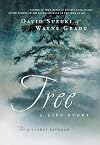
Evergreens help make much of the Pacific Northwest one of the most beautiful places on earth. Pines, cedars, and Douglas-fir line the horizon almost everywhere I go, and I’m lucky enough to see a few out any window of my house. But trees are more than ornaments. They are environments unto themselves. They provide shelter, food, and nutrients to a rich mix of birds, mammals, insects, and smaller organisms in the soil. I sometimes stop in the woods during mountain hikes and try to picture show more all the activity, both seen and unseen. Seeing a tree is one thing. Understanding and appreciating them is much deeper.
David Suzuki and Wayne Grady have put together an enjoyable book to help you do that. Tree: A Life Story, follows the long life of a single Douglas-fir in the Pacific Northwest. Beginning with the aftermath of a forest fire, the book studies the germination, growth, death, and recycling of the seed that becomes a giant. It rises through the forest canopy seeking sunlight, and deals with attacks and inconveniences from insects, birds, and other natural forces, before returning to the soil.
This may seem like a child’s book on the life cycle of a tree, but it is not simplistic. Suzuki (whom you may know from the television series The Nature of Things) and Grady delve into science every step of the way. Why do roots dig down while the stem sprouts up? How does the seedling know down from up anyway? How does chlorophyll work? How do the sugars produced in that process get distributed and, for that matter, how does the tree pump water and nutrients up a trunk that is over 200 feet tall?
The authors look beyond “our” individual Douglas-fir. They explore the tree’s relationships, too. A tree does not move, of course, but it connects, interacts, and communicates with nearly everything in its ecosystem, starting with the mychorrhyzial relationship its root tips share with fungi and the chemical defenses it deploys against insects. It even releases warnings to other trees when disease strikes.
Pleasantly meandering discussions in the book wander into the science of genetics, pollen distribution, bird, squirrel and salamander activity, how salmon improve forests, and the growth of botanical science over the centuries. All these topics — tread upon lightly but addressed satisfactorily — fit into a slim volume. I haven’t enjoyed a popular science book as much as this one in a long time.
Trees live longer and grow larger than any other organisms on earth, but they literally blend into the scenery unless you stop to notice the often small-scale, slow-motion activity feverishly taking place in and around them. By the time you reach the last page of Tree, even a rotted-out nurse log might stir your thoughts.
Find more of my reviews at Mostly NF. show less
David Suzuki and Wayne Grady have put together an enjoyable book to help you do that. Tree: A Life Story, follows the long life of a single Douglas-fir in the Pacific Northwest. Beginning with the aftermath of a forest fire, the book studies the germination, growth, death, and recycling of the seed that becomes a giant. It rises through the forest canopy seeking sunlight, and deals with attacks and inconveniences from insects, birds, and other natural forces, before returning to the soil.
This may seem like a child’s book on the life cycle of a tree, but it is not simplistic. Suzuki (whom you may know from the television series The Nature of Things) and Grady delve into science every step of the way. Why do roots dig down while the stem sprouts up? How does the seedling know down from up anyway? How does chlorophyll work? How do the sugars produced in that process get distributed and, for that matter, how does the tree pump water and nutrients up a trunk that is over 200 feet tall?
The authors look beyond “our” individual Douglas-fir. They explore the tree’s relationships, too. A tree does not move, of course, but it connects, interacts, and communicates with nearly everything in its ecosystem, starting with the mychorrhyzial relationship its root tips share with fungi and the chemical defenses it deploys against insects. It even releases warnings to other trees when disease strikes.
Pleasantly meandering discussions in the book wander into the science of genetics, pollen distribution, bird, squirrel and salamander activity, how salmon improve forests, and the growth of botanical science over the centuries. All these topics — tread upon lightly but addressed satisfactorily — fit into a slim volume. I haven’t enjoyed a popular science book as much as this one in a long time.
Trees live longer and grow larger than any other organisms on earth, but they literally blend into the scenery unless you stop to notice the often small-scale, slow-motion activity feverishly taking place in and around them. By the time you reach the last page of Tree, even a rotted-out nurse log might stir your thoughts.
Find more of my reviews at Mostly NF. show less
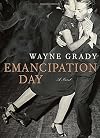
This ensemble narrated book, based in the 40s and 50s really hit something inside of me, surprising me and pulling me in. Each character, given their own narrative had their own unique point of view of events that happened, giving a full fleshed out picture of what happens when someone might not be willing to accept who they are. It reflects the length we go to as people, to possibly escape our pasts, but inevitably some pieces of it end up engrained in our future.
It is easy to tell that show more this book, in some ways is autobiographical, and it is so well written that all of the characters become people to sympathize with. Whether it’s Jack, who really is a little boy lost, not matter what decisions he tries to make. Or Vivian who is so naive and yet one of the warmer characters in the novel. William Henry was the one who I felt the most sympathy for, as he made wrong decisions, left and right and didn’t quite know what to make of his son until it was far too late.
It was also a good, albeit sad reflection of racial relations in both the U.S and Canada which really fleshed out the realism in the book.
This book also made me fall in love with it because it is a Canadian novel, with settings so close to me, and the area I live in. It was simply a well written, well woven tale.
Good for:
Those who love a good historical book with a strong basis in reality. show less
It is easy to tell that show more this book, in some ways is autobiographical, and it is so well written that all of the characters become people to sympathize with. Whether it’s Jack, who really is a little boy lost, not matter what decisions he tries to make. Or Vivian who is so naive and yet one of the warmer characters in the novel. William Henry was the one who I felt the most sympathy for, as he made wrong decisions, left and right and didn’t quite know what to make of his son until it was far too late.
It was also a good, albeit sad reflection of racial relations in both the U.S and Canada which really fleshed out the realism in the book.
This book also made me fall in love with it because it is a Canadian novel, with settings so close to me, and the area I live in. It was simply a well written, well woven tale.
Good for:
Those who love a good historical book with a strong basis in reality. show less
Lists
Awards


You May Also Like


Associated Authors
Statistics
- Works
- 32
- Also by
- 7
- Members
- 894
- Popularity
- #28,652
- Rating
- 3.7
- Reviews
- 18
- ISBNs
- 75
- Languages
- 4