

Theodore W. Gray
Author of The Elements: A Visual Exploration of Every Known Atom in the Universe
About the Author
Image credit: From Theodore Gray Wikipedia article. Photographer: Kathryn Cramer.
Series
Works by Theodore W. Gray
The Elements: A Visual Exploration of Every Known Atom in the Universe (2009) 2,896 copies, 21 reviews
Reactions: An Illustrated Exploration of Elements, Molecules, and Change in the Universe (2017) 404 copies, 6 reviews
Theo Gray's Mad Science: Experiments You Can Do at Home - But Probably Shouldn't (2009) 282 copies, 4 reviews
Theodore Gray's Completely Mad Science: Experiments You Can Do at Home but Probably Shouldn't: The Complete and Updated Edition (2016) 52 copies, 3 reviews
The Kid's Book of the Elements: An Awesome Introduction to Every Known Atom in the Universe (2020) 49 copies, 1 review
Exploring Mathematics With Mathematica: Dialogs Concerning Computers and Mathematics (1991) 23 copies, 1 review
The Photographic Engagement Calendar of The Elements: A Visual Exploration of Every Known Atom in the Universe 2012 (2011) 2 copies
The Elements 2013 Calendar: A Visual Exploration of Every Known Atom in the Universe (2012) 2 copies
Theo Gray's Mad Science: Experimente, die man zu Hause machen kann - oder vielleicht lieber doch nicht (2019) 1 copy
ABC Elements 1 copy
My Element 1 copy
Associated Works
Tagged
Common Knowledge
- Canonical name
- Gray, Theodore W.
- Birthdate
- 1964-11-18
- Gender
- male
- Education
- University of Illinois, Urbana-Champaign (BS, Chemistry)
- Organizations
- Wolfram Research
- Nationality
- USA
- Birthplace
- Urbana, Illinois, USA
- Associated Place (for map)
- Illinois, USA
Members
Discussions
Chemistry coffee table book in Name that Book (July 2010)
Reviews
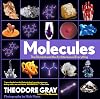
This is a follow-up of sorts to Theodore Gray's earlier book, The Elements: A Visual Exploration of Every Known Atom in the Universe. Unlike that one, this volume cannot possibly be comprehensive because while there are a limited number of elements in the periodic table, the ways in which those elements can combine into molecules is practically infinite. So Gray instead takes us through a sampling of interesting and important molecules, loosely organized by what they're used for by human show more beings.
If you've read The Elements -- and you should! -- this one has a very similar sensibility, with lots and lots of photos of substances the author has painstakingly collected and managed to make visually interesting, despite the tendency of most pure substances to actually just look like boring white powders. There's a nice little basic chemistry lesson at the beginning and all kinds of wonderfully fascinating information to be found throughout the entire book, as Gray tells us, for instance, why teflon is so slippery, how soap works, why oil and water don't mix, and what's in artificial sweeteners, along with tons of other, sometimes much weirder and more obscure things. He does this with a lot of genial humor; in places this book is genuinely laugh-out-loud funny. But he also takes a wonderfully hard-headed and clear-eyed look at things like what the difference is between "natural" and "artificial" substances is (answer: very little), at chemicals that get an undeserved bad rap, and at ones that genuinely are bad news.
It's all extremely interesting and delightfully fun, as weird as that might seem for a book about chemistry, even for a science-minded reader like me. More than that, though, I think it really has shifted my perspective on the world around me. It's one thing to be aware, hypothetically, somewhere in the back of your mind, that everything in the world is made of molecules and almost everything that happens in it comes down to the action of these small, varied entities fitting together and breaking apart, but it's a different experience entirely to find yourself stopping to think about what that really means, and to marvel at the ways in which we human beings have found to shape these tiny interactions to do some very big things. And all the more so when you contemplate just how simple so many of these ultra-important molecules are, and how much small differences between them -- even ones so small it can be hard to notice them on a diagram -- matter in our lives.
In other words, this is pretty, it's entertaining, it's educational, and it's actually kind of mind-blowing. A very, very cool book! show less
If you've read The Elements -- and you should! -- this one has a very similar sensibility, with lots and lots of photos of substances the author has painstakingly collected and managed to make visually interesting, despite the tendency of most pure substances to actually just look like boring white powders. There's a nice little basic chemistry lesson at the beginning and all kinds of wonderfully fascinating information to be found throughout the entire book, as Gray tells us, for instance, why teflon is so slippery, how soap works, why oil and water don't mix, and what's in artificial sweeteners, along with tons of other, sometimes much weirder and more obscure things. He does this with a lot of genial humor; in places this book is genuinely laugh-out-loud funny. But he also takes a wonderfully hard-headed and clear-eyed look at things like what the difference is between "natural" and "artificial" substances is (answer: very little), at chemicals that get an undeserved bad rap, and at ones that genuinely are bad news.
It's all extremely interesting and delightfully fun, as weird as that might seem for a book about chemistry, even for a science-minded reader like me. More than that, though, I think it really has shifted my perspective on the world around me. It's one thing to be aware, hypothetically, somewhere in the back of your mind, that everything in the world is made of molecules and almost everything that happens in it comes down to the action of these small, varied entities fitting together and breaking apart, but it's a different experience entirely to find yourself stopping to think about what that really means, and to marvel at the ways in which we human beings have found to shape these tiny interactions to do some very big things. And all the more so when you contemplate just how simple so many of these ultra-important molecules are, and how much small differences between them -- even ones so small it can be hard to notice them on a diagram -- matter in our lives.
In other words, this is pretty, it's entertaining, it's educational, and it's actually kind of mind-blowing. A very, very cool book! show less
Theodore Gray's Elements Vault: Treasures of the Periodic Table with Removable Archival Documents and Real Element Samples - Including Pure Gold! by Theodore W. Gray
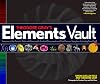
Joined by science writer Simon Quellen Field, Theodore Gray has expanded and extended his original ELEMENTS book
with more detailed explorations of each element. Photographic presentation is beautiful and document envelopes a unique
and welcome addition.
Yet, problems abound.
The subtitle on the front cover reads: "Treasures...Removable Archival Documents and Real Element Samples - including Pure Gold" -
this is very misleading. We logically deduced that there would be SOME kind of sample for show more each element other than gases or poisons.
Yet, there are only 5 samples included! Very disappointing for kids.
As for the documents, yes, the book starts and ends with a few fine archival ones, but many in between are simply overlong and boring
with no illustrations for clarity and no obvious reason why they warranted an envelope rather than just entered with other dense information.
"Where does Helium..." begs for graphics.
Except for the small documents, the large sheets are at least a quarter of an inch too long to fit easily back into the envelopes.
Worse still, the envelope on Page 45 arrived glued to the page and text got torn off when the envelope was pulled back, ruining the page.
The first envelope, Electron Shells, is confusing even to educated lay readers since it does not create a memorable referent as electrons
are discussed throughout the book.
Definitions and illustrations of Nucleus, Protons, Electrons, Electron Shells and their relationships would be more than helpful.
Philosophy - why the deep and pervasive emphasis, presented in a "cold and unemotional" manner, on bombs, nuclear reactors, and other death weapons?
Uranium, for example, is covered with no mention of the human, animal, and plant devastation and the hideous and lingering deaths.
No questions are ever asked about whether The Elements should have been "extracted" with the goal of killing and should still be pursued to
destroy the earth even further with more bombs, nuclear reactors, gases, poisonous fertilizers, and more and more weapons...why?
Why have scientists not instead devoted their considerable time, energy, and money toward using OUR Elements for Cures...?
Why no Periodic Table column headings in the book?
They reinforce the considerable knowledge base required to read with comprehension.
Dark blue Periodic Table row cannot be read.
Page 62 = reversal of captions?
Page 94 = "Man - " or "Human-made?"
Index?
All that and still I liked THE ELEMENTS VAULT enough to read it all. show less
with more detailed explorations of each element. Photographic presentation is beautiful and document envelopes a unique
and welcome addition.
Yet, problems abound.
The subtitle on the front cover reads: "Treasures...Removable Archival Documents and Real Element Samples - including Pure Gold" -
this is very misleading. We logically deduced that there would be SOME kind of sample for show more each element other than gases or poisons.
Yet, there are only 5 samples included! Very disappointing for kids.
As for the documents, yes, the book starts and ends with a few fine archival ones, but many in between are simply overlong and boring
with no illustrations for clarity and no obvious reason why they warranted an envelope rather than just entered with other dense information.
"Where does Helium..." begs for graphics.
Except for the small documents, the large sheets are at least a quarter of an inch too long to fit easily back into the envelopes.
Worse still, the envelope on Page 45 arrived glued to the page and text got torn off when the envelope was pulled back, ruining the page.
The first envelope, Electron Shells, is confusing even to educated lay readers since it does not create a memorable referent as electrons
are discussed throughout the book.
Definitions and illustrations of Nucleus, Protons, Electrons, Electron Shells and their relationships would be more than helpful.
Philosophy - why the deep and pervasive emphasis, presented in a "cold and unemotional" manner, on bombs, nuclear reactors, and other death weapons?
Uranium, for example, is covered with no mention of the human, animal, and plant devastation and the hideous and lingering deaths.
No questions are ever asked about whether The Elements should have been "extracted" with the goal of killing and should still be pursued to
destroy the earth even further with more bombs, nuclear reactors, gases, poisonous fertilizers, and more and more weapons...why?
Why have scientists not instead devoted their considerable time, energy, and money toward using OUR Elements for Cures...?
Why no Periodic Table column headings in the book?
They reinforce the considerable knowledge base required to read with comprehension.
Dark blue Periodic Table row cannot be read.
Page 62 = reversal of captions?
Page 94 = "Man - " or "Human-made?"
Index?
All that and still I liked THE ELEMENTS VAULT enough to read it all. show less

The book's introduction begins with an annoying and belligerent failure to distinguish between motor and engine. Signs put up by bureaucrats are not the slam-dunk that the author thinks they are. Perhaps he never read P. W. Atkins's "The Second Law".
Once you get past the introduction the rest of the book is fantastic, though. Lost in the back is a little discussion of autopens, in the Mechanical Plotting chapter, showing how a very simple linkage can give you all the flexibility necessary show more for any signature desired. show less
Once you get past the introduction the rest of the book is fantastic, though. Lost in the back is a little discussion of autopens, in the Mechanical Plotting chapter, showing how a very simple linkage can give you all the flexibility necessary show more for any signature desired. show less
Reactions: An Illustrated Exploration of Elements, Molecules, and Change in the Universe by Theodore W. Gray
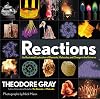
This is the final book in Theodore Gray's wonderful non-fiction trilogy about the chemistry of everything around us. The Elements introduced the basic building blocks of that chemistry, Molecules showed the ways in which those building blocks could combine to create an unimaginably vast array of substances, and Reactions looks at some of the ways in which those substances interact with each other to make things happen. We find out here why some materials burn more easily than others, why show more dropping a bottle of nitroglycerine can ruin your whole day, how it's possible to tell by analyzing your breath whether your body is currently burning sugar or fat, why watching grass grow or paint dry should be far less boring than you think, and a great deal more.
As with the previous books, this is a beautifully well-designed volume full of eye-catching photographs. It's also deeply fascinating. I'm extremely impressed with Gray's ability to explain things very clearly and interestingly, in such a way that not only do you understand the science better, but you also find yourself with a new and exciting perspective on the whole world around you. He also writes with a fun, engaging, often very humorous voice.
I definitely recommend all three books, even (or perhaps especially) for those who took high school chemistry and thought it was boring. show less
As with the previous books, this is a beautifully well-designed volume full of eye-catching photographs. It's also deeply fascinating. I'm extremely impressed with Gray's ability to explain things very clearly and interestingly, in such a way that not only do you understand the science better, but you also find yourself with a new and exciting perspective on the whole world around you. He also writes with a fun, engaging, often very humorous voice.
I definitely recommend all three books, even (or perhaps especially) for those who took high school chemistry and thought it was boring. show less
Lists
Awards


You May Also Like


Associated Authors
Statistics
- Works
- 37
- Also by
- 2
- Members
- 5,160
- Popularity
- #4,819
- Rating
- 4.4
- Reviews
- 53
- ISBNs
- 99
- Languages
- 15
- Favorited
- 3