
Harry Mount
Author of Amo, Amas, Amat... and All That
About the Author
Image credit: via Hachette Australia
Works by Harry Mount
A Lust for Window Sills: A Lover's Guide to British Buildings from Portcullis to Pebble Dash (2008) 82 copies, 2 reviews
Summer Madness: How Brexit Split the Tories, Destroyed Labour and Divided the Country (2017) 13 copies
Associated Works
Pictorial Composition from Medieval to Modern Art (Warburg Institute Colloquia) (2001) — Contributor — 3 copies
Tagged
Common Knowledge
- Canonical name
- Mount, Harry
- Birthdate
- 1971
- Gender
- male
- Occupations
- author
journalist - Relationships
- Ferdinand Mount (father)
- Nationality
- UK
- Places of residence
- London, England, UK
- Associated Place (for map)
- England, UK
Members
Discussions
Amo. amas, amat and all that in Lingua Latina (March 2009)
Reviews
A Lust for Window Sills: A Lover's Guide to British Buildings from Portcullis to Pebble-Dash by Harry Mount
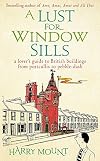
Though Harry Mount says that this is a book to dip into, rather than read from beginning to end, I started at the beginning and read right through to the glossary and acknowledgements (I did stop short at the index). It is such an enjoyable book, a light-hearted, witty and knowledgeable description of architecture in Britain, full of literary, poetic and filmographic quotations that act as mnemonics. I particularly liked the walking or driving routes at the end, and especially the train ride show more from Kings Cross to Edinburgh - I have taken that train so many times from London to Darlington and never saw how special the columns of Darlington station are. I love every bit of this book, including the illustrations on the endpapers and even the dust jacket whose photos and drawings are referenced in the text.
Rarely have I learned such a lot from a single book, even a very useful German word which has no equivalent in English, Schwellenangst (a fear of crossing over thresholds). It can be used figuratively. show less
Rarely have I learned such a lot from a single book, even a very useful German word which has no equivalent in English, Schwellenangst (a fear of crossing over thresholds). It can be used figuratively. show less
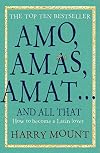
Harry Mount is what my daughter would call a 'try hard'. In this book, he tries very hard to shake off the patched-elbows-on-Harris-tweed stereotype of the classicist and make enjoying Latin cool. In many places this works and it's refreshingly light and humorous, with Mount translating very modern phrases into Latin, but in other places it got my goat as it felt teenager-esque cruel at certain celebrities' expense, e.g. Paulus Gasconius uxorem suam Sherylam percusit - Paul Gascoigne beat show more his wife Sheryl (the book was written in 2006), and some translations around Princess Diana saying the MI6 were trying to kill her. Whilst I don't condone Paul Gasgoigne beating his wife (90s England soccer player for those not in the know), alcohol addiction has pretty much destroyed his life (more bad taste examples referring to that later in the book), and the reference to Princess Diana barb felt similarly school-boyish and unnecessary.
Mount also devotes an entire chapter to picking up on some work by Kingsley Amis where he divided English language pedants into Berks and Wankers, and again, like a spotty 15 year old boy, he delights in using the word 'wanker' prolifically throughout the rest of the book to describe the Latin language equivalents. I'm not a language prude - it just felt a bit wearingly juvenile after a while.
So what about the Latin? Well, that was interesting, and I enjoyed revision of many aspects of the language (I studied Latin to GCSE at school) interspersed with interesting facts about the Romans and modern day use of Latin). Mount seems to expect that if you've studied Latin at some point in the distant past then by the end of the book you'll be translating as if you've never stepped away from it, but unfortunately my brain matter felt rather 'closed cell' when it came to absorbing much, and it would take many, many more reads of this text and others before I'd be able to write a single sentence unaided again (by the end of the book I decided the 15 year old me must have been some kind of child genius to figure this stuff out first time around).
All in all interesting enough (and Boris Johnson got a mention - who knew back in 2006 where he'd be now), and I may refer back to it again in the future when I've got more head space for properly brushing up on Latin.
3.5 stars - an interesting and light-hearted approach, but definitely too 'try hard' where the humour was concerned. show less
Mount also devotes an entire chapter to picking up on some work by Kingsley Amis where he divided English language pedants into Berks and Wankers, and again, like a spotty 15 year old boy, he delights in using the word 'wanker' prolifically throughout the rest of the book to describe the Latin language equivalents. I'm not a language prude - it just felt a bit wearingly juvenile after a while.
So what about the Latin? Well, that was interesting, and I enjoyed revision of many aspects of the language (I studied Latin to GCSE at school) interspersed with interesting facts about the Romans and modern day use of Latin). Mount seems to expect that if you've studied Latin at some point in the distant past then by the end of the book you'll be translating as if you've never stepped away from it, but unfortunately my brain matter felt rather 'closed cell' when it came to absorbing much, and it would take many, many more reads of this text and others before I'd be able to write a single sentence unaided again (by the end of the book I decided the 15 year old me must have been some kind of child genius to figure this stuff out first time around).
All in all interesting enough (and Boris Johnson got a mention - who knew back in 2006 where he'd be now), and I may refer back to it again in the future when I've got more head space for properly brushing up on Latin.
3.5 stars - an interesting and light-hearted approach, but definitely too 'try hard' where the humour was concerned. show less
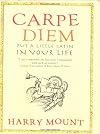
This was a fun book to read. I took five years of Latin in high school, and I enjoyed delving back into the subject. Harry Mount's intention was presumably to bring people into the classics web, but there is a lot for the person who still retains some familiarity with Latin's declensions and conjugations. The grammar never becomes boring because Mount tells stories of his growing up, investigates Greek and Roman columns, complains about wankers, and displays a large list of Latin writing show more devices. The one missing thing is an index. I wanted to relook at the chapter on gerunds and gerundives and a had a problem finding it. I thought it might be in the vicinity of the ablative absolute, which I found every time I reopened the book. But, it's located between the chapter on the fifth declension nouns and a funny one on Bertie Wooster's Classical Education--Latin in English literature. I was wondering whether I might do some alternate translating of gerundives, and then I thought back to the time where I used Latinate phrasing in English composition class. My retort was that I was just following the Latinate style of English authors during the Augustan age (my favorites were the essays of Addison and Steele).
This book is highly recommended for both the newcomer and casual Latinist. show less
This book is highly recommended for both the newcomer and casual Latinist. show less

While I love all things ancient and Roman, and can have a go at translating easy bits of Latin, I can’t claim to be able to write it at all. I can hear you exclaiming, “But you have a Latin motto on your blog! ("Noli domo egredi, nisi librum habes – Never leave home without a book".) What’s that all about then?” “Simples!” (as Alexandr Meerkat would say – sorry!) – Mottos just sound better in Latin. I did have a go at writing it myself with the aid of a quite scholarly show more grown-up teach yourself Latin book Learn Latin. In the end though I needed help, and my colleague Dr Ridd from Abingdon School sorted my schoolgirl Latin out.
Then my other half gave me this book for Christmas. It combines all the Latin grammar an amateur needs, with added bits about all things Latin and Roman. These include discussions on the famous Monty Python sketch in Life of Brian and Jeeves’ propensity to spout bits of Latin amongst other references. Also included is an etymological list of common Latin expressions in use in English today. All of this is written in a jocular fashion and is thoroughly entertaining. I’m sure a bit more of the language has sunk in. I’ve certainly got a new appreciation for many a Latin phrase, but also much English grammar along the way.
I also found out that the author despises the Cambridge Latin course – which was a rather touchy-feely way of teaching Latin introduced into schools in the 1970s (and still going). Of course that’s how I learned my Latin! About a third of the O-Level marks were for earned for spouting about ancient Roman life – which was fab. Unfortunately, you didn’t have to learn conjugations and declensions off by heart as in the trad approach, so while you could always translate the stems - you didn’t always get the sense of the syntax/grammar properly. I still managed to get an ‘A’, but possibly because we had previously translated the ‘unseen’ Pliny passage in the exam for prep the month before, and I really did know my set text Virgil off by heart …
If you want to brush up your grammar and learn how to use Latin in everyday English, this book will be really useful in a fun way; as a Latin primer though, it’s far too much fun (but good for revision)! show less
Then my other half gave me this book for Christmas. It combines all the Latin grammar an amateur needs, with added bits about all things Latin and Roman. These include discussions on the famous Monty Python sketch in Life of Brian and Jeeves’ propensity to spout bits of Latin amongst other references. Also included is an etymological list of common Latin expressions in use in English today. All of this is written in a jocular fashion and is thoroughly entertaining. I’m sure a bit more of the language has sunk in. I’ve certainly got a new appreciation for many a Latin phrase, but also much English grammar along the way.
I also found out that the author despises the Cambridge Latin course – which was a rather touchy-feely way of teaching Latin introduced into schools in the 1970s (and still going). Of course that’s how I learned my Latin! About a third of the O-Level marks were for earned for spouting about ancient Roman life – which was fab. Unfortunately, you didn’t have to learn conjugations and declensions off by heart as in the trad approach, so while you could always translate the stems - you didn’t always get the sense of the syntax/grammar properly. I still managed to get an ‘A’, but possibly because we had previously translated the ‘unseen’ Pliny passage in the exam for prep the month before, and I really did know my set text Virgil off by heart …
If you want to brush up your grammar and learn how to use Latin in everyday English, this book will be really useful in a fun way; as a Latin primer though, it’s far too much fun (but good for revision)! show less
Lists
Awards

You May Also Like


Associated Authors
Statistics
- Works
- 18
- Also by
- 1
- Members
- 998
- Popularity
- #25,828
- Rating
- 3.4
- Reviews
- 22
- ISBNs
- 45
- Languages
- 2