
Ferdinand Mount
Author of The Tears of the Rajas: Mutiny, Money and Marriage in India 1805-1905
About the Author
Ferdinand Mount is the author of such novels as Jem (and Sam), a New York Times Book Review Notable Book of the Year, and Fairness, a nominee for the Booker Prize. Both The Man Who Rode Ampersand and Fairness are novels in the acclaimed series A Chronicle of Modern Twilight. Mount edited the Times show more Literary Supplement for many years and is now a columnist for the Sunday Times in London show less
Series
Works by Ferdinand Mount
Big Caesars and Little Caesars: How They Rise and How They Fall - From Julius Caesar to Boris Johnson (2023) 25 copies, 1 review
Clubbing Together 1 copy
Associated Works
Tagged
Common Knowledge
- Legal name
- Mount, Sir William Robert Ferdinand, 3rd Baronet
- Birthdate
- 1939-07-02
- Gender
- male
- Education
- Greenways School
Ashton Gifford House, Wiltshire, England, UK
Sunningdale School, Berkshire, England, UK
Eton College, Eton, Berkshire, England, UK
University of Oxford (Christ Church College) - Occupations
- writer
columnist
politician - Organizations
- The Sunday Times
The Times Literary Supplement - Relationships
- Harry Mount (son)
- Nationality
- UK
- Places of residence
- Islington, London, England, UK
- Associated Place (for map)
- England, UK
Members
Reviews
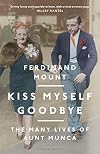
A few things drew me to this book. First of all it was the intrigue behind the author's Aunt Munca, not just the fact that she used the name of a Beatrix Potter mouse but also the fact she was quite a mysterious figure for him. He grew up spending quite a lot of time around her but never really felt that he knew her fully.
The second thing was the mention of Sheffield and there is a fabulous lengthy chapter in the book about my home city in the late 19th and early 20th century. I'm sure any show more reader would agree that there is something extra special about reading about a place you know well.
And then there's that gorgeous cover with the image of a glamorous looking man and woman lightly holding hands. I was desperate to know their story.
Kiss Myself Goodbye is Ferdinand Mount's account of his aunt's life. A shadowy character, edging around questions she doesn't want to provide true answers to, he manages to discover endless amazing things about her life both up until the point she is a part of his life and beyond. And it truly is fascinating. The whole thing had my jaw dropping on many occasions, and sometimes nodding along sagely as previously unknown or seemingly unconnected pieces of information all slotted into place.
I particularly enjoyed Mount's journey of discovery through genealogy research, the way he found out so much from birth, marriage and death certificates. He has a difficult job as Munca didn't seem to tell the truth about herself so every single detail is hard won.
Kiss Myself Goodbye is the name of a song the author remembers from a trip to a nightclub with his Aunt Munca but it's also remarkably fitting as Munca spent her lifetime kissing her real self goodbye and reinventing herself. They often say the truth is stranger than fiction and that's definitely true of Munca's life.
I found this to be an engrossing story of a woman with more layers than an onion and a social history read packed with informational gems. Whilst there was the odd section that didn't completely absorb me, the vast majority of it was utterly captivating. It's a fabulous book. show less
The second thing was the mention of Sheffield and there is a fabulous lengthy chapter in the book about my home city in the late 19th and early 20th century. I'm sure any show more reader would agree that there is something extra special about reading about a place you know well.
And then there's that gorgeous cover with the image of a glamorous looking man and woman lightly holding hands. I was desperate to know their story.
Kiss Myself Goodbye is Ferdinand Mount's account of his aunt's life. A shadowy character, edging around questions she doesn't want to provide true answers to, he manages to discover endless amazing things about her life both up until the point she is a part of his life and beyond. And it truly is fascinating. The whole thing had my jaw dropping on many occasions, and sometimes nodding along sagely as previously unknown or seemingly unconnected pieces of information all slotted into place.
I particularly enjoyed Mount's journey of discovery through genealogy research, the way he found out so much from birth, marriage and death certificates. He has a difficult job as Munca didn't seem to tell the truth about herself so every single detail is hard won.
Kiss Myself Goodbye is the name of a song the author remembers from a trip to a nightclub with his Aunt Munca but it's also remarkably fitting as Munca spent her lifetime kissing her real self goodbye and reinventing herself. They often say the truth is stranger than fiction and that's definitely true of Munca's life.
I found this to be an engrossing story of a woman with more layers than an onion and a social history read packed with informational gems. Whilst there was the odd section that didn't completely absorb me, the vast majority of it was utterly captivating. It's a fabulous book. show less
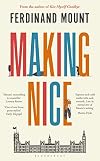
Ferdinand Mount's "Making Nice" is a withering satire of the world of public relations, a landscape dominated by hype, spin, deceit, and greed. The book's ill-starred protagonist and narrator is Dickie Pentecost, a newspaper correspondent who is made redundant. His wife, Jane, an oncologist, takes a leave from her job to care for their adolescent daughter, who is ailing. In desperation, Dickie takes a position in Reputation Management with a man he met on a trip—the eccentric Ethelbert show more Evers, Ethel for short—who runs his own PR firm.
What Dickie soon realizes is that nothing that Ethel tells him can be taken at face value.
This arrogant, self-centered, and manipulative man has a knack for persuading others to do his bidding. Among other unsavory tasks, Dickie is assigned to help a blowhard MP named Bryce Wincott write his autobiography, a project that Dickie dreads. Also troubling is the fact that Flo, Dickie and Jane's daughter, falls under Ethel's spell. Her parents are horrified that their sixteen-year-old is besotted with this egotist and charlatan.
"Making Nice" is often amusing and clever, although Ethel's obnoxiousness becomes tiresome as the story progresses. The author not so subtly alludes to the current state of public communication. PR firms often gravitate to heavy hitters who are flush with cash, but may turn out to be crooked, racist, and/or immoral. Dickie learns the hard way that it is foolhardy to compromise one's values; that his family should be his top priority; and that although insufferable people may thrive, they are hardly role models for the rest of us. Dickie must decide whether to pursue a career that does not compromise his principles or sell out to the highest bidder. This timely novel is a harsh indictment of the ways in which politics, social media, the misuse of data, and public discourse have become increasingly toxic. show less
What Dickie soon realizes is that nothing that Ethel tells him can be taken at face value.
This arrogant, self-centered, and manipulative man has a knack for persuading others to do his bidding. Among other unsavory tasks, Dickie is assigned to help a blowhard MP named Bryce Wincott write his autobiography, a project that Dickie dreads. Also troubling is the fact that Flo, Dickie and Jane's daughter, falls under Ethel's spell. Her parents are horrified that their sixteen-year-old is besotted with this egotist and charlatan.
"Making Nice" is often amusing and clever, although Ethel's obnoxiousness becomes tiresome as the story progresses. The author not so subtly alludes to the current state of public communication. PR firms often gravitate to heavy hitters who are flush with cash, but may turn out to be crooked, racist, and/or immoral. Dickie learns the hard way that it is foolhardy to compromise one's values; that his family should be his top priority; and that although insufferable people may thrive, they are hardly role models for the rest of us. Dickie must decide whether to pursue a career that does not compromise his principles or sell out to the highest bidder. This timely novel is a harsh indictment of the ways in which politics, social media, the misuse of data, and public discourse have become increasingly toxic. show less
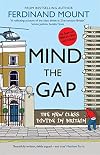
A book that purports to be a piece of sociology. In fact it's a piece of polemic with its heart in the right place but starting from false premises. The author, I feel, is somewhat disingenuous; the plain, if not 'ordinary', name masks the fact that he is Sir Ferdinand Mount, third baronet and a one-time political commentator on The Times. He argues from a patrician point of view as a journalist and takes an idealised view of the working class, carefully cherry-picking his sources to confirm show more his prejudices and taking a sour view of those primary sources and more recent academic writers like EP Thompson who don't confirm his view. There is no bibliography to show he has done his homework.
His tone is rather condescending too. I don't feel he would have let his idealised working-class folk into his own exalted circles but would be happy to let them have their own chapels – he's big on religion even though Dickens and others record the workers staying away from God in droves – and mutually-funded schools. His solutions, predictably, are those of the old "one-nation" patrician Tory; more grammar schools to allow hand-picked individuals who can be trusted to behave to "rise above" their roots (as with most grammar school proponents there's no critique of the secondary modern schools in which 80% of children were taught to know their place.
The author means well but he misses the point. He shows little awareness of the struggles of the working-classes to find a place in a post-industrial economy. It's readable enough thouigh. show less
His tone is rather condescending too. I don't feel he would have let his idealised working-class folk into his own exalted circles but would be happy to let them have their own chapels – he's big on religion even though Dickens and others record the workers staying away from God in droves – and mutually-funded schools. His solutions, predictably, are those of the old "one-nation" patrician Tory; more grammar schools to allow hand-picked individuals who can be trusted to behave to "rise above" their roots (as with most grammar school proponents there's no critique of the secondary modern schools in which 80% of children were taught to know their place.
The author means well but he misses the point. He shows little awareness of the struggles of the working-classes to find a place in a post-industrial economy. It's readable enough thouigh. show less
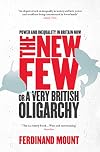
This must be the ultimate curate's egg of a book. It begins with a description of Britain's oligarchy, omitting any mention of the powerful families that have run this country since time immemorial. The owners of our media sources are seen as sole representatives of the bad guys.
Just as I am about to lay this tome aside and write a blistering critique upon this site, our author produces an insightful piece upon the way in which both Labour and Conservative governments have stripped power show more from local bodies and secreted it into government offices and quangos.
I am beginning to question my initial judgement when, Mr. Mount moves onto the topic of the coalition government, which was obviously just coming to power as he was penning this work. We are assured that this is the solution to all the aforementioned ills and that, although the Conservatives will be held back by the Lib Dems, they will be our liberators. History has, of course, removed any doubt as to the inaccuracy of that prediction.
Were the above not to be bad enough, our author decides to end the book with a party political broadcast on behalf of the blue party. This is the weakest section of all; it seems that all rational has gone out of the window as dubious doctrine is extolled and flags are waved.
The book deserves its three stars for the section concerning the dismantling of local government: it more than deserves to lose the other two for its sneaky partisanship and painfully inaccurate predictions. show less
Just as I am about to lay this tome aside and write a blistering critique upon this site, our author produces an insightful piece upon the way in which both Labour and Conservative governments have stripped power show more from local bodies and secreted it into government offices and quangos.
I am beginning to question my initial judgement when, Mr. Mount moves onto the topic of the coalition government, which was obviously just coming to power as he was penning this work. We are assured that this is the solution to all the aforementioned ills and that, although the Conservatives will be held back by the Lib Dems, they will be our liberators. History has, of course, removed any doubt as to the inaccuracy of that prediction.
Were the above not to be bad enough, our author decides to end the book with a party political broadcast on behalf of the blue party. This is the weakest section of all; it seems that all rational has gone out of the window as dubious doctrine is extolled and flags are waved.
The book deserves its three stars for the section concerning the dismantling of local government: it more than deserves to lose the other two for its sneaky partisanship and painfully inaccurate predictions. show less
Lists
Awards


You May Also Like


Associated Authors
Statistics
- Works
- 30
- Also by
- 1
- Members
- 923
- Popularity
- #27,802
- Rating
- 3.3
- Reviews
- 11
- ISBNs
- 85
- Languages
- 3