
Reginald Hill (1936–2012)
Author of On Beulah Height
About the Author
Reginald Hill has received Britain's most coveted mystery writers award, the Cartier Diamond Dagger Award, as well as the Golden Dagger, for his Dalziel/Pascoe series. (Publisher Provided) Reginald Hill was born in Hartlepool, England on April 3, 1936. He received an English degree from St. show more Catherine's College, Oxford University and worked as a teacher until 1980, when he retired to become a full-time writer. His first novel, A Clubbable Woman, was published in 1970. During his lifetime, he wrote over 50 books that range from historical novels to science fiction including Fell of Dark, No Man's Land, The Spy's Wife, and The Woodcutter. He was best known for the Dalziel and Pascoe series and the Joe Sixsmith series. He also wrote under the pseudonyms of Patrick Ruell, Dick Morland, and Charles Underhill. He received the 1990 Golden Dagger Award for Best Crime Novel of the Year for Bones and Silence and the 1995 Cartier Diamond Dagger Award for lifetime achievement. He died from a brain tumor on January 12, 2012 at the age of 75. (Bowker Author Biography) show less
Image credit: Tony Davis
Series
Works by Reginald Hill
Pascoe's Ghost [short story] 2 copies
The Game of Dog 2 copies
Uncle Harry 2 copies
The Stranger House 1 copy
Snowball [short story] 1 copy
Castles [short story] 1 copy
The Woodcutter 1 copy
Stonestar [short story] 1 copy
INEDITO 1 copy
Auteur Theory [short story] 1 copy
Exit Line [short story] 1 copy
Associated Works
The Year's 25 Finest Crime and Mystery Stories: Second Annual Edition (1993) — Contributor — 12 copies
The Year's 25 Finest Crime and Mystery Stories: Seventh Annual Edition (1998) — Contributor — 9 copies
Reader's Digest Condensed Books: Outbreak • The Collaborators • A Boy Called Bracken • The Churchill Diamonds (1500) — Author — 6 copies
The Year's 25 Finest Crime and Mystery Stories: Sixth Annual Edition (1997) — Contributor — 5 copies, 1 review
Livros Condensados: Der lange Mord | Afrika, dunkel lockende Welt | Das grosse Doppelspiel | Wer entfuehrte Suzy Marsh? (1991) 5 copies
Reader's Digest Condensed Books: A Matter of Honour • Ice Trek • The Long Kill • This Shining Land 4 copies
Livros Condensados: O voo das águias | Primeiro prémio | Assassino a soldo | Sétimo céu (1999) 3 copies
Reader's Digest Condensed Books: The Long Kill • The Ladies of Missalonghi • Exodus Genesis • Just Another Kid (1989) — Author — 3 copies
Dalziel & Pascoe (Series 1-12) — Author — 2 copies
Tagged
Common Knowledge
- Legal name
- Hill, Reginald Charles
- Other names
- Morland, Dick
Ruell, Patrick
Underhill, Charles - Birthdate
- 1936-04-03
- Date of death
- 2012-01-12
- Gender
- male
- Education
- Carlisle Grammar School
St. Catherine's College, Oxford - Occupations
- teacher(1960-1980)
novelist
short story writer
crime novelist - Awards and honors
- Crime Writers' Association Cartier Diamond Dagger for Lifetime Achievement (1995)
- Agent
- Caradoc King (AP Watt)
- Short biography
- Hill was born to a "very ordinary" working-class family—his father was a professional footballer long before sportsmen earned riches—but began reading young. His mother was a great fan of Golden-Age crime writers, and he discovered the genre while fetching her library-books. After National Service (1955–57) and studying English at St Catherine's College, Oxford University (1957–60) he worked as a teacher for many years, rising to Senior Lecturer at Doncaster College of Education. In 1980 he retired from salaried work in order to devote himself full-time to writing.
- Nationality
- UK
- Birthplace
- West Hartlepool, County Durham, England, UK
- Places of residence
- Cumbria, England, UK
- Place of death
- Ravenglass, Cumbria, England, UK
- Map Location
- England, UK
Members
Discussions
Reginald Hill in Crime, Thriller & Mystery (November 2012)
Reginald Hill in British & Irish Crime Fiction (January 2011)
Reviews
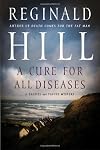
This was a real treat to read. I really enjoyed the narrative structure -- e-mail observations from sharp-eyed psychologist-in-training Charley Heywood, tape-recorded observations from the always amusing (if often horrifying) Andy Dalziel, and of course third-person narration to fill in the rest. The extensive use of first person for the first "volume" of the book really drew me in, especially to Charley. Her personality really shone through in those e-mails, with clever turns of phrase, show more family in-jokes that can be figured out from context (and that are not spelled out) and idiosyncratic spelling/use of punctuation. And it was also quite entertaining to be inside Dalziel's head -- usually we're on the outside, but here we are privy to all the workings of his mind. For fans of Dalziel, this is not to be missed.
With the focus on the characters, it does take the entire first volume to build up to the murder, but boy, what a murder! Sensational circumstances and no shortage of suspects. Exciting! Along the way suspects are offered up, dismissed, pondered again; alibis are broken down or pieced together from others' testimony; evidence is gathered and witnesses interviewed, with Dalziel and Charley providing their own perspectives to complement or perhaps counteract the third person.
As usual, the writing is excellent. In addition to really capturing a personality with Charley and Dalziel, Hill once again shows his customary skill with comparisons. Wieldy's face is described as being "as unreadable as a footballer's biography", and another person is so horrified by something that his face "made Edvard Munch's The Scream look like a smiley." And of course he always manages to put some hilarious expressions into Dalziel's mouth and render the Yorkshire accent in print without descending into complete unreadability, as can be the danger with dialect.
I borrowed this from the library but liked it so much I may have to pick up my own copy. It could do for a reread later, perhaps after I have read Sanditon, by Jane Austen, which served as the inspiration for the structure of this book. I feel like I'll get even more out of it under those circumstances. Highly recommended for D and P fans, and perhaps newcomers who are also Austenites (although you may want to read the previous book, The Death of Dalziel aka Death Comes for the Fat Man, first). show less
With the focus on the characters, it does take the entire first volume to build up to the murder, but boy, what a murder! Sensational circumstances and no shortage of suspects. Exciting! Along the way suspects are offered up, dismissed, pondered again; alibis are broken down or pieced together from others' testimony; evidence is gathered and witnesses interviewed, with Dalziel and Charley providing their own perspectives to complement or perhaps counteract the third person.
As usual, the writing is excellent. In addition to really capturing a personality with Charley and Dalziel, Hill once again shows his customary skill with comparisons. Wieldy's face is described as being "as unreadable as a footballer's biography", and another person is so horrified by something that his face "made Edvard Munch's The Scream look like a smiley." And of course he always manages to put some hilarious expressions into Dalziel's mouth and render the Yorkshire accent in print without descending into complete unreadability, as can be the danger with dialect.
I borrowed this from the library but liked it so much I may have to pick up my own copy. It could do for a reread later, perhaps after I have read Sanditon, by Jane Austen, which served as the inspiration for the structure of this book. I feel like I'll get even more out of it under those circumstances. Highly recommended for D and P fans, and perhaps newcomers who are also Austenites (although you may want to read the previous book, The Death of Dalziel aka Death Comes for the Fat Man, first). show less
WARNING: This review contains spoilers.
****
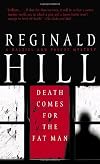
Come for the plot, stay for the characters. While the plot of this novel is somewhat interesting (and topical), dealing as it does with terrorist hideouts, counterterrorism units and East/West tensions, it is the characters that really make this novel. At the start of the book, Dalziel and Pascoe are caught in an explosion at a suspected terrorist house. Pascoe, being sheltered by Dalziel's massive bulk, gets off much more lightly than does Fat show more Andy, who spends most of the book hovering between life and death. The remaining characters thus have to grapple with the possibility of Dalziel leaving them forever -- someone likened it to a mountain being removed from a landscape. Pascoe seems to adapt to Dalziel's absence by becoming more like him: being gruff with others, uttering rather colourful similes, and most memorably, telling a couple of members of CAT who have just complimented him profusely for his service with them to "get fucked".
Another really interesting bit in the book was the interludes with Dalziel hovering between life and death, having an out-of-body experience and engaging in several conversations with an ethereal Presence over whether or not he should pass to the other side. But through it all he is still his usual self -- he decides that he's still alive because "dead men don't fart". Only Dalziel!
And I must say that the bottom still fell out of my heart when Wieldy told the Pascoes and Kentmore that Dalziel was dead, even though in my mind I knew he had to survive. Hill just sweeps you along and you have to trust that the story will resolve itself as it will.
Finally, the mystery itself was very good, and I think it was laid out fair enough for the reader to deduce things about the same time as Pascoe did. A very solid entry in the D+P series. show less
****
Come for the plot, stay for the characters. While the plot of this novel is somewhat interesting (and topical), dealing as it does with terrorist hideouts, counterterrorism units and East/West tensions, it is the characters that really make this novel. At the start of the book, Dalziel and Pascoe are caught in an explosion at a suspected terrorist house. Pascoe, being sheltered by Dalziel's massive bulk, gets off much more lightly than does Fat show more Andy, who spends most of the book hovering between life and death. The remaining characters thus have to grapple with the possibility of Dalziel leaving them forever -- someone likened it to a mountain being removed from a landscape. Pascoe seems to adapt to Dalziel's absence by becoming more like him: being gruff with others, uttering rather colourful similes, and most memorably, telling a couple of members of CAT who have just complimented him profusely for his service with them to "get fucked".
Another really interesting bit in the book was the interludes with Dalziel hovering between life and death, having an out-of-body experience and engaging in several conversations with an ethereal Presence over whether or not he should pass to the other side. But through it all he is still his usual self -- he decides that he's still alive because "dead men don't fart". Only Dalziel!
And I must say that the bottom still fell out of my heart when Wieldy told the Pascoes and Kentmore that Dalziel was dead, even though in my mind I knew he had to survive. Hill just sweeps you along and you have to trust that the story will resolve itself as it will.
Finally, the mystery itself was very good, and I think it was laid out fair enough for the reader to deduce things about the same time as Pascoe did. A very solid entry in the D+P series. show less
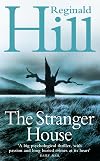
Reginald Hill has written dozens of books, but I think I love this one the best. Having nothing to do with Hill's usual Daziel and Pascoe series, this almost Gothic novel is set in Cumbria, a dark place literally caught in season-long shadow, during part of the year. With a near-seamless interweaving of two pasts and the present, the author no only presents us with four murders, but throws in a few details about the Child Migrant Scheme as well. I do wish there was more about this horrible show more part of England's past in the novel, and that's about my only issue with the story-line.
Two strangers meet in a tiny town called Illthwaite, to search out the history of their respective family's. Stranger House is filled with a lot of coincidences, a touch of ghosts, a large bunch of memorable characters, and quite a few twists and turns. I will still trying to figure out which person did the most wrong, buy the end of the novel! Ghosts, dark secrets, both past and present, villagers obviously hiding things from our protagonists, who are brought together supernaturally, a rather large serving of coincidence plus identically brutal identical twins, misty moors and bogs. WOW! It could have been rather preposterous in the way that Sam and Miguel arrive a the same moment with interlocking stories. But Hill is perfectly able to weave them together in a way that's not only believable, but in a very satisfactory way. Not only is Miguel's ability to see ghosts, and have them guide them through his life to this moment, but Sam's character as a female lead is strong, vibrant, and quite likable.
The atmosphere in the novel feels authentic, despite a lead theme of a village with inhabitants that seem still in the 19th century at best. Hill makes it all somehow seem absolutely realistic, proves a meticulous knowledge and background research in as widely separated fields as mathematics and theology and throws many pieces of interesting facts in the story, many of which later proves to be important for the continuing plot. With all of this, it does not feel artificial or far-fetched at all. The clash between the two main characters is both very entertaining and funny and their relationship transforms in a loving way. The story, finally, is both convincingly told and most logical, and above all, extremely thrilling.
Some of the lines from the book I will be quoting:
"When murk began to coalesce into form, she found herself standing by a font consisting of a granite block out of which a basin had been scooped deep enough for an infant to drown in. Around its rough-hewn sides a not incompetent artist had carved a frieze of spasmodic dancers doing a conga behind a hooded figure carrying a scythe."
"He raised his eyebrows comically as he spoke. His eyes had a distinctly flirtatious twinkle. How did he get it there? she asked herself. With an eyedropper?"
"'So what you're saying is you've been getting like e-mails from God dot com?" she mocked. "How do you know it's not just spam from the devil like your confessor tried to tell you?'" show less
Two strangers meet in a tiny town called Illthwaite, to search out the history of their respective family's. Stranger House is filled with a lot of coincidences, a touch of ghosts, a large bunch of memorable characters, and quite a few twists and turns. I will still trying to figure out which person did the most wrong, buy the end of the novel! Ghosts, dark secrets, both past and present, villagers obviously hiding things from our protagonists, who are brought together supernaturally, a rather large serving of coincidence plus identically brutal identical twins, misty moors and bogs. WOW! It could have been rather preposterous in the way that Sam and Miguel arrive a the same moment with interlocking stories. But Hill is perfectly able to weave them together in a way that's not only believable, but in a very satisfactory way. Not only is Miguel's ability to see ghosts, and have them guide them through his life to this moment, but Sam's character as a female lead is strong, vibrant, and quite likable.
The atmosphere in the novel feels authentic, despite a lead theme of a village with inhabitants that seem still in the 19th century at best. Hill makes it all somehow seem absolutely realistic, proves a meticulous knowledge and background research in as widely separated fields as mathematics and theology and throws many pieces of interesting facts in the story, many of which later proves to be important for the continuing plot. With all of this, it does not feel artificial or far-fetched at all. The clash between the two main characters is both very entertaining and funny and their relationship transforms in a loving way. The story, finally, is both convincingly told and most logical, and above all, extremely thrilling.
Some of the lines from the book I will be quoting:
"When murk began to coalesce into form, she found herself standing by a font consisting of a granite block out of which a basin had been scooped deep enough for an infant to drown in. Around its rough-hewn sides a not incompetent artist had carved a frieze of spasmodic dancers doing a conga behind a hooded figure carrying a scythe."
"He raised his eyebrows comically as he spoke. His eyes had a distinctly flirtatious twinkle. How did he get it there? she asked herself. With an eyedropper?"
"'So what you're saying is you've been getting like e-mails from God dot com?" she mocked. "How do you know it's not just spam from the devil like your confessor tried to tell you?'" show less
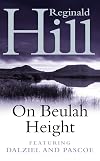
Phew! This was a bit sober for the maestro. Yes, I did laugh out loud a few times, but equally, this book has moments to make a jester suicidal. The subject of child abduction and murder was never going to be light, but I was fascinated that his characters swear more in this book than in the rest put together. I wonder if this was skilful writing: our heroes showing their frustration and depression, or a sign of the author's feelings. Rosie's illness was a useful tool allowing Pascoe to show more empathize with the parents and Mr Hill's genius was that he managed to keep the whole opus on the right side of outright maudlin.
This is a cracking book and one that I would recommend anyone to read, but only at a time that life is being kind to you. show less
This is a cracking book and one that I would recommend anyone to read, but only at a time that life is being kind to you. show less
Lists
04 (1)
2016 UpROOTed (1)
Rising water (1)
Awards


You May Also Like


Associated Authors
Statistics
- Works
- 84
- Also by
- 55
- Members
- 18,511
- Popularity
- #1,185
- Rating
- 3.7
- Reviews
- 431
- ISBNs
- 1,022
- Languages
- 12
- Favorited
- 81