
Banesh Hoffmann (1906–1986)
Author of Albert Einstein: Creator and Rebel
About the Author
Works by Banesh Hoffmann
Perspectives in Geometry and Relativity: Essays in Honor of Václav Hlavatý (1966) — Editor — 3 copies
Associated Works
Flatland: A Romance of Many Dimensions (1884) — Introduction, some editions — 10,840 copies, 203 reviews
Tagged
Common Knowledge
- Birthdate
- 1906-09-06
- Date of death
- 1986-08-05
- Gender
- male
- Education
- University of Oxford (BS)
Princeton University (PhD) - Occupations
- physicist
mathematician - Nationality
- UK
- Birthplace
- Richmond, North Yorkshire, England
- Places of residence
- Richmond, London, England, UK
- Place of death
- Flushing, New York, USA
Members
Reviews
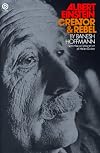
As indicated in the subtitle, this book focuses on Einstein’s creativity. He had an amazing amount of intuition about the scientific principles of our world. The book covers his theories – many that were eventually confirmed (or at least generally agreed upon) and a few that were eventually debunked. It is a book for science fans. Those interested in his personal life will find only the basics here, but it does give the reader a glimpse into his temperament, political views, and fears show more about the ways his discoveries could be (and were) used.
I particularly enjoyed the descriptions of Einstein’s theories in terms that are (fairly) easily understood. I say “fairly” easily since I think it is dependent upon the reader’s familiarity with scientific principles. Topics include the general theory of relativity, special theory of relativity, quantum mechanics, and properties of light, electromagnetism, and gravity. The author uses accessible analogies and eliminates the mathematical proofs. He has a wry sense of humor and occasionally asks the reader to “bear with me – we’ll return to this exciting discovery later.” It is obvious the author is enthusiastic about this material. I looked Hoffmann up later and found that he worked with Einstein personally, and contributor Helen Dukas worked as Einstein’s administrative assistant.
I loved the inclusion of Einstein’s interactions with other notable scientists of the day, and their lively discourses and disagreements about their scientific discoveries. Examples include Niels Bohr, Erwin Schrödinger, Werner Heisenberg, and Max Planck. Einstein predicted the existence of black holes (a term not coined until the 1960s) in 1916. This book was published in 1972 at a time when they were just being proven to exist. Even so, the author’s approach feels fresh, and sheds light on Einstein’s methods, opinions beyond science, and personality quirks. show less
I particularly enjoyed the descriptions of Einstein’s theories in terms that are (fairly) easily understood. I say “fairly” easily since I think it is dependent upon the reader’s familiarity with scientific principles. Topics include the general theory of relativity, special theory of relativity, quantum mechanics, and properties of light, electromagnetism, and gravity. The author uses accessible analogies and eliminates the mathematical proofs. He has a wry sense of humor and occasionally asks the reader to “bear with me – we’ll return to this exciting discovery later.” It is obvious the author is enthusiastic about this material. I looked Hoffmann up later and found that he worked with Einstein personally, and contributor Helen Dukas worked as Einstein’s administrative assistant.
I loved the inclusion of Einstein’s interactions with other notable scientists of the day, and their lively discourses and disagreements about their scientific discoveries. Examples include Niels Bohr, Erwin Schrödinger, Werner Heisenberg, and Max Planck. Einstein predicted the existence of black holes (a term not coined until the 1960s) in 1916. This book was published in 1972 at a time when they were just being proven to exist. Even so, the author’s approach feels fresh, and sheds light on Einstein’s methods, opinions beyond science, and personality quirks. show less

As indicated in the subtitle, this book focuses on Einstein’s creativity. He had an amazing amount of intuition about the scientific principles of our world. The book covers his theories – many that were eventually confirmed (or at least generally agreed upon) and a few that were eventually debunked. It is a book for science fans. Those interested in his personal life will find only the basics here, but it does give the reader a glimpse into his temperament, political views, and fears show more about the ways his discoveries could be (and were) used.
I particularly enjoyed the descriptions of Einstein’s theories in terms that are (fairly) easily understood. I say “fairly” easily since I think it is dependent upon the reader’s familiarity with scientific principles. Topics include the general theory of relativity, special theory of relativity, quantum mechanics, and properties of light, electromagnetism, and gravity. The author uses accessible analogies and eliminates the mathematical proofs. He has a wry sense of humor and occasionally asks the reader to “bear with me – we’ll return to this exciting discovery later.” It is obvious the author is enthusiastic about this material. I looked Hoffmann up later and found that he worked with Einstein personally, and contributor Helen Dukas worked as Einstein’s administrative assistant.
I loved the inclusion of Einstein’s interactions with other notable scientists of the day, and their lively discourses and disagreements about their scientific discoveries. Examples include Niels Bohr, Erwin Schrödinger, Werner Heisenberg, and Max Planck. Einstein predicted the existence of black holes (a term not coined until the 1960s) in 1916. This book was published in 1972 at a time when they were just being proven to exist. Even so, the author’s approach feels fresh, and sheds light on Einstein’s methods, opinions beyond science, and personality quirks. show less
I particularly enjoyed the descriptions of Einstein’s theories in terms that are (fairly) easily understood. I say “fairly” easily since I think it is dependent upon the reader’s familiarity with scientific principles. Topics include the general theory of relativity, special theory of relativity, quantum mechanics, and properties of light, electromagnetism, and gravity. The author uses accessible analogies and eliminates the mathematical proofs. He has a wry sense of humor and occasionally asks the reader to “bear with me – we’ll return to this exciting discovery later.” It is obvious the author is enthusiastic about this material. I looked Hoffmann up later and found that he worked with Einstein personally, and contributor Helen Dukas worked as Einstein’s administrative assistant.
I loved the inclusion of Einstein’s interactions with other notable scientists of the day, and their lively discourses and disagreements about their scientific discoveries. Examples include Niels Bohr, Erwin Schrödinger, Werner Heisenberg, and Max Planck. Einstein predicted the existence of black holes (a term not coined until the 1960s) in 1916. This book was published in 1972 at a time when they were just being proven to exist. Even so, the author’s approach feels fresh, and sheds light on Einstein’s methods, opinions beyond science, and personality quirks. show less
One of the best biographies I've read. While reading this book, you begin to understand the deep intelligence, simplicity and humility of Albert Einstein, and come away with a sense of wonder.
1/23: starting out a wee bit sycophantic for my taste. not that einstein wasn't brilliant, but still. he wasn't any kind of deity, either.
2/20: ok, so maybe i should have known that it would be very praise-y, given the use of the word "creator" in the title. still reading, but it's hard to build up any kind of momentum (hello, bad physics pun!).
finally(!) finished this book. and oh my goodness. maybe i just don't have a head for physics, i don't know. i understand it must be a very difficult show more thing to try to write a biography of a major scientific figure without discussing his science, but i still feel this could have been done much, much better. show less
2/20: ok, so maybe i should have known that it would be very praise-y, given the use of the word "creator" in the title. still reading, but it's hard to build up any kind of momentum (hello, bad physics pun!).
finally(!) finished this book. and oh my goodness. maybe i just don't have a head for physics, i don't know. i understand it must be a very difficult show more thing to try to write a biography of a major scientific figure without discussing his science, but i still feel this could have been done much, much better. show less
Awards

You May Also Like


Associated Authors
Statistics
- Works
- 7
- Also by
- 2
- Members
- 895
- Popularity
- #28,622
- Rating
- 3.8
- Reviews
- 11
- ISBNs
- 53
- Languages
- 5
- Favorited
- 1