
Clive James (1939–2019)
Author of Cultural Amnesia: Necessary Memories from History and the Arts
About the Author
Vivian Leopold James was born on Oct. 7, 1939, in Kogarah, a suburb of Sydney, Australia. His father was taken prisoner by the Japanese at the beginning of World War II and died when the American transport plane carrying him back to Australia crashed into Manila Bay.He changed his first name to show more Clive after Vivian Leigh became famous for starring in Gone With the Wind. After graduating from the University of Sydney and working briefly as an assistant editor on The Sydney Morning Herald, Mr. James set sail for London in 1962. The first volume of his autobiography, "Unreliable Memoirs", which was published in 1980 and rose to the top of the best-seller list in Britain, described his childhood in Australia. Its sequel, "Falling Towards England", covered, in often painful detail, his mostly unsuccessful attempts to gain traction in London, where he shared a flat with the future filmmaker Bruce Beresford. Pembroke College, Cambridge, came to the rescue, offering him a place. Mr. James did manage to earn a degree and even embarked on a doctoral dissertation. Eric Idle, the future Monty Python star, welcomed him into Footlights, the student theatrical troupe; he became its president. He pressed his poems on every journal available and parlayed his enthusiasm for Hollywood. A scrambling career in literary journalism followed, recounted in "North Face of Soho". His essays were first collected in "The Metropolitan Critic" (1974). Later collections included "At the Pillars of Hercules" (1977) and "From the Land of Shadows" (1982). His television criticism, issued in book form in "Visions Before Midnight" (1977), "The Crystal Bucket" (1981) and "Glued to the Box" (1983), was gathered in a single volume, "On Television," in 1991. Clive Leopold James passed away on Sunday 12/01/2019 in Cambridge, England at the age of 80. show less
Image credit: Clive James
Series
Works by Clive James
Glued to the Box: Television Criticism from the "Observer", 1979-82 (Picador Books) (1983) 145 copies
Visions Before Midnight: Television Criticism from the "Observer", 1972-76 (1977) 140 copies, 2 reviews
The Fire of Joy: Roughly 80 Poems to Get by Heart and Say Aloud (2020) — Editor — 105 copies, 2 reviews
Unreliable Memoirs (Unreliable Memoirs, Falling Fowards England, May Week was in June) (1990) 4 copies
The joy of fire 1 copy
Unreliable Memors 1 copy
Poetry 1 copy
Clive James Articles to 2018 1 copy
Associated Works
The Secret Policeman's Balls — Actor — 1 copy
Tagged
Common Knowledge
- Canonical name
- James, Clive
- Legal name
- James, Vivian Leopold (birth name)
James, Clive Leopold - Other names
- Pygge, Edward
- Birthdate
- 1939-10-07
- Date of death
- 2019-11-24
- Gender
- male
- Education
- University of Sydney (BA|1961)
Pembroke College, University of Cambridge (BA) - Occupations
- critic
television host
essayist
poet
journalist
satirist - Organizations
- The Observer
ITV
BBC - Awards and honors
- Order of Australia (Member, 1992)
Order of the British Empire (Commander, 2012)
Order of Australia (Officer, 2013)
Philip Hodgins Memorial Medal for Literature (2003)
Royal Society of Literature (Fellow, 2010)
British Academy President's Medal (2014) - Relationships
- Shaw, Prue (wife)
- Cause of death
- leukemia (B-cell chronic lymphocytic leukemia)
- Nationality
- Australia
- Birthplace
- Kogarah, New South Wales, Australia
- Places of residence
- Sydney, New South Wales, Australia
London, Middlesex, England, UK - Place of death
- Cambridge, Cambridgeshire, England, UK
- Associated Place (for map)
- Australia
Members
Reviews

Clive James became famous by appearing on television but he did his best work writing about it. I picked this up in an idle moment and had difficulty putting it down again. I also couldn’t stop laughing. James was such a funny critic that he often found himself accused of performing stand-up routines rather than writing criticism. In fact, as demonstrated by this selection of reviews first published in the Observer newspaper in the 1970s, he combined wit and critical insight with rare show more skill.
His often mesmerising prose was suffused with high intelligence and a refreshing lack of snobbery. James subjected himself willingly to the full sanity-threatening diversity of ‘70s British television and found a deranged sort of enlightenment. He was the first television critic to appreciate that its supposed ephemera could be more entertaining and culturally significant than the alleged ‘quality’ output. He knew that the weather forecaster telling you about the coming storm, with the irritatingly chirpy manner and wildly strobing jacket, the hysterical and barely articulate sports commentators, the hapless continuity announcers unable to get through the shortest of links without fluffing, were the true stars of the medium; they were of television in a way that the passing famous thespians and playwrights were not. He was always quick to praise the well-written sitcom or popular drama serial over the latest pedestrian adaptation of a classic novel. Some concluded that James preferred trash to art, but they were mistaken. He just recognised that TV had its own unique strengths and they had little to do with Great Literature or Art.
For those of us of a certain age and background Visions Before Midnight carries an intoxicating Proustian rush as the once famous and now forgotten names of TV personalities and shows roll by. But there’s more to this book than the dubious if seductive pleasure of nostalgia. What happened on the box was a reflection, however distorted, of what was happening outside it and these wittily perceptive pieces are also valuable cultural history. show less
His often mesmerising prose was suffused with high intelligence and a refreshing lack of snobbery. James subjected himself willingly to the full sanity-threatening diversity of ‘70s British television and found a deranged sort of enlightenment. He was the first television critic to appreciate that its supposed ephemera could be more entertaining and culturally significant than the alleged ‘quality’ output. He knew that the weather forecaster telling you about the coming storm, with the irritatingly chirpy manner and wildly strobing jacket, the hysterical and barely articulate sports commentators, the hapless continuity announcers unable to get through the shortest of links without fluffing, were the true stars of the medium; they were of television in a way that the passing famous thespians and playwrights were not. He was always quick to praise the well-written sitcom or popular drama serial over the latest pedestrian adaptation of a classic novel. Some concluded that James preferred trash to art, but they were mistaken. He just recognised that TV had its own unique strengths and they had little to do with Great Literature or Art.
For those of us of a certain age and background Visions Before Midnight carries an intoxicating Proustian rush as the once famous and now forgotten names of TV personalities and shows roll by. But there’s more to this book than the dubious if seductive pleasure of nostalgia. What happened on the box was a reflection, however distorted, of what was happening outside it and these wittily perceptive pieces are also valuable cultural history. show less
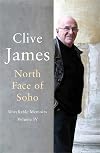
A photo on the back of the jacket reveals the author sporting lavish sideburns, a tonsorial arrangement which artfully combines baldness with long hair, and a hideous cravat, so you know immediately that it was taken in the 1970s. James says he had an entire rack of cravats ‘of a chemically derived material printed with a paisley pattern’. He describes the period as ‘an era of dandies without taste’. This ability to sum up a subject or person in one witty sentence is evident show more throughout the book.
The fourth instalment in the Unreliable Memoirs series, North Face of Soho covers about fifteen years from the late ‘60s to the early ‘80s. It starts with James having a nervous breakdown after being fired as director of an Oxbridge revue and ends with another theatrical disaster. In between he is building his career, or perhaps that should be careers, and nowhere near as famous as he would become later in the ‘80s when millions came to know him simply as a television performer rather than the brilliant critical essayist he also was. Consequently it’s much more interesting than the final volume, which dealt with the years of TV fame, the ascent always being more fascinating to read about than the Olympian view from the summit.
Although the quantity of his output during these years is impressive, it’s the variety that is really striking. When he wasn’t establishing a reputation as a heavyweight literary critic in the pages of the TLS, The New Review and the The New York Review of Books, he was doing impressions of Henry Kissinger on late night satirical TV shows. Or furnishing singer-songwriter Pete Atkin with literate lyrics. Or helping future Factory Records boss Tony Wilson present an off-beat rock show called So It Goes. Or writing a groundbreaking TV review column for the Observer newspaper. Or writing poetry. I could go on, but you get the picture. This is a book full of anecdotes involving people who don’t belong in the same book: Peter Sellers & Robert Lowell, Barry Humphries and Martin Amis, Ian Hamilton and Johnny Rotten. The common factor is the Zelig-like kid from Kogarah.
James was a postmodernist before postmodernism was a thing, and long before the thing became a cliche. I’m not sure if he was consciously breaking down barriers between art and entertainment or if he just couldn’t help finding everything interesting. Perhaps he wasn’t sure either. Most intelligent people are interested in lots of different stuff. Unlike many, certainly fifty years ago, James wasn’t afraid to say so. He made the world of ‘serious literature’ seem accessible to the general reader and gave you the courage to enjoy alleged trash without feeling stupid. If someone as obviously clever as Clive James thought Star Trek was good fun, then it was okay for you to do so. Culturally omnivorous rather than populist he was the personification of the idea of a genuinely democratic culture, neither highbrow or lowbrow: ‘everything created should be composed on the assumption that it can be enjoyed by anybody, even if not by everybody’.
All of this was exemplified by his TV reviews written between 1972 and 1982. My paperback collections of the columns fell apart long ago through excessive reading. These mesmerising pieces were so funny that some concluded they weren’t criticism at all. James, however, proved that being funny and being serious were the same thing. When he made fun of the indefatigable patriotism of the BBC sports commentators at the 1972 Olympic Games (‘And Wilkins quite content with his fifth place. He can build on that’) he was telling you about Britain’s reluctance to accept that it was no longer an imperial power. Usually mainly remembered for hilarious put-downs of the famous his TV columns were really a celebration of the bewildering variety of 1970s British television, even if the compliments had a tendency to be distinctly backhanded. He wrote with an admirable lack of snobbery, taking popular fare like sit-coms as seriously as the supposedly prestigious productions, and frequently finding them more rewarding. Never intimidated by reputation he was always willing to point out that the Famous Playwright wasn’t wearing any clothes. And he didn’t just review the programmes: he also reviewed the adverts, the continuity announcers unable to get through a single link without fluffing, and the weather forecaster resplendent in a wildly strobing jacket while prattling about something called ‘a freezing fog situation.’ For Clive James television was a riotous carnival of eccentric characters and bizarre juxtapositions erupting into your living room. His reviews were often more enjoyable than the programmes and remain worth reading even though many of the programmes have been forgotten.
This is a wonderfully entertaining memoir, it zips along with tremendous energy and is full of wit and wisdom. It’s also full of the kind of finely honed and assiduously polished prose that dullards dismiss as slick. The kind of prose that is easy to read and almost impossible to achieve. James was a poet whose best poetry was written right across the page. He is honest about the ambition that drove him (‘I seemed less ambitious for anything in particular than for everything at once’) and avoids false modesty while taking delight in detailing his many failings. His failings are on such a grand scale they sound like achievements in themselves. For instance, he didn’t just smoke he ‘smoked so much that I needed the hubcap of a Bedford van as an ashtray’. Classic comic exaggeration, I thought. I then came across an article by Russell Davies in which he recalls both being in the street with James when he found the hubcap and how alarmingly quickly it filled up with cigarette butts.
Not everything Clive James did was good. There was quite a lot of dross among the gold. He mentions, without a flicker of embarrassment, a sequence of putatively comic epic poems with awful alliterative titles like Peregrine Prykke’s Pilgrimage through the London Literary World. Some of his programmes were more entertaining than envious fellow journalists allowed but there is no doubt that he was much better writing about television than appearing on it. His finest work is on the page: the reviews, essays, and memoirs like this one. A fashionable view is that he was a split personality fatally divided between his desire to be a famous jester and taken seriously: fashionable and false. This book, like all his best work, demonstrates the truth of something he once said: ‘A sense of humour is just common sense, dancing. Those who lack humour are without judgement and should be trusted with nothing.’ show less
The fourth instalment in the Unreliable Memoirs series, North Face of Soho covers about fifteen years from the late ‘60s to the early ‘80s. It starts with James having a nervous breakdown after being fired as director of an Oxbridge revue and ends with another theatrical disaster. In between he is building his career, or perhaps that should be careers, and nowhere near as famous as he would become later in the ‘80s when millions came to know him simply as a television performer rather than the brilliant critical essayist he also was. Consequently it’s much more interesting than the final volume, which dealt with the years of TV fame, the ascent always being more fascinating to read about than the Olympian view from the summit.
Although the quantity of his output during these years is impressive, it’s the variety that is really striking. When he wasn’t establishing a reputation as a heavyweight literary critic in the pages of the TLS, The New Review and the The New York Review of Books, he was doing impressions of Henry Kissinger on late night satirical TV shows. Or furnishing singer-songwriter Pete Atkin with literate lyrics. Or helping future Factory Records boss Tony Wilson present an off-beat rock show called So It Goes. Or writing a groundbreaking TV review column for the Observer newspaper. Or writing poetry. I could go on, but you get the picture. This is a book full of anecdotes involving people who don’t belong in the same book: Peter Sellers & Robert Lowell, Barry Humphries and Martin Amis, Ian Hamilton and Johnny Rotten. The common factor is the Zelig-like kid from Kogarah.
James was a postmodernist before postmodernism was a thing, and long before the thing became a cliche. I’m not sure if he was consciously breaking down barriers between art and entertainment or if he just couldn’t help finding everything interesting. Perhaps he wasn’t sure either. Most intelligent people are interested in lots of different stuff. Unlike many, certainly fifty years ago, James wasn’t afraid to say so. He made the world of ‘serious literature’ seem accessible to the general reader and gave you the courage to enjoy alleged trash without feeling stupid. If someone as obviously clever as Clive James thought Star Trek was good fun, then it was okay for you to do so. Culturally omnivorous rather than populist he was the personification of the idea of a genuinely democratic culture, neither highbrow or lowbrow: ‘everything created should be composed on the assumption that it can be enjoyed by anybody, even if not by everybody’.
All of this was exemplified by his TV reviews written between 1972 and 1982. My paperback collections of the columns fell apart long ago through excessive reading. These mesmerising pieces were so funny that some concluded they weren’t criticism at all. James, however, proved that being funny and being serious were the same thing. When he made fun of the indefatigable patriotism of the BBC sports commentators at the 1972 Olympic Games (‘And Wilkins quite content with his fifth place. He can build on that’) he was telling you about Britain’s reluctance to accept that it was no longer an imperial power. Usually mainly remembered for hilarious put-downs of the famous his TV columns were really a celebration of the bewildering variety of 1970s British television, even if the compliments had a tendency to be distinctly backhanded. He wrote with an admirable lack of snobbery, taking popular fare like sit-coms as seriously as the supposedly prestigious productions, and frequently finding them more rewarding. Never intimidated by reputation he was always willing to point out that the Famous Playwright wasn’t wearing any clothes. And he didn’t just review the programmes: he also reviewed the adverts, the continuity announcers unable to get through a single link without fluffing, and the weather forecaster resplendent in a wildly strobing jacket while prattling about something called ‘a freezing fog situation.’ For Clive James television was a riotous carnival of eccentric characters and bizarre juxtapositions erupting into your living room. His reviews were often more enjoyable than the programmes and remain worth reading even though many of the programmes have been forgotten.
This is a wonderfully entertaining memoir, it zips along with tremendous energy and is full of wit and wisdom. It’s also full of the kind of finely honed and assiduously polished prose that dullards dismiss as slick. The kind of prose that is easy to read and almost impossible to achieve. James was a poet whose best poetry was written right across the page. He is honest about the ambition that drove him (‘I seemed less ambitious for anything in particular than for everything at once’) and avoids false modesty while taking delight in detailing his many failings. His failings are on such a grand scale they sound like achievements in themselves. For instance, he didn’t just smoke he ‘smoked so much that I needed the hubcap of a Bedford van as an ashtray’. Classic comic exaggeration, I thought. I then came across an article by Russell Davies in which he recalls both being in the street with James when he found the hubcap and how alarmingly quickly it filled up with cigarette butts.
Not everything Clive James did was good. There was quite a lot of dross among the gold. He mentions, without a flicker of embarrassment, a sequence of putatively comic epic poems with awful alliterative titles like Peregrine Prykke’s Pilgrimage through the London Literary World. Some of his programmes were more entertaining than envious fellow journalists allowed but there is no doubt that he was much better writing about television than appearing on it. His finest work is on the page: the reviews, essays, and memoirs like this one. A fashionable view is that he was a split personality fatally divided between his desire to be a famous jester and taken seriously: fashionable and false. This book, like all his best work, demonstrates the truth of something he once said: ‘A sense of humour is just common sense, dancing. Those who lack humour are without judgement and should be trusted with nothing.’ show less

A delightful slim volume of essays, so full of life and the love of art, made poignant by our knowledge of the author’s mortality.
There is much to enjoy and learn from these very short essays , many revisiting the writer’s favourite authors, such as the novel sequences of Powell or Waugh, but also with new discoveries, such as Olivia Manning, or at a lighter level, O’Brien’s Jack Aubrey novels. As ever with literary essays, part of the pleasure is from affirmation that books that show more you have enjoyed are praised and part from the promise of new books you should enjoy, as your taste in books is similar (although nowhere near as erudite). There are short essays on Hollywood books, political biographies and the physical shelving problem arising from always needing to buy books (to which one can relate!).
There are also two series of essays scattered through the collection about the books & life of Hemingway and the books of Conrad which share the frustration with or appreciation of those works with us:
Conrad was the writer who reached political adulthood before any of the other writers of his time, and when they did, they only reached to his knee.
The author’s illness and adult family are mentioned, mainly in passing, throughout the book. This might be off-putting for those who have never read the author before, but works for me as someone who grew up listening to his BBC film reviews. I can hear the authorial voice too.
There is much to appreciate and so little time. This book is worth the time, sharing his appreciation to guide you on to make time for those works which are satisfying and enjoyable. show less
There is much to enjoy and learn from these very short essays , many revisiting the writer’s favourite authors, such as the novel sequences of Powell or Waugh, but also with new discoveries, such as Olivia Manning, or at a lighter level, O’Brien’s Jack Aubrey novels. As ever with literary essays, part of the pleasure is from affirmation that books that show more you have enjoyed are praised and part from the promise of new books you should enjoy, as your taste in books is similar (although nowhere near as erudite). There are short essays on Hollywood books, political biographies and the physical shelving problem arising from always needing to buy books (to which one can relate!).
There are also two series of essays scattered through the collection about the books & life of Hemingway and the books of Conrad which share the frustration with or appreciation of those works with us:
Conrad was the writer who reached political adulthood before any of the other writers of his time, and when they did, they only reached to his knee.
The author’s illness and adult family are mentioned, mainly in passing, throughout the book. This might be off-putting for those who have never read the author before, but works for me as someone who grew up listening to his BBC film reviews. I can hear the authorial voice too.
There is much to appreciate and so little time. This book is worth the time, sharing his appreciation to guide you on to make time for those works which are satisfying and enjoyable. show less
Here’s a book, a slim volume of a book that hooked me right from the start. Oh how I wish they all did! What our Clive James doesn’t know about literature, reading and writing is probably not worth the bother. At times I was a little out of my depth but Clive managed to go easy with this novice and reeled me back in when I got lost, gently taught me new words and delighted me with many a perfectly structured turn of phrase. Mr. James spoke to me as an interested friend and amazed me with show more a commanding yet easy eloquence. For the first time ever in my reading life I’ve come across a book that I could happily re-read, immediately, and gain more for the doing of it…..I think I will. show less
Lists
Art of Reading (1)
Awards


You May Also Like


Associated Authors
Statistics
- Works
- 75
- Also by
- 19
- Members
- 7,301
- Popularity
- #3,346
- Rating
- 4.0
- Reviews
- 96
- ISBNs
- 223
- Languages
- 1
- Favorited
- 20
