
Kate Atkinson
Author of Life After Life
About the Author
Kate Atkinson was born in York, and studied English Literature at the University of Dundee. She earned her Masters Degree from Dundee in 1974. She then went on to study for a doctorate in American Literature but she failed at the viva (oral examination) stage. After leaving the university, she took show more on a variety of jobs from home help to legal secretary and teacher. Her first novel, Behind the Scenes at the Museum, won the 1995 Whitbread Book of the Year ahead of Salman Rushdie's The Moor's Last Sigh and Roy Jenkins's biography of William Ewart Gladstone. It went on to be a Sunday Times bestseller. Since then, she has published another five novels, one play, and one collection of short stories. Her work is often celebrated for its wit, wisdom and subtle characterisation, and the surprising twists and plot turns. Her most recent work has featured the popular former detective Jackson Brodie. In 2009, she donated the short story Lucky We Live Now to Oxfam's 'Ox-Tales' project, four collections of UK stories written by 38 authors. Atkinson's story was published in the 'Earth' collection. In March 2010, Atkinson appeared at the York Literature Festival, giving a world-premier reading from an early chapter from her forthcoming novel Started Early, Took My Dog, which is set mainly in the English city of Leeds. Atkinson's bestselling novel, Life after Life, has won numerous awards, including the COSTA Novel Award for 2013. The follow-up to Life After Life is A God in Ruins and was published in 2015. This title won a Costa Book Award 2015 in the novel category. (Bowker Author Biography) show less
Series
Works by Kate Atkinson
Wentworth : Season 8 : Part 1 2 copies
Lineup 1 copy
Lucky We Live Now - story 1 copy
Affairs of the Heart 1 copy
Creepy Crawlies 1 copy
Tracce d'amore 1 copy
Associated Works
The Book That Changed My Life: 71 Remarkable Writers Celebrate the Books That Matter Most to Them (2006) — Contributor — 411 copies, 18 reviews
Freedom: Stories Celebrating the Universal Declaration of Human Rights (2009) — Contributor — 88 copies, 2 reviews
Tagged
Common Knowledge
- Birthdate
- 1951-12-20
- Gender
- female
- Education
- University of Dundee (1974)
- Occupations
- legal secretary
teacher
novelist - Awards and honors
- British Book Award (Newcomer of the Year ∙ 1997)
E. M. Forster Award (1998)
Order of the British Empire (Member ∙ 2011)
Whitbread First Novel Award (1995)
Whitbread Book of the Year Prize (1995) - Agent
- Peter Straus
- Relationships
- Hixon, Andy (partner or husband)
- Short biography
- She was born in York, and studied English Literature at the University of Dundee, gaining her Masters Degree in 1974. During her final year of this course, she was married for the first time. The marriage lasted only two years, but produced Atkinson's first daughter, Eve, who was born in 1975. She subsequently studied for a doctorate in American Literature which she failed at the viva stage. After leaving university, she took on a variety of miscellaneous jobs from home help to legal secretary and teacher. She lived in Whitby, Yorkshire for a time, but now lives in Edinburgh.
- Nationality
- UK
- Birthplace
- York, Yorkshire, England, UK
- Places of residence
- Whitby, Yorkshire, England, UK
Edinburgh, Scotland, UK - Map Location
- England, UK
Members
Discussions
BRITISH AUTHOR CHALLENGE - OCTOBER 2016 - ATKINSON & GOLDING in 75 Books Challenge for 2016 (October 2016)
"Life After Life": Is it worth a read? in Girlybooks (September 2015)
Life after Life - Kate Atkinson in Orange January/July (May 2014)
Reviews

Some mornings, she woke and felt that she might be on the cusp of something great. Other mornings, she was simply hungover and in a stranger's bed.
Kate Atkinson has written a collection of short stories and it is a delightful romp with a decidedly fairy tale feel. A few stories feature fairy tales explicitly but most use elements sparingly; an occasional talking animal or fortune teller used in unexpected ways. While each story stands on its own, the characters often appear in other stories, show more or see their earlier narratives turned upside down in another. Atkinson is a talented writer who knows how to spin an intricate plot and to create complex characters. Here, the format of the short story frees her to unleash her imagination in wild and wonderful ways. This collection will please anyone who loves Kelly Link's short stories. show less
Kate Atkinson has written a collection of short stories and it is a delightful romp with a decidedly fairy tale feel. A few stories feature fairy tales explicitly but most use elements sparingly; an occasional talking animal or fortune teller used in unexpected ways. While each story stands on its own, the characters often appear in other stories, show more or see their earlier narratives turned upside down in another. Atkinson is a talented writer who knows how to spin an intricate plot and to create complex characters. Here, the format of the short story frees her to unleash her imagination in wild and wonderful ways. This collection will please anyone who loves Kelly Link's short stories. show less
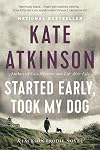
Whenever I feel that my reading has been a bit esoteric, I reach back to Kate Atkinson and another of her Jackson Brody novels. This is not a knock on Atkinson. Her writing is literary, witty, observational, and empathetic. I’ve come to enjoy her style of introducing random characters and getting into the minds of various people, and then bringing them all together to satisfactory conclusion of an intricate plot. In this case, Jackson Brody begins by rescuing a dog from some oaf, a retired show more police woman named Tracy rescues a little girl from a drug addicted prostitute, and in a general theme that resonates throughout the novel - no good deed goes unpunished.
The narrative starts to connect when Jackson takes on a case from a woman in Australia who’s trying to find out her birth history. She has loved her adopted parents, but now they have died and she’s trying to connect to any origin story that he can uncover. At the same time, the narrative traces back to 1975 when another working girl was found murdered in her apartment by a new detective (that same Tracy Waterhouse) and present in the room of this decomposing body was a little boy. Throughout the novel, we go back-and-forth to the events that unfolded after the discovery of this dead woman and to the events going on in present day in the lives of Jackson and Tracy, and also an aging actress with dementia. The reader gets to know all of these characters and again the writing is both clever and filled in this particular novel with bits of Emily Dickinson allusions. I am destined. I’m sure to read the two other novels in this six novel series. I look forward to completing the Jackson Brody story.
Lines:
The social worker was there (apparently) to help guide him through that terrible year of bereavement which began with his mother dying of cancer and ended with his brother killing himself after their sister was murdered.
Julia had once told him that the ideal partner was one that you could keep in a cupboard and take out when you felt like it.
An old flame flickering weakly rather than burning brightly, denied oxygen by their absence from each other.
It was a woman’s job to try and improve a man. It was a man’s job to resist improvement.
She looked very demure compared to some of the flesh on show, mutton dressed as lamb.
She was the kind of wife you were glad to leave at home.
All whores wanted was money, Barry “explained” to Tracy. Wives made you pay with your lifeblood.
Skinny, midthirties, dyed black hair left over from the previous decade, cut in a bob so sharp that it looked as if it would cut you if you got too close to her. She had a beaky nose that gave her a hungry look. She was the kind who would trample over the bodies of the fallen to get to the story.
Tracy’s farewell piss-up had already acquired legendary status. Everyone liked Tracy, although a lot of them had liked to pretend that they didn’t.
Both men had the doughy faces of people reared on a diet of fat and potatoes and were dressed in leather jackets that had last been fashionable sometime in the seventies, unless you lived in Albania, where they had never become démodé and possibly never would.
A little carriage clock on the mantelpiece struck a tinny-sounding hour and Marilyn Nettles flinched like a woman who had just realized how long it was since she’d had a drink.
Tracy had finally managed to dispense with the awkward burden of her virginity.
He wasn’t what you’d call a catch, but then Tracy wasn’t looking to keep him.
Nice coincidence, although I always say that a coincidence is just an explanation waiting to happen.”
This was love. It didn’t come free, you paid in pain. Your own. But then nobody ever said love was easy. Well, they did, but they were idiots.
Jackson didn’t know what ‘it’ was, but that was the point, wasn’t it? That was what solving something was about, it was hunting the ‘it’ down, pinning its arms above its head and making it spill the beans. It was like being in a game, a game where you didn’t know the rules or the identity of the other players and where you were unsure of the goal.” show less
The narrative starts to connect when Jackson takes on a case from a woman in Australia who’s trying to find out her birth history. She has loved her adopted parents, but now they have died and she’s trying to connect to any origin story that he can uncover. At the same time, the narrative traces back to 1975 when another working girl was found murdered in her apartment by a new detective (that same Tracy Waterhouse) and present in the room of this decomposing body was a little boy. Throughout the novel, we go back-and-forth to the events that unfolded after the discovery of this dead woman and to the events going on in present day in the lives of Jackson and Tracy, and also an aging actress with dementia. The reader gets to know all of these characters and again the writing is both clever and filled in this particular novel with bits of Emily Dickinson allusions. I am destined. I’m sure to read the two other novels in this six novel series. I look forward to completing the Jackson Brody story.
Lines:
The social worker was there (apparently) to help guide him through that terrible year of bereavement which began with his mother dying of cancer and ended with his brother killing himself after their sister was murdered.
Julia had once told him that the ideal partner was one that you could keep in a cupboard and take out when you felt like it.
An old flame flickering weakly rather than burning brightly, denied oxygen by their absence from each other.
It was a woman’s job to try and improve a man. It was a man’s job to resist improvement.
She looked very demure compared to some of the flesh on show, mutton dressed as lamb.
She was the kind of wife you were glad to leave at home.
All whores wanted was money, Barry “explained” to Tracy. Wives made you pay with your lifeblood.
Skinny, midthirties, dyed black hair left over from the previous decade, cut in a bob so sharp that it looked as if it would cut you if you got too close to her. She had a beaky nose that gave her a hungry look. She was the kind who would trample over the bodies of the fallen to get to the story.
Tracy’s farewell piss-up had already acquired legendary status. Everyone liked Tracy, although a lot of them had liked to pretend that they didn’t.
Both men had the doughy faces of people reared on a diet of fat and potatoes and were dressed in leather jackets that had last been fashionable sometime in the seventies, unless you lived in Albania, where they had never become démodé and possibly never would.
A little carriage clock on the mantelpiece struck a tinny-sounding hour and Marilyn Nettles flinched like a woman who had just realized how long it was since she’d had a drink.
Tracy had finally managed to dispense with the awkward burden of her virginity.
He wasn’t what you’d call a catch, but then Tracy wasn’t looking to keep him.
Nice coincidence, although I always say that a coincidence is just an explanation waiting to happen.”
This was love. It didn’t come free, you paid in pain. Your own. But then nobody ever said love was easy. Well, they did, but they were idiots.
Jackson didn’t know what ‘it’ was, but that was the point, wasn’t it? That was what solving something was about, it was hunting the ‘it’ down, pinning its arms above its head and making it spill the beans. It was like being in a game, a game where you didn’t know the rules or the identity of the other players and where you were unsure of the goal.” show less
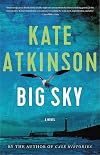
Kate Atkinson's Jackson Brodie books are a very distinctive kind of fiction. They are told with beautiful language, an innovative structure, wit, compassion and an understanding of moral frailty. They are filled with real people, described in ways that capture their individuality while setting them in a closely observed and finally nuanced landscape of class and power. The plots wrap themselves around something dark slithering its ways through the corrupt heart of English power and show more privilege. This darkness is challenged by Jackson Brodie: romantic pragmatist, ex-soldier, ex-policeman, ex-husband and everyday protector of the weak. Yet Jackson is not the true centre of the books. That place is held by the women who, in their different ways, decline to be victims and who do whatever is necessary to fight their way back to safety.
"Big Sky" like the last Jackson Brodie novel, "Started Early. Took My Dog" is breathtakingly good.
In the nine years since the last novel, Jackson has built a more stable life. His son is now a teenager. He has a strong relationship of the she's-my-ex-and-my-best-friend type. Hers is the voice he most often hears in his head when he's critiquing his own behaviour. He's now a private investigator in Yorkshire, mostly investigating cheating spouses.
The plot revolves around two current stains on English society, the institutionalisation of the sexual abuse of children by the powerful and the growing volume of foreign women being sold into sexual slavery. Both of those things are repellant and widespread. Take a look at the reports from the IICSA to see how well-organised the sexual abuse of children is. Visit the website of The Independent Anti-Slavery Commissioner, established by the 2015 Modern Slavery Act, and see the estimates that there are at least 13,000 victims of slavery in the UK. What Kate Atkinson does in "Big Sky" is to tell the story of the women and children and the men who abuse them in a way that makes it real without descending into voyeurism.
She achieves this partly by the people-centric structure of the story. Instead of pursuing a plot or a theme, Kate Atkinson follows a path of "serial immersion" dropping us into the minds of one character after another. In the beginning, we don't know the role of the people in the story or how they relate to each other. There isn't a central puzzle that they're all working to solve or to hide. Instead, we have the overlapping lives of people, good, bad, strong, weak, none of whom see the whole story and each of whom takes decisions that affect everyone else.
Here's an example. Chapter four opens with three men playing golf. We don't know who they are or how they relate to the story but we quickly find ourselves immersed in the world view of Vince, the most junior member of the trio:
There were different categories of friends, in Vince's opinion: golf friends, work friends, old school friends, shipboard friends, He'd been on a Mediterranean cruise a few years ago with Wendy, his about to be ex-wife, but Friend friends were harder to come by. Andy and Tommy were golf friends. Not to each other. With each other, they were friend friends. They'd known each other for years and had a relationship so tight that Vince always felt he was on the outside of something when he was with them. Not that he could put his finger on what it was her was excluded from exactly. He wondered sometimes if it wasn't so much that Tommy and Andy shared a secret so much as they liked to make him think they shared a secret. Men never really left the snigger of the schoolyard, they just grew bigger. That was his wife's opinion anyway, soon to be ex-wife.
Vince's taxonomy of friends tells us a great deal about him. It's more than an idle conceit. It's how he structures his life. It drives his actions and it will emerge again later when things turn nasty. His references to his soon to be ex-wife show his as nice but weak. His wife's voice is still in his head and he can't quite accept the truth that Wendy will no longer be his wife. The "Men never really leave the snigger of the schoolyard, they just grow bigger" comment, will be echoed by other female voices in the heads of other men as the book goes on.
The serial immersions mean that our understanding of the people comes ahead of and informs our understanding of the plot. This is what keeps the book human, driving anger at the abuse, compassion for the abused and insight into the abusers that is personal rather than abstract.
As this story is woven, Jackson Brodie is the warp, the static frame, around which the weftof the other characters shuttle to create the pattern. Jackson is the cowboy who thinks he's a sheriff and sometimes he is. He wants to do the right thing although he often can't work out what that is. His character is beautifully crafted. The times spent immersed in Jackson were the ones I enjoyed most. Here's an example of Jackson's interior monologue as he runs through a forest. He realises that he can't identify any tree except the oaks and even then only because they have funny shaped leave so he comes up with the idea that:
Somebody should invent a Shazam for trees and plants. They probably had. ¨Gap in the market' Jackson thought. Quite a niche market though. National Trust members mostly: middle-class, middle-income, the frail and over-burdened backbone of England. The kind of people who owned Labradors listened to "The Archers" and couldn't abide Reality TV. 'Me' Jackson thought, even if the Labrador was on loan and he didn't actually listen to "The Archers".
I was smiling as I listened to this. Like Jackson, I grew up in a working-class home and yet the National Trust / Labrador / Archers trinity is one I've worshipped at and I think Reality TV is an attack on the concept of truth. I like Jackson's ability to see these things and I like that he's constantly reviewing his place and the world, usually guided by the voices of women he has known. He provides a context that says that we ought to be aware of who we are and to own the decisions that we take.
The underlying emotion driving the book is deep anger at the long-term, consequence-free, systematic sexual abuse of women by rich and powerful men. Yet it is not an angry book. This is a book in which humanity and humour are synonymous. The women are shown as people who survive and take their revenge when they can. The book itself is a form of Romance, in the old sense of that word. It's a mystery and a quest. The heroes and heroines are brave and live to their values. There is also a sense of fate bringing together the people in whose minds we've been immersed and we trust that somehow they will converge and good will win through.
I listened to the audiobook which is expertly narrated by Jacob Issacs, who played Jackson Brodie in the TV series based on the books. Click on the SoundCloud link below to hear a sample.
https://soundcloud.com/audiolibrary-a/big-sky-jackson-brodie-n-5-by-kate-atkinso... show less
"Big Sky" like the last Jackson Brodie novel, "Started Early. Took My Dog" is breathtakingly good.
In the nine years since the last novel, Jackson has built a more stable life. His son is now a teenager. He has a strong relationship of the she's-my-ex-and-my-best-friend type. Hers is the voice he most often hears in his head when he's critiquing his own behaviour. He's now a private investigator in Yorkshire, mostly investigating cheating spouses.
The plot revolves around two current stains on English society, the institutionalisation of the sexual abuse of children by the powerful and the growing volume of foreign women being sold into sexual slavery. Both of those things are repellant and widespread. Take a look at the reports from the IICSA to see how well-organised the sexual abuse of children is. Visit the website of The Independent Anti-Slavery Commissioner, established by the 2015 Modern Slavery Act, and see the estimates that there are at least 13,000 victims of slavery in the UK. What Kate Atkinson does in "Big Sky" is to tell the story of the women and children and the men who abuse them in a way that makes it real without descending into voyeurism.
She achieves this partly by the people-centric structure of the story. Instead of pursuing a plot or a theme, Kate Atkinson follows a path of "serial immersion" dropping us into the minds of one character after another. In the beginning, we don't know the role of the people in the story or how they relate to each other. There isn't a central puzzle that they're all working to solve or to hide. Instead, we have the overlapping lives of people, good, bad, strong, weak, none of whom see the whole story and each of whom takes decisions that affect everyone else.
Here's an example. Chapter four opens with three men playing golf. We don't know who they are or how they relate to the story but we quickly find ourselves immersed in the world view of Vince, the most junior member of the trio:
There were different categories of friends, in Vince's opinion: golf friends, work friends, old school friends, shipboard friends, He'd been on a Mediterranean cruise a few years ago with Wendy, his about to be ex-wife, but Friend friends were harder to come by. Andy and Tommy were golf friends. Not to each other. With each other, they were friend friends. They'd known each other for years and had a relationship so tight that Vince always felt he was on the outside of something when he was with them. Not that he could put his finger on what it was her was excluded from exactly. He wondered sometimes if it wasn't so much that Tommy and Andy shared a secret so much as they liked to make him think they shared a secret. Men never really left the snigger of the schoolyard, they just grew bigger. That was his wife's opinion anyway, soon to be ex-wife.
Vince's taxonomy of friends tells us a great deal about him. It's more than an idle conceit. It's how he structures his life. It drives his actions and it will emerge again later when things turn nasty. His references to his soon to be ex-wife show his as nice but weak. His wife's voice is still in his head and he can't quite accept the truth that Wendy will no longer be his wife. The "Men never really leave the snigger of the schoolyard, they just grow bigger" comment, will be echoed by other female voices in the heads of other men as the book goes on.
The serial immersions mean that our understanding of the people comes ahead of and informs our understanding of the plot. This is what keeps the book human, driving anger at the abuse, compassion for the abused and insight into the abusers that is personal rather than abstract.
As this story is woven, Jackson Brodie is the warp, the static frame, around which the weftof the other characters shuttle to create the pattern. Jackson is the cowboy who thinks he's a sheriff and sometimes he is. He wants to do the right thing although he often can't work out what that is. His character is beautifully crafted. The times spent immersed in Jackson were the ones I enjoyed most. Here's an example of Jackson's interior monologue as he runs through a forest. He realises that he can't identify any tree except the oaks and even then only because they have funny shaped leave so he comes up with the idea that:
Somebody should invent a Shazam for trees and plants. They probably had. ¨Gap in the market' Jackson thought. Quite a niche market though. National Trust members mostly: middle-class, middle-income, the frail and over-burdened backbone of England. The kind of people who owned Labradors listened to "The Archers" and couldn't abide Reality TV. 'Me' Jackson thought, even if the Labrador was on loan and he didn't actually listen to "The Archers".
I was smiling as I listened to this. Like Jackson, I grew up in a working-class home and yet the National Trust / Labrador / Archers trinity is one I've worshipped at and I think Reality TV is an attack on the concept of truth. I like Jackson's ability to see these things and I like that he's constantly reviewing his place and the world, usually guided by the voices of women he has known. He provides a context that says that we ought to be aware of who we are and to own the decisions that we take.
The underlying emotion driving the book is deep anger at the long-term, consequence-free, systematic sexual abuse of women by rich and powerful men. Yet it is not an angry book. This is a book in which humanity and humour are synonymous. The women are shown as people who survive and take their revenge when they can. The book itself is a form of Romance, in the old sense of that word. It's a mystery and a quest. The heroes and heroines are brave and live to their values. There is also a sense of fate bringing together the people in whose minds we've been immersed and we trust that somehow they will converge and good will win through.
I listened to the audiobook which is expertly narrated by Jacob Issacs, who played Jackson Brodie in the TV series based on the books. Click on the SoundCloud link below to hear a sample.
https://soundcloud.com/audiolibrary-a/big-sky-jackson-brodie-n-5-by-kate-atkinso... show less
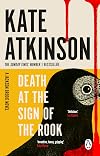
This, the sixth Jackson Brodie detective novel, is a spoof of the chamber mysteries popularized by Agatha Christie and others (including the Nancy Styles Atkinson invents here). Much of the action occurs at a stately manor on the Yorkshire moors. A hapless theatrical troupe stages a murder mystery for paying guests to test their skills as amateur sleuths; meanwhile, the manor becomes a genuine crime scene. This feat of dual plotting allows Atkinson to marshal—along with the requisite dotty show more nobility—two majors, two vicars, and other usual characters.
From the start of her Brodie series, Atkinson seemed determined to disprove the cliché that, while women authors might excel in mystery fiction, they were too genteel to write realistically about violent crime. At the same time, she has consistently displayed a sense of humor. In this book, however, the humor has become more absurd, continuing in the surrealist vein she mined in her recent short story collection, Normal Rules Don’t Apply.
The madcap denouement was less Agatha Christie than Marx Brothers, especially Animal Crackers (which also involved a missing picture and, in the end, abandoned all attempts at resolution). Not all explanations are necessarily true, nor are all the loose ends tied up (was Nanny’s corpse ever retrieved from the pantry?). In particular, the identity of the best actor (fittingly, not part of the theatrical company) remains a mystery.
And I didn’t care. This may not maintain the high quality of the first four Brodies, but I enjoyed it from start to finish. show less
From the start of her Brodie series, Atkinson seemed determined to disprove the cliché that, while women authors might excel in mystery fiction, they were too genteel to write realistically about violent crime. At the same time, she has consistently displayed a sense of humor. In this book, however, the humor has become more absurd, continuing in the surrealist vein she mined in her recent short story collection, Normal Rules Don’t Apply.
The madcap denouement was less Agatha Christie than Marx Brothers, especially Animal Crackers (which also involved a missing picture and, in the end, abandoned all attempts at resolution). Not all explanations are necessarily true, nor are all the loose ends tied up (was Nanny’s corpse ever retrieved from the pantry?). In particular, the identity of the best actor (fittingly, not part of the theatrical company) remains a mystery.
And I didn’t care. This may not maintain the high quality of the first four Brodies, but I enjoyed it from start to finish. show less
Lists
Female Author (6)
Family Drama (1)
Ryan's Books (1)
Netgalley Reads (1)
Thrillers (1)
Read in 2016 (1)
Magic Realism (1)
READ in 2023 (1)
5 Best 5 Years (1)
io9 Book Club (1)
Same Title (1)
Best Spy Fiction (1)
100 New Classics (1)
First Novels (1)
BBC Big Read (1)
READ IN 2022 (1)
British Mystery (2)
. (2)
Unread books (2)
Favourite Books (2)
Library List 4.5 (1)
Carole's List (1)
Movies/Shows (1)
Favorite Series (1)
Women's Stories (1)
War Literature (1)
Awards


You May Also Like


Associated Authors
Statistics
- Works
- 36
- Also by
- 14
- Members
- 52,493
- Popularity
- #291
- Rating
- 3.8
- Reviews
- 2,473
- ISBNs
- 700
- Languages
- 29
- Favorited
- 227

