
Susannah Kells
Author of A Crowning Mercy
About the Author
Disambiguation Notice:
Pseudonym for Bernard Cornwell and his wife Judy
Series
Works by Susannah Kells
Das Erbe der Väter 1 copy
The Crowning Mercy 1 copy
Tagged
Common Knowledge
- Gender
- male
- Disambiguation notice
- Pseudonym for Bernard Cornwell and his wife Judy
Members
Reviews
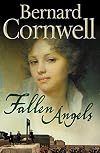
I bought this book because of the French Revolution background, but the story is so much more than that (in fact, Paris during the revolution barely features, but I was hooked anyway!): romance, a strong heroine, characters who earn the reader's trust and don't deserve it (and vice versa). The involvement of an Illuminati sect, the 'Fallen Angels' is well written, and adds to the darkness and danger of 1790s Paris, but seems rather superfluous to the conclusion. It was fun guessing the show more identity of Lucifer, the shadowy head of the Fallen Angels, and waiting to have my suspicions confirmed: the author neatly reminds the reader of certain character traits,to aid a mental game of 'Snap!' with the many 'dual personalities' in the book. The historical detail was slightly anachronistic, mainly concerning dance and dress (more Victorian than late Georgian or early Regency), but the descriptions of place and the chivalrous behaviour of the characters was certainly evocative of the time. This is my first taste of Bernard Cornwell - or Susannah Kells, in this case - and I shall certainly try and read the other two stories in this sequence! show less
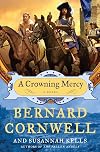
Set during the 1640s when King Charles I of England was at war with his own people, this story follows the up and downs of a beautiful woman with an ugly name: Dorcas Slythe. Not surprisingly, when she meets her dream man, who adores her but hates her name, she readily agrees to being called Campion after a beautiful flower.
Campion is raised as a Puritan. Her unloving father beats her with his belt whenever she does anything he considers as sinful. Yet he’s hiding something from her; show more something that holds great riches and a means of escape from her miserable home.
At length Campion discovers her father’s secret and leaves for London. For the rest of the story she experiences a mixture of great happiness and humiliating horrors.
The two authors have done a good job of intermixing themes. Some readers won’t like this whilst others – including me – will appreciate the blend of different tones. In some instances they do this in the same scene.
For example, early on in the book Campion’s enemies are trying to force her to marry an ugly man. During the service, while she’s being manhandled by someone she knows would rape her with pleasure, there’s also a comedy being acted out with the drunk priest. Again, some readers may not like this, but I found it high entertainment and cleverly written.
I did consider some sections as dull but these were few. On the whole I thought this was an excellent tale, well-plotted, blending humour and horror to great effect, featuring a likeable heroine along with several strong characters. show less
Campion is raised as a Puritan. Her unloving father beats her with his belt whenever she does anything he considers as sinful. Yet he’s hiding something from her; show more something that holds great riches and a means of escape from her miserable home.
At length Campion discovers her father’s secret and leaves for London. For the rest of the story she experiences a mixture of great happiness and humiliating horrors.
The two authors have done a good job of intermixing themes. Some readers won’t like this whilst others – including me – will appreciate the blend of different tones. In some instances they do this in the same scene.
For example, early on in the book Campion’s enemies are trying to force her to marry an ugly man. During the service, while she’s being manhandled by someone she knows would rape her with pleasure, there’s also a comedy being acted out with the drunk priest. Again, some readers may not like this, but I found it high entertainment and cleverly written.
I did consider some sections as dull but these were few. On the whole I thought this was an excellent tale, well-plotted, blending humour and horror to great effect, featuring a likeable heroine along with several strong characters. show less
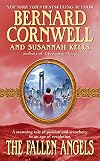
I read this book back in the late 80's when the cover of the book was The Gypsy riding his horse and it was authored by Sussanah Kells. I remember picking up the book at a book sale and read it over the summer while riding the bus to and from school. I liked the intrigue and the story, the heroine was not a Mary Sue but a strong character, the scenes written of her thoughts and longing for the gypsy was well crafted and the political intrigue of the novel was pretty good too. Didn't know show more that this book was actually book 2, and I'm lucky the library had book 1 Crowning mercy which is the next book I will be reading. show less
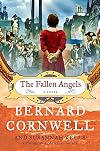
“The Fallen Angels” has a lot of good things going for it, though I prefer the first book of the Crowning Mercy series. I like how the authors have created a sequel that is set in a different era, with brand new characters, yet manage to link this book back to its predecessor.
Whereas Book 1 had lots of conflict and dramatic situations, this second book starts out in a similar fashion, yet for most of the middle section it strikes me as lacklustre in some way. The last few chapters pick show more up the pace again, though they neither match the opening scenes, nor come close to the final stages in the first novel.
Both novels feature a heroine named Campion, with the Campion of this tale being the great-great granddaughter of the former. They are similar in appearance and personality, yet the first Campion appealed to me more.
Aspects that make this book lack sparkle is the amount of repetition and the overuse of adjectives. English style often gets overlooked in historical fiction, as most authors in this genre put all their efforts into researching the past. Content and style should complement each other.
Quite often a character is described with two or three adjectives when one would’ve sufficed. There’s a point where the character Gitan is introduced as wearing black. This information is followed up by listing all the characters garments, each of which is preceded by the word “black”, thus we have an overflow of adjectives and needless repetition.
What particularly annoyed me was the overuse of the phrases, “he/she smiled”, “he/she laughed”. One or both of these are used during almost every character interaction. This stands out more and more as the story progresses, slowing the narrative down, when in most cases the reader can imagine whether a character would smile or laugh by the context of the sentence, like with the following two:
>He smiled at her. 'It's going to be all right.'
>Her face was frowning. 'But what if he can't unblock the tunnel?'
As a rule, if a person tells someone that things will be all right, they say it with a smile. The second sentence is Campion expressing concern, thus it’s obvious what her face is doing. These additions to the dialogue, of which there are many, serve no purpose other than providing an unwanted distraction.
I do greatly admire Bernard Cornwell’s authorship, but in every book of his that I’ve read so far his weak point is always dialogue attribution. The dialogue itself is good, but he slows it down, distracting the reader with things like in the sentences above, or telling the reader which character is speaking when it’s obvious who it is.
Anyway, despite these minus points, the good parts really are good, thus it just about deserves four stars. show less
Whereas Book 1 had lots of conflict and dramatic situations, this second book starts out in a similar fashion, yet for most of the middle section it strikes me as lacklustre in some way. The last few chapters pick show more up the pace again, though they neither match the opening scenes, nor come close to the final stages in the first novel.
Both novels feature a heroine named Campion, with the Campion of this tale being the great-great granddaughter of the former. They are similar in appearance and personality, yet the first Campion appealed to me more.
Aspects that make this book lack sparkle is the amount of repetition and the overuse of adjectives. English style often gets overlooked in historical fiction, as most authors in this genre put all their efforts into researching the past. Content and style should complement each other.
Quite often a character is described with two or three adjectives when one would’ve sufficed. There’s a point where the character Gitan is introduced as wearing black. This information is followed up by listing all the characters garments, each of which is preceded by the word “black”, thus we have an overflow of adjectives and needless repetition.
What particularly annoyed me was the overuse of the phrases, “he/she smiled”, “he/she laughed”. One or both of these are used during almost every character interaction. This stands out more and more as the story progresses, slowing the narrative down, when in most cases the reader can imagine whether a character would smile or laugh by the context of the sentence, like with the following two:
>He smiled at her. 'It's going to be all right.'
>Her face was frowning. 'But what if he can't unblock the tunnel?'
As a rule, if a person tells someone that things will be all right, they say it with a smile. The second sentence is Campion expressing concern, thus it’s obvious what her face is doing. These additions to the dialogue, of which there are many, serve no purpose other than providing an unwanted distraction.
I do greatly admire Bernard Cornwell’s authorship, but in every book of his that I’ve read so far his weak point is always dialogue attribution. The dialogue itself is good, but he slows it down, distracting the reader with things like in the sentences above, or telling the reader which character is speaking when it’s obvious who it is.
Anyway, despite these minus points, the good parts really are good, thus it just about deserves four stars. show less
You May Also Like


Associated Authors
Statistics
- Works
- 5
- Members
- 761
- Popularity
- #33,428
- Rating
- 3.4
- Reviews
- 19
- ISBNs
- 59
- Languages
- 3