
About the Author
Image credit: Photo by David Shankbone, Aug. 10, 2006,
at the Chelsea Barnes & Noble, New York City
at the Chelsea Barnes & Noble, New York City
Series
Works by Mark Leyner
Why Do Men Have Nipples? Hundreds of Questions You'd Only Ask a Doctor After Your Third Martini (2005) 1,651 copies, 36 reviews
Why Do Men Fall Asleep After Sex?: More Questions You'd Only Ask a Doctor After Your Third Whiskey Sour (2006) 480 copies, 11 reviews
Let's Play Doctor: The Instant Guide to Walking, Talking, and Probing Like a Real M.D. (2008) 43 copies, 1 review
Associated Works
Storming the Reality Studio: A Casebook of Cyberpunk and Postmodern Science Fiction (1991) — Contributor — 263 copies
Tagged
Common Knowledge
- Birthdate
- 1956
- Gender
- male
- Education
- Brandeis University (BA)
University of Colorado (MFA) - Nationality
- USA
- Birthplace
- Jersey City, New Jersey, USA
- Associated Place (for map)
- New Jersey, USA
Members
Reviews
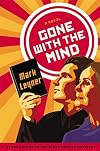
Mark Leyner is a fascinating experimentalist. In his early writing, I thought of him as a comic absurdist, such as in his amazing short stories in My Cousin, My Gastroenterologist. And there is still some of that lingering in his work, there are moments of humor no doubt, but now they are embedded within a larger, weirder context that is pushing the boundaries of meaning in fiction.
Gone with the Mind reminded me in some ways of The Life and Opinions of Tristram Shandy, Gentleman. Both novels show more purport to be about to present to you the full autobiography or memoirs of the main character (in this case, it's "Mark Leyner") and in both cases, the book never gets to where it's going. Tristram never actually tells us about his life. "Mark" is about to read from his "non-fiction" autobiography, Gone with the Mind, but instead he rambles digressively about primarily insignificant aspects of his fictional life. I say fictional, because most seem ridiculous and constructed nonsense rather than actual aspects of his life. Some, perhaps, may be real, I can't know but most digressions are radically insane and bizarre, such as his obsession with a beloved writing assistant who he conjured out of cracks in the tile of the bathroom floor as he was taking a crap.
The novel begins with a long run-on story by his fictional mother that was pretty honestly amazing because it sounded hella like my own mother. I mean, legit old school Jew from New York City who JUST. WON'T. STOP. TALKING. And mostly about meaningless details. Well, that and bodily failure and relatives or friends that you have never met. It was amazingly believable in style.
At times, Gone with the Mind is alienating. As in Sugar Frosted Nutsack, I think intentionally so. Such as the incredibly awkward Oedipal implications in the Leyner character's relationship with his mother. And while it was amusing to have the faux reading, which comprises the entire story, take place in a deserted mall food court, I found the brief interactions with the fast-food employees ignoring him to be rather unnatural. Everything is contrived here and that's part of the point. The story of our self is a contrived one. We lie to ourselves as much as we lie to others. Or are simply oblivious. As a story of autobiography gone wrong, Gone with the Mind is quite a treat. Certainly not as humorous as his earliest work, but he has other intentions these days, such as seeing how far he can explore pushing the boundaries of fiction. show less
Gone with the Mind reminded me in some ways of The Life and Opinions of Tristram Shandy, Gentleman. Both novels show more purport to be about to present to you the full autobiography or memoirs of the main character (in this case, it's "Mark Leyner") and in both cases, the book never gets to where it's going. Tristram never actually tells us about his life. "Mark" is about to read from his "non-fiction" autobiography, Gone with the Mind, but instead he rambles digressively about primarily insignificant aspects of his fictional life. I say fictional, because most seem ridiculous and constructed nonsense rather than actual aspects of his life. Some, perhaps, may be real, I can't know but most digressions are radically insane and bizarre, such as his obsession with a beloved writing assistant who he conjured out of cracks in the tile of the bathroom floor as he was taking a crap.
The novel begins with a long run-on story by his fictional mother that was pretty honestly amazing because it sounded hella like my own mother. I mean, legit old school Jew from New York City who JUST. WON'T. STOP. TALKING. And mostly about meaningless details. Well, that and bodily failure and relatives or friends that you have never met. It was amazingly believable in style.
At times, Gone with the Mind is alienating. As in Sugar Frosted Nutsack, I think intentionally so. Such as the incredibly awkward Oedipal implications in the Leyner character's relationship with his mother. And while it was amusing to have the faux reading, which comprises the entire story, take place in a deserted mall food court, I found the brief interactions with the fast-food employees ignoring him to be rather unnatural. Everything is contrived here and that's part of the point. The story of our self is a contrived one. We lie to ourselves as much as we lie to others. Or are simply oblivious. As a story of autobiography gone wrong, Gone with the Mind is quite a treat. Certainly not as humorous as his earliest work, but he has other intentions these days, such as seeing how far he can explore pushing the boundaries of fiction. show less
The Sugar Frosted Nutsack has the distinction of being as close to "metafiction" in a pure sense as one is likely to ever get, with recursive fractal curlicues redoubling constantly such that, as with some poetry, you can anticipate entire stanzas, but also constantly filling in more detail, as in discussions of Mandelbrot and the infinitely long coastline of Great Britain.
But there is also a heart at the center, suggesting that the closest movie analogue is actually Mulholland Drive rather show more something much more obvious at first glance, like Detention.
Or, to put it another way, as it moves from a story of a character struggling to be an individual, and heroic in his own way, to the story of everybody trying to frame that story, it lends heroism to that character simply by dint of his being the center of the constantly re-framed story. Does that make sense?
Further, it references this by offering that some have postulated that that character has, in fact, been a statue the entire time, thus auto-critiquing its own narrative point and structure.
And it has all of the wacky Leyner hijinx his other fiction does: too many pop-culture references to count, a genuinely astounding vocabulary and breadth of knowledge that seems almost wasteful, and astonishing imagination matched with descriptions that manage to convey visual imagery pretty much unmatched anywhere else.
As with everything that is so successful a deconstruction, though, it ends up empty except for the experience. show less
But there is also a heart at the center, suggesting that the closest movie analogue is actually Mulholland Drive rather show more something much more obvious at first glance, like Detention.
Or, to put it another way, as it moves from a story of a character struggling to be an individual, and heroic in his own way, to the story of everybody trying to frame that story, it lends heroism to that character simply by dint of his being the center of the constantly re-framed story. Does that make sense?
Further, it references this by offering that some have postulated that that character has, in fact, been a statue the entire time, thus auto-critiquing its own narrative point and structure.
And it has all of the wacky Leyner hijinx his other fiction does: too many pop-culture references to count, a genuinely astounding vocabulary and breadth of knowledge that seems almost wasteful, and astonishing imagination matched with descriptions that manage to convey visual imagery pretty much unmatched anywhere else.
As with everything that is so successful a deconstruction, though, it ends up empty except for the experience. show less
When I first read The Crying of Lot 49 I thought: well at least an author has found a way to dazzle us with language enough that we don't immediately figure out we're dealing with a cry for attention (a lot). Of course then you read Portnoys Complaint and The Tetherballs of Bougainville and you realize this is common practice. Most of the time there is something to be had in such novels that makes the reading worth while. In Lot 49 there is an interesting plot and in Portnoy we learn much show more more about mother-son and other family relationships. In Tetherballs we get absolutely nothing but the raw cry for attention by an author. Before we've figured this out we've gone through countless litanies of objects, people, places, situations, and anything else you can list or recite.
It's supposed to be funny, and it is for the first fifteen pages or so, but then the constant use of 'clever' metaphors, interlinked symbols, inappropriately yet sophisticated sexual remarks and blatantly in-your-face physicality eventually wears you out. There is a somewhat detectable plot line somewhere and it does seem to involve some of the main characters but it doesn't really matter much. It's not about them, it's about the author. Of course the author himself is clever enough to understand we eventually figure that out. He therefore included a review about his own book/plot in which he explains how self-gratifying his own writing is. Clever, but it doesn't fix much. By then the damage is done.
How does it all work? What I mean by that is, what's the literary device employed here that makes us read this text without wanting to yell at the author? There seems to be a basic rule in public speaking and entertainment that if you want to say something important that people remember, then you have to say it in all seriousness. If on the other hand if you want to say something important and have people pay attention, then you need to say it with humor. In fact if you say anything funny you can make people overlook any offensive content or direct insults you wish to hide. Most stand-up comedians are living proof of this principle. Even though a lot of the content in Tetherballs isn't actually funny, it sounds funny, or we know it should be funny. That keeps our emotional brain busy enough to not see the forest through the trees.
Essentially Mark Leyner is writing about himself. He's writing about all his frustrations, desires, needs and urges. For Leyner it is not enough to weave his own needs into an intricate story with many vivid characters that each evolve and come to grips with the maddening world around them. No, Leyer quite literally screams at us through his words. I find it difficult to label any book or novel offensive because you can always decline to read it. I also find it difficult to call a novel manipulative, because we all know they are and we all willingly participate. So I wouldn't call Tetherballs offensive or manipulative because I willingly read it and I never fell for the surface text. I will call the novel sad though. show less
It's supposed to be funny, and it is for the first fifteen pages or so, but then the constant use of 'clever' metaphors, interlinked symbols, inappropriately yet sophisticated sexual remarks and blatantly in-your-face physicality eventually wears you out. There is a somewhat detectable plot line somewhere and it does seem to involve some of the main characters but it doesn't really matter much. It's not about them, it's about the author. Of course the author himself is clever enough to understand we eventually figure that out. He therefore included a review about his own book/plot in which he explains how self-gratifying his own writing is. Clever, but it doesn't fix much. By then the damage is done.
How does it all work? What I mean by that is, what's the literary device employed here that makes us read this text without wanting to yell at the author? There seems to be a basic rule in public speaking and entertainment that if you want to say something important that people remember, then you have to say it in all seriousness. If on the other hand if you want to say something important and have people pay attention, then you need to say it with humor. In fact if you say anything funny you can make people overlook any offensive content or direct insults you wish to hide. Most stand-up comedians are living proof of this principle. Even though a lot of the content in Tetherballs isn't actually funny, it sounds funny, or we know it should be funny. That keeps our emotional brain busy enough to not see the forest through the trees.
Essentially Mark Leyner is writing about himself. He's writing about all his frustrations, desires, needs and urges. For Leyner it is not enough to weave his own needs into an intricate story with many vivid characters that each evolve and come to grips with the maddening world around them. No, Leyer quite literally screams at us through his words. I find it difficult to label any book or novel offensive because you can always decline to read it. I also find it difficult to call a novel manipulative, because we all know they are and we all willingly participate. So I wouldn't call Tetherballs offensive or manipulative because I willingly read it and I never fell for the surface text. I will call the novel sad though. show less
Here's a thing about Mark Leyner and his books, which are becoming increasing idiosyncratic even as his plotting becomes more focused and his skills more honed. The Venn diagram of readers that enjoy the slightly transgressive tales-told-out-of-school story-telling of David Sedaris, as well as the metafictional pyrotechnics of David Foster Wallace at his most precious, and the whimsy of somebody like Terry Gilliam, is vanishingly small, one suspects.
That said, if one is there for it, then show more Leyner nails it.
Parts are laugh-out-loud funny, and it is weirdly propulsive for such a strange "autobiographical" project that is almost the opposite of a traditional biography in that it lets you know many things about the mind of the author, but very little about what he has actually done.
"Brilliant, but not for everyone." undersells both sides of that sentence. show less
That said, if one is there for it, then show more Leyner nails it.
Parts are laugh-out-loud funny, and it is weirdly propulsive for such a strange "autobiographical" project that is almost the opposite of a traditional biography in that it lets you know many things about the mind of the author, but very little about what he has actually done.
"Brilliant, but not for everyone." undersells both sides of that sentence. show less
Lists
You May Also Like


Associated Authors
Statistics
- Works
- 15
- Also by
- 5
- Members
- 4,480
- Popularity
- #5,592
- Rating
- 3.3
- Reviews
- 96
- ISBNs
- 98
- Languages
- 12
- Favorited
- 15