
James Lowder
Author of Prince of Lies
About the Author
Series
Works by James Lowder
Beyond the Wall: Exploring George R. R. Martin's A Song of Ice and Fire, From A Game of Thrones to A Dance with Dragons (2012) — Editor — 173 copies, 7 reviews
Triumph of The Walking Dead: Robert Kirkman’s Zombie Epic on Page and Screen (2011) — Editor — 36 copies, 2 reviews
Madness on the Orient Express: 16 Lovecraftian Tales of an Unforgettable Journey (2014) — Editor — 33 copies, 1 review
The Munchkin Book: The Official Companion - Read the Essays * (Ab)use the Rules * Win the Game (2016) — Editor — 18 copies, 1 review
Além da muralha: explorando o universo de As crônicas de gelo e fogo, de George R. R. Martin 4 copies
THE HARPERS 1: Parched Sea; 2: Elfshadow; 3: Red Magic; 4: Night Parade; 5: Ring of Winter; 6: Crypt of the Shadowking; — Author — 2 copies
The Weeping Masks 2 copies
Hack/Slash Issue#18 1 copy
Hack/Slash 18 1 copy
Chronicles of the Demon Lord 1 copy
Fanboy 1 copy
Krainy niesławy 1 copy
Make Em Laugh 1 copy
Associated Works
The Unauthorized X-Men: SF and Comic Writers on Mutants, Prejudice, and Adamantium (Smart Pop series) (2006) — Contributor — 34 copies, 1 review
King Kong Is Back!: An Unauthorized Look at One Humongous Ape! (Smart Pop series) (2005) — Contributor — 19 copies
Butcher Knives and Body Counts: Essays on the Formula, Frights, and Fun of the Slasher Film (2011) — Contributor — 14 copies, 1 review
Prince Valiant Episode Book — Contributor, some editions — 4 copies
New Edge Sword & Sorcery Issue #5 — Contributor, some editions — 1 copy
Tagged
Common Knowledge
- Legal name
- Lowder, James Daniel
- Birthdate
- 1963-01-02
- Gender
- male
- Education
- Marquette University (BS ∙ English)
University of Wisconsin, Milwaukee (MS ∙ Literary Studies)
Whitman-Hanson Regional High School - Occupations
- novelist
editor
film critic - Nationality
- USA
- Birthplace
- Quincy, Massachusetts, USA
- Places of residence
- Whitman, Massachusetts, USA
Milwaukee, Wisconsin, USA - Associated Place (for map)
- Massachusetts, USA
Members
Reviews

This review is written with a GPL 4.0 license and the rights contained therein shall supersede all TOS by any and all websites in regards to copying and sharing without proper authorization and permissions. Crossposted at WordPress, Blogspot & Librarything by Bookstooge’s Exalted Permission
Title: The Ring of Winter
Series: Forgotten Realms: The Harpers #5
Author: James Lowder
Rating: 2.5 of 5 Stars
Genre: Fantasy
Pages: 320
Format: Digital Edition
Synopsis:
Artus Cimber, a former harper, has show more been searching for the Ring of Winter for over a decade with almost no success. However, when a fellow Adventurer member comes back from an expedition in the deepest, hottest jungles where dinosaurs live and tells of a freak snowstorm that saved his life, Artus knows he's hot on the trail.
Taking off in the middle of the night with his only friend, an older mage, so that the Harpers can't pressure him in any way, Artus's journey doesn't start well. The ship they paid passage to be on forces them to be regular sailors and the captain is an insane witch woman. Artus ends up killing her. Artus and Pontifex finally make it to Dinosaur Land, only to be attacked by members of the Cult of Frost, who are led by Kaverin Ebonhand. Kaverin also desires the Ring of Winter as it supposedly endows its controller with immortal life.
Pontifex dies, Artus is on his own. Sets off into the jungles with a local guide, only to find out it is a magician in thrall to Kaveron. Artus is captured by goblins, thrown into a pit of a monster that they worship and escapes with the help of 2 talking wombats named Byrt and Lugg.
I am NOT kidding.
Kaveron gets all the goblins to unite and attack the city of Mezro which had 7 magical guardians. One of them revealed that he had had the Ring of Winter but that he couldn't control it and so threw it into the testing chamber where new magical girls, errrr, guardians were tested and chosen. Artus goes after it, gets it and saves the city because he CAN control the Ring.
Everybody who is still alive is happy and Artus realizes that he's still a Harper at heart and now with a super powerful artifact he can do lots and lots of good things. Yippeee!
My Thoughts:
This was a perfect example of an author forcing the character to act like the author wanted without regards to any past actions, feelings or explanations. Artus starts out as an impetuous, selfish idiot. He hates the Harpers, puts others in danger without regard when searching for the Ring of Winter and generally acts like an ass. The shazaaam, he gets tested by the god Ubtao and suddenly he's the soul of wisdom, discretion and goodness.
The talking wombats? Besides getting him out of the monster pit the first time, and talking in fake british accents, dropping all their “h's”, etc, they were pointless. Which leads into all the side characters. There were so many that none of them really got to be “real” people. Kaveron was the perfect example. He's the leader of the Frost Cult, has stone hands due to fighting with Artus in the past, is in thrall to the mad god Cyric and can make magical icemen assassins. Yet he loses control of a small goblin tribe? He was just a name attached to a vehicle that moved the plot forward. People are introduced and in a lot of cases, die off within 10-20 pages. I gave up trying to keep track because I never knew if someone introduced was a long term character or just another meat bag for the mill.
I felt like this had too many elements contained in one story and it diluted the whole focus on the Ring of Winter. Well, I'm giving the Harpers sub-series one more book and then if that book doesn't get a 3.5star rating I'll be done. I'm not 12 or 14 years old.
And the Ring of Winter? It should have been a wicked super awesome cool artifact. Kind of like this M:TG card looks. But no. It is as disappointing as the rest of the book.
★★☆☆½ show less
Title: The Ring of Winter
Series: Forgotten Realms: The Harpers #5
Author: James Lowder
Rating: 2.5 of 5 Stars
Genre: Fantasy
Pages: 320
Format: Digital Edition
Synopsis:
Artus Cimber, a former harper, has show more been searching for the Ring of Winter for over a decade with almost no success. However, when a fellow Adventurer member comes back from an expedition in the deepest, hottest jungles where dinosaurs live and tells of a freak snowstorm that saved his life, Artus knows he's hot on the trail.
Taking off in the middle of the night with his only friend, an older mage, so that the Harpers can't pressure him in any way, Artus's journey doesn't start well. The ship they paid passage to be on forces them to be regular sailors and the captain is an insane witch woman. Artus ends up killing her. Artus and Pontifex finally make it to Dinosaur Land, only to be attacked by members of the Cult of Frost, who are led by Kaverin Ebonhand. Kaverin also desires the Ring of Winter as it supposedly endows its controller with immortal life.
Pontifex dies, Artus is on his own. Sets off into the jungles with a local guide, only to find out it is a magician in thrall to Kaveron. Artus is captured by goblins, thrown into a pit of a monster that they worship and escapes with the help of 2 talking wombats named Byrt and Lugg.
I am NOT kidding.
Kaveron gets all the goblins to unite and attack the city of Mezro which had 7 magical guardians. One of them revealed that he had had the Ring of Winter but that he couldn't control it and so threw it into the testing chamber where new magical girls, errrr, guardians were tested and chosen. Artus goes after it, gets it and saves the city because he CAN control the Ring.
Everybody who is still alive is happy and Artus realizes that he's still a Harper at heart and now with a super powerful artifact he can do lots and lots of good things. Yippeee!
My Thoughts:
This was a perfect example of an author forcing the character to act like the author wanted without regards to any past actions, feelings or explanations. Artus starts out as an impetuous, selfish idiot. He hates the Harpers, puts others in danger without regard when searching for the Ring of Winter and generally acts like an ass. The shazaaam, he gets tested by the god Ubtao and suddenly he's the soul of wisdom, discretion and goodness.
The talking wombats? Besides getting him out of the monster pit the first time, and talking in fake british accents, dropping all their “h's”, etc, they were pointless. Which leads into all the side characters. There were so many that none of them really got to be “real” people. Kaveron was the perfect example. He's the leader of the Frost Cult, has stone hands due to fighting with Artus in the past, is in thrall to the mad god Cyric and can make magical icemen assassins. Yet he loses control of a small goblin tribe? He was just a name attached to a vehicle that moved the plot forward. People are introduced and in a lot of cases, die off within 10-20 pages. I gave up trying to keep track because I never knew if someone introduced was a long term character or just another meat bag for the mill.
I felt like this had too many elements contained in one story and it diluted the whole focus on the Ring of Winter. Well, I'm giving the Harpers sub-series one more book and then if that book doesn't get a 3.5star rating I'll be done. I'm not 12 or 14 years old.
And the Ring of Winter? It should have been a wicked super awesome cool artifact. Kind of like this M:TG card looks. But no. It is as disappointing as the rest of the book.
★★☆☆½ show less
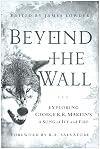
Beyond the Wall: Exploring George R. R. Martin's A Song of Ice and Fire, From A Game of Thrones to A Dance with Dragons by James Lowder
Call your bannermen!
Beyond the Wall: Exploring George R. R. Martin’s A Song of Ice and Fire, edited by James Lowder (Smart Pop, $14.95).
For those of us who were re-introduced to Martin’s fantasy novels by way of the HBO series—and for newbies, who are readng the books to keep up with the series and catch missing nuances—this collection of essays by smart people will crack open a few ideas and trains of thought.
These are much more oriented toward the books than the series, though, so show more beware: spoilers within and ahead.
First, each of the authors included have varied areas of expertise. For example, Caroline Spector takes a feminist approach (and yes, given the setting, violence against women is rampant; by the same token, resisting and powerful women wear many faces).
Brent Hartinger, the well-respected author of the YA novel The Geography Club, weighs in on the position of the outsider in the books (“A Different Kind of Other: The Role of Freaks and Outcasts in A Song of Ice and Fire”) and Matt Staggs looks at the outright sociopathy of Petyr Baelish (“Petyr Baelish and the Mask of Sanity”).
There are also a couple of really good essays on magic, religion and ethics as they work in Martin’s built world (“A Sword Without a Hilt: The Dangers of Magic in (and to) Westeros” by Jesse Scoble and “The Brutal Cost of Redemption in Westeros, or, What Moral Ambiguity?” by Susan Vaught).
And there’s also an interesting essay on romanticism that addresses the pernicious discussions of the Lyanna-Rhaegar hypothesis (“The Palace of Love, the Palace of Sorrow: Romanticism in A Song of Ice and Fire” by Linda Antonsson and Elio M. Garcia, Jr.).
For readers who are fans of the novels or world-building in general, this is a wonderful collection that will enrich one’s enjoyment. For those who are simply enjoying the TV version, it won’t likely add or subtract much either way.
Reviewed on Lit/Rant: www.litrant.tumblr.com show less
Beyond the Wall: Exploring George R. R. Martin’s A Song of Ice and Fire, edited by James Lowder (Smart Pop, $14.95).
For those of us who were re-introduced to Martin’s fantasy novels by way of the HBO series—and for newbies, who are readng the books to keep up with the series and catch missing nuances—this collection of essays by smart people will crack open a few ideas and trains of thought.
These are much more oriented toward the books than the series, though, so show more beware: spoilers within and ahead.
First, each of the authors included have varied areas of expertise. For example, Caroline Spector takes a feminist approach (and yes, given the setting, violence against women is rampant; by the same token, resisting and powerful women wear many faces).
Brent Hartinger, the well-respected author of the YA novel The Geography Club, weighs in on the position of the outsider in the books (“A Different Kind of Other: The Role of Freaks and Outcasts in A Song of Ice and Fire”) and Matt Staggs looks at the outright sociopathy of Petyr Baelish (“Petyr Baelish and the Mask of Sanity”).
There are also a couple of really good essays on magic, religion and ethics as they work in Martin’s built world (“A Sword Without a Hilt: The Dangers of Magic in (and to) Westeros” by Jesse Scoble and “The Brutal Cost of Redemption in Westeros, or, What Moral Ambiguity?” by Susan Vaught).
And there’s also an interesting essay on romanticism that addresses the pernicious discussions of the Lyanna-Rhaegar hypothesis (“The Palace of Love, the Palace of Sorrow: Romanticism in A Song of Ice and Fire” by Linda Antonsson and Elio M. Garcia, Jr.).
For readers who are fans of the novels or world-building in general, this is a wonderful collection that will enrich one’s enjoyment. For those who are simply enjoying the TV version, it won’t likely add or subtract much either way.
Reviewed on Lit/Rant: www.litrant.tumblr.com show less
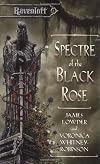
This is a sequel to a painfully sub par roleplaying spin-off book. Surprisingly it’s pretty good. It’s worth it just for the two villains, the Bloody Cobbler and the Whispering Beast. I felt that the first novel in this series tried and failed to be both a fantasy and a gothic horror novel; this one succeeds particularly in these characters as they are wonderful gothic motifs, two creatures formed from the unresolved and suppressed pathos of the main character. They each serve a role in show more this little tragedy and they aren’t what they originally seem. There is a nice supporting cast as well. While roleplaying fiction rarely rises above sub-par standards this book holds its own on the bookshelf next to similar bubblegum sci-fi fantasy books. show less
Beyond the Wall: Exploring George R. R. Martin's A Song of Ice and Fire, From A Game of Thrones to A Dance with Dragons by James Lowder
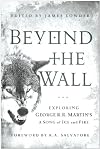
This collection of essays edited by James Lowder is one of the best books about the Song of Ice and Fire series by George R.R.Martin. Each contributor touches upon themes that are vital in the wonderfully twisted universe that Martin has created.
''The Palace of Love, the Palace of Sorrow'' by Linda Antonsson and Elio M.Garcia. I don't particularly like this duo as personalities, but their essay touches upon the movement of Romanticism, the way it influenced Martin's writing and draws a very show more interesting comparison between the classical Byronic hero and Jaime Lannister. It is easily the best essay in the collection.
''Men and Monsters'' by Alyssa Rosenberg. The essay deals with Martin's way of using monstrous actions like murder, rape, betrayal, to advance the narrative and expose the vices of his world and ours. Rosenberg provides a lot of interesting answers to these who claim that Martin is cruel to his female characters. Each season since 2011, the time when the TV series hit our screens, there are critics who cry ''Horror'' each time a sex scene appears, when a woman is mistreated, accussing Martin or the screenwriters as misogynists. Frankly, how can these critics become more and more ludicrous year after year is beyond me. Read a Medieval history book, I say to them. The era upon which the series is based, had nothing to do with the Idylls of Knighthood.
''Same Song in a Different Key'' by Daniel Abraham deals with the grapjic novel based on the series.
''An Unreliable World by Adam Whitehead talks about the way certain key events are altered each time a different character narrates or remembers them. The most crucial example is the relationship between Rheagar and Lyanna.
''Back to the Egg by Gary Westfahl deals with the Dunk and Egg stories.
''Art Imitates War by Myke Cole. One of the most interesting essays of the collection, touching upon the symptoms of Post-Traumatic Stress Disorder in the series. Theon and Arya take centre stage here.
''The Brutal Cost of Redemption in Westeros'' by Susan Vaught. Which character does the word ''redemption'' bring to mind? If you don't answer ''Jaime''', you haven't been paying attention. In addition, Susan Vaught makes some very interesting remarks on the Stark family in all their ''righteousness'' and how their unwise choices bring about disaster, especially in the case of Catelyn Stark.
''Of Direwolves and Gods'' by Andrew Zimmerman Jones. The presence -or lack of it- of the many different gods in Westeros and beyond and the significance (?) of the direwolves.
''A Sword Without A Hilt'' by Jesse Scoble. The function of witchcraft in the events that seal the War of the Five Kings.
''Petyr Baelish and the Mask of Sanity'' by Matt Stuggs. Yes, this one...Littlefinger...The man we all love to hate. Probably the only character with a few scraps of brain in his head.
''A Different Kind of Other'' by Brent Hartinger. One of the elements that prove how much of a genius Martin is comes with the fact that he created characters who represent types of people cast out by society (even by today's norms) and brought them to the spotlight.
''Power and Feminism in Westeros'' by Caroline Spector. I didn't feel comfortable with this essay. I never feel comfortable with the views that constantly belittle Sansa as docile and cowardish, ignoring the codex of the era, glorifying Brienne and Arya just because they adopt a male attire. Or with the view that dismisses Daenerys'love for Drogo as ''absurd'', a simple Stockhom syndrome affair. Needless to say, the essayist didn't convince me at all.
''Collecting Ice and Fire in the Age of Nook and Kindle by John Jos. Miller. > Interesting to see how the TV adaptation brought the popularity of the book in sky-high levels.
''Beyond the Ghetto by Ned Vizzini. How George R.R.Martin transcends the boundaries of genres with his creation.
A great choice for those who love the series. At the time of publication, the five books of A Song of Ice and Fire and the first season of A Game of Thrones had come out. Now, if we could magically have the sixth book, ''The Winds of Winter, it would make for a very good 2017...
show less
''The Palace of Love, the Palace of Sorrow'' by Linda Antonsson and Elio M.Garcia. I don't particularly like this duo as personalities, but their essay touches upon the movement of Romanticism, the way it influenced Martin's writing and draws a very show more interesting comparison between the classical Byronic hero and Jaime Lannister. It is easily the best essay in the collection.
''Men and Monsters'' by Alyssa Rosenberg. The essay deals with Martin's way of using monstrous actions like murder, rape, betrayal, to advance the narrative and expose the vices of his world and ours. Rosenberg provides a lot of interesting answers to these who claim that Martin is cruel to his female characters. Each season since 2011, the time when the TV series hit our screens, there are critics who cry ''Horror'' each time a sex scene appears, when a woman is mistreated, accussing Martin or the screenwriters as misogynists. Frankly, how can these critics become more and more ludicrous year after year is beyond me. Read a Medieval history book, I say to them. The era upon which the series is based, had nothing to do with the Idylls of Knighthood.
''Same Song in a Different Key'' by Daniel Abraham deals with the grapjic novel based on the series.
''An Unreliable World by Adam Whitehead talks about the way certain key events are altered each time a different character narrates or remembers them. The most crucial example is the relationship between Rheagar and Lyanna.
''Back to the Egg by Gary Westfahl deals with the Dunk and Egg stories.
''Art Imitates War by Myke Cole. One of the most interesting essays of the collection, touching upon the symptoms of Post-Traumatic Stress Disorder in the series. Theon and Arya take centre stage here.
''The Brutal Cost of Redemption in Westeros'' by Susan Vaught. Which character does the word ''redemption'' bring to mind? If you don't answer ''Jaime''', you haven't been paying attention. In addition, Susan Vaught makes some very interesting remarks on the Stark family in all their ''righteousness'' and how their unwise choices bring about disaster, especially in the case of Catelyn Stark.
''Of Direwolves and Gods'' by Andrew Zimmerman Jones. The presence -or lack of it- of the many different gods in Westeros and beyond and the significance (?) of the direwolves.
''A Sword Without A Hilt'' by Jesse Scoble. The function of witchcraft in the events that seal the War of the Five Kings.
''Petyr Baelish and the Mask of Sanity'' by Matt Stuggs. Yes, this one...Littlefinger...The man we all love to hate. Probably the only character with a few scraps of brain in his head.
''A Different Kind of Other'' by Brent Hartinger. One of the elements that prove how much of a genius Martin is comes with the fact that he created characters who represent types of people cast out by society (even by today's norms) and brought them to the spotlight.
''Power and Feminism in Westeros'' by Caroline Spector. I didn't feel comfortable with this essay. I never feel comfortable with the views that constantly belittle Sansa as docile and cowardish, ignoring the codex of the era, glorifying Brienne and Arya just because they adopt a male attire. Or with the view that dismisses Daenerys'love for Drogo as ''absurd'', a simple Stockhom syndrome affair. Needless to say, the essayist didn't convince me at all.
''Collecting Ice and Fire in the Age of Nook and Kindle by John Jos. Miller. > Interesting to see how the TV adaptation brought the popularity of the book in sky-high levels.
''Beyond the Ghetto by Ned Vizzini. How George R.R.Martin transcends the boundaries of genres with his creation.
A great choice for those who love the series. At the time of publication, the five books of A Song of Ice and Fire and the first season of A Game of Thrones had come out. Now, if we could magically have the sixth book, ''The Winds of Winter, it would make for a very good 2017...
show less
Lists
Awards

You May Also Like


Associated Authors
Statistics
- Works
- 49
- Also by
- 18
- Members
- 4,061
- Popularity
- #6,198
- Rating
- 3.5
- Reviews
- 40
- ISBNs
- 67
- Languages
- 7
- Favorited
- 2