
John McGahern (1934–2006)
Author of Amongst Women
About the Author
John McGahern was born in Dublin in 1934. He has received several awards for his writing, including the AE Memorial Award in 1952, for the manuscript of "'The Barracks," and British Arts Council awards in 1968, 1970, and 1973. His other books include "The Dark" and "Amongst Women," nominated for show more the Booker Prize in 1990. (Bowker Author Biography) show less
Image credit: Photo © 2003 Jerry Bauer
Works by John McGahern
Dear Mr McLaverty: the literary correspondence of John McGahern and Michael McLaverty 1959-1980 (2006) 5 copies
Sierra Leone [short story] 1 copy
Great Irish Writers 1 copy
McGahern John 1 copy
Associated Works
Tagged
Common Knowledge
- Canonical name
- McGahern, John
- Other names
- MacGahern, John
- Birthdate
- 1934-11-12
- Date of death
- 2006-03-30
- Gender
- male
- Education
- University College Dublin
- Occupations
- novelist
short story writer
laborer
teacher - Organizations
- Aosdána
- Awards and honors
- Irish Book Award (Lifetime Achievement, 2007)
Lannan Literary Award (Fiction, 2003) - Relationships
- Kiberd, Declan (student)
- Nationality
- Ireland
- Birthplace
- Knockanroe, Ireland
- Places of residence
- Dublin, Ireland (birth)
- Place of death
- Dublin, Ireland
- Burial location
- St Patrick's Church, Aughawillan, Co. Leitrim, Ireland
- Associated Place (for map)
- Ireland
Members
Reviews
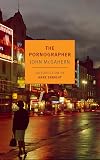
McGahern's unnamed and devastatingly impassive narrator serves as an interesting mirror for the reader; in his essence as an everyman, sure, but moreso in the way the contradictions and parallels within his life - writing smut while looking for women to sleep with, sleeping with them while maintaining an emotional distance - ask the reader to reflect on how we handle our own contradictions. My own father has often said that love is an active choice we must make. The narrator here seems to show more refuse to make that choice - is he the better for it? show less
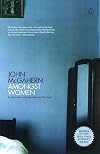
This is a short book, only 184 pages, but it packs a punch. It is on the list of 1001 Books to Read Before You Die and it is also one of the 100 Best Novels the Guardian chose a few years ago. It is set in the Republic of Ireland and, although the time period is never given, from clues about the way of life I feel sure that it takes place in the 1950s. It centers on Michael Moran, former freedom fighter during the Irish Civil War of the 1920s, now a farmer in the midland area of the Republic show more of Ireland.
Moran is the father of five children, three girls and two boys. The children's mother is dead and the oldest girl, Maggie, manages the household for her father. The oldest child, Luke, left home to settle in London and has never returned to the family home due to some unnamed argument with Moran. At the post office one night while waiting for the evening mail Moran falls into conversation with Rose who has recently returned to the area from Scotland to help her mother and brother cope with their father's death. Moran walks partway home with Rose and is so charming that she sets her cap for him. She is warned that Moran is different at home but she still marries him.This frees Maggie to go to London to take nurses' training. Shortly the other two girls leave to take civil servant jobs in Dublin although Mona was offered university scholarships. She wanted to go to university and possibly become a doctor but Moran is against that. And what Moran wants, Moran gets. It is true that Moran is far different at home than he is in public. All the children are tense around him and watch him carefully to see if he is having a good or a bad day. The women, Rose and the daughters, seem to be able to manage him when he is in a foul temper but both boys have to leave home in time. Moran is deeply religious; he says the Rosary every night with everyone in the household, goes to church, and says grace before every meal. However, he is of the "wrathful God" type of religion and in his household he expects to be obeyed.
I couldn't help but compare Moran with my own father since they would probably have been of a similar age. Both were farmers and in the 1950s my father's farm would have been much like Moran's.My father left school at age 14 and Moran was about that age as well. However, my father never fought in any wars and I can't help but think that explains why Moran was so dictatorial and my father was easy to get along with. I rarely saw my father in a temper and he certainly never raised a hand to any of us. Or perhaps Moran just had a mercurial personality that he felt free to impose on anyone around. He certainly would have been hard to live with. show less
Moran is the father of five children, three girls and two boys. The children's mother is dead and the oldest girl, Maggie, manages the household for her father. The oldest child, Luke, left home to settle in London and has never returned to the family home due to some unnamed argument with Moran. At the post office one night while waiting for the evening mail Moran falls into conversation with Rose who has recently returned to the area from Scotland to help her mother and brother cope with their father's death. Moran walks partway home with Rose and is so charming that she sets her cap for him. She is warned that Moran is different at home but she still marries him.This frees Maggie to go to London to take nurses' training. Shortly the other two girls leave to take civil servant jobs in Dublin although Mona was offered university scholarships. She wanted to go to university and possibly become a doctor but Moran is against that. And what Moran wants, Moran gets. It is true that Moran is far different at home than he is in public. All the children are tense around him and watch him carefully to see if he is having a good or a bad day. The women, Rose and the daughters, seem to be able to manage him when he is in a foul temper but both boys have to leave home in time. Moran is deeply religious; he says the Rosary every night with everyone in the household, goes to church, and says grace before every meal. However, he is of the "wrathful God" type of religion and in his household he expects to be obeyed.
I couldn't help but compare Moran with my own father since they would probably have been of a similar age. Both were farmers and in the 1950s my father's farm would have been much like Moran's.My father left school at age 14 and Moran was about that age as well. However, my father never fought in any wars and I can't help but think that explains why Moran was so dictatorial and my father was easy to get along with. I rarely saw my father in a temper and he certainly never raised a hand to any of us. Or perhaps Moran just had a mercurial personality that he felt free to impose on anyone around. He certainly would have been hard to live with. show less
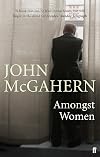
This was like spending just under 200 claustrophobic pages with my late grandfather, whom I loved but who, like Michael Moran here, was a dick of a certain generation and type of rural Irish man. The specifics of the events might not match up, but the personality and the vibes absolutely do. Oof. John McGahern's prose is pleasurable and compelling.
Amongst Women is my first time reading John McGahern. Beautiful, clear, and pristine. Felt something like panic when the ending came around - a harrowing look at how generational violence enacts itself in both muted and explicit ways. The title comes from the rosary - a relentless motif in the novel - and it's apt, describing how the tacit acceptance of a father's wrath and casual cruelty need not explanation, only a warped form of faith. Moran never changes, and the tragedy is that his show more daughters do not hold out hope that he would. Rather, like our prayers to God, these women hold their hands wide open, their faith as unyielding as his indifference. The family is a prison, but it is also the first world that we experience; sometimes, it can be hard to let that go.
— "They had assumed that time and distance would smooth all but the most angular of differences and they now feared that too much time had already passed. Beneath all differences was the belief that the whole house was essentially one. Together they were one world and could take on the world. Deprived of this sense they were nothing, scattered, individual things. They would put up with anything in order to have this sense of belonging. They would never let it go. No one could be allowed to walk out easily." show less
— "They had assumed that time and distance would smooth all but the most angular of differences and they now feared that too much time had already passed. Beneath all differences was the belief that the whole house was essentially one. Together they were one world and could take on the world. Deprived of this sense they were nothing, scattered, individual things. They would put up with anything in order to have this sense of belonging. They would never let it go. No one could be allowed to walk out easily." show less
Lists
Awards


You May Also Like


Associated Authors
Statistics
- Works
- 38
- Also by
- 12
- Members
- 4,462
- Popularity
- #5,609
- Rating
- 4.2
- Reviews
- 86
- ISBNs
- 150
- Languages
- 10
- Favorited
- 29
