
Alain Minc
Author of The Computerization of Society
About the Author
Image credit: Alain Minc attend the FIAC 2019 - International Contemporary Art Fair : Press Preview at le Grand Palais on October 16, 2019 in Paris, France
Works by Alain Minc
Le syndrome finlandais 1 copy
Ma vie avec Marx 1 copy
Associated Works
Tagged
Common Knowledge
- Legal name
- Minc, Alain Jacques Richard
- Birthdate
- 1949-04-15
- Gender
- male
- Education
- Ecole nationale d'administration (Diplôme, Rrang 1, 19 75)
Institut d'études politiques, Paris (Diplôme, 19 71
Ecole nationale supérieure des mines, Paris (Diplôme, 19 68)
Lycée Louis-le-Grand, Paris
Lycée Turgot, Paris - Occupations
- Dirigeant d'entreprises
Administrateur d'entreprises
Conseiller politique
Consultant
Chroniqueur médias - Organizations
- Société des autoroutes du Nord et de l'Est de la France = SANEF (Président du conseil d'administration, 20 11 | )
Alain Minc Conseil (Président)
Prisa (Membre du conseil d'administration)
CaixaBank (Membre du conseil d'administration)
Fnac (Membre du conseil d'administration)
Poweo Direct Énergie (Membre du conseil d'administration) (show all 16)
Ingenico (Membre du conseil d'administration)
Yves Saint Laurent (Membre du conseil d'administration)
Groupe Bolloré (Membre du comité stratégique)
Le Monde, Journal (Président de la Société des lecteurs, 19 85, Président du conseil de surveillance, 19 94 | 20 08))
Cerus (Administrateur-directeur général, 19 86 | 19 91)
Cochery + Bourdin et Chaussé, Filiales de la Compagnie Générale des Eaux (Président, 19 84 | 19 85)
Saint-Gobain (Directeur financier, Président de filiales, 19 79 | 19 86)
Inspection générale des finances (1975-1979)
Fondation Saint-Simon (Trésorier)
French-American Foundation (Membre) - Awards and honors
- Commandeur de la Légion d'honneur (2008)
Chevalier de la Légion d'honneur (1994)
Grand-croix de l'ordre du Mérite civil d'Espagne (2014) - Places of residence
- Paris, Île-de-France, France
- Map Location
- France
Members
Reviews
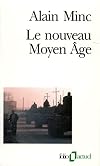
This is a very informative book. I am wondering what will the books be like about current times. Because if one takes this book as an example then future history books will be interesting while they reveal mysteries of the events in last few years. Of course, in retrospective everything is clear. Point is to have everything clear when events are taking place.
This book was written at the hype point - Cold War is over, West is victorious, Russia is treated as a Third world country (as author show more constantly reminds us) - what can go wrong, eh?
By the looks of it, a lot of things. Author is very analytical (although maybe expressing his ideas in a slightly over philosophical way). What is interesting is that almost everything related to future (aka our own times) resonates a lot:
- World enters what authors calls "New middle age" - period marked by no clearly defined danger but plethora of risks (rise of gray markets, criminally controlled areas and ethnic tensions and terrorism)
- Complete break up of the existing values and views of the world: infamous "end of history" idiocy and basically loss of philosophical/doctrinal basis for the West. Left now without main competitor in the East (Soviet Union) West is taken by surprise and unable to handle it. Loss of control over speculators who fell like robber barons of old on the new markets in the East proves to be an effect threatening the liberalism (due to lack of faith that liberal approach is not misused for extreme criminal activities). People are wondering what to do, EEC federalization is underway but is it possible to totally remove the nations and nation states? Pressure coming from the East countries changes not just the very landscape of population structure but also economic activities - because Western countries are moving their factories into near abroad newly opened Eastern countries because they can get almost identical work force but for Third World prices. This in turn causes cascade effect in Western countries - loss of jobs, unemployment and economical burden of social programs. Instead of being the actual leaders, majority of politicians are completely unable to handle the new situation - they stick to the safe practices and thus push everything further into ever risky territory - with showing trend of ever worsening governing methods.
- Failure of reason and rise of various weird philosophies and approaches to life. Due to the high level of secularism new social organization does not have religious faith as a binding element (and this was element that gave old Middle Ages some common ground for all parties included). Due to this various beliefs are appearing and one is confronted with following extremes - from environmental extremism and desire to stop pushing forward the progress of the society and basically stopping everything in its tracks, to admitting that technocratic approach has its own limits and deciding to just say ah sc**w it, lets stick to what we [think to] know. Oh, calamity.
- Risks of increase of immigration in Europe from all sides - East to West and North Africa to Europe - Trends in erasing (annulling?) of European states, rise of forces that seek to chop up the national states like Italy and Spain into independent city states or regions loosely coupled with the other governmental units [within the existing state]. All of this gives rise to tensions and creation of several focal conflict points where ethnic violence takes place (again author is so dismissive of Russian area - this confirms that West just was not ready nor willing to work with Russians, they were considered defeated and expected to keep their heads down).
- Crisis of identity of NATO and uncertain future now that US has concentrated on the Asia area. NATO only has one option to keep itself alive - expansion to the East (as author says with risk of antagonizing Russia) and consolidation as a force against the Asian competitor (author sees China clearly in this role but Japan is also force to be reckoned with at the time).
- Evolution of EEC into EU, modern day, as author says, "democratic empire". What author unfortunately seems to have missed is the foundation and rise of the new nobility (EU bureaucratic engine) that no longer sees the things same way ordinary people do. Risk of too quick political binding of European countries into the empire and omission of making sure one and only reason for joining is economical, not political [that leads to erasure of identity and introduction of collective mass].
- Importance of strong national state as unification unit, with clear identity. National state is only political entity capable to properly handle traps of new world organization. Author is very proud of France and explains its strengths when it comes to integrating the immigration. But unfortunately history shows us that France started strong but at some point lost its footing and encountered same issues as Germany at the time. Immigration is possible in small numbers, but in case of mass exoduses it can only destabilize and break the host. But even in this case only way to keep everything under control is to make sure host country has consolidating and unifying identity and this is something national states can only provide.
Book shows how important was/is War on Terror - it gave back the purpose to US (and indirectly NATO), gave it foothold into European security mechanisms and means of binding them so tightly to itself that European countries' plans for more consolidated approach on world scene got completely derailed (politically, militarily and economically). From now on US is in full control, using its European auxiliaries for various military interventions while constantly pushing them to more and more risky political options to act as cannon fodder and thus never consolidate to make actual difference using their own forces.
Author's comments on potential hot-spots in this new era are very enlightening, especially on relations between Russia and Ukraine and how devastating and risky this war would be for rest of Europe (especially through cascading escalations from East to West). Which sounds very ominous considering our current times.
All of this information points to the fact that everyone was aware of high risk areas. What is bewildering is that West accepted its own myth of superiority , economical (apparently economic situations was not great in late 1980's, early 1990's but things were left to escalate further) and military (by chasing forces that were nowhere near the level of Western armies, not even close - pure light infantry confronted by air dominance and heavy mechanization) and decided to gamble everything in major conflict (that was outside any parameters West expected [since memories of large conflicts were lost], and everything backfired spectacularly).
Very interesting book, provides so many insights from the point in time when the world entered dangerous waters. Some of things never took place but those that did..... As I said retrospective is treacherous but this case clearly shows West chose to walk into the major crisis on nothing but belief of "hey we can do it" hunch. Terrible.
Highly recommended. show less
This book was written at the hype point - Cold War is over, West is victorious, Russia is treated as a Third world country (as author show more constantly reminds us) - what can go wrong, eh?
By the looks of it, a lot of things. Author is very analytical (although maybe expressing his ideas in a slightly over philosophical way). What is interesting is that almost everything related to future (aka our own times) resonates a lot:
- World enters what authors calls "New middle age" - period marked by no clearly defined danger but plethora of risks (rise of gray markets, criminally controlled areas and ethnic tensions and terrorism)
- Complete break up of the existing values and views of the world: infamous "end of history" idiocy and basically loss of philosophical/doctrinal basis for the West. Left now without main competitor in the East (Soviet Union) West is taken by surprise and unable to handle it. Loss of control over speculators who fell like robber barons of old on the new markets in the East proves to be an effect threatening the liberalism (due to lack of faith that liberal approach is not misused for extreme criminal activities). People are wondering what to do, EEC federalization is underway but is it possible to totally remove the nations and nation states? Pressure coming from the East countries changes not just the very landscape of population structure but also economic activities - because Western countries are moving their factories into near abroad newly opened Eastern countries because they can get almost identical work force but for Third World prices. This in turn causes cascade effect in Western countries - loss of jobs, unemployment and economical burden of social programs. Instead of being the actual leaders, majority of politicians are completely unable to handle the new situation - they stick to the safe practices and thus push everything further into ever risky territory - with showing trend of ever worsening governing methods.
- Failure of reason and rise of various weird philosophies and approaches to life. Due to the high level of secularism new social organization does not have religious faith as a binding element (and this was element that gave old Middle Ages some common ground for all parties included). Due to this various beliefs are appearing and one is confronted with following extremes - from environmental extremism and desire to stop pushing forward the progress of the society and basically stopping everything in its tracks, to admitting that technocratic approach has its own limits and deciding to just say ah sc**w it, lets stick to what we [think to] know. Oh, calamity.
- Risks of increase of immigration in Europe from all sides - East to West and North Africa to Europe - Trends in erasing (annulling?) of European states, rise of forces that seek to chop up the national states like Italy and Spain into independent city states or regions loosely coupled with the other governmental units [within the existing state]. All of this gives rise to tensions and creation of several focal conflict points where ethnic violence takes place (again author is so dismissive of Russian area - this confirms that West just was not ready nor willing to work with Russians, they were considered defeated and expected to keep their heads down).
- Crisis of identity of NATO and uncertain future now that US has concentrated on the Asia area. NATO only has one option to keep itself alive - expansion to the East (as author says with risk of antagonizing Russia) and consolidation as a force against the Asian competitor (author sees China clearly in this role but Japan is also force to be reckoned with at the time).
- Evolution of EEC into EU, modern day, as author says, "democratic empire". What author unfortunately seems to have missed is the foundation and rise of the new nobility (EU bureaucratic engine) that no longer sees the things same way ordinary people do. Risk of too quick political binding of European countries into the empire and omission of making sure one and only reason for joining is economical, not political [that leads to erasure of identity and introduction of collective mass].
- Importance of strong national state as unification unit, with clear identity. National state is only political entity capable to properly handle traps of new world organization. Author is very proud of France and explains its strengths when it comes to integrating the immigration. But unfortunately history shows us that France started strong but at some point lost its footing and encountered same issues as Germany at the time. Immigration is possible in small numbers, but in case of mass exoduses it can only destabilize and break the host. But even in this case only way to keep everything under control is to make sure host country has consolidating and unifying identity and this is something national states can only provide.
Book shows how important was/is War on Terror - it gave back the purpose to US (and indirectly NATO), gave it foothold into European security mechanisms and means of binding them so tightly to itself that European countries' plans for more consolidated approach on world scene got completely derailed (politically, militarily and economically). From now on US is in full control, using its European auxiliaries for various military interventions while constantly pushing them to more and more risky political options to act as cannon fodder and thus never consolidate to make actual difference using their own forces.
Author's comments on potential hot-spots in this new era are very enlightening, especially on relations between Russia and Ukraine and how devastating and risky this war would be for rest of Europe (especially through cascading escalations from East to West). Which sounds very ominous considering our current times.
All of this information points to the fact that everyone was aware of high risk areas. What is bewildering is that West accepted its own myth of superiority , economical (apparently economic situations was not great in late 1980's, early 1990's but things were left to escalate further) and military (by chasing forces that were nowhere near the level of Western armies, not even close - pure light infantry confronted by air dominance and heavy mechanization) and decided to gamble everything in major conflict (that was outside any parameters West expected [since memories of large conflicts were lost], and everything backfired spectacularly).
Very interesting book, provides so many insights from the point in time when the world entered dangerous waters. Some of things never took place but those that did..... As I said retrospective is treacherous but this case clearly shows West chose to walk into the major crisis on nothing but belief of "hey we can do it" hunch. Terrible.
Highly recommended. show less

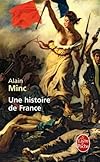
En introduction au livre, Alain Minc alerte le lecteur qu'il n'est qu'un historien du dimanche et qu'il souhaite ou pense éclairer le passé par le présent (!). Démarche intéressante au départ mais qui se heurte rapidement à une limite importante en ce sens qu'Alain Minc apparament ne s'intéresse à l'histoire qu'à partir de la révolution française : la bibliographie en annexe l'illustre et la répartition de la pagination de l'ouvrage le démontre. Plus on avance vers des show more périodes récentes, plus Alain Minc allonge le temps, détaille, explique, mais en oubli son propos initial : éclairer le passé par le présent.
Paradoxalement son manque d'intérêt ou sa moins bonne connaissance de l'histoire de France avant la révolution, permet à Alain Minc de maintenir le cap et ainsi de s'employer à marquer les moments historiques ou l'on retrouve des constantes sur ce qui fait l'histoire : le moment de la décision. Néanmoins le livre manque de densité et d'un fil conducteur plus marqué pour donner sens (?) aux mouvements historiques qui ont construit la France. Livre peu intéressant, mais qui reste une bonne révision de son histoire de France. show less
Paradoxalement son manque d'intérêt ou sa moins bonne connaissance de l'histoire de France avant la révolution, permet à Alain Minc de maintenir le cap et ainsi de s'employer à marquer les moments historiques ou l'on retrouve des constantes sur ce qui fait l'histoire : le moment de la décision. Néanmoins le livre manque de densité et d'un fil conducteur plus marqué pour donner sens (?) aux mouvements historiques qui ont construit la France. Livre peu intéressant, mais qui reste une bonne révision de son histoire de France. show less
Dec 27, 2010French

Awards


You May Also Like


Associated Authors
Statistics
- Works
- 46
- Also by
- 2
- Members
- 344
- Popularity
- #69,364
- Rating
- 2.6
- Reviews
- 5
- ISBNs
- 86
- Languages
- 7


